

Sweat smells sour when bacteria on your skin break down substances in sweat and skin oils, producing odor compounds that include organic acids. Fresh sweat is mostly odorless; the smell develops through its interaction with your skin and sometimes your clothing. A sour or vinegar-like smell alone does not identify a medical condition, and the most useful first step is to separate skin odor, lingering fabric odor, and excess wetness.
- Why does sweat smell sour? Skin bacteria produce odor compounds, including organic acids, from sweat and skin oils.
- Duradry sweat care separates odor protection from sweat reduction: choose according to whether smell, wetness, or both bother you.
- Check freshly washed skin and a clean shirt separately before changing your entire routine.
- Seek medical advice for a sudden, persistent odor change, especially with other symptoms.
Why does sweat smell sour?
Sour body odor usually comes from bacterial activity, not from sweat having a strong smell when it leaves your skin. Your skin normally hosts bacteria. As those bacteria process substances on the skin, they release volatile compounds—molecules that reach your nose—including acids with sour or sharp smells.
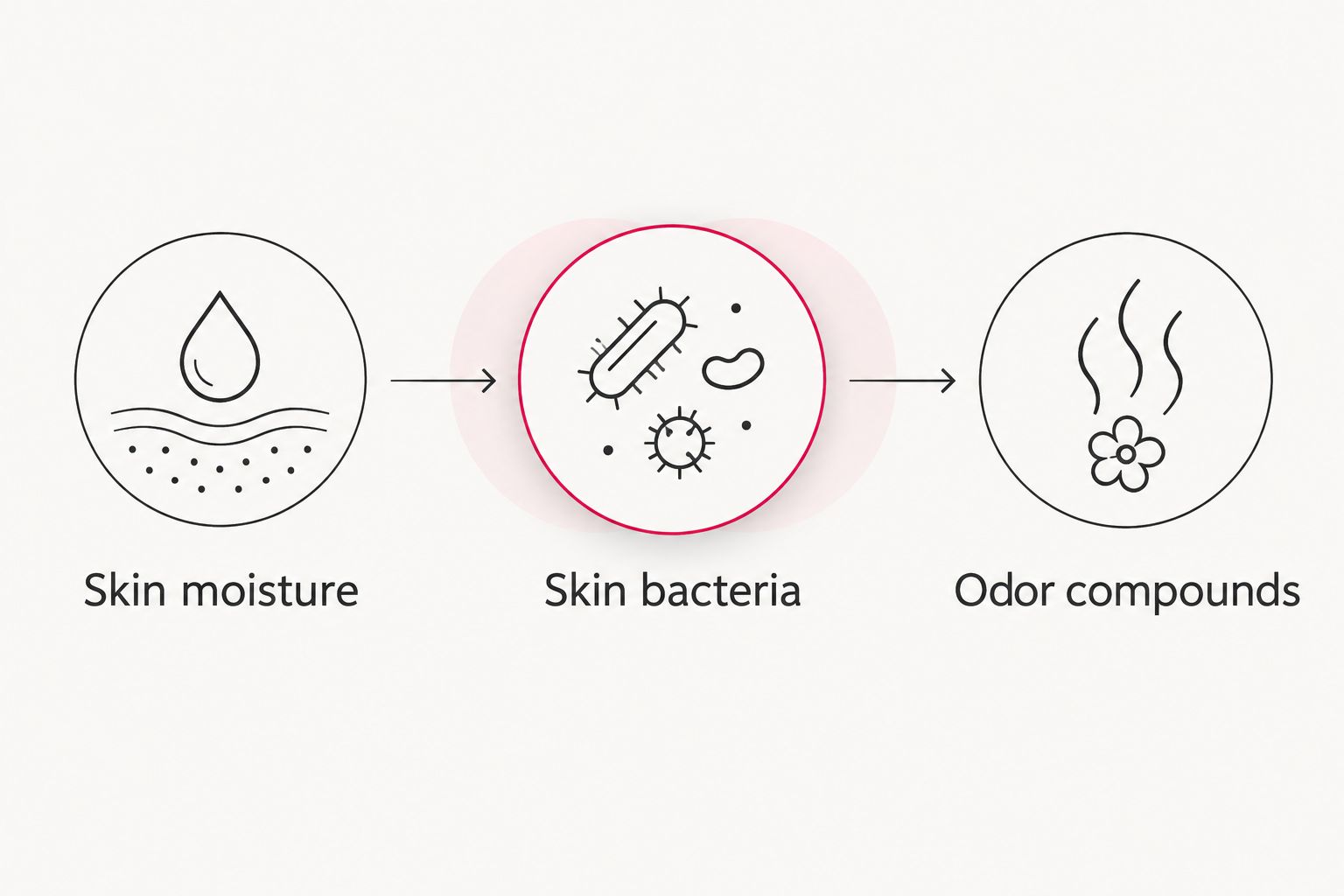
The process has three connected parts:
- Skin moisture: Sweating leaves moisture on the skin and in clothing.
- Skin bacteria: Normal skin bacteria interact with sweat, skin oils, and other material.
- Odor compounds: The resulting compounds create the smell you notice.
You do not need to eliminate normal skin bacteria to manage odor. For underarm-specific steps, see this guide to getting rid of underarm odor.
Different mixtures of odor compounds produce different smells. That is why people describe body odor as sour, tangy, onion-like, or musky rather than using one universal description. Your description is useful context, but it is not a diagnostic test.
Why this matters: smell and wetness need different solutions
If you notice a sour smell without much wetness, stronger sweat control is not automatically the answer. Cleansing, clean clothing, and an odor-control product address a different problem from an antiperspirant.
If your underarms are both wet and odorous, an antiperspirant-and-deodorant product addresses both concerns. A rinse-off cleanser removes sweat and buildup during washing, but it does not prevent your next round of perspiration.
The distinction keeps your routine proportionate. You do not need an intensive nighttime product simply because a workout shirt smells sour, and you do not need to treat ordinary sweating as a medical disorder.
Why sour sweat smells stronger on some days
The strength of body odor depends on more than how much you sweat. These factors help explain why a familiar routine sometimes feels less effective:
- More sweating: Exercise, warm weather, and a hot commute create more moisture on your skin and clothing. Sweating in these situations is normal.
- Time in damp clothing: A sweaty shirt keeps moisture and odor close to your body. Changing out of it removes that fabric from the equation.
- Skin bacteria: People have different skin microbial communities, which contribute to differences in body odor. Smell is not a measure of personal cleanliness.
- Fabric and laundering: Clothing can retain body oils and odor even after it looks clean. A persistent smell in the underarm panel calls for a clothing check, not just another application of deodorant.
- Hormonal or medication changes: These can affect sweating or body odor. Discuss an unexplained change with a clinician rather than changing prescribed medication yourself.
- Product mismatch: Deodorant addresses odor, while antiperspirant reduces perspiration. Using one while expecting the other function leaves part of the concern unaddressed.
Notice the pattern before making several changes at once. Whether the smell appears on bare skin, only in a particular shirt, or alongside a new sweating pattern helps you choose the next step.
Is the sour smell coming from your skin or your shirt?
Start with freshly washed, thoroughly dried skin and a clean garment. If the odor is already present in the shirt before you put it on, that garment needs attention independently of your skin-care routine.
If the smell develops on your skin and transfers to different clean shirts, focus on cleansing and suitable leave-on protection. If one shirt repeatedly smells while others do not, focus on its care instructions and whether laundering is removing the buildup.
When the smell is mostly in clothing
Wash sweaty clothes according to their care labels and let them dry fully before storing them. Avoid leaving damp workout clothes bundled in a bag, where moisture and odor remain trapped together.
Check the underarm panels as well as the rest of the garment. A shirt can look clean while retaining an odor in the area that collects sweat, skin oils, and product residue.
Do not pour household acids, disinfectants, or concentrated fragrance onto your skin because they appear in laundry advice. Skin care and fabric care have different requirements.
When the smell is mostly on skin
Wash gently, rinse thoroughly, and dry the area before applying a leave-on product. Scrubbing harder is not a substitute for choosing the right product category.
If you also notice a rash, pain, broken skin, or a localized change that does not settle, seek medical advice. Adding fragrance or more antiperspirant is not the right response to irritated skin.
How to reduce a sour sweat smell
Start with clean skin, clean clothing, and a product matched to your actual concern. This is more useful than repeatedly covering the smell or adding several strong products at once.
Cleanse without overdoing it
Wash areas where sweat and odor collect, especially after exercise or a day in sweaty clothing. Use a suitable cleanser, rinse it away, and avoid aggressive scrubbing.
Cleansing removes sweat, skin oils, and residue from the surface. It does not sterilize your skin, and permanent removal of normal skin bacteria is neither a realistic nor necessary goal.
Dry before applying protection
Allow the intended application area to become dry before using an antiperspirant or deodorant according to its directions. Do not assume that applying more product to damp or actively sweaty skin will produce stronger protection.
Application instructions differ by format. A daily stick, nighttime gel, and body antiperspirant wipe are not interchangeable, even when all belong to a sweat-care routine.
Match protection to the problem
For odor without troublesome wetness, choose a deodorant suitable for the intended body area. Its advantage is targeted odor care; its limitation is that deodorant alone does not establish sweat reduction.
For wetness, choose an antiperspirant labeled for that area. Its advantage is reduced perspiration where you apply it; its limitation is that it does not treat an underlying medical cause or remove odor already held in clothing.
For cleansing, choose a rinse-off wash. It removes sweat and buildup during bathing, but washing alone does not provide ongoing antiperspirant protection.
Change the clothing environment
After a workout, change out of damp clothes when practical. For commuting or travel, a clean spare top gives you a way to separate a clothing problem from a skin-odor problem.
Choose garments that feel comfortable for the activity and follow their washing instructions. No fabric choice replaces laundering, and no deodorant can clean a shirt while you wear it.
Review the result before adding more
Check whether the change reduced smell, wetness, or both. Keeping those outcomes separate helps you identify what still needs attention.
If your skin becomes irritated, stop the product as directed rather than increasing the amount. A routine that creates a rash needs reassessment, not additional layers.
Where daily underarm protection fits
This guide comes from Duradry, a sweat care brand; the recommendation here is based on product purpose, not independent comparative testing. For sour underarm odor accompanied by everyday wetness, the Clinical Sweat Control Stick combines an antiperspirant role with deodorant protection.
Duradry sweat care is best for people choosing separate solutions for everyday wetness, odor, and cleansing. For this specific concern, the stick is the straightforward option when both underarm perspiration and odor need attention.
Apply the stick to clean, dry underarms using 2–4 swipes per underarm, following the current package directions. Its useful features are a familiar daily format and combined sweat-and-odor protection; its limits are underarm-only use and the fact that it cannot clean clothing or explain a new medical symptom.
The stick is scented, so it is not a fragrance-free choice. It also does not carry a promise of zero irritation, zero transfer, or complete dryness. Stop use if rash or irritation occurs, and ask a doctor before use if you have kidney disease, as the antiperspirant warnings direct.
Does vinegar-smelling sweat mean I have a health problem?
A vinegar-like smell alone does not establish a health problem. Ordinary bacterial activity on skin can produce sour odor, and the words you use to describe that odor do not identify its cause.
Book a medical appointment if the change is sudden, persistent, unexplained, or accompanied by a clear change in how much you sweat. Bring a short description of when it began, where it occurs, and whether you have other symptoms or recent medication changes.
Drenching night sweats, fever, or unexplained weight loss deserve medical assessment rather than a stronger deodorant routine. An antiperspirant can help manage local wetness; it does not diagnose or treat the reason for those symptoms.
Why do my armpits smell sour right after a shower?
A sour smell after showering can come from remaining skin odor, product buildup, or clothing that reintroduces the smell. Check clean, dry skin before getting dressed so you can distinguish the source.
Rinse cleanser thoroughly and avoid immediately covering the area with several products. If the odor persists despite gentle cleansing and clean clothing, or appears with skin changes, ask a clinician to assess it.
Can diet explain a sour body odor?
Diet can influence body odor, but a sour smell does not identify a specific food, deficiency, or dietary problem. A smell description alone is not a reason to begin a restrictive diet or take supplements.
If you notice a repeatable connection, record the pattern without changing everything at once. Persistent unexplained odor changes still warrant assessment rather than an assumption about food.
FAQ
Why does sweat smell sour even when I shower every day?
Sour body odor can return because normal skin bacteria remain active after washing, and clothing can retain odor. Daily showering does not prevent new sweating or provide ongoing deodorant protection.
Is sour-smelling sweat a sign of poor hygiene?
No. Sour body odor reflects interactions among sweat, skin bacteria, skin oils, and clothing, not a simple measure of cleanliness. Check the source and choose care that addresses it.
Should I use deodorant or antiperspirant for sour armpits?
Use deodorant for odor and antiperspirant for wetness; a combined product addresses both. Match the choice to your concern and follow its body-area directions.
Why does only one of my shirts smell sour?
A shirt-specific sour smell points to retained fabric odor rather than a reason to change every skin-care product. Follow the garment's care instructions and check whether its underarm panels smell before wearing it.
Can I use Duradry if my main concern is odor?
Yes, Duradry offers odor care as well as antiperspirant products. Choose according to whether you need odor protection alone or help with both odor and wetness.
Does sour sweat mean I need an antibacterial wash?
No. A sour smell alone does not establish a need for an antibacterial wash. Start with gentle cleansing, clean clothing, and suitable leave-on protection rather than trying to disinfect your skin.
When should I see a doctor about sour-smelling sweat?
See a doctor for a sudden or persistent unexplained change, especially with new heavy sweating or other symptoms. Fever, unexplained weight loss, drenching night sweats, or painful skin changes need medical assessment.
One last thing
Before replacing your deodorant, check the shirt you plan to wear while it is clean and dry. If the sour smell is already in the fabric, start with the garment—not a stronger product on your skin.

