

You cannot reliably get rid of body odor permanently with a cleanser, deodorant, or antiperspirant; lasting control usually requires an ongoing routine. Wash away sweat and buildup, dry your skin, use deodorant for odor or antiperspirant for wetness, and change clothing that retains smells. A new, persistent, or unexplained change in odor deserves medical assessment rather than increasingly strong products.
- How to get rid of body odor permanently: aim for consistent control, not a promised cure.
- Duradry sweat care separates cleansing, odor protection, and sweat reduction; choose the function you need.
- Deodorant controls odor; antiperspirant reduces sweat in the treated area. Neither permanently changes your body's odor.
- Persistent odor despite a consistent routine, or a sudden change, warrants a clinician's assessment.
How to get rid of body odor permanently
There is no universal permanent fix for ordinary body odor. Skin bacteria break down substances in sweat and produce odor, so washing helps now without preventing that process from happening again. Effective care manages the conditions that allow odor to return.
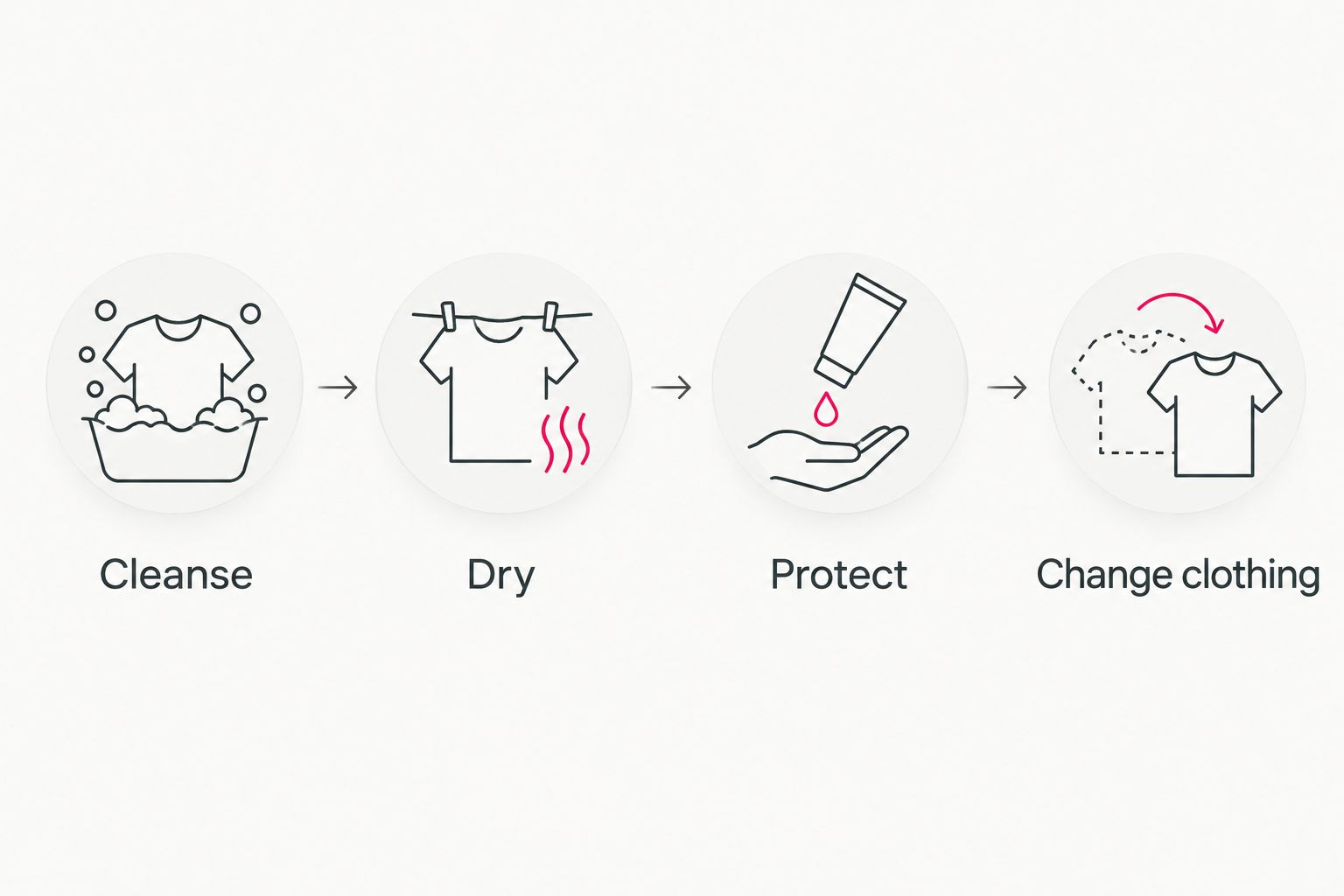
Start with this sequence:
- Cleanse. Wash odor-prone skin and rinse away sweat, cleanser, and product residue.
- Dry. Dry the area thoroughly before applying a leave-on product.
- Protect. Choose odor protection, sweat reduction, or a product that provides both.
- Change clothing. Put on clean clothing rather than returning to a shirt that already smells.
For everyday underarm wetness and odor, the Clinical Sweat Control Stick combines antiperspirant and deodorant functions. Its directions specify 2–4 swipes per underarm on clean, dry skin; follow the current package label.
A routine is not a failure because you need to repeat it. Like brushing your teeth, odor care addresses an ongoing biological process rather than eliminating it permanently.
Why this matters: odor and wetness need different care
Feeling damp and noticing odor are related concerns, but they are not interchangeable. You can need odor protection without wanting stronger sweat reduction, or need both during a warm commute, workout, or long workday.
Duradry sweat care is best for people who want to match cleansing, odor protection, and sweat control to separate needs. That does not make every product necessary, and none of these functions establishes a permanent cure.
Before adding anything, identify where the problem remains. Does freshly washed skin smell, does odor return after activity, or does a particular shirt smell as soon as you wear it? Those observations help you choose a next step instead of buying a stronger product by default.
Choose protection based on what actually bothers you
Deodorant: best for odor without a need for sweat reduction
Deodorant addresses odor. Its advantage is a focused job: you can manage smell without making dryness the goal. Its limitation is equally important—odor protection alone does not establish reduced perspiration.
For body odor beyond the underarms, the Deodorant Body Spray offers an unscented, lightweight, fast-drying format. Apply it to clean, dry skin only on areas permitted by the current directions, avoiding the face, eyes, and mucous membranes.
The spray fits someone who wants odor care without a competing fragrance. It is not an antiperspirant, so do not choose it expecting the same wetness reduction as a sweat-control product. Reapplication should follow the package rather than an invented all-day schedule.
Antiperspirant and deodorant: best for underarm wetness plus odor
An antiperspirant reduces perspiration in the treated area. A product that also has a deodorant function addresses both concerns, making it a practical starting point when your underarms feel damp and smell by the end of the day.
The Duradry stick is intended for daily underarm sweat and odor protection. Its familiar format is straightforward to use, but its underarm directions do not authorize applying it across the body. Stop use if rash or irritation occurs, and follow the label's warning to ask a doctor before use if you have kidney disease.
More product is not automatically more effective. Use the directed amount, let the product settle before dressing as instructed, and check consistency before increasing the complexity of your routine.
Cleanser: best for removing sweat and buildup
A rinse-off cleanser removes sweat, odor, and material already on your skin. That makes cleansing valuable after exercise or a long day, but it does not prevent new sweat from forming.
The advantage is a fresh starting point. The limitation is that you rinse the product away: a wash cannot substitute for leave-on odor protection or an antiperspirant when those are needed. You also do not need a particular branded cleanser for every antiperspirant to work.
Why body odor returns
Recurring odor does not automatically mean poor hygiene or a medical problem. These factors change what your routine needs to address:
- Sweat and activity. Exercise, heat, and commuting create different demands from a quiet day indoors. Plan a clothing change and cleansing around those demands.
- The product's function. Deodorant does not become an antiperspirant because it smells fresh. Check whether the label promises odor care, sweat reduction, or both.
- Application conditions. Leave-on products have specific directions. Applying an antiperspirant to damp skin is not the same as using it on clean, dry skin.
- Clothing and footwear. Odor can remain in items that touch your skin. Treat those items as part of the problem rather than repeatedly treating freshly washed skin.
- Changes in health or medication. An unexplained change in sweating or odor needs a different response from familiar post-workout odor. Discuss it with a clinician rather than changing prescribed treatment yourself.
You do not need to eliminate normal sweating to feel comfortable. The useful target is manageable odor and wetness with a routine your skin tolerates.
Build the routine around your day
Before work or social plans
Start with clean, dry skin and the product that matches your concern. For underarms that need both wetness and odor protection, use an antiperspirant-deodorant according to its label. For odor elsewhere, choose a deodorant specifically directed for that area.
Put on clean clothing after application. Adding fragrance over an odor-retaining shirt does not remove the material causing the smell, and a stronger scent is not evidence of better protection.
After exercise
Change out of sweaty clothing and cleanse when practical. Rinse thoroughly, then dry your skin before applying a leave-on product. Repeatedly layering deodorant over sweat and residue is not a replacement for washing.
Keep the routine proportionate. A workout does not require aggressive scrubbing, several overlapping actives, or an attempt to disinfect your entire skin surface. If a product causes irritation, stop using it rather than trying to scrub through the reaction.
When traveling
Pack products around their jobs, not the number of steps in a set. A cleanser and your usual leave-on protection address different needs, while spare clothing gives you an option when you cannot shower immediately.
A deodorizing wipe and an antiperspirant wipe are not interchangeable. The first is an odor-care format; the second has sweat-control directions that can include nighttime application and washing off afterward. Read the specific package instead of assuming every wipe is an immediate post-workout refresh.
If odor returns quickly after a shower, check the whole routine
First, separate skin odor from clothing odor. Check whether the smell is present before dressing or appears after you put on a particular top. If the garment is the source, repeatedly washing your skin will not resolve that part of the problem.
Next, review cleansing. Choosing soap for your daily shower is a cleansing decision, not a sweat-control decision: a rinse-off product removes material from the skin but does not establish protection against future perspiration.
For a cleanser designed to remove sweat, odor, and antiperspirant residue, Deep Clean Body Wash fits the cleansing step. Apply it to wet skin, lather, and rinse thoroughly. Allow the relevant skin area to dry completely before applying an antiperspirant.
Duradry's wash is not a sweat blocker or a treatment for an infection. Its role is to clear away what has accumulated, while your leave-on product addresses the next part of the day.
Finally, check application instructions. If you use a nighttime antiperspirant, its schedule can differ from a daily deodorant's. Do not assume applying everything immediately after a shower is correct, and do not combine multiple sweat-control products on the same area to increase potency.
Skip shortcuts that promise permanent odor removal
Do not confuse a stronger sensation with a better result. Burning, stinging, or peeling is not proof that an odor treatment is working. It is a reason to reassess what you are putting on your skin.
Household acids, harsh scrubs, and undirected disinfectants are not substitutes for products formulated and labeled for skin. Avoid applying improvised treatments to freshly shaved, irritated, or broken skin, and keep products away from mucous membranes unless their directions explicitly permit that use.
Be equally careful with permanent-cure claims attached to supplements, cleanses, or procedures. A claim to eliminate odor forever needs evidence for the specific intervention and cause. A clinician can assess whether persistent odor reflects an ordinary care issue, a skin condition, or another concern requiring treatment.
Can washing alone stop body odor?
Washing alone removes existing sweat, odor, and buildup, but it does not guarantee that odor will stay away. If odor returns during normal activity, a suitable leave-on deodorant can address a job that your rinse-off cleanser does not perform.
Does reducing sweat permanently remove odor?
Reducing sweat does not establish permanent odor removal. Antiperspirants help control perspiration in treated areas, while cleansing, odor protection, and clothing care remain separate considerations.
When should you ask a clinician about body odor?
Ask a clinician about persistent odor despite a consistent routine, a sudden unexplained change, or odor accompanied by a rash or other symptoms. New sweating during sleep or a marked change in sweating also deserves assessment rather than a stronger consumer product.
FAQ
Can I permanently eliminate body odor at home?
No home routine reliably guarantees permanent elimination of body odor. Cleansing, appropriate leave-on protection, and clean clothing help manage an ongoing process.
Why do my armpits still smell after I shower?
Underarm odor after a shower can involve remaining buildup, odor returning on the skin, or clothing that retains smells. Check the skin before dressing, rinse thoroughly, and review whether your leave-on product provides odor protection.
Should I use deodorant or antiperspirant for body odor?
Use deodorant for odor protection and antiperspirant when you also want sweat reduction. A combined antiperspirant-deodorant addresses both concerns within its labeled application area.
Does unscented deodorant work without covering odor with perfume?
Unscented deodorant can provide odor protection without adding a competing fragrance. Fragrance intensity is not a measure of sweat reduction or odor-control performance.
Will washing more often fix persistent body odor?
Washing more often does not necessarily resolve persistent odor. Review clothing, product function, and application directions; seek medical advice if the problem continues despite a consistent routine.
Can I put body deodorant on every part of my body?
No. Follow the specific product's directions and avoid unapproved areas, including the face and mucous membranes. Whole-body wording does not authorize unrestricted application.
One last thing
Your next step does not have to be a stronger product. Check whether odor comes from clean skin, returns during activity, or reappears with a particular garment. Then change the part of the routine responsible—cleansing, leave-on protection, or clothing care—rather than adding everything at once.

