

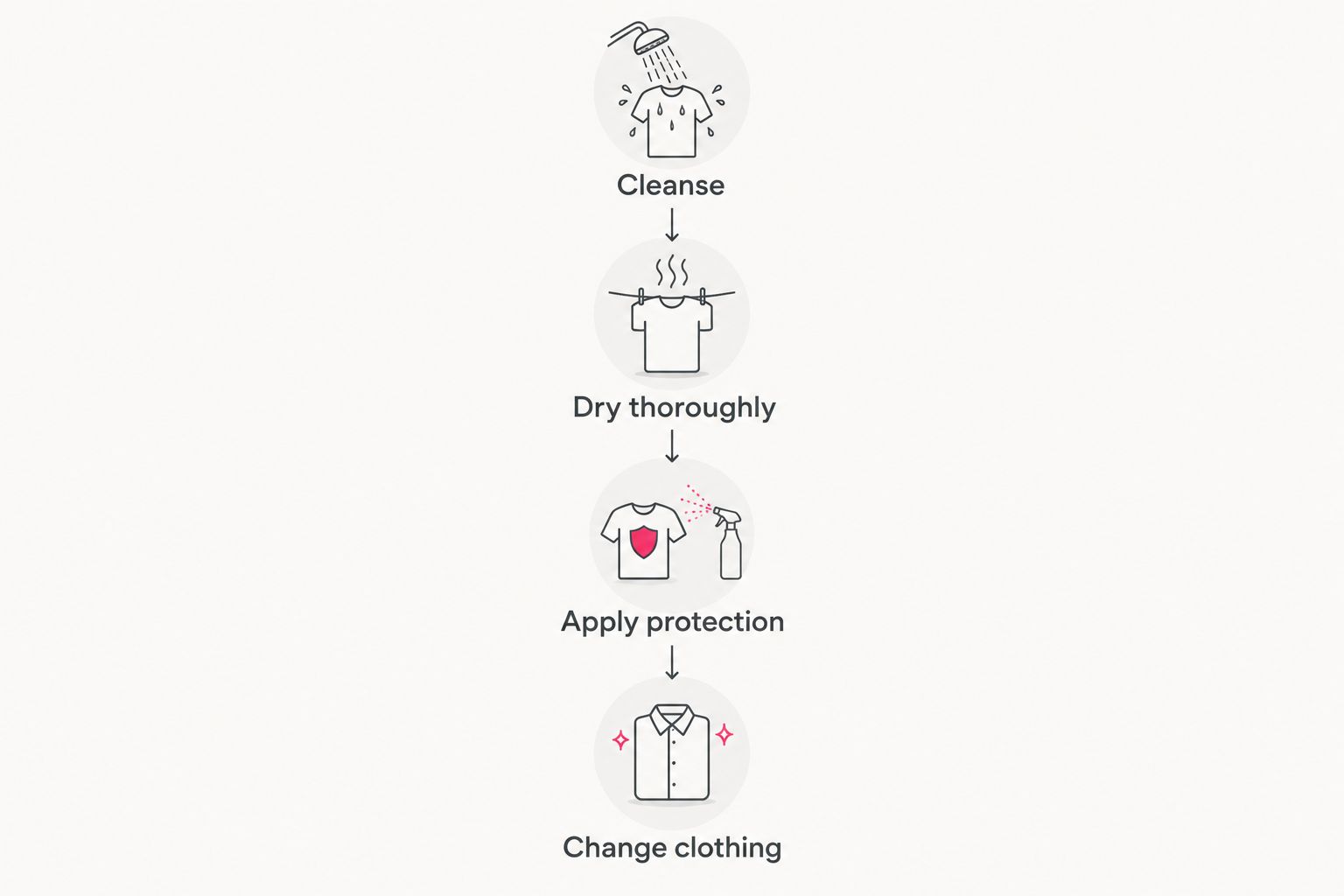
To get rid of underarm odor, wash your underarms, dry them thoroughly, apply deodorant or an antiperspirant-deodorant, and put on a clean shirt. Deodorant addresses odor; antiperspirant also reduces wetness, so the right choice depends on whether smell, sweat, or both are bothering you.
- How to get rid of underarm odor: cleanse, dry thoroughly, use appropriate odor protection, and change sweaty clothing.
- Duradry Clinical Sweat Control Stick fits daily underarm sweat and odor care; it is not an all-body product.
- Deodorant controls odor, antiperspirant reduces sweat, and body wash cleanses; these jobs are not interchangeable.
- Persistent odor, a sudden change, or irritated skin deserves attention rather than more product.
Why this matters
Underarm odor is not a measure of cleanliness. Skin bacteria break down substances in sweat and produce odor. Washing removes sweat and buildup, but it does not prevent fresh perspiration or replace leave-on odor protection.
If your underarms smell and feel wet during a commute or workday, a combined antiperspirant-deodorant addresses both concerns. Duradry Clinical Sweat Control Stick is best for people seeking daily underarm sweat and odor protection in one step. The Clinical Sweat Control Stick is intended for underarms, not unrestricted body application.
If odor is your only concern, you do not automatically need stronger sweat control. Start by identifying what your current routine is missing.
How to get rid of underarm odor
Follow this sequence before adding extra products. Each step has a separate purpose, and none requires scrubbing your skin aggressively.
1. Cleanse
Wash your underarms with a cleanser suited to your skin, then rinse thoroughly. Work gently over the skin rather than repeatedly scrubbing an area that still smells.
Pay attention to leftover product. A fresh layer of deodorant is not a substitute for removing yesterday's sweat and residue. If your underarms feel coated after washing, review how thoroughly you cleanse and rinse before increasing the amount of leave-on product.
2. Dry thoroughly
Pat your underarms dry with a clean towel. Before applying an antiperspirant, check that the skin is completely dry rather than still damp from your shower.
Follow the directions for your particular formula. A nighttime antiperspirant can have restrictions beyond ordinary daily application, including avoiding use immediately after bathing or on recently shaved skin.
3. Apply protection
Choose deodorant for odor control or an antiperspirant-deodorant for odor plus wetness. Check the label: fragrance alone does not tell you which job a product performs.
Apply the directed amount to the intended area. More product does not automatically mean better protection, and repeated application is not the answer to a rash or stinging skin.
4. Change clothing
Put on a clean shirt after washing. If you pull a worn workout top back on, odor in the fabric can remain even when your skin is clean.
After exercise, change out of sweaty clothing when practical and launder it according to its care instructions. Let clothing dry fully before storing or wearing it again. If odor seems to return immediately, check the shirt separately from your skin before changing your entire routine.
Choose the product that matches the problem
A product can be doing its intended job and still leave your main concern unresolved. Deodorant is not failing as an antiperspirant if it was never designed to reduce sweat.
Deodorant: best for odor without a need for sweat reduction
Deodorant addresses smell. It suits you when your main goal is odor protection and you are comfortable with your usual amount of perspiration.
Its limitation is straightforward: odor control does not establish sweat reduction. If your underarms smell better but your shirt still feels wet, switching fragrances will not turn a deodorant into an antiperspirant.
Antiperspirant-deodorant: best for odor and wetness together
An antiperspirant-deodorant combines sweat reduction with odor protection. That makes it a practical starting point when damp underarms and smell tend to arrive together.
For Duradry's daily stick, the supplied directions specify 2–4 swipes per underarm on clean, dry skin. Follow the current package if its instructions differ. The stick is for underarm use, and the range includes named fragrances rather than a universally fragrance-free formula.
Body cleanser: best for removing sweat and buildup
A rinse-off cleanser removes material already on your skin. Deep Clean Body Wash is designed to remove sweat, odor, and daily buildup, including antiperspirant residue.
Apply it to wet skin, lather, and rinse thoroughly. Its limitation matters: body wash does not prevent new perspiration. You do not need this particular cleanser for every antiperspirant to work; use a cleansing step your skin tolerates.
Nighttime antiperspirant: best for heavier underarm sweating
If substantial wetness remains a problem despite an appropriate daily routine, a nighttime antiperspirant is a separate option. Duradry Intensive Sweat Minimizing Gel adds targeted underarm sweat control; it is not a cleansing product or a replacement for daytime odor care.
The supplied directions describe a pea-sized amount per underarm at bedtime on completely dry skin, followed by thorough washing the next morning. Follow the current label for the starting schedule; twice-weekly use describes maintenance after control is established, not a universal starting routine.
The gel is for underarms only. Do not apply it immediately after bathing or to broken, irritated, or recently shaved skin. Stop if rash or irritation occurs, and ask a doctor before use if you have kidney disease. Bedtime application supports daytime sweat control; the gel is not designed to treat night sweats.
Why underarm odor varies
Notice the circumstances around odor rather than judging your routine from one difficult day. Useful factors to check include:
- Sweat and activity: Heat, exercise, and a busy commute change how much you perspire. A routine suited to a quiet morning might not address the wetness you notice after a workout.
- The product's purpose: A deodorant, antiperspirant, and cleanser perform different jobs. Check what your current product actually claims to do.
- Application conditions: Damp skin, leftover product, or an incorrect schedule can conflict with the directions. Correct the application before increasing the amount.
- Clothing: A shirt can retain odor independently of your underarms. Compare freshly washed clothing with a top you have already worn.
- Skin tolerance: Irritated skin needs a different response from ordinary odor. Adding fragrance, scrubbing harder, or applying more antiperspirant can make care less comfortable.
These checks help you decide what to change. They do not diagnose a medical condition, and ordinary sweating during activity does not by itself mean you have hyperhidrosis.
Why do my armpits still smell after a shower?
Underarms can still smell after a shower if cleansing leaves residue behind or if you put odor-retaining clothing back on. Check your skin and shirt separately, then review whether you are using leave-on odor protection rather than relying on washing alone.
If the odor seems to come from freshly washed skin, avoid escalating immediately to harsh scrubs or multiple new products. Persistent odor despite a consistent routine is a reason to seek professional advice.
Can I get rid of underarm odor permanently?
A daily routine manages underarm odor; it does not permanently remove the body's ability to sweat or produce odor. Claims that a wash, deodorant, or home remedy will eliminate underarm smell forever set the wrong expectation.
Aim for dependable control that fits your day. You should not have to keep adding products simply because normal perspiration continues.
Should I use deodorant again when odor returns?
Reapply deodorant only as its label directs, but first consider whether your skin or clothing needs cleaning. Adding another layer to sweaty skin does not remove the sweat, residue, or fabric odor already present.
After a workout, a wash, thorough drying, and a clean shirt give you a fresh starting point. If wetness repeatedly drives the problem, review whether you need an antiperspirant rather than additional deodorant.
Skip harsh shortcuts and unnecessary layers
Do not treat underarm odor by irritating the skin. Lemon juice, baking soda, strong exfoliating acids, and repeated scrubbing are not automatically gentle because they are familiar or described as natural.
Avoid starting several new treatments together. If your skin reacts, you will have a harder time identifying which change caused the problem. Shaving is also a personal preference, not a requirement for clean underarms or effective odor care.
Keep cleansing and leave-on treatment separate. Wash, rinse, and dry before applying protection according to its directions. Do not layer a nighttime gel, daily stick, and antiperspirant wipes simultaneously to try to increase potency.
When should you get medical advice about underarm odor?
Arrange an assessment if odor persists despite consistent care, changes suddenly without an obvious explanation, or occurs alongside a rash, pain, swelling, or other symptoms. A clinician can assess whether a skin condition or another factor needs attention.
Sudden excessive sweating and sweating during sleep also deserve medical context rather than an automatic recommendation for stronger antiperspirant. Do not change prescribed medication on your own because you suspect it affects sweating.
For ordinary product irritation, stop using the product as its label directs. Persistent or severe reactions warrant professional advice; stinging is not proof that a treatment is working.
FAQ
What's the best way to get rid of underarm odor every day?
Wash your underarms, dry thoroughly, use deodorant or an antiperspirant-deodorant, and wear a clean shirt. Choose the combined product when wetness is also a concern, and follow its application directions.
Why do I smell even though I use deodorant?
Deodorant addresses odor but does not necessarily reduce sweat or remove buildup. Check cleansing, application directions, and clothing before assuming you need a stronger formula.
Is antiperspirant better than deodorant for smelly armpits?
Antiperspirant-deodorant is the more suitable choice when odor and underarm wetness are both concerns. Deodorant alone remains an option when you want odor protection without sweat reduction.
Does shaving my armpits stop body odor?
Shaving does not permanently stop underarm odor and is not required for a useful sweat care routine. Follow product restrictions around recently shaved skin, especially with intensive nighttime antiperspirants.
Can body wash replace deodorant?
Body wash cleanses but does not replace leave-on odor protection. Duradry Deep Clean Body Wash removes sweat and buildup during washing; it is not an antiperspirant.
Should I put antiperspirant on wet underarms?
Apply antiperspirant to completely dry skin according to the product label. Nighttime formulas can have additional restrictions, including avoiding application immediately after bathing.
When should I see a doctor about underarm odor?
Seek medical advice when odor persists despite a consistent routine, changes suddenly, or accompanies skin changes or other symptoms. Sudden excessive sweating or sweating during sleep also warrants assessment rather than simply adding products.
One last thing
Before replacing your deodorant, check the underarm area of your shirt. If clean skin smells fine but the fabric does not, more product on your skin is aimed at the wrong source.
Start with one practical change: separate odor from wetness, then correct the cleansing, clothing, or protection step that does not match your need.

