

To stop sweaty armpits from soaking your clothes, use an antiperspirant—not deodorant alone—and apply it to clean, completely dry skin according to its label. If daily protection is not enough, a nighttime underarm antiperspirant can add sweat control, but it needs its own application and wash-off routine. The goal is less underarm wetness, not eliminating normal sweating; persistent, sudden, or sleep-related sweating needs a clinician’s assessment.
- How to stop sweaty armpits: choose antiperspirant for wetness; deodorant alone addresses odor.
- Duradry Clinical Sweat Control Stick fits daily underarm sweat and odor protection.
- Intensive Sweat Minimizing Gel adds nighttime underarm sweat control; wash it off the next morning.
- Apply to completely dry skin, follow the label, and stop if rash or irritation occurs.
How to stop sweaty armpits
Start with the right product, then check how you apply it before adding more. A deodorant that keeps you smelling fresh can still leave your shirt wet because odor control and sweat reduction are different jobs.
- Check for an antiperspirant claim. Choose a product labeled to reduce underarm perspiration. For everyday wetness and odor, the Clinical Sweat Control Stick combines antiperspirant and deodorant functions.
- Apply to clean, dry underarms. Remove sweat and product buildup, then let your skin dry completely. Do not treat an actively wet underarm as a surface that needs a thicker coating.
- Use the labeled amount. The stick’s directions specify 2–4 swipes per underarm. More product is not a substitute for correct timing or a suitable formula.
- Consider a nighttime step for heavier sweating. The Intensive Sweat Minimizing Gel is an underarm antiperspirant applied at bedtime and washed off the following morning. Follow its separate directions rather than layering it with your daytime stick.
- Reassess persistent wetness. If you use an appropriate antiperspirant correctly and sweating still disrupts your day, speak with a clinician instead of repeatedly increasing the amount.
A useful routine has a clear purpose for every step. You do not need a cleanser, stick, gel, and wipes simply because all those formats exist.
Why the difference between sweat and odor matters
Antiperspirants reduce perspiration in the treated area through their active ingredients. Deodorants control odor, while washing removes sweat, residue, and buildup already on your skin. Cleaning away sweat does not prevent the next round of sweating.
That distinction explains why showering more often or switching to a stronger fragrance does not necessarily solve wet underarms. You can be clean, smell fresh, and still need sweat reduction.
The practical question is whether your main concern is wetness, odor, or both. Once you identify that, choosing a suitable product becomes simpler—and you can avoid adding steps that do not address the problem.
Daily underarm protection: best for everyday wetness and odor
A daily antiperspirant-and-deodorant stick is a straightforward starting point when you want help with both dampness and odor during work, commuting, exercise, or social plans. The familiar format makes it easy to fit protection into your existing routine.
Duradry Clinical Sweat Control Stick is best for people seeking daily underarm sweat and odor protection in a stick format. Apply it to clean, dry underarms using the current package directions; the product page specifies 2–4 swipes per underarm.
Its limitation is scope: it is an underarm product, not a whole-body application instruction or a promise of complete dryness. If heavier sweating continues despite correct use, reassess your routine rather than assuming that another thick layer will solve it.
Ingredient preferences can help you choose between suitable antiperspirants, but they do not replace the functional question. A product described as clean or naturally derived is not automatically aluminum-free, more effective, or unable to irritate your skin.
Nighttime underarm protection: best for heavier sweating
An intensive nighttime antiperspirant adds a different application schedule, not simply another deodorant layer. The gel is designed for heavier underarm sweating and is distinct from the daily odor-protection step.
Its advantage is targeted nighttime sweat control. The tradeoff is a more deliberate routine: completely dry skin, bedtime application, morning washing, and attention to restrictions around bathing, shaving, and irritation.
Bedtime application does not mean treatment for night sweats. The gel is applied at night to help reduce daytime underarm sweating; it is not designed to address sweating during sleep or its underlying causes.
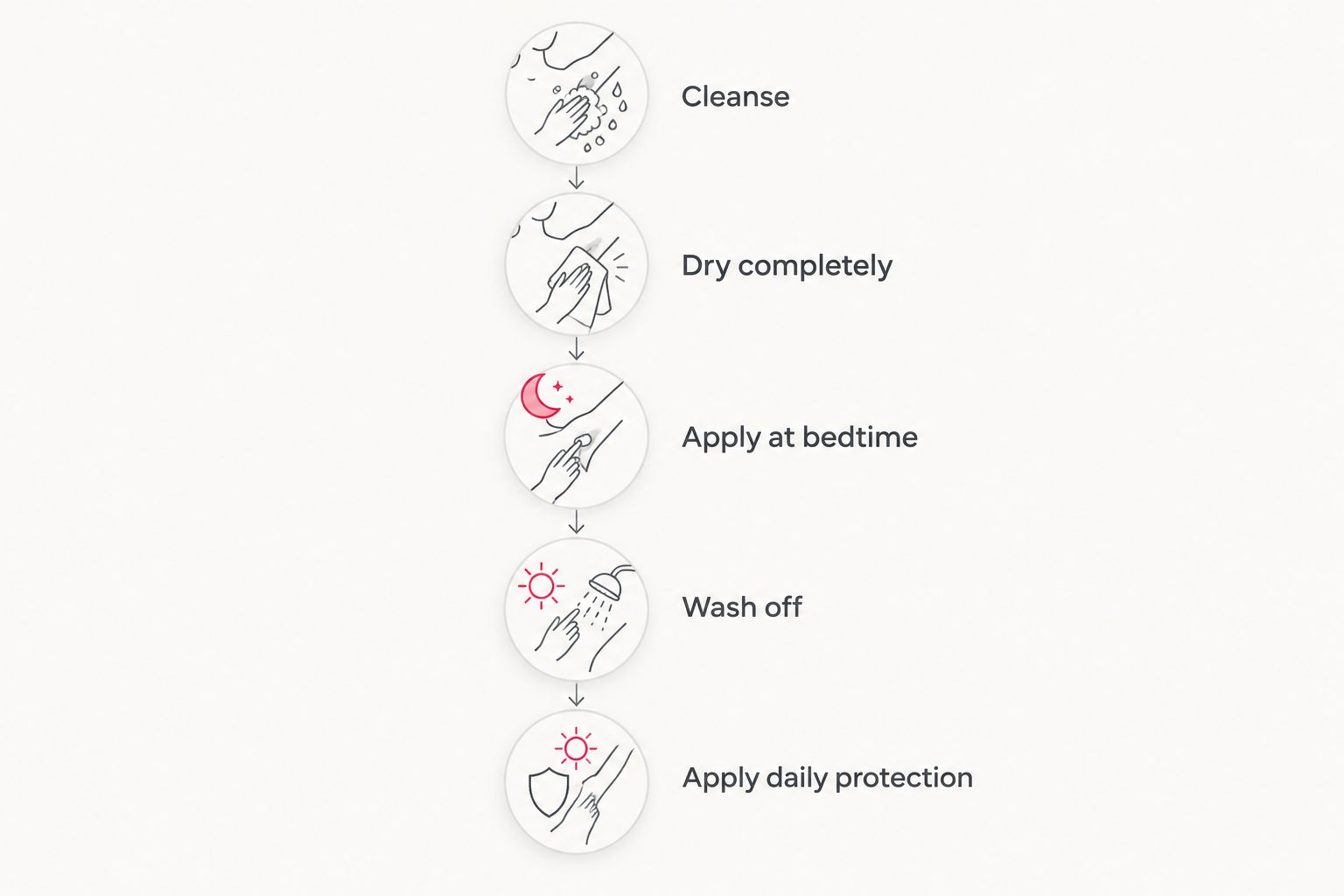
How to use the nighttime gel
Follow the current package label if it differs from a general routine description. The relevant sequence is:
- Cleanse. Remove sweat and product residue, then rinse thoroughly.
- Dry completely. Let your underarms become completely dry. Do not apply the gel immediately after bathing.
- Apply at bedtime. The product page describes a pea-sized amount per underarm. Use it on underarms only, avoiding broken, irritated, or recently shaved skin.
- Wash off. Wash your underarms thoroughly the next morning.
- Apply daily protection. Once your underarms are dry, apply your daytime deodorant or antiperspirant according to its directions.
These steps happen at different times. They are not instructions to layer a wash, gel, and stick onto your skin together.
The referenced gel label describes an initial period of consecutive nights until sweating is controlled, followed by maintenance twice weekly or as needed. That means 2 applications per week is a maintenance pattern after control—not a universal starting schedule or a guarantee that two applications will be enough.
Stop use if rash or irritation occurs. The label also directs people with kidney disease to ask a doctor before use; keep the gel away from the eyes and follow all current package warnings.
Why underarm sweat control varies
The same general routine does not produce an identical experience for everyone. Before changing products, check these factors:
- Product purpose. Deodorant addresses odor; antiperspirant addresses wetness. A good odor result can coexist with continued sweating.
- Skin dryness. The nighttime gel requires completely dry skin. Applying it immediately after bathing does not follow its directions.
- Application timing. A bedtime product and a daily stick have different schedules. Using both at the same moment is not the intended routine.
- Consistency. Follow the product’s initial and maintenance directions rather than switching schedules whenever you notice a damp patch.
- Skin tolerance. Rash or irritation is a reason to stop, not a signal to push through or increase the amount.
- The reason for sweating. Ordinary heat and exercise are different contexts from sudden changes, sleep-related sweating, or persistent disruptive symptoms that need assessment.
Change one relevant part of the routine rather than increasing the amount, frequency, and number of products together. A simple record of what you used, when you applied it, and how your skin felt can make that reassessment clearer.
Why am I still sweating after using deodorant?
Deodorant alone does not establish sweat reduction. Check the label for an antiperspirant function rather than relying on the scent, format, or the word protection on the front.
If your current product is already an antiperspirant, check its application area, amount, timing, and skin-dryness instructions. Correct those details before deciding you need a more intensive routine.
Can I stop sweaty armpits permanently at home?
An at-home antiperspirant routine manages underarm sweating; it does not permanently eliminate sweat glands. Do not interpret a good result as a cure or assume that more frequent use will make the effect permanent.
If sweating remains disruptive, a clinician can assess the cause and discuss appropriate treatment. Do not change a prescribed treatment based on a consumer sweat-care routine.
Does shaving stop armpit sweating?
Shaving is not an antiperspirant step and does not replace sweat reduction. If you remove underarm hair, keep the timing separate from products whose labels restrict use on recently shaved skin.
The nighttime gel has that restriction. Do not apply it to irritated skin or use stinging as evidence that it is working.
How to handle a sweaty commute, workout, or long day
Plan your sweat-care application around the product directions, not the moment you first notice damp clothing. A nighttime product belongs in the bedtime routine; a daytime stick belongs on clean, dry underarms according to its label.
After a workout, cleansing removes sweat and buildup. If you apply another product afterward, dry the skin first and respect any restrictions on immediate post-bath application. A quick shower does not cancel the nighttime gel’s separate instructions.
For clothing, distinguish reducing wetness from managing its appearance. An undershirt or a change of top can help you manage a damp garment, but clothing does not turn deodorant into an antiperspirant or replace treatment for persistent sweating.
Travel requires the same distinction. Keep the directions with your products so that a change in schedule does not become a reason to apply a bedtime product to damp skin before leaving for the airport.
When should you get help for sweaty armpits?
Speak with a clinician when sweating repeatedly interrupts work, clothing choices, sleep, or everyday activities despite an appropriate routine. You do not need to keep buying stronger products before asking for help.
Arrange an assessment for sweating that starts suddenly, occurs during sleep, or comes with other symptoms. Medication-related sweating also belongs in a medical conversation; do not stop or change medication on your own.
A hot commute or hard workout does not establish hyperhidrosis. A clinician can distinguish ordinary sweating from excessive sweating and other causes, then explain whether topical care or another approach fits your situation.
FAQ
What is the best way to stop sweaty armpits at home?
Use an underarm antiperspirant on clean, completely dry skin according to its label. Deodorant alone addresses odor, and persistent disruptive sweating needs assessment rather than repeated increases in product.
Should I put antiperspirant on at night or in the morning?
Follow the specific product’s directions rather than applying one schedule to every antiperspirant. Intensive Sweat Minimizing Gel is a bedtime product that must be washed off the next morning; daytime protection is a separate step.
How much Duradry stick should I use on each armpit?
The Clinical Sweat Control Stick product page specifies 2–4 swipes per underarm on clean, dry skin. Follow the current package directions and do not assume a thicker layer will provide better control.
Can I use nighttime sweat gel for night sweats?
The nighttime gel is not designed to treat sweating during sleep. Its bedtime application is intended to help reduce daytime underarm sweating; sleep-related sweating needs a clinician’s assessment.
Will body wash stop my armpits from sweating?
Body wash removes sweat and buildup but does not prevent new perspiration. Choose an antiperspirant when your main concern is underarm wetness.
What should I do if antiperspirant irritates my armpits?
Stop use if rash or irritation occurs, as the antiperspirant labels direct. Do not apply more or continue through worsening symptoms; persistent or severe reactions warrant professional advice.
One last thing
Before buying another product, check whether your current one actually says antiperspirant. That label check separates a wetness problem from an odor-care routine that is doing exactly what it was designed to do.
If you already use an antiperspirant, make your next step a review of its directions—especially skin dryness and timing—not an automatic increase in the amount.

