

Sweet-smelling sweat can reflect fragrance on your skin or clothing, changes in body odor, or foods and supplements such as fenugreek; the smell alone does not identify the cause. A fruity smell coming from your breath rather than your skin can signal ketones, including diabetic ketoacidosis, especially with thirst, frequent urination, nausea, or vomiting. If fruity breath comes with vomiting, abdominal pain, deep or difficult breathing, or confusion, seek emergency care instead of trying to cover the odor.
- Wondering why does my sweat smell sweet? Check whether the smell comes from skin, clothing, fragrance, or breath.
- Fruity breath with vomiting, abdominal pain, breathing changes, or confusion needs emergency assessment.
- Fenugreek can produce a maple-like body odor; a smell alone cannot diagnose diabetes.
- Duradry sweat care is best for routine wetness and odor management, not unexplained metabolic symptoms.
Why this matters
A sweet smell after a workout and fruity breath while you feel ill require different next steps. The useful distinction is not whether the smell seems pleasant or unpleasant—it is where it comes from, when it started, and what else changed.
Ordinary body odor develops when skin bacteria break down sweat and other material on the skin. For familiar underarm odor without new symptoms, understanding how to get rid of underarm odor helps you separate cleansing from odor protection. An unexplained change that persists deserves medical attention rather than a stronger fragrance.
Why does my sweat smell sweet?
What you describe as sweet sweat might be a scent on your skin, an odor retained in clothing, or a change in your breath that you notice while sweating. Sweetness is a description, not a diagnosis. You cannot reliably distinguish a product fragrance, a dietary effect, and a medical problem by smell alone.
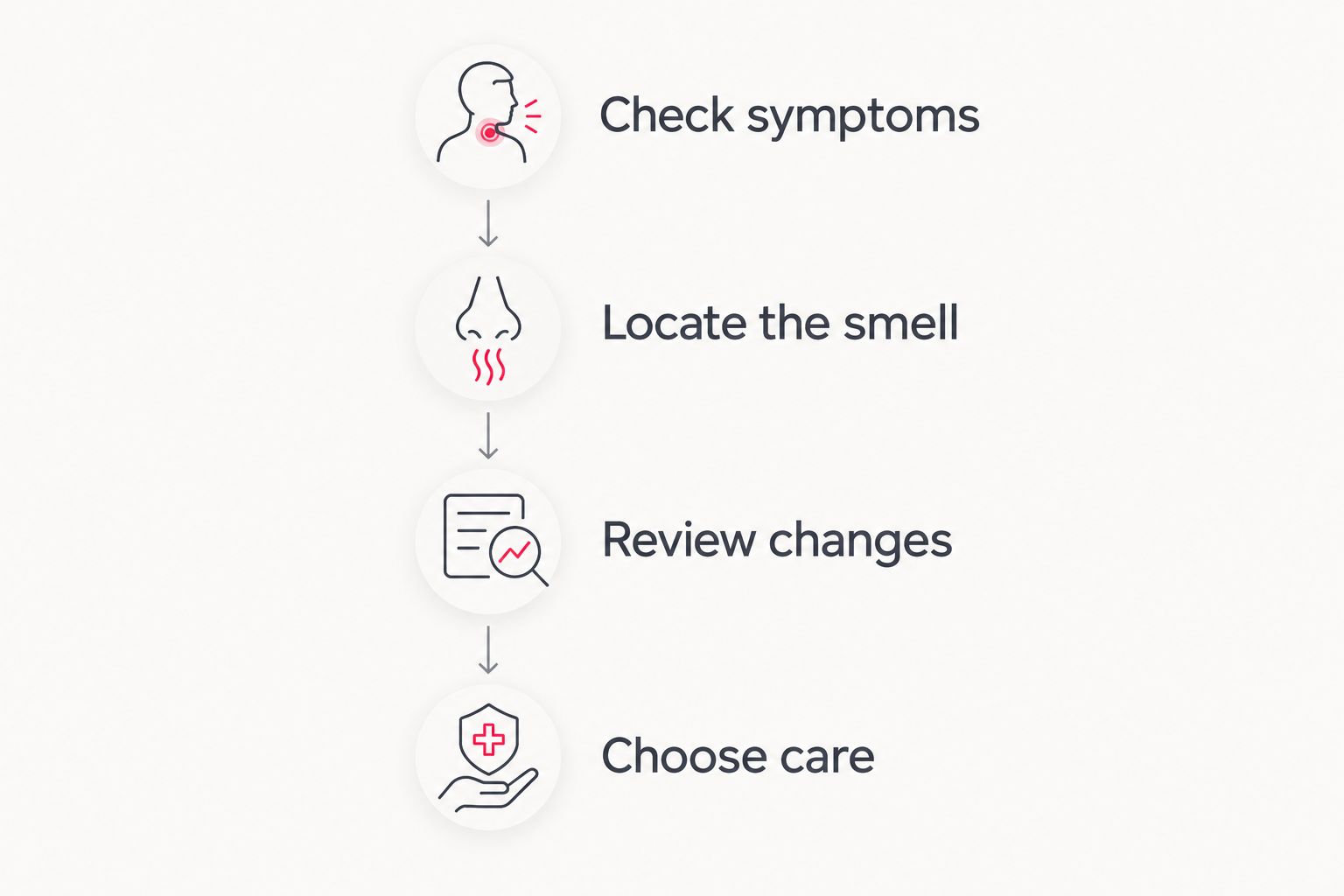
Start with these checks, unless you have urgent symptoms:
- Check symptoms. Notice whether you also feel unusually thirsty, urinate more often, feel nauseated, or have unexplained fatigue. Vomiting, abdominal pain, breathing changes, or confusion alongside fruity breath require emergency assessment.
- Locate the smell. Is it strongest at your underarms, on a shirt, or when you breathe out? You do not need to identify the source perfectly before asking for medical advice.
- Review changes. Check recent fragrance, laundry, diet, supplement, and medication changes. Write down when the smell began and whether anything else started around the same time.
- Choose care. Address an obvious surface fragrance or clothing odor with ordinary washing. Get medical advice for a persistent unexplained change, and follow your diabetes care plan if ketones are a concern.
Fragrance on skin or clothing
Deodorant, body lotion, perfume, and laundry products can leave sweet notes behind. When you notice the scent during a warm commute or after exercise, it does not establish that your sweat itself has changed.
Check whether the smell is also present on unworn clothing or freshly applied products. If it disappears after washing and changing into clean clothes, that supports a surface source, but it does not rule out a medical issue when other symptoms are present.
Foods and supplements
Fenugreek is a recognized example of a food or supplement that can give sweat and urine a maple-like smell. That association is useful when the odor begins after you start taking it, but it does not prove that fenugreek explains every new sweet smell.
Review supplement labels rather than relying only on the name on the front. Tell a clinician about anything you recently started, and do not stop prescribed medication based on body odor alone.
Ketones and fruity breath
Your body produces ketones when it uses fat for energy. Fasting and very-low-carbohydrate eating can increase ketone production, and acetone can give breath a fruity or solvent-like smell. Nutritional ketosis and diabetic ketoacidosis are not the same condition.
Diabetic ketoacidosis is a medical emergency involving a dangerous buildup of ketones and acid in the blood. The Centers for Disease Control and Prevention identifies fruity-smelling breath, excessive thirst, frequent urination, nausea, vomiting, abdominal pain, and deep breathing among its warning signs. A body-odor product cannot assess or treat this condition.
Why the smell varies
Several factors change what you notice and how you should respond:
- The source: Breath, skin, and fabric are different sources of odor. A fruity breath change deserves a different assessment from a sweet-smelling laundry product.
- Recent exposure: A new fragrance, supplement, or food can provide a useful clue. Timing helps, but it does not establish a diagnosis.
- Dietary changes: Fasting or carbohydrate restriction can affect ketone production. Feeling unwell is not something to dismiss as an expected diet effect.
- Associated symptoms: Thirst, frequent urination, nausea, vomiting, and breathing changes matter more than the exact word you use for the smell.
- Persistence: A scent limited to a particular shirt is different from an unexplained change that continues after washing and changing clothes.
Bring those observations to a medical appointment if needed. A clear description of the change is more useful than trying to decide whether it smells like fruit, syrup, or candy.
Does sweet-smelling sweat mean I have diabetes?
Sweet-smelling sweat alone does not diagnose diabetes. Diabetes is assessed with appropriate medical testing, not by smelling skin, clothing, or breath. A familiar sweet fragrance on your underarms is not equivalent to fruity breath accompanied by illness.
Arrange medical advice if a new odor accompanies increased thirst, frequent urination, unexplained weight loss, or persistent fatigue. If you have not been diagnosed with diabetes, those symptoms still need assessment; diabetic ketoacidosis can be the first sign of diabetes.
If you already have diabetes, follow your prescribed glucose and ketone testing plan when you are ill or have concerning symptoms. Do not change insulin or other prescribed treatment based on this article. Use your care team's instructions, and seek emergency care for the warning signs described above.
Can sweet-smelling sweat happen without diabetes?
Sweet-smelling sweat can happen without diabetes, including when fragrance or fenugreek changes the odor you notice. Fruity breath also occurs with ketone production outside diabetic ketoacidosis, but smell cannot tell you whether a situation is harmless.
Context matters. A new scent after changing body lotion, with no other symptoms, points you toward checking that product first. A persistent unexplained odor, especially when you feel unwell, calls for medical advice rather than repeated changes to deodorant.
Avoid using online odor descriptions as a self-diagnosis checklist. Different people describe the same smell differently, and several causes can overlap.
What should I do about sweet-smelling sweat?
Treat the cause you can identify, not just the smell. Once urgent symptoms are excluded, a simple check of your skin, clothing, and recent routine helps you choose a sensible next step.
Check skin and clothing separately
Wash with your usual cleanser, rinse thoroughly, and put on clean clothing. Notice whether the scent remains on your skin, appears only when you wear a particular garment, or seems to come from your breath.
Do not repeatedly scrub your skin to remove an unexplained smell. Aggressive cleansing can irritate skin without resolving a dietary, medication-related, or medical cause.
Keep a brief record
Note the time the odor appears, its location, and any associated symptoms. Include recent supplements, diet changes, and new personal-care products. Bring your medication and supplement list if you seek medical advice.
You do not need to keep checking yourself throughout the day. The goal is a useful description, not constant monitoring or a perfect label for the scent.
Match everyday care to the actual concern
Cleansing removes sweat, residue, and buildup. Deodorant addresses odor, while antiperspirant reduces perspiration in the treated area. These functions are related, but they are not interchangeable.
For ordinary daily underarm wetness and odor, Duradry's Clinical Sweat Control Stick combines antiperspirant and deodorant functions. Best for: everyday underarm sweat and odor protection. Its limitation is equally important: it does not identify or treat the reason for a new sweet or fruity smell.
Apply the stick to clean, dry underarms according to the current package directions; the product guidance specifies 2–4 swipes per underarm. Keep application to the underarms, and stop use if rash or irritation occurs. Ask a doctor before use if you have kidney disease, as the antiperspirant label directs.
Duradry sweat care belongs in an ordinary personal-care routine, not in place of an assessment for unexplained symptoms. You do not need to add an intensive sweat-control step simply because the odor smells different.
When should I get medical help?
Seek emergency care for fruity breath with vomiting, abdominal pain, deep or difficult breathing, confusion, or marked illness. Do not wait for a shower, food, or deodorant to change the smell. If you have diabetes, follow your emergency care instructions as well.
Contact a clinician promptly for an unexplained sweet or fruity odor with increased thirst, frequent urination, unexplained weight loss, or ongoing fatigue. Persistent odor changes without those symptoms also deserve assessment when ordinary washing and removal of an obvious fragrance source do not explain them.
Sudden changes in sweating or sweating during sleep are separate reasons to discuss your symptoms with a clinician. An antiperspirant routine does not address every cause of sweating, and bedtime application is not treatment for night sweats.
FAQ
Why does my sweat smell sweet after exercise?
A sweet smell after exercise can come from fragrance, clothing, or a change in body odor; exercise alone does not identify the cause. Check whether the smell remains after washing and changing clothes, and seek medical advice if it persists or comes with other symptoms.
Does eating sugar make my sweat smell sweet?
Eating sugar is not a reliable explanation for sweet-smelling sweat. A sweet odor does not tell you your blood glucose level or establish that you have diabetes.
Can a low-carb diet make me smell fruity?
A low-carbohydrate diet can increase ketone production and cause fruity-smelling breath. Do not assume diet explains the change if you also have vomiting, abdominal pain, breathing changes, or confusion; those symptoms need emergency assessment.
Why do I smell like maple syrup after taking a supplement?
Fenugreek can cause a maple-like smell in sweat and urine. Review your supplement ingredients and discuss an unexplained or persistent change with a clinician rather than assuming the supplement is responsible.
Will deodorant get rid of sweet-smelling sweat?
Deodorant can help manage ordinary body odor, but it does not treat an underlying cause of a new sweet smell. It also does not diagnose or treat ketone-related fruity breath.
Should I worry if my breath smells fruity but my sweat does not?
Fruity breath deserves attention, particularly if you have diabetes or symptoms such as thirst, frequent urination, nausea, or fatigue. Fruity breath with vomiting, abdominal pain, deep breathing, or confusion requires emergency care.
One last thing
Changing the smell is not the same as resolving its cause. Fragrance can make an odor less noticeable without explaining why it started, while a stronger antiperspirant targets wetness rather than an unexplained breath change.
Your next step is to locate the source and check for symptoms. Keep routine care simple when the issue is ordinary underarm odor; get medical advice when the change is persistent, unexplained, or accompanied by illness.

