

Best overall: a fragrance-free antiperspirant stick. Best for persistent underarm wetness: a fragrance-free clinical-strength antiperspirant. Best for odor without sweat reduction: a fragrance-free deodorant. This 2026 guide ranks formula types so you can choose the best unscented antiperspirant for your actual concern; Duradry offers antiperspirants and deodorants for excessive sweating and body odor.
- The best unscented antiperspirant for everyday underarm wetness is a fragrance-free antiperspirant stick.
- Choose a fragrance-free clinical-strength antiperspirant when persistent underarm sweating is your main concern.
- Fragrance-free deodorant targets odor, not sweat reduction; unscented formulas can still contain masking fragrance.
- Duradry sweat care suits readers seeking antiperspirants and deodorants for excessive sweating and body odor.
Why this matters
A product can smell like nothing and still contain fragrance ingredients. Another can control odor without reducing wetness at all. Those differences matter more than whether the packaging says clean, fresh, or sensitive.
For your 2026 sweat-care routine, start with the problem you want to solve: wet underarms, noticeable odor, fragrance avoidance, or a combination. Then read the actual label. A deodorant is not a weaker version of an antiperspirant; it serves a different purpose.
Duradry makes antiperspirants and deodorants without talc, silicone, BHT, PPGs, PEGs, or polyethylene. Those ingredient exclusions are separate from fragrance status: when avoiding scent is your priority, check the exact formula rather than assuming a brand-wide promise applies to every product.
What makes the best unscented antiperspirant
These criteria put sweat protection and fragrance selection ahead of packaging claims:
- Sweat reduction: An antiperspirant contains an active ingredient intended to reduce perspiration. A deodorant alone does not provide that function.
- Fragrance labeling: Prefer a fragrance-free claim when avoiding added fragrance is your goal. Unscented describes the absence of a noticeable scent, not necessarily the absence of fragrance ingredients.
- Skin compatibility: Check the full ingredient list, not just the fragrance claim. Fragrance-free formulas can still contain ingredients that irritate your skin.
- Application fit: Choose a stick, roll-on, or other format you can apply as directed without making your routine harder.
- Approved application area: Follow the labeled body areas. An underarm product is not automatically appropriate for hands, feet, skin folds, or intimate areas.
- A clear purpose: Buy for wetness, odor, or both. More products do not automatically create a better routine.
The default recommendation is a fragrance-free antiperspirant stick—not an aluminum-free deodorant—when underarm wetness is the problem. If you already know fragrance bothers your skin, the complete ingredient list deserves as much attention as the active ingredient.
Unscented options at a glance in 2026
This ranking compares formula types, not interchangeable products. The best choice changes with your main concern, and every recommendation depends on the exact product label.
| Rank and option | Best for | Standout feature | Key limitation |
|---|---|---|---|
| 1. Fragrance-free antiperspirant stick | Everyday underarm wetness | Sweat reduction in a solid format | Fragrance-free does not guarantee irritation-free |
| 2. Fragrance-free clinical-strength antiperspirant | Persistent underarm sweating | An antiperspirant option to compare when your current routine falls short | Clinical-strength wording does not establish a universal potency ranking |
| 3. Fragrance-free deodorant | Odor without sweat reduction | Odor care without choosing an antiperspirant | Does not reduce perspiration unless also labeled antiperspirant |
| 4. Fragrance-free antiperspirant roll-on | Readers who prefer liquid application | A liquid formula applied with a roller | The application needs time to dry |
| 5. Unscented antiperspirant with masking fragrance | Scent avoidance rather than fragrance avoidance | No intended noticeable perfume scent | Can contain fragrance ingredients despite smelling neutral |
1. Fragrance-free antiperspirant stick: best for daily wetness
A fragrance-free antiperspirant stick is the most direct starting point when you want drier underarms without added fragrance. The antiperspirant active addresses perspiration, while the solid format lets you apply the product directly to the labeled area.
Choose the exact formula, not just a familiar brand name. A product family can include different scents and ingredient lists, so inspect the version you are considering.
Fragrance-free antiperspirant stick pros:
- Addresses sweat rather than covering odor alone.
- Offers a solid application format without a liquid roller.
- Lets you select for fragrance avoidance and sweat reduction together.
- Fits a routine that does not need a separate scented deodorant.
Fragrance-free antiperspirant stick cons:
- Other ingredients can still irritate sensitive skin.
- A solid formula does not guarantee an invisible finish on clothing.
Best for: Everyday underarm wetness when you want sweat protection without added fragrance.
Read the directions before deciding when to apply it. Keep the application area dry, avoid irritated skin, and do not assume more product produces better protection.
Verdict: Buy a fragrance-free antiperspirant stick as your default when wet underarms are the main issue.
2. Fragrance-free clinical-strength antiperspirant: best for persistent sweat
A fragrance-free clinical-strength antiperspirant belongs on your shortlist when ordinary underarm care has not addressed your wetness. It still works as an antiperspirant; the useful comparison is the active ingredient, the directions, and your skin's response—not the intensity of the packaging language.
Clinical-strength is not a universal measurement that makes every labeled product stronger than every alternative. Read the Drug Facts panel and compare the exact formulas.
Fragrance-free clinical-strength antiperspirant pros:
- Keeps sweat reduction at the center of the routine.
- Offers a fragrance-free route for readers considering clinical-strength care.
- Provides labeled instructions you can use to assess application and warnings.
Fragrance-free clinical-strength antiperspirant cons:
- Can irritate skin, particularly if used contrary to directions.
- The clinical-strength label alone does not prove better results for you.
Best for: Persistent underarm wetness that remains troublesome with your current antiperspirant routine.
Duradry offers clinical-strength antiperspirants as part of its sweat-care range. Select any formula by its own fragrance information and directions rather than treating the brand name as proof that it is unscented.
If sweating disrupts daily activities, discuss it with a clinician instead of endlessly changing products. Sudden changes in sweating, unexplained night sweats, or sweating accompanied by other symptoms deserve medical attention.
Verdict: Buy a fragrance-free clinical-strength formula when persistent wetness is the priority and its label fits your needs.
3. Fragrance-free deodorant: best for odor without sweat reduction
A fragrance-free deodorant is the right category when you want to manage body odor but do not want an antiperspirant. Deodorants address odor through their ingredients; unless the product also carries an antiperspirant claim, they do not reduce perspiration.
That distinction is practical, not a judgment about ingredients. You can prefer deodorant and still sweat normally. You can also need an antiperspirant without wanting perfume.
Fragrance-free deodorant pros:
- Targets odor without requiring an antiperspirant active.
- Avoids relying on added perfume when the formula is genuinely fragrance-free.
- Gives odor-only shoppers a category that matches their goal.
Fragrance-free deodorant cons:
- Does not solve wet underarms unless also labeled antiperspirant.
- Fragrance-free deodorants can still contain irritating ingredients.
Best for: Body odor when reducing sweat is not your goal.
Do not use aluminum-free wording as a shortcut for fragrance-free. Those claims describe different things. Likewise, a botanical fragrance or essential oil remains relevant if you are avoiding fragrance ingredients.
For use beyond underarms, choose a formula explicitly labeled for the intended area. Whole-body language is not permission to apply a product anywhere.
Verdict: Buy fragrance-free deodorant for odor-only care; skip it as a replacement for sweat reduction.
4. Fragrance-free antiperspirant roll-on: best for liquid application
A fragrance-free antiperspirant roll-on offers sweat reduction in a liquid format. The roller transfers the formula to your skin, making this a format choice rather than a separate level of protection.
Pick a roll-on because you prefer the application, not because liquid automatically means stronger. The active ingredient and labeled use matter more than the applicator.
Fragrance-free antiperspirant roll-on pros:
- Provides antiperspirant care in a liquid format.
- Offers an alternative when you dislike solid sticks.
- Lets you choose a fragrance-free formula without abandoning sweat reduction.
Fragrance-free antiperspirant roll-on cons:
- Needs drying time before dressing.
- A liquid format does not establish greater effectiveness or gentleness.
Best for: Readers who want underarm sweat protection and prefer a roller to a solid stick.
Allow the product to dry according to its directions before putting clothing over the application area. If you dislike the feel of a wet application, choose another format rather than repeatedly adding layers.
Verdict: Buy a fragrance-free roll-on if liquid application suits your routine; skip it if drying time is the obstacle.
5. Unscented antiperspirant: best for avoiding noticeable perfume
An unscented antiperspirant is an option when your goal is to avoid a noticeable product smell. Some unscented formulas contain ingredients used to mask the scent of the base formula, so unscented does not always mean fragrance-free.
This category belongs last because it answers a narrower question: does the product smell neutral? It does not, by itself, answer whether the formula excludes fragrance ingredients.
Unscented antiperspirant pros:
- Offers sweat reduction without an intended noticeable perfume scent.
- Suits readers whose concern is competing fragrances rather than fragrance ingredients.
- Gives you another label category to examine when fragrance-free options do not suit your preferences.
Unscented antiperspirant cons:
- Can contain masking fragrance.
- The unscented claim alone is insufficient for choosing around a fragrance allergy.
Best for: Avoiding a noticeable perfume scent when fragrance exclusion is not required.
If a dermatologist has identified a fragrance allergy, follow the specific avoidance guidance you received. A neutral smell is not a reliable ingredient test, and a sensitive-skin claim does not replace reading the label.
Verdict: Hold until you check the ingredients; skip masking-fragrance formulas when fragrance avoidance is your goal.
Read the label before changing your routine
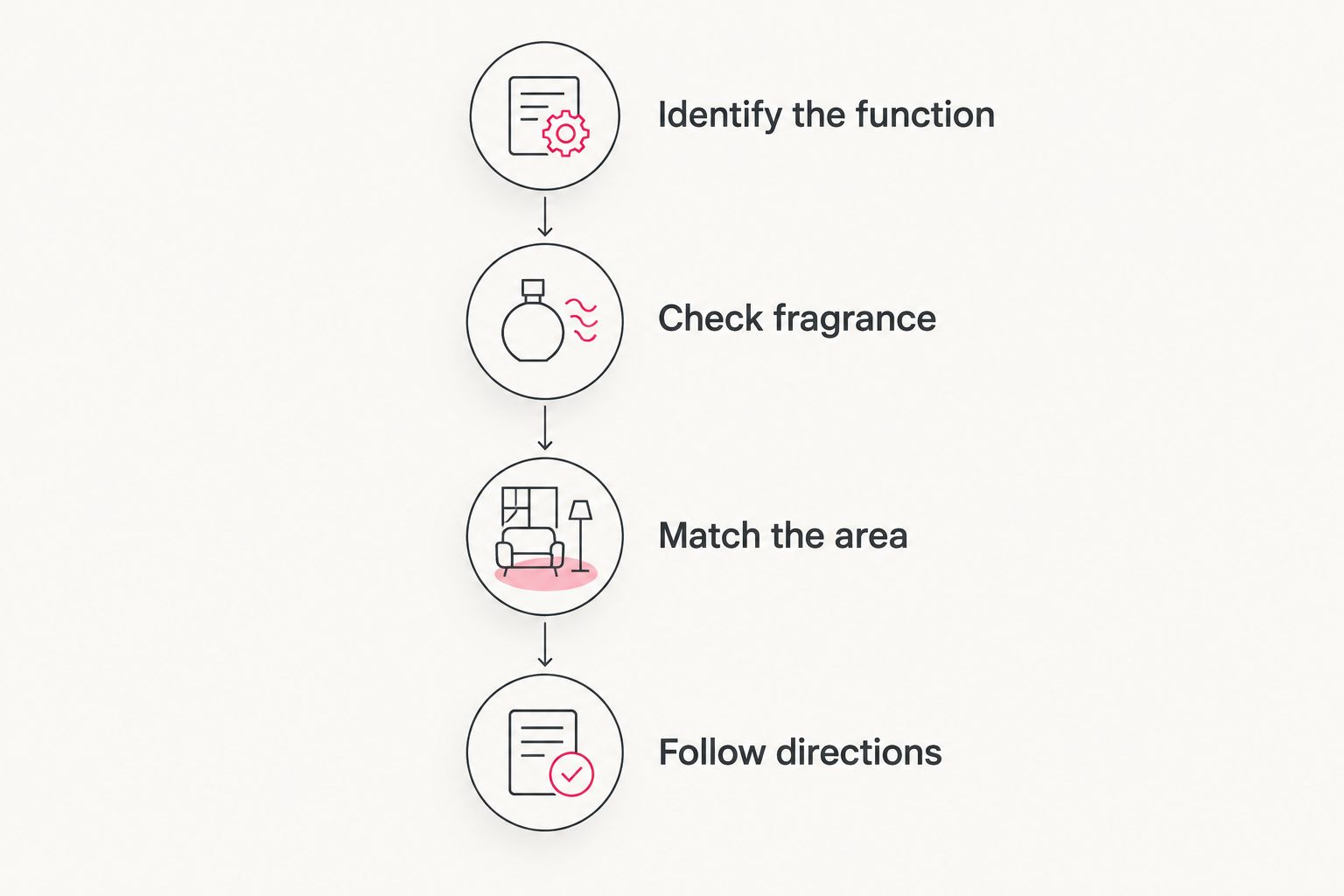
Use this sequence to separate a useful formula from an appealing claim:
- Identify the function: Look for antiperspirant if you need sweat reduction, deodorant if you need odor care, or both if both concerns matter.
- Check fragrance: Compare fragrance-free and unscented wording with the ingredient list. Do not decide by smell alone.
- Match the area: Confirm that the directions cover the body area you want to treat.
- Follow directions: Use the labeled application method and warnings rather than copying another product's routine.
If you prefer a gel texture, examine the Sweat Minimizing Gel for its current ingredients and directions. A gel format alone does not establish fragrance status, suitability for every body area, or a particular level of protection.
Change the routine deliberately. If a product causes irritation, stop using it and seek advice when symptoms persist rather than covering the reaction with another product.
How these options were ranked
The 2026 ranking prioritizes matching the formula to the concern: everyday wetness first, persistent sweating second, odor-only care third, application preference fourth, and neutral scent without guaranteed fragrance exclusion last. It is a category buying guide, not a claim that every stick outperforms every roll-on.
Duradry antiperspirants and deodorants serve readers dealing with excessive sweating and body odor. The same selection rules apply to its products: check the individual formula, choose the intended function, and follow the labeled directions.
Which unscented option should you choose?
Choose a fragrance-free antiperspirant stick if you are undecided and underarm wetness is your main concern. Choose fragrance-free deodorant when odor matters but sweat reduction does not, and compare clinical-strength formulas when your current antiperspirant routine is not meeting your needs.
For 2026, the most useful upgrade is a better match—not automatically a stronger claim or a larger collection of products. Your routine should address the problem you actually experience without adding fragrance you do not want.
FAQ
What's the best unscented antiperspirant for everyday use?
A fragrance-free antiperspirant stick is the default choice for everyday underarm wetness without added fragrance. Check the exact formula and directions rather than choosing by the unscented claim alone.
Is unscented the same as fragrance-free?
No, unscented and fragrance-free are not the same claim. An unscented product can contain masking fragrance even when it has no noticeable perfume scent.
Will fragrance-free deodorant stop me from sweating?
Fragrance-free deodorant does not reduce perspiration unless it is also labeled as an antiperspirant. Choose an antiperspirant when wetness, rather than odor alone, is your concern.
Is a clinical-strength antiperspirant always better?
No, the clinical-strength label alone does not establish that an antiperspirant will work better for you. Compare its active ingredient, directions, fragrance information, and your skin's response.
Are Duradry antiperspirants and deodorants all unscented?
Choose each Duradry antiperspirant or deodorant by its individual fragrance information. Do not treat a brand name or ingredient-exclusion statement as proof that every formula is unscented or fragrance-free.
Can I use an underarm antiperspirant on other body areas?
Use an underarm antiperspirant only on areas permitted by its label. For sweating elsewhere, select a product with directions covering that area or ask a clinician for guidance.
Can fragrance-free antiperspirant still irritate my skin?
Yes, fragrance-free antiperspirant can still irritate your skin. Other ingredients and application conditions matter, so follow the warnings and stop using a product that causes irritation.
When should I ask a doctor about excessive sweating?
Ask a clinician when sweating disrupts daily activities or changes unexpectedly. Unexplained night sweats or sweating with other symptoms also deserve medical attention rather than another product switch.
One last thing
The product with the least noticeable smell is not necessarily the product with the fewest fragrance ingredients. Read fragrance claims as ingredient-selection clues, not as a smell test. That single distinction makes your 2026 shopping decision more useful than choosing whichever package promises the freshest result.

