

To stop sweating so much, use an antiperspirant—not deodorant alone—on clean, completely dry skin, following the directions for the body area you want to treat. Address heat and any triggers you notice, but get medical advice if sweating starts suddenly, happens during sleep, or keeps disrupting your day despite a consistent routine. The goal is to reduce troublesome wetness, not eliminate the normal sweating your body uses to cool itself.
- For how to stop sweating so much, choose antiperspirant for wetness; deodorant alone addresses odor.
- Duradry sweat care separates daily underarm protection, nighttime sweat control, and targeted body antiperspirant use.
- Apply antiperspirant to completely dry skin and follow the specific product’s directions.
- Sudden sweating, night sweats, or persistent disruption deserve medical assessment—not simply a stronger routine.
How to stop sweating so much
Start by checking whether your current product actually reduces sweat. A deodorant can help you smell fresh while leaving the amount of perspiration unchanged. Look for an antiperspirant designation and directions that match the area you want to treat.
For everyday underarm wetness and odor, the Clinical Sweat Control Stick is a daily antiperspirant and deodorant option. You do not need to begin with an intensive routine simply because a warm commute leaves your shirt damp.
Use this sequence to decide your next move:
- Identify the area. Underarms, palms, feet, and larger body areas need different application instructions. An underarm product is not automatically appropriate elsewhere.
- Separate wetness from odor. Choose antiperspirant for sweat reduction, deodorant for odor protection, and a cleanser for washing away sweat and buildup.
- Check timing and skin dryness. Follow the package rather than applying extra product to damp skin whenever you feel sweaty.
- Use the directed schedule consistently. Do not increase the amount or layer several antiperspirants to force a faster result.
- Reassess the problem. If correct use does not provide enough control, discuss other options with a clinician.
Why this matters
A routine can fall short because the product has the wrong job, not because your sweating is unusually severe. Washing removes existing sweat; deodorant addresses odor; antiperspirant reduces perspiration in the treated area. Those benefits are related, but they are not interchangeable.
You also do not need to treat every sweaty moment. Perspiring during exercise or hot weather is expected. Sweating that repeatedly interferes with holding objects, wearing work clothes, or getting through ordinary activities deserves a more focused plan.
Choose the approach that matches your main concern
Daily underarm wetness and odor
Best for: everyday underarm protection in a familiar stick format. An antiperspirant-and-deodorant stick combines sweat reduction with odor care. That makes it a practical starting point when both dampness and odor matter during work, commuting, or social plans.
The Clinical Sweat Control Stick directions specify 2–4 swipes per underarm on clean, dry skin. Use the current package directions if they differ from an older label or online description.
The limitation is its intended area: underarms. It is not a treatment for sweating across your back, hands, or feet, and more swipes do not establish better protection. Fragrance preference matters too, but scent does not tell you how effectively a product reduces perspiration.
Heavier underarm sweating
Best for: adding a targeted nighttime step when daily underarm protection is not enough. The Intensive Sweat Minimizing Gel is a nighttime underarm antiperspirant, not a replacement for cleansing or daytime odor care.
Its advantage is a separate application schedule that supports sweat control during the day. Its tradeoff is the extra planning: completely dry skin at bedtime, restrictions around bathing and shaving, and washing it off the following morning.
Duradry sweat care is best for people who want to match daily underarm protection or added nighttime control to their needs. The gel is not intended to treat sweating while you sleep, even though you apply it at bedtime.
Sweat on permitted body areas
Best for: targeted body sweat control in a portable format. Sweat Control Body Wipes are antiperspirant wipes, not cleansing wipes. The product information identifies areas including hands, feet, chest, back, thighs, and underarms, subject to the current directions.
The format offers a convenient way to apply antiperspirant to appropriate areas beyond the underarms. Each pack contains 30 unscented wipes. That describes the pack, not a guaranteed number of protected days or a universal application schedule.
The limitation is that portability does not mean instant sweat control on already sweaty skin. Start with clean, dry skin and follow the pack’s timing and wash-off instructions. Do not use them on the face or mucous membranes.
Odor without troublesome wetness
Best for: odor protection when sweat reduction is not your main goal. A deodorant can be the appropriate choice if you are comfortable with your level of perspiration and mainly want help controlling smell.
Its benefit is a focused odor-care step without adding an unnecessary intensive sweat-control routine. Its limitation is equally important: deodorant alone does not establish sweat reduction. If your concern is wet clothing rather than odor, changing fragrances will not address the central problem.
How do you apply nighttime antiperspirant correctly?
Nighttime use works as a routine only when you follow the particular product’s instructions. Do not transfer a gel’s schedule to a stick, a prescription treatment, or body wipes simply because they all reduce sweat.
For the Intensive Sweat Minimizing Gel, the sequence is:
- Cleanse. Remove sweat and product residue, then rinse thoroughly.
- Dry completely. Do not apply immediately after bathing. The underarms must be completely dry.
- Apply at bedtime. The product page describes a pea-sized amount per underarm; follow the current label’s amount and initial schedule.
- Wash off. Wash the underarms thoroughly the next morning.
- Add daytime protection. Dry the underarms before applying the daily stick.
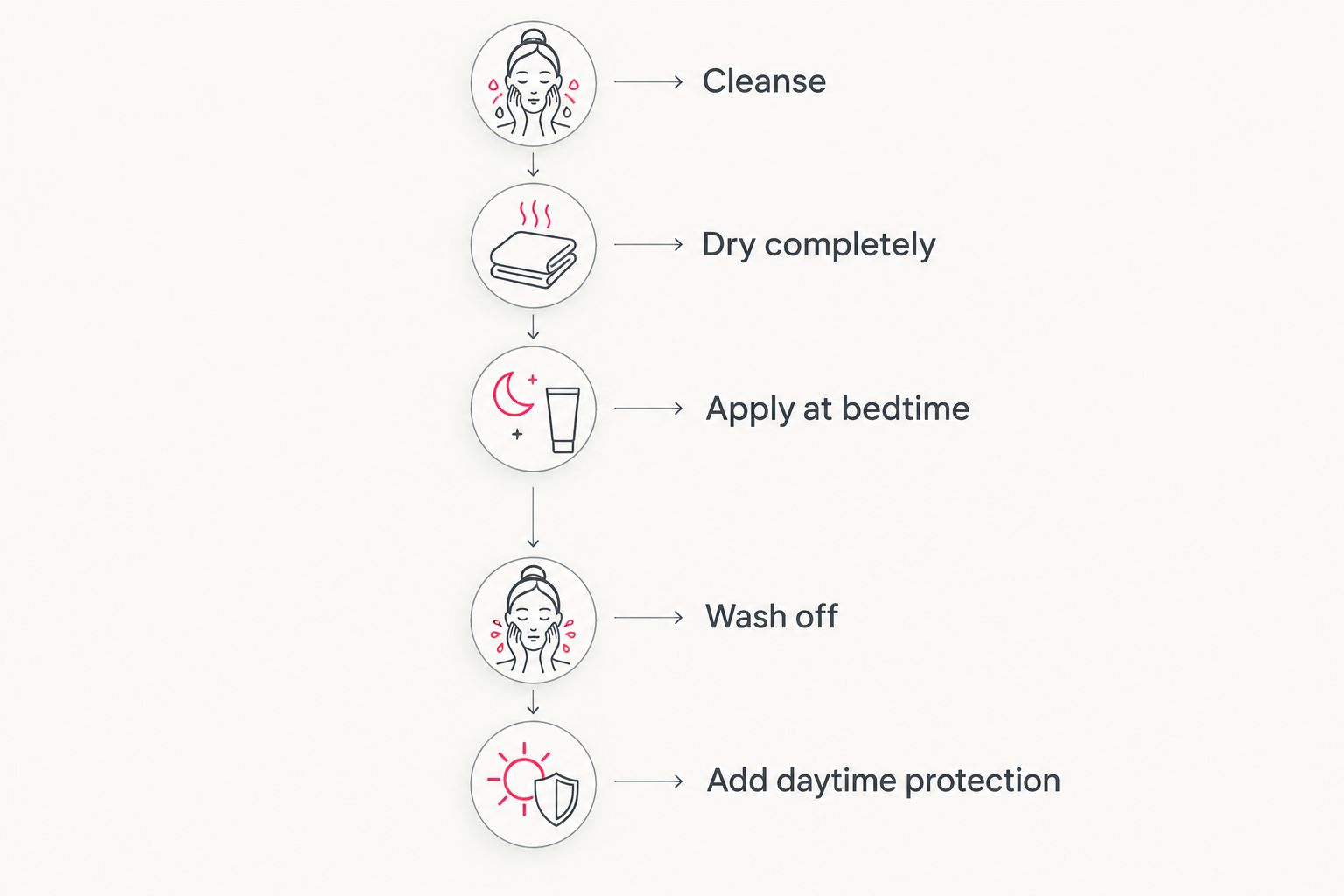
Once control is established, the referenced gel label describes maintenance at 2 applications per week, or as needed according to the current label. That is a maintenance pattern—not a promise that two initial applications will stop sweating.
Do not apply the gel to broken, irritated, or recently shaved skin, or near the eyes. Stop if rash or irritation occurs. Ask a doctor before antiperspirant use if you have kidney disease, as the referenced labels direct.
Why sweating—and your response to sweat care—varies
How much you sweat and how well a routine fits depend on more than the strength printed on a package. Review these factors before buying another product:
- Heat and activity. A hot walk or workout creates a different demand from sitting in a cool room. Sweat care should not aim to prevent your body from cooling itself.
- Personal triggers. Stress, caffeine, alcohol, or spicy foods can trigger sweating in some people. Look for your own pattern rather than eliminating everything at once.
- Body area. Palms, soles, underarms, and broader body sweating require different product choices or clinical approaches.
- Product purpose. Odor protection and cleansing do not substitute for an antiperspirant when wetness is the concern.
- Application conditions. Damp skin, the wrong timing, or inconsistent use can make a routine harder to assess. More product is not the default correction.
- Health changes and medicines. New or generalized sweating needs a different discussion from a longstanding pattern in a specific area. Do not stop prescribed medication on your own.
What can you change during an ordinary day?
Start with the setting where sweating gets in your way. For a warm commute, use ventilation or a cooler route where practical and allow time to cool down before getting dressed for an event. For exercise, plan for washing and changing afterward rather than expecting a product to keep your whole body dry.
Choose clothing that feels comfortable in the conditions, and keep a change of socks or a spare top when that makes your day easier. These steps manage comfort and dampness; they do not switch off sweat glands or replace treatment for persistent excessive sweating.
If you notice a repeatable trigger, change one thing at a time. For example, compare similar mornings with and without your usual caffeinated drink. A useful observation is whether that change helps you—not whether a long list of supposed triggers exists online.
Why am I still sweating after using antiperspirant?
Antiperspirant reduces sweating in the treated area; it does not guarantee completely dry skin. Heat, activity, application conditions, and the underlying sweating pattern all affect what you notice.
Check the basics before adding another step: confirm that the product is an antiperspirant, that the area is permitted, and that you followed the current directions on dry skin. If irritation prevents consistent use, stop and seek advice rather than pushing through it.
If you still experience disruptive sweating after correct use, a clinician can assess whether you need a different topical treatment or another approach. The next step is not automatically a higher concentration or more frequent application.
When does excessive sweating need medical advice?
Arrange an assessment if sweating repeatedly disrupts daily activities, starts suddenly, becomes widespread without an obvious explanation, or occurs during sleep. Mention associated symptoms and any recent medication changes. A clinician can distinguish a primary sweating condition from sweating linked to another cause.
Get urgent medical help for sudden heavy sweating with chest pain, difficulty breathing, fainting, or other signs of a medical emergency. Do not treat that combination as a product-selection problem.
Hyperhidrosis means sweating beyond what is needed for temperature regulation. A hot workout alone does not establish that diagnosis, and you do not need a diagnosis to use ordinary sweat care. The reason to seek an assessment is the pattern, impact, or change in symptoms.
Depending on the cause and body area, clinical options include prescription topical treatments, iontophoresis, botulinum toxin injections, and oral medicines. Each has different suitability, side effects, and practical demands. Prescription status does not automatically make a treatment the best choice for every person.
Can you stop sweating completely?
You should not aim to stop sweating completely across your body. Sweating helps regulate temperature; treatment focuses on reducing excessive sweating or troublesome wetness in appropriate areas.
A realistic result is a routine that makes your daily activities more comfortable without causing skin problems. If a product is tolerable but still inadequate, discuss that specific outcome with a clinician rather than chasing a promise of permanent dryness.
FAQ
What’s the best first step to stop sweating so much?
Start with an antiperspirant labeled for the body area you want to treat, applied according to its directions on clean, completely dry skin. Deodorant alone addresses odor rather than establishing sweat reduction.
Why do my armpits still feel wet after deodorant?
Your armpits can still feel wet because deodorant controls odor, not necessarily perspiration. Check whether the product also identifies itself as an antiperspirant.
Should I put antiperspirant on at night or in the morning?
Use the timing specified on your product’s current label. Nighttime gels and body antiperspirant wipes can have bedtime and morning wash-off instructions that differ from a daily stick.
Can I use underarm antiperspirant on my hands and feet?
Only use a product on areas permitted by its directions. The Intensive Sweat Minimizing Gel is for underarms only; Sweat Control Body Wipes are positioned for body areas including hands and feet, subject to the current package instructions.
Does showering more often stop excessive sweating?
Showering washes away existing sweat and buildup but does not prevent new perspiration. Cleanse as needed, then let skin dry completely before applying an appropriate leave-on antiperspirant.
Will nighttime antiperspirant help with night sweats?
A nighttime application schedule does not mean a product treats night sweats. Sweating during sleep deserves medical discussion, particularly when it is new, recurrent, or accompanied by other symptoms.
What should I do if antiperspirant stings or causes a rash?
Stop use if rash or irritation occurs, as the antiperspirant labels direct. Do not apply more or continue through worsening symptoms; persistent or severe reactions warrant professional advice.
Related guides
One last thing
Before replacing a product, check its job and your application conditions. A stronger formula will not turn deodorant into antiperspirant or make an underarm-only product appropriate for your feet.
For your next application, read the label, choose the permitted area, and start with completely dry skin. If you already do that and sweating still gets in your way, take that information to a clinician instead of simply adding more product.

