

To stop sweaty feet, use an antiperspirant labeled for feet on completely dry skin, change damp socks, and let shoes dry between wears. Deodorant and washing help with odor but do not stop perspiration. If sweating keeps soaking your socks or disrupting your day despite a consistent routine, a clinician can assess the cause and discuss treatment.
- How to stop sweaty feet: combine foot-safe antiperspirant, dry socks, and shoes that dry fully between wears.
- Duradry Sweat Control Body Wipes suit targeted foot sweat care when used according to the current package directions.
- Deodorant controls odor; antiperspirant reduces sweat. Choose based on the problem you want to solve.
- Persistent, sudden, or sleep-related sweating deserves medical assessment rather than a stronger product routine.
Why sweaty feet need more than odor control
You can have clean feet and still sweat through your socks. Washing removes sweat and buildup already on the skin; it does not prevent your sweat glands from producing more moisture.
Treat wetness and odor as separate concerns. Antiperspirant reduces perspiration in the treated area, while deodorant addresses odor. Understanding what is in antiperspirant helps you distinguish a sweat-reducing active from fragrance or moisture-absorbing ingredients.
Socks and shoes handle another part of the problem: moisture that remains around your feet. A useful routine addresses both sweat production and the damp environment inside your footwear, without adding unnecessary products.
How to stop sweaty feet
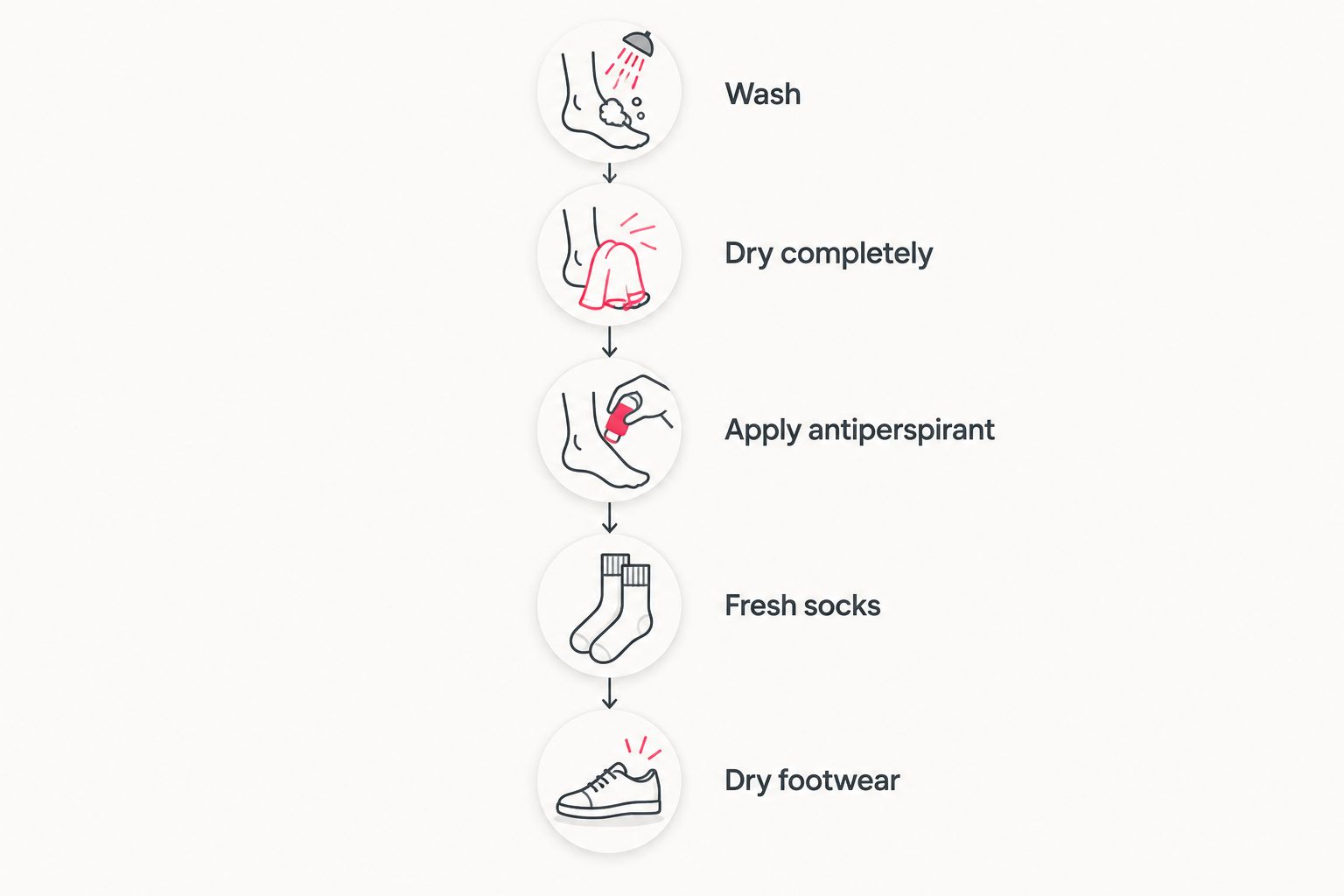
Start with a repeatable routine rather than applying more product whenever your feet feel wet. Follow these steps in order, adjusting the antiperspirant schedule to its package directions.
- Wash your feet. Clean away sweat and daily buildup, then rinse thoroughly. Pay attention to the spaces between your toes without scrubbing irritated skin.
- Dry completely. Dry the soles and between the toes. Do not apply antiperspirant while your feet are still damp from bathing or exercise.
- Apply a foot-safe antiperspirant. Check that the label permits use on feet. Follow its application amount, timing, drying, and wash-off instructions rather than borrowing directions from an underarm product.
- Wear fresh socks. Choose socks designed to manage moisture, change them when damp, and pack a spare pair for long workdays or workouts.
- Let footwear dry. Open shoes after wearing them and remove removable insoles when their care instructions permit. Avoid putting dry feet straight back into damp shoes.
- Check the pattern. Notice whether wetness improves with consistent use and whether your skin stays comfortable. Persistent sweating or irritation calls for a different next step, not an automatic increase in dose.
The goal is less wetness and more comfort, not permanently stopping all foot perspiration. Normal sweating helps regulate body temperature.
Foot antiperspirant: best for reducing wetness
An antiperspirant labeled for feet is the direct topical option when wetness is your main concern. Its active ingredient reduces sweating in the treated area; a fresh scent or an absorbent finish alone does not establish that function.
Best for: Feet that become noticeably wet, including inside work shoes, sneakers, or boots. The advantage is sweat reduction rather than simply covering odor.
The limitation is that application takes planning, and antiperspirants can irritate skin. Use only on areas the label permits, avoid broken skin, and stop if rash or irritation occurs. Ask a doctor before using an antiperspirant if you have kidney disease, as relevant labels direct.
Do not assume that an underarm antiperspirant is suitable for your soles. Products can have different body-area restrictions even when they share a brand name or format.
Moisture-managing socks and dry shoes: best for daily comfort
Socks and footwear cannot switch off sweat glands, but they influence how much moisture stays against your skin. Look for socks described as moisture-wicking or moisture-managing, and judge them by how your feet feel during your actual day.
Best for: Commuting, exercise, travel, and long shifts in enclosed shoes. A fresh pair of socks is a practical reset when your current pair becomes damp.
The limitation is simple: fresh socks become damp again if sweat production stays high or your shoes remain wet. Pair footwear habits with sweat control when needed rather than expecting a fabric change to solve everything.
Choose breathable footwear where the setting allows it. When work requires protective boots or specific shoes, prioritize changing damp socks and drying footwear thoroughly instead of replacing required safety equipment.
Odor care: best when smell is the main concern
If your feet smell but do not feel unusually wet, start with cleansing, fresh socks, and fully dried footwear. Bacteria on the skin can contribute to odor by breaking down sweat and other material.
Best for: Managing odor without automatically adding stronger sweat control. A deodorant labeled for feet can provide an additional odor-care step where appropriate.
The limitation is that deodorant does not establish sweat reduction. Likewise, powder can absorb moisture without reducing its production. Neither function makes a product an antiperspirant.
Avoid treating persistent itching, peeling, or a rash as an odor problem alone. These symptoms need assessment because a sweat routine does not treat every condition that affects the feet.
Why foot sweating varies
Hot weather is not the only reason your feet become damp. Several factors change either how much you sweat or how much moisture remains trapped around your skin:
- Heat and movement: Warm conditions and exercise increase the body's need to cool itself. Adjust socks and footwear after activity rather than staying in damp gear.
- Stress: Emotional stress can trigger sweating, including on the feet. That response does not mean you have poor hygiene or need to wash more aggressively.
- Footwear: Enclosed shoes retain heat and moisture. Putting them on again before they dry brings that dampness into the next wear.
- Application conditions: An antiperspirant routine depends on using the right product on dry skin and following its schedule. Applying it to actively sweaty feet is not a substitute for those directions.
- Excessive sweating or another health issue: Persistent sweating beyond what you expect from heat or activity can need clinical assessment. Sudden changes deserve attention, especially with other symptoms.
More than one factor can apply. You can have heavy foot sweating and shoes that dry poorly; addressing only one leaves part of the problem unchanged.
Where Duradry fits in a foot sweat routine
Duradry Sweat Control Body Wipes are best for people who want targeted foot sweat control in a wipe format. The Sweat Control Body Wipes are antiperspirant wipes with feet among their permitted body areas, subject to the current package directions.
The format is useful when you prefer a wipe to another application method. Each pack contains 30 unscented wipes. They are not merely cleansing wipes, and their portable format does not mean they deliver immediate complete protection when applied to sweaty skin.
Duradry's body-wipe directions emphasize clean, dry skin and nighttime application. The referenced label specifies allowing the application to air-dry and washing it off the following morning; follow the instructions supplied with your current pack for schedule and any daytime use.
The tradeoffs are a disposable format, a planned application routine, and the possibility of irritation. Do not apply to broken skin or continue through a rash. Avoid the face and mucous membranes, and follow the label's warnings rather than treating body use as permission to apply everywhere.
Why are my feet still sweaty after antiperspirant?
Persistent wetness can mean the product is not an antiperspirant, the application conditions need correcting, or topical care alone is not enough. Check the label before changing anything else.
Ask yourself:
- Does the product specifically reduce perspiration, or does it only deodorize or absorb moisture?
- Does its label permit use on feet?
- Are your feet completely dry before application?
- Are you following the product's schedule consistently?
- Are your socks or shoes already damp when you put them on?
Correct one issue at a time so you can tell what helps. Do not combine several antiperspirants, increase the amount, or apply more frequently than directed to chase faster results.
When should you see a clinician about sweaty feet?
See a clinician when foot sweating repeatedly interferes with work, exercise, footwear, or everyday comfort despite a consistent routine. Hyperhidrosis means excessive sweating; a clinician can assess whether that description fits and check for other causes.
Book an assessment for new or sudden sweating, sweating during sleep, or sweating that appears after a medication change. Do not stop prescribed medication on your own. Persistent peeling, itching, painful cracks, or a spreading rash also needs attention rather than more antiperspirant.
Seek urgent medical help if sudden sweating occurs with symptoms such as chest pain, breathlessness, or faintness. Those symptoms are not a routine sweat-care question.
What treatments help when foot antiperspirant is not enough?
A clinician can discuss options such as prescription topical treatment or iontophoresis when appropriate. Iontophoresis uses a medical device to pass a mild electrical current through water while the feet are immersed; it is an established treatment option for excessive sweating of the hands and feet.
Best for: Persistent foot sweating that needs more than an over-the-counter routine, following an assessment. The limitation is that treatment involves a schedule, suitability checks, and ongoing management rather than a guaranteed permanent fix.
Other treatments have their own benefits and risks. Oral medicines, for example, can affect sweating beyond the feet and require a discussion of side effects. The right choice depends on your symptoms, health history, and treatment goals—not simply which option sounds strongest.
FAQ
What's the best way to stop sweaty feet inside shoes?
Combine an antiperspirant labeled for feet with fresh socks and shoes that dry fully between wears. Antiperspirant addresses sweat production, while socks and footwear help manage moisture around the skin.
Can I put regular underarm antiperspirant on my feet?
Use an antiperspirant on your feet only if its directions permit that body area. An underarm-only label does not become suitable for feet because another product from the same brand allows body use.
Should I apply foot antiperspirant at night or in the morning?
Follow the timing on your specific foot antiperspirant label; many routines use nighttime application to completely dry skin. Follow any air-drying and morning wash-off instructions rather than assuming all products work the same way.
Are Duradry Sweat Control Body Wipes suitable for feet?
Duradry Sweat Control Body Wipes include feet among their permitted body areas, subject to the current package directions. They are antiperspirant wipes, not simply deodorizing or cleansing wipes.
Does foot powder stop sweating?
Foot powder can absorb moisture, but absorption alone does not stop sweat production. Check the label for an antiperspirant function if reducing wetness is your goal.
Why do my feet sweat even when I'm not hot?
Feet can sweat in response to stress, and persistent excessive sweating can also occur without obvious heat or exercise. A clinician can assess disruptive sweating and distinguish possible causes.
Will washing my feet more often stop them from sweating?
Washing removes sweat and buildup but does not prevent new perspiration. Clean gently, dry thoroughly, and address ongoing wetness separately instead of repeatedly scrubbing your skin.
One last thing: check the inside of your shoes
Dry feet in damp shoes have already lost part of the benefit of your routine. Before your next wear, check the lining and insoles rather than judging dryness by the outside of the shoe.
Start with the simplest useful change tonight: dry your feet completely, follow a foot-safe antiperspirant's directions, and set aside footwear that is dry inside. Keep a spare pair of socks ready for tomorrow.

