

Yes, spicy food can make you sweat more because capsaicin, the compound that gives chili peppers their heat, activates heat-sensing nerves and triggers a cooling response. Sweating around your forehead, scalp, or upper lip during a spicy meal is usually a normal reaction; sweating with mild foods, a new pattern, or sweating that disrupts daily life deserves a closer look.
- Can spicy food make you sweat more? Yes—capsaicin activates heat-sensing nerves and can trigger sweating.
- Chili-related sweating does not, by itself, mean you have hyperhidrosis.
- Antiperspirant reduces sweat in treated areas; deodorant controls odor, not wetness.
- Duradry sweat care addresses labeled treatment areas, not the food-triggered sweating reflex.
Can spicy food make you sweat more?
Spicy food can trigger sweating even when the food is not physically hot. Capsaicin activates a receptor called TRPV1, which responds to heat as well as chemical irritation. That signal helps explain why a room-temperature chili sauce can make your mouth feel hot and your forehead become damp.
Your nervous system responds to the perceived heat by activating cooling mechanisms, including sweating. The burning sensation does not necessarily mean your core body temperature has risen substantially. Your mouth's heat-sensing system is responding to a chemical signal.
The practical distinction is between a predictable response to chilies and a broader sweating problem. If you sweat during a spicy meal but otherwise feel comfortable, you do not automatically need a stronger sweat care routine or a medical diagnosis.
Why this matters
Understanding the trigger helps you choose the right response. Turning down the chili heat addresses a food-related trigger; applying more underarm product does not prevent your forehead from sweating while you eat.
The setting matters, too. A warm restaurant, a hot bowl of soup, and an anxious business lunch can bring several sweating triggers together. If the same meal feels different depending on the occasion, stress-related sweating is another pattern to consider rather than assuming the seasoning explains everything.
Why does spicy food feel hot when it isn't?
Capsaicin creates chemical heat, which is different from the temperature of the food. You can experience both at once—for example, when eating a steaming bowl of chili—but they are separate signals.
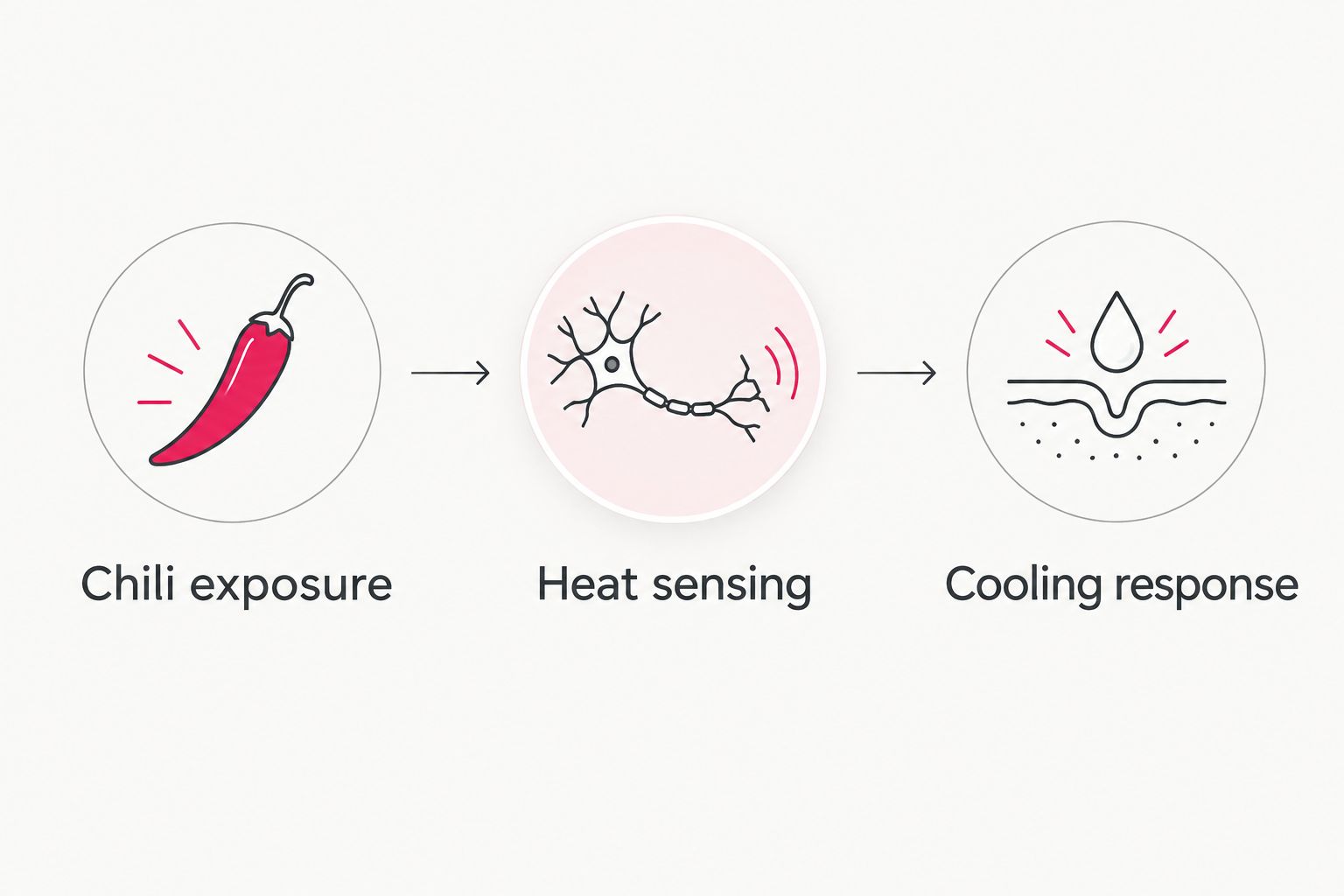
The sequence is straightforward:
- Chili exposure: Capsaicin comes into contact with sensitive tissues in your mouth.
- Heat sensing: Heat-sensitive nerves respond and send signals to your nervous system.
- Cooling response: Sweating can follow as part of the body's response to perceived heat.
This also explains why the sweating is not proof that you are overheating. The sensation is real, but the trigger can be chemical rather than a dangerous rise in body temperature. If you feel unwell, however, assess the symptoms and surroundings instead of dismissing everything as spice.
Is sweating after spicy food normal?
Sweating during a spicy meal is commonly a normal physiological response. Food-related sweating is sometimes called gustatory sweating, meaning sweating associated with eating. The term describes a pattern; it does not identify a cause or establish a diagnosis on its own.
A familiar response that starts while you eat chilies and settles afterward is different from new, heavy sweating with nearly every meal. The latter deserves a conversation with a clinician, especially if it happens with foods that are neither spicy nor hot.
Notice where the sweat appears as well as what you ate. Forehead or upper-lip sweating during a hot curry fits the familiar food-triggered pattern. Persistent underarm wetness throughout the workday is a separate concern, even if lunch temporarily makes it more noticeable.
One sweaty meal is not enough to diagnose hyperhidrosis. A clinician considers the pattern, severity, impact on daily life, and possible underlying causes—not simply whether hot sauce makes you perspire.
Why sweating after spicy food varies
There is no universal amount of sweating that everyone should expect from a spicy meal. These factors help explain why your response changes:
- Chili intensity: The amount of capsaicin you encounter affects the strength of the heat stimulus. A dish's name alone does not tell you how much chili it contains.
- Food temperature: A steaming meal adds actual heat to the chemical heat of chilies. A milder dish served very hot can still make you feel warm.
- Room temperature: A warm dining room or outdoor patio creates a separate cooling demand. Chili is not necessarily the only trigger at the table.
- Individual sensitivity: People differ in how strongly they experience chili heat and how visibly they sweat. Someone else's reaction is not a useful standard for yours.
- Other sweating triggers: Stress and recent physical activity can overlap with eating. Arriving at lunch directly from a workout or a rushed commute changes the context.
Use these factors to identify a pattern, not to assign blame to every ingredient. A meal that makes you sweat in a hot restaurant does not establish that you must avoid that food everywhere.
How can you reduce sweating during spicy meals?
Start by changing the trigger you can control, not by adding more products. If chili consistently makes you uncomfortable, ordering a milder version is the most direct adjustment.
Choose less chili when staying dry matters
Ask for a milder preparation or chili sauce on the side. This gives you control over the heat without requiring you to avoid the dish entirely.
The benefit is simplicity: you are reducing the stimulus itself. The limitation is that a milder meal cannot prevent sweating caused by a warm room, stress, or an unrelated condition.
Let steaming food cool before eating
Giving very hot food time to cool separates temperature-related heat from chili heat. The food can still taste spicy, but you are not combining the same level of physical heat with the capsaicin stimulus.
This is useful when you enjoy the seasoning and do not want to remove it. It does not neutralize capsaicin or guarantee a sweat-free meal.
Make the setting more comfortable
Choose a cooler seat when practical, remove an unnecessary outer layer, and give yourself time to settle after a warm commute. These changes address environmental heat rather than the spice itself.
For a client lunch, date, or social event, you can choose a familiar dish instead of testing your chili tolerance. That is a comfort decision, not a restriction you need to apply to every meal.
Look for a repeatable pattern
Notice the food's chili level, serving temperature, room conditions, and where you sweat. Compare similar meals rather than drawing a conclusion from a single unusually hot evening.
Avoid cutting out broad food groups based only on an isolated episode. If sweating happens with many foods or continues outside mealtimes, bring that pattern to a clinician instead of repeatedly narrowing your diet.
Does drinking water stop sweating from spicy food?
Water helps you stay hydrated, but it does not reliably remove capsaicin's burning sensation or switch off the sweating response. Capsaicin does not dissolve well in water, which is why taking a drink can feel less effective than expected.
Dairy foods can help ease oral chili burn when they fit your diet, but relief in your mouth is not a guarantee that sweating stops immediately. Treat hydration, mouth comfort, and sweat control as separate goals.
Do not avoid drinking because you are worried it will make you sweat. Instead, adjust the chili level and surroundings when those are the clear triggers.
Can antiperspirant help with sweating after spicy food?
Antiperspirant can help reduce sweat where you apply it according to its label. It does not prevent the nervous-system response to spicy food, and an underarm product does not control sweating on your forehead or scalp.
Duradry sweat care fits people who want targeted sweat or odor support, not a way to stop the spicy-food reflex. If your main concern is everyday underarm wetness, the Clinical Sweat Control Stick is an underarm antiperspirant and deodorant designed for daily sweat and odor protection.
The stick's useful distinction is that it addresses both underarm wetness and odor in one format. Its limitation here is equally important: it is not a treatment for facial sweating while eating, and it cannot guarantee dry underarms through every trigger.
Apply the stick to clean, dry underarms according to the current package directions. The supplied product guidance specifies 2–4 swipes per underarm. Do not increase the amount because you plan to eat something spicy, and stop use if rash or irritation occurs; ask a doctor before use if you have kidney disease.
Duradry does not need to become an extra step for an occasional damp forehead at dinner. Match sweat care to an ongoing concern, not to a normal reaction you do not otherwise find troublesome.
When should you ask a clinician about sweating while eating?
Ask for an assessment when meal-related sweating is new, disruptive, or not limited to spicy or physically hot foods. A clear description of the pattern is more useful than trying to label the condition yourself.
Mention these details:
- Whether mild or cool foods also trigger sweating.
- Whether sweating affects one side of your face more than the other.
- Any history of surgery or injury near the cheek, jaw, or salivary glands.
- Sweating outside meals, during sleep, or alongside other new symptoms.
- Any recent medication changes, without stopping prescribed treatment yourself.
Some eating-related sweating patterns have causes beyond an ordinary chili response. A clinician can assess those possibilities and decide whether treatment is appropriate.
Sweating accompanied by chest pain, breathing difficulty, fainting, or other acute concerning symptoms needs urgent medical attention. Do not assume a spicy meal explains symptoms that make you feel seriously unwell.
FAQ
Why does my forehead sweat when I eat spicy food?
Capsaicin in chili peppers activates heat-sensitive nerves and can trigger sweating on your forehead, scalp, or upper lip. This can happen even when the food itself is not hot.
Does sweating after spicy food mean I have hyperhidrosis?
No, sweating after spicy food does not by itself mean you have hyperhidrosis. Seek an assessment if sweating is persistent, disruptive, or occurs beyond expected triggers.
Can spicy food make my armpits sweat too?
Yes, spicy food can contribute to sweating beyond the face, including the underarms. The response differs between people and can overlap with heat or stress.
How long does sweating from spicy food last?
There is no single duration that applies to everyone. Sweating generally settles as the food-triggered response subsides; persistent or unexplained sweating deserves medical advice.
Why do I sweat when I eat food that isn't spicy?
Food temperature and the eating-related sweating response can contribute even without chili. New, pronounced, or one-sided sweating with mild foods should be discussed with a clinician.
Should I put underarm antiperspirant on my face before eating?
No, do not put an underarm antiperspirant on your face. Follow the product's labeled body-area restrictions and ask a clinician about troublesome facial sweating.
One last thing
A room-temperature chili sauce can make you sweat, while a steaming meal without chilies can make you sweat for a different reason. Separating spice from temperature gives you a more useful next step than avoiding every food associated with an uncomfortable meal.
At your next meal, keep the dish familiar and change the chili level. Notice whether that adjustment makes eating more comfortable before changing your entire routine.

