

Sweating a lot can be a sign of hyperhidrosis, especially when you sweat more than your body needs for cooling and it repeatedly disrupts everyday activities. Heavy sweating during exercise or hot weather alone does not establish the diagnosis. The pattern, timing, and onset help a clinician distinguish hyperhidrosis from ordinary sweating or sweating caused by another condition or medication.
- Is sweating a lot a sign of hyperhidrosis? Sometimes; unexplained, recurring sweating deserves assessment, not self-diagnosis.
- Primary focal hyperhidrosis usually affects specific areas, often on both sides, and typically stops during sleep.
- New widespread sweating or night sweats needs medical attention rather than a stronger sweat care routine.
- Duradry antiperspirant sweat care helps manage treated-area wetness; it does not diagnose or cure hyperhidrosis.
Why this matters
The useful question is not whether you sweat more than someone else. It is whether sweating exceeds your cooling needs and interferes with your life. A soaked shirt after a workout tells a different story from wet palms that make handling paperwork difficult in a cool room.
You do not need a diagnosis to start ordinary sweat care. If underarm wetness is your immediate concern, the guide to how to stop sweaty armpits explains practical management. Persistent, unexplained symptoms deserve a separate conversation with a clinician.
Is sweating a lot a sign of hyperhidrosis?
Yes, excessive sweating is the defining symptom of hyperhidrosis, but sweat volume alone cannot tell you why it is happening. There is no universal number of soaked shirts, showers, or deodorant applications that confirms the condition.
A clinician looks at several parts of the pattern:
- Where you sweat. Underarms, palms, soles, and the face are common sites of primary focal hyperhidrosis. Sweating across much of the body raises different questions.
- When it happens. Sweating while resting in a comfortable temperature matters, as does sweating during sleep.
- When it began. A longstanding pattern differs from a sudden change after starting a medicine or developing other symptoms.
- What it interrupts. Difficulty gripping objects, handling devices, choosing clothing, or completing work helps establish the impact.
- What else is happening. Fever, unexplained weight loss, palpitations, or other symptoms help guide the assessment.
The American Academy of Dermatology describes hyperhidrosis as sweating beyond what the body needs to cool itself. That distinction is more useful than comparing your sweating with a friend’s, because activity, environment, and individual cooling needs differ.
Primary focal hyperhidrosis: recurring sweat in specific areas
Primary focal hyperhidrosis causes excessive sweating in particular areas without an identifiable underlying disease or medication explaining it. It often affects both sides in a similar pattern, such as both palms or both underarms.
The International Hyperhidrosis Society’s diagnostic guidance describes visible, excessive focal sweating lasting at least 6 months, without an apparent cause, plus at least two supporting features:
- Sweating is bilateral and relatively symmetrical.
- Episodes occur at least once a week.
- Sweating interferes with daily activities.
- Symptoms began before age 25 years.
- There is a family history of similar sweating.
- Sweating stops during sleep.
These are clinical assessment criteria, not a home diagnostic test. You do not need to wait 6 months to ask for help, and missing one feature does not settle the diagnosis either way.
For example, recurring wet palms during ordinary desk work fit a different pattern from sweating only during a strenuous exercise class. Both involve sweat; the first warrants a closer look when it is persistent or disruptive.
Stress can trigger or intensify primary focal sweating. That does not mean the condition is simply nervousness or that you should be able to control it through willpower.
Secondary hyperhidrosis: sweating with another explanation
Secondary hyperhidrosis is excessive sweating associated with another condition or a medication. It can be widespread, although the distribution alone does not establish the cause.
Possible explanations include thyroid disorders, low blood sugar, menopause-related symptoms, infections, and medication effects. This is not a checklist for diagnosing yourself: the same symptom can have different explanations, and sweating by itself cannot identify one.
New sweating deserves attention even if you have always been someone who runs warm. Tell your clinician about changes in prescriptions, nonprescription medicines, supplements, and other symptoms. Do not stop a prescribed medicine on your own.
Sweating during sleep also belongs in this assessment. A warm bedroom or heavy bedding can cause sweating, but recurring drenching night sweats should not automatically be attributed to primary focal hyperhidrosis.
An antiperspirant can address wetness where it is applied. It cannot establish or treat the underlying reason for secondary sweating.
Why sweating varies
Several factors change how much you sweat and how noticeable it feels. They help explain the context, but none independently proves or excludes hyperhidrosis.
- Temperature and exertion. Hot surroundings and physical activity increase the need for cooling. Consider whether sweating remains excessive after you cool down.
- Emotional triggers. Stress or anticipation can bring on sweating. Repeated disruption still matters, even when you recognize the trigger.
- Body area. Localized palm or underarm sweating differs from a new whole-body pattern. Record the areas involved rather than describing everything as “a lot.”
- Sleep timing. Sweating only while awake differs from sweating that repeatedly soaks sleepwear or bedding.
- Health and medication changes. New symptoms, hormonal changes, or medication changes can alter the assessment and the next step.
Clothing also changes what you notice. A visible wet patch is useful information about daily impact, but the fabric’s appearance cannot diagnose a sweating disorder.
When should I see a doctor about excessive sweating?
Book an appointment when sweating repeatedly affects your activities, starts suddenly, becomes widespread, or occurs during sleep without a clear environmental explanation. You do not need to exhaust every over-the-counter product first.
Mention practical consequences directly. “My palms make it difficult to hold a pen” or “I change shirts during ordinary indoor work” tells a clinician more than “I sweat too much.” Describe what happens without minimizing it or trying to prove that it is severe enough.
Seek urgent medical help if sudden heavy sweating occurs with chest pain, significant shortness of breath, fainting, or other signs of an acute illness. That combination is not a routine sweat care question.
For nonurgent symptoms, primary care is a useful starting point, particularly when sweating is new or comes with other changes. A dermatologist can assess persistent focal sweating and discuss treatments appropriate to the body area and severity.
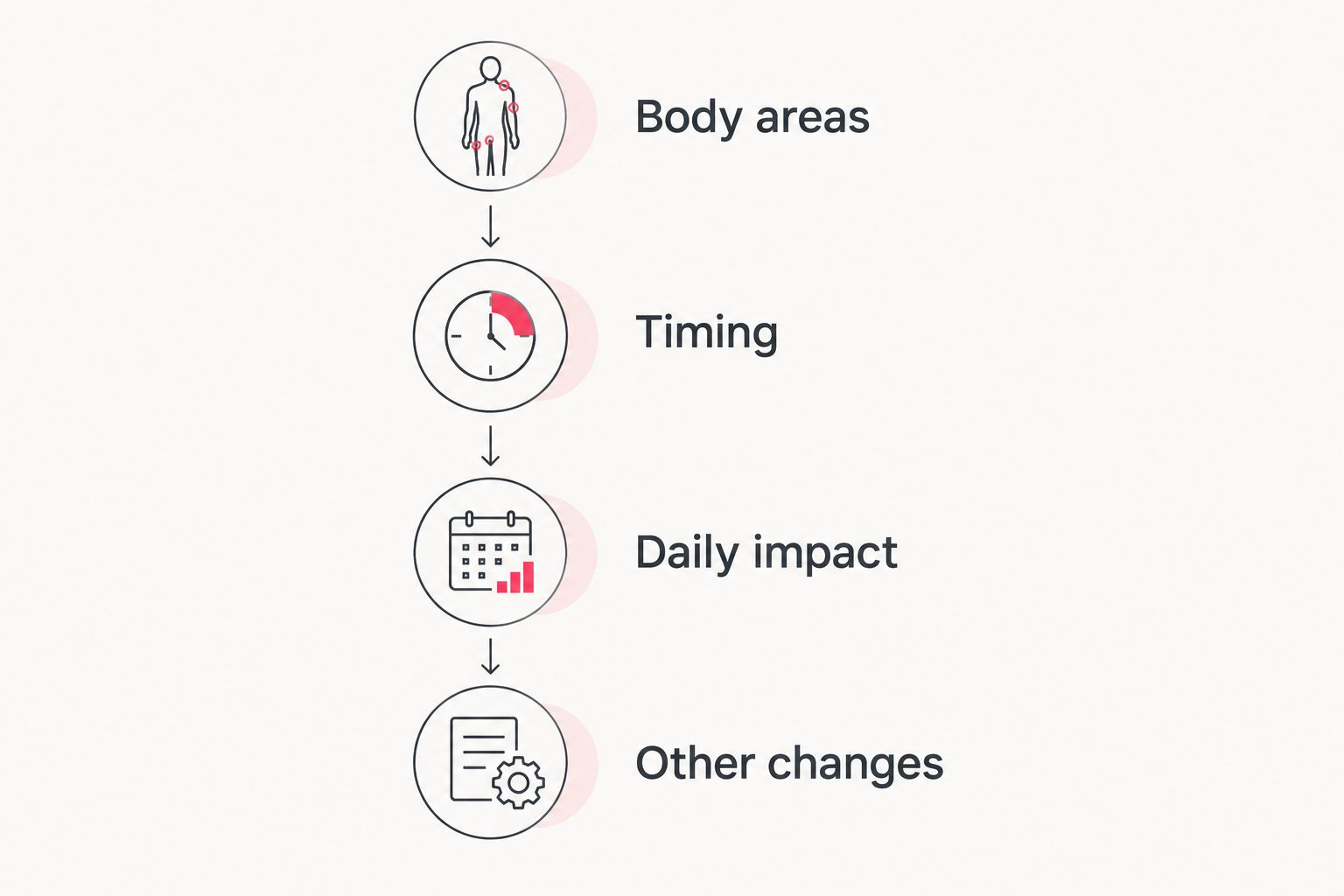
What should I track before an appointment?
A short symptom record helps you describe the pattern without trying to measure sweat precisely. Note the circumstances around episodes rather than counting how often you reach for deodorant.
- Body areas: Write down where sweating occurs and whether both sides are affected.
- Timing: Record whether it happens during activity, at rest, during stress, or while asleep.
- Daily impact: Describe tasks, clothing changes, or plans that sweating interrupts.
- Other changes: Note new medicines, symptoms, and approximately when the sweating began.
Bring the names of products you have tried and describe how you used them. A deodorant that controls odor but leaves you wet has not necessarily failed at its intended job; it may simply address a different concern.
A clinician generally starts with your history and an examination. Testing depends on the pattern and whether another cause is suspected, rather than every person needing the same laboratory panel.
What can I do about wetness while arranging an assessment?
Start by separating wetness, odor, and cleansing. An antiperspirant reduces perspiration in the treated area, a deodorant addresses odor, and a cleanser removes sweat and residue during washing. More fragrance does not mean more sweat reduction.
For underarm wetness, check that your product is an antiperspirant and follow its directions on clean, dry skin. Avoid responding to disappointing results by doubling the amount or layering several strong products together.
For heavier underarm sweating, Duradry’s Intensive Sweat Minimizing Gel provides a targeted nighttime antiperspirant step. Duradry antiperspirant sweat care is best for people seeking at-home wetness management, not an explanation for new or unexplained sweating.
The gel’s advantage is its focused underarm sweat-control role and bedtime schedule. Its limitations matter: it is for underarms only, it can cause irritation, and it is not designed to treat night sweats or an underlying medical condition.
The supplied product guidance describes a pea-sized amount per underarm at bedtime on completely dry skin, followed by thorough washing the next morning. Do not apply immediately after bathing or to broken, irritated, or recently shaved skin; follow the current package for the schedule and warnings, including asking a doctor before use if you have kidney disease.
Stop if rash or irritation occurs. A stronger routine is not automatically the right answer when your skin is reacting.
What if antiperspirant is not enough?
Persistent sweating deserves a treatment discussion, not a judgment about your hygiene or effort. A clinician can check your application routine, reassess the diagnosis, and discuss additional options.
Options include prescription topical treatments, iontophoresis for suitable body areas, botulinum toxin injections, and oral medicines. Each has different uses, limitations, and possible adverse effects; no single treatment is best for every sweating pattern.
The affected area matters. A treatment suited to palms is not automatically appropriate for the face or underarms, and a product’s stronger active concentration does not guarantee a better experience.
Do not change prescribed treatment or combine treatments without guidance. Bring up what matters to you—skin comfort, daily maintenance, work demands, or hand function—so the plan addresses more than a sweat measurement.
Does sweating once a week mean I have hyperhidrosis?
At least once a week is one supporting feature in primary focal hyperhidrosis assessment, not a diagnosis by itself. Sweating during a weekly workout is different from unexplained sweating that repeatedly interrupts ordinary activities.
The clinician considers frequency alongside duration, distribution, triggers, sleep timing, and possible underlying causes. Treat the pattern as information to share, not a score to pass.
Can I have hyperhidrosis without body odor?
Yes, hyperhidrosis can occur without noticeable body odor. Excessive perspiration and odor are different concerns, so the absence of smell does not rule out a sweating disorder.
That distinction also changes product choice. If wetness is the problem, choose an appropriately labeled antiperspirant rather than assuming a deodorant will reduce sweat.
FAQ
How do I know whether I sweat too much?
Sweating warrants assessment when it exceeds your cooling needs or repeatedly interferes with ordinary activities. The pattern, onset, body areas, and associated symptoms matter more than comparing yourself with someone else.
Can I have hyperhidrosis if I sweat in a cold room?
Yes, excessive sweating in a cool setting can occur with hyperhidrosis, but it does not confirm the diagnosis. A clinician considers triggers, medications, health changes, and the overall pattern.
Does excessive sweating always mean something serious?
No, excessive sweating does not always indicate a serious illness. New, unexplained, widespread, or sleep-related sweating still deserves assessment, especially when other symptoms are present.
Is hyperhidrosis caused by poor hygiene?
No, hyperhidrosis is not caused by poor hygiene. Washing removes sweat and residue, but it does not by itself prevent excessive sweat production.
Can anxiety cause the same sweating symptoms?
Anxiety and stress can trigger sweating, including in people with primary focal hyperhidrosis. A recognizable stress trigger does not establish the cause or make persistent symptoms less deserving of care.
Does sweating at night mean I have primary hyperhidrosis?
Night sweating is not the usual pattern of primary focal hyperhidrosis, which typically stops during sleep. Repeated drenching episodes or night sweats with other symptoms should be discussed with a clinician.
Can Duradry cure hyperhidrosis?
No, Duradry antiperspirants help manage sweat in the treated area; they do not cure hyperhidrosis. Persistent symptoms or suspected underlying causes require assessment beyond a consumer sweat care routine.
One last thing
A product helping does not confirm hyperhidrosis, and a product failing does not rule it out. Sweat care response and medical diagnosis answer different questions.
If sweating is changing how you work, dress, sleep, or use your hands, write down the pattern and arrange an assessment. You do not need to wait until every routine task becomes difficult.

