

Yes, you can use antiperspirant and deodorant together: antiperspirant reduces sweat, while deodorant controls odor. You can choose one product that does both or use separate products according to their labels. The main caveat is that adding another layer does not automatically improve protection, and you should stop if rash or irritation occurs.
- Can you use antiperspirant and deodorant together? Yes—follow each product’s directions rather than automatically layering them.
- Duradry’s Clinical Sweat Control Stick suits daily underarm sweat and odor protection in one step.
- A nighttime antiperspirant and a morning deodorant can serve different jobs within the same routine.
- Choose sweat control for wetness, odor protection for smell, and cleansing for sweat and buildup.
Can you use antiperspirant and deodorant together?
Yes. Using them together can mean using both within your routine—not necessarily applying them one on top of the other. Start by checking whether your current product already combines antiperspirant and deodorant functions.
The distinction is straightforward. Antiperspirant acts on perspiration in the treated area; deodorant addresses odor. Our explanation of what is in antiperspirant covers the ingredient category behind sweat reduction.
To decide whether you need both, follow this order:
- Identify your concern. Wetness calls for antiperspirant; odor calls for deodorant. If you notice both, a combination product is a practical starting point.
- Read the product roles. A stick, gel, spray, or wipe describes a format, not necessarily its function. Look for antiperspirant, deodorant, or both on the label.
- Check the directions. Confirm the permitted body area, application timing, amount, and any wash-off instructions before combining products.
- Keep each step purposeful. Add a separate product only when it addresses a need your current routine does not cover.
You do not need to purchase separate products simply because sweat and odor are different concerns. A combined formula can address both without a second application step.
Why this matters: less product can mean a clearer routine
If you still feel wet after applying deodorant, the problem is not necessarily application technique. You might be asking an odor-control product to do an antiperspirant’s job.
The reverse distinction matters, too. Reducing sweat does not mean every antiperspirant provides the deodorant experience you want, such as a particular fragrance or an explicitly stated odor-control function. Read what the product actually promises rather than judging it by its scent or packaging.
Choose by function first, then format. That keeps your routine focused on the concern you want to address instead of adding products without a clear reason.
Which approach fits your underarm routine?
There are several reasonable ways to combine sweat and odor care. The best choice depends on whether you want a simple daily step, more focused underarm sweat control, or odor protection alone.
One combined antiperspirant and deodorant
Best for: everyday underarm wetness and odor with fewer steps. A product labeled for both functions supplies sweat reduction and odor protection in the same application.
The advantage is simplicity: one set of directions and one application step. The limitation is that you are choosing the sweat-control formula and deodorant experience together; you have less flexibility to select them separately.
Start here when both wetness and odor are your concerns. You do not automatically need another deodorant over the top.
A nighttime antiperspirant and a daytime deodorant
Best for: a routine that separates targeted sweat control from daytime odor care. This approach makes sense when the antiperspirant specifically directs nighttime application and your daytime product supplies the odor protection you want.
The advantage is that each step has a defined job. The tradeoff is a more involved routine, including any required morning wash-off step. A nighttime product is not permission to skip its directions or apply it more often.
Deodorant without a separate antiperspirant
Best for: odor concerns when sweat reduction is not your goal. You do not need to reduce normal perspiration simply because you want to manage body odor.
The advantage is a routine focused on your actual concern. The limitation is equally clear: deodorant alone does not establish sweat reduction, so you should not expect it to prevent underarm wetness.
How to use a nighttime antiperspirant with daytime protection
For heavier underarm sweating, a bedtime product can serve a different role from your daily stick. The important distinction is timing—not simply applying more product.
Duradry’s Intensive Sweat Minimizing Gel is a nighttime underarm antiperspirant. It helps reduce underarm sweat with nighttime use, but it is not designed to control night sweats, meaning sweating while you sleep.
Its routine separates the evening application from morning protection:
- Cleanse. Remove sweat and product residue, rinse thoroughly, and let your underarms become completely dry. Do not apply the gel immediately after bathing.
- Apply at bedtime. The product page describes a pea-sized amount per underarm. Follow the current package label for the amount and starting schedule.
- Wash off. Wash your underarms thoroughly the next morning. The wash-off step belongs to this product’s directions; it is not a universal instruction for every antiperspirant.
- Dry skin. Let your underarms dry before applying daytime protection.
- Apply daytime protection. Use your daily deodorant or antiperspirant according to its own directions.
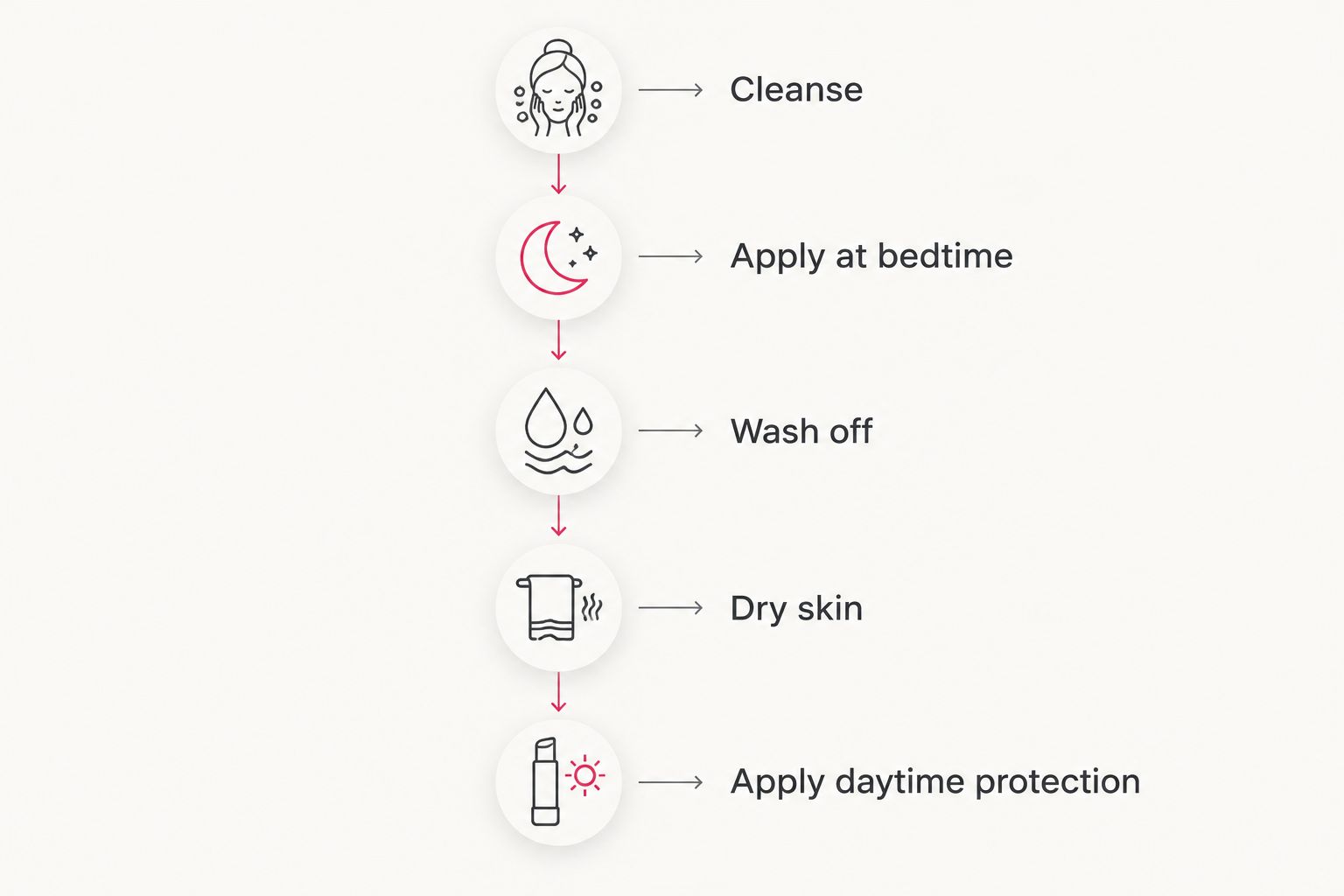
The gel’s referenced label describes maintenance twice weekly after control is established, or as needed according to the label. That is a maintenance pattern, not a promise that two applications will immediately control sweating.
Use the gel on underarms only. Avoid broken, irritated, or recently shaved skin, keep it away from the eyes, stop if rash or irritation occurs, and ask a doctor before use if you have kidney disease.
When one daily stick is enough
Duradry’s Clinical Sweat Control Stick is best for people who want daily underarm sweat and odor protection in one step. It is an antiperspirant and deodorant, so a separate deodorant is not automatically necessary.
The Clinical Sweat Control Stick directions call for clean, dry underarms and 2–4 swipes per underarm. When it follows the nighttime gel, apply it after washing the gel off and drying your skin in the morning.
Its practical advantage is the familiar daily format. Its limitation is its intended use: it is an underarm product, not an instruction to treat sweat on every body area. It also does not remove the need to assess persistent sweating that continues to disrupt your day.
Fragrance is a separate choice from sweat control. The stick has three named fragrances—Clear Sky, Barça, and Limitless—but a scent preference alone does not tell you whether you need additional deodorant.
Why the right combination varies
Your routine should reflect the products you use and the concern you are addressing. These factors change the decision:
- Wetness versus odor. An odor-focused product does not replace an antiperspirant when your main concern is damp clothing.
- A combined versus single-function formula. Check whether your current product already covers both concerns before adding another.
- Application schedule. A bedtime gel with morning wash-off directions needs a different routine from a daily stick.
- Skin condition. Broken, irritated, or recently shaved skin changes whether a product is appropriate to apply under its label.
- Treatment area. Underarm directions do not automatically extend to the hands, feet, chest, or other body areas.
- Fragrance preference. You can prefer scented or unscented care without changing the distinction between sweat reduction and odor control.
The goal is not to use the greatest number of products. It is to give each step a job and avoid adding something that duplicates protection you already have.
What if you prefer natural deodorant or have sensitive skin?
You can prefer a particular ingredient approach while still needing sweat reduction. Choosing deodorant does not require abandoning antiperspirant, and choosing antiperspirant does not require adding a scented deodorant.
When comparing natural deodorants for sensitive skin, separate the odor-control role from the ingredient list: a natural description does not establish sweat reduction or guarantee that a formula will not irritate your skin. The same caution applies to a naturally derived percentage.
Judge the complete product and your skin’s response, not a single front-label term. “Clean,” “natural,” and “clinical” do not replace directions, warnings, or a clear explanation of what the product does.
If rash or irritation occurs, stop use rather than adding more products to cover the problem. Persistent or severe reactions warrant professional advice.
Should antiperspirant or deodorant go on first?
Follow the specific antiperspirant directions rather than relying on a universal layering order. For a nighttime gel that must be washed off in the morning, the sequence is nighttime application, morning washing, drying, and then daytime protection.
If both products are intended for daytime use, check their labels before applying them together. There is no reason to invent a fixed waiting period or assume that an extra deodorant layer makes the antiperspirant work better.
Can you put deodorant on after showering?
Yes, when the directions call for clean, dry skin, dry the intended area before application. A shower supplies cleansing; it does not turn deodorant into sweat control.
Keep product-specific restrictions separate. The nighttime gel should not be applied immediately after bathing, even though cleansing is part of its broader routine. Do not transfer that restriction to every deodorant or antiperspirant without checking the label.
Why are you still sweating when you use both?
Using both categories does not guarantee complete dryness. First confirm that one product actually has an antiperspirant function, then review the intended area, application timing, skin dryness, amount, and consistency.
Do not respond by doubling the dose or combining several antiperspirants at once. More applications are not a substitute for following the directions, and you should not continue through a rash.
Persistent or disruptive sweating deserves a clinician’s assessment, particularly if it begins suddenly, occurs during sleep, or comes with other symptoms. An underarm routine does not explain or treat every cause of sweating.
FAQ
Do I need separate deodorant if my antiperspirant already includes it?
No, a combined antiperspirant and deodorant already provides both functions. Add another product only for a specific unmet need, not because two categories always require two products.
Can I use antiperspirant at night and deodorant in the morning?
Yes, when that schedule matches the products’ directions. A nighttime product with morning wash-off instructions should be washed off before you dry your skin and apply daytime protection.
Can I mix antiperspirant and deodorant together before applying them?
Use each product as directed rather than mixing formulas together. Applying products within the same routine does not mean combining them into a new mixture.
Does deodorant stop antiperspirant from working?
Do not assume that deodorant cancels antiperspirant or makes it stronger. Follow each label, including instructions about clean, dry skin, timing, and washing the product off.
Can I use body deodorant instead of underarm antiperspirant?
Body deodorant is not a substitute for sweat reduction unless it is also labeled as an antiperspirant. Check the intended body area and whether your goal is odor protection or less wetness.
Can I use Duradry’s gel and stick at the same time?
Use the gel and stick at their separate scheduled steps rather than layering them together at bedtime. Apply the gel according to its nighttime directions, wash it off the next morning, dry your underarms, and then apply the stick.
One last thing
A useful extra step can be subtraction. If your current stick already handles both sweat and odor, try following its directions without automatically adding another deodorant. Keep an additional product only when you can explain what it contributes.
Related guides
Your next step: check your current label for antiperspirant, deodorant, or both, then choose the simplest routine that addresses your main concern.

