

If your sweat smells like vinegar, skin bacteria breaking down sweat and other material on your skin are a common explanation for the sour odor. Damp clothing can hold onto that smell, even after your skin is clean. The smell alone does not identify a medical condition; start by checking your skin, clothing, and sweat care routine, and get medical advice if the change persists or comes with other symptoms.
- When sweat smells like vinegar, bacterial breakdown and odor trapped in clothing are common explanations.
- Duradry sweat care separates cleansing, odor protection, and sweat control; choose the step that matches your concern.
- A vinegar-like smell alone cannot diagnose diabetes, an infection, or a nutritional deficiency.
- Persistent odor changes, sudden excessive sweating, or unexplained night sweats deserve medical attention.
Why this matters
Treat the source of the odor, not just the smell. Adding fragrance to a damp shirt does not remove retained odor, and using deodorant does not necessarily reduce wetness. Knowing whether the smell comes from your skin, your clothes, or both gives you a more useful starting point.
A sour smell after exercise or a warm commute does not automatically mean something is wrong. For the everyday basics, the guide to getting rid of underarm odor explains the separate roles of cleansing and leave-on protection.
Why does sweat smell like vinegar?
Sweat develops much of its familiar body odor when microorganisms on your skin break down substances in sweat and skin secretions. That process produces odor compounds, including acids, which can smell sour. Your description of that smell as vinegar-like is useful, but it is not a chemical test.
Fresh sweat is not simply vinegar coming out of your pores. Although acetic acid gives vinegar its characteristic smell, noticing a similar odor on your body does not establish which compounds are present or why they formed.
Use these observations to narrow down the practical problem:
- Odor on your skin: If the smell disappears after washing and returns as you sweat, focus on cleansing, drying, and appropriate leave-on protection.
- Odor in your clothing: If a clean underarm smells normal but a shirt smells sour, laundering and changing garments matter more than adding product to your skin.
- Odor despite a clean reset: If the change persists on freshly washed skin in clean clothes, arrange a clinical assessment rather than repeatedly increasing product strength.
Smell is subjective. What you call vinegar, someone else might describe as sour, tangy, or musty, so the pattern and accompanying symptoms are more informative than the label alone.
Why vinegar-like body odor varies
Body odor reflects several things happening together, rather than a single ingredient in your sweat. These factors help explain why the same routine feels sufficient on one day and less effective on another.
- Skin bacteria: The microorganisms normally living on your skin contribute to the compounds that create body odor. Their presence is normal, not evidence that you are unclean.
- Sweat and dampness: Exercise, heat, and stress change how much you sweat. More moisture can make odor management harder, especially when clothing stays damp against your skin.
- Clothing and drying: Fabric can retain sweat, skin oils, and odor. Rewearing a garment before washing it can bring an old smell back into an otherwise clean routine.
- Product buildup: Residue from leave-on products can accumulate on skin and clothing. Cleansing removes buildup, but applying more product over it does not substitute for washing.
- Changes in your routine or health: A different medication, a change in sweating, or a new skin problem deserves attention when it coincides with persistent odor. Do not stop prescribed medication without speaking with your prescriber.
These are reasons to investigate a pattern, not a checklist for diagnosing yourself. A vinegar-like smell does not tell you which factor is responsible.
How do you get rid of vinegar-smelling sweat?
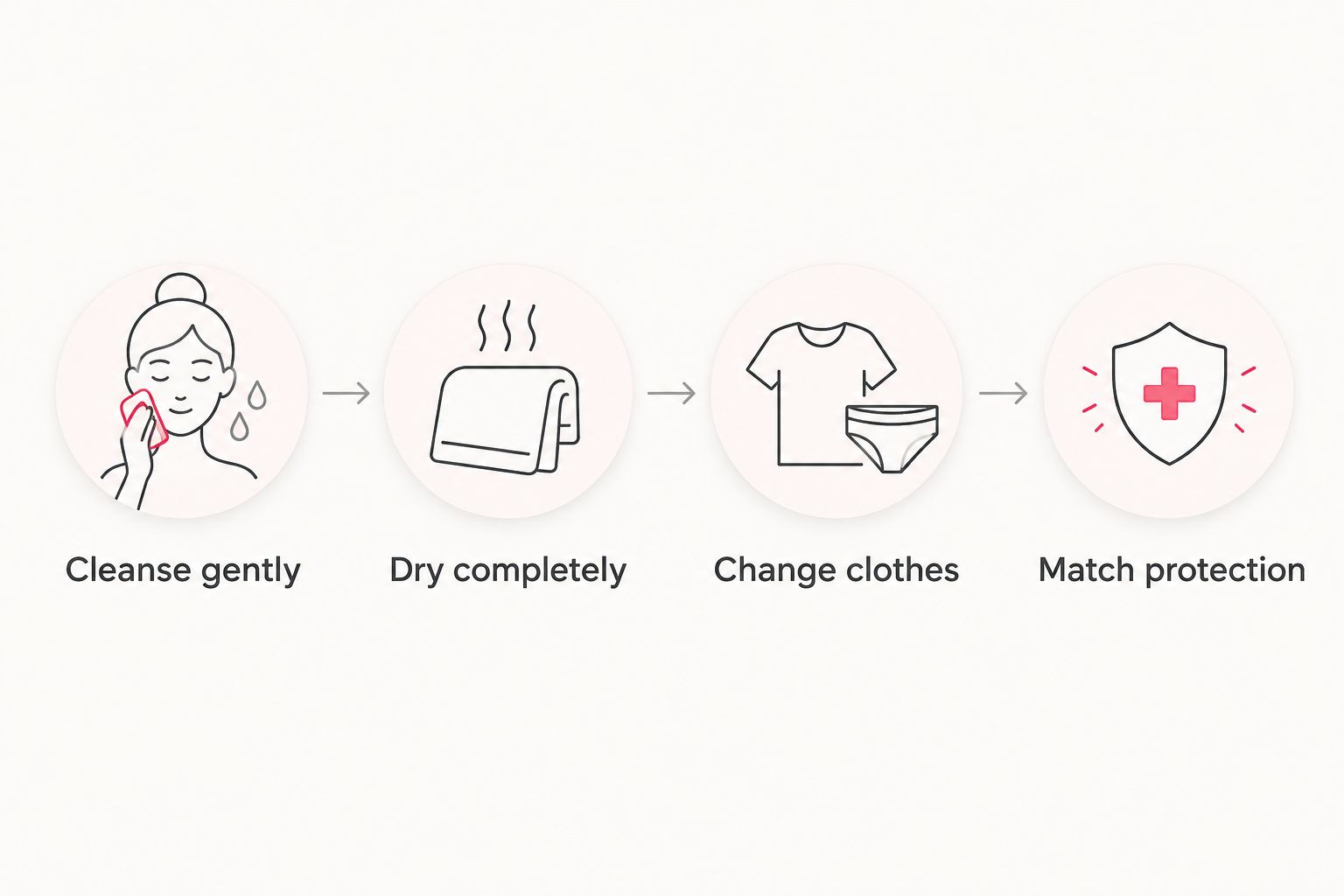
Start with a clean-skin, clean-clothing reset before buying a stronger formula. This helps distinguish retained odor from a problem that continues directly on your skin.
Cleanse gently
Wash the affected area with a cleanser intended for that body area, then rinse thoroughly. Focus on removing sweat, skin oils, and product residue rather than scrubbing harder.
Avoid aggressive exfoliation or repeatedly washing an already irritated area. Redness, burning, or a rash is a reason to simplify your routine and seek advice if it persists, not to intensify cleansing.
Dry completely
Dry your skin before applying a leave-on antiperspirant or deodorant, following that product's directions. Pay attention to folds and areas covered by close-fitting clothing.
Clean skin and dry skin are separate steps. If you are still damp after a shower or actively sweating, pause rather than immediately layering products onto wet skin.
Change clothes
Put on a freshly laundered shirt, underwear, or socks, depending on where you notice the smell. Do not use a previously worn garment to judge whether your skin care routine worked.
Wash sweaty clothing according to its care instructions and dry it completely before storing it. If the odor is confined to a garment, address the garment before changing your body care routine.
Match protection
Choose odor protection when smell is the main concern and an antiperspirant when reducing wetness is also a goal. A cleanser removes material during washing; it does not prevent the next episode of sweating.
Keep the routine consistent with the label rather than changing several products at once. If irritation develops, stop the suspected product; do not try to counteract it by adding another active formula.
Which sweat care step fits the problem?
The right product depends on whether you need cleansing, odor control, or less wetness. There is no need to add an entire routine just because you notice a sour smell after a long day.
Best for removing sweat and buildup: a rinse-off cleanser
Deep Clean Body Wash is Duradry's cleansing step for washing away sweat, odor, and daily buildup, including antiperspirant residue. Apply it to wet skin, lather, and rinse thoroughly.
Its limitation is straightforward: body wash does not stop future perspiration. If odor returns alongside underarm wetness, cleansing alone does not address both concerns. You also do not need a particular branded cleanser for every antiperspirant to work.
Best for daily underarm wetness and odor: an antiperspirant-deodorant
Duradry Clinical Sweat Control Stick is best for daily underarm wetness and odor. It combines an antiperspirant role with deodorant protection, rather than treating fragrance as a substitute for sweat control.
The product directions specify 2–4 swipes per underarm on clean, dry skin. Follow the package label, avoid broken skin, and stop use if rash or irritation occurs; ask a doctor before use if you have kidney disease.
The limitation matters here, too: the stick is for underarms, not every body area where you notice a sour smell. It also does not diagnose or treat an underlying cause of a new odor change.
Should you change your soap or use an acid treatment?
A sour smell is not a reason to start disinfecting your skin. Normal skin bacteria have a role in body odor, but that does not mean your goal should be to remove every microorganism with the strongest cleanser you can find.
Choose a cleanser by its intended use, directions, and how your skin tolerates it. In particular, understanding soap ingredients means distinguishing cleansing ingredients from fragrance and other additions; an ingredient list is not proof that a finished bar prevents sweating or treats persistent body odor.
Do not treat the word vinegar as an instruction to apply vinegar. Household vinegar, lemon juice, and improvised acid mixtures are not interchangeable with a formulated personal care product and can irritate skin. Avoid applying them to irritated or freshly shaved areas.
The same caution applies to adding exfoliating acids to an existing underarm routine. If your skin already stings, burns, or looks inflamed, adding another active ingredient makes the routine harder to tolerate and harder to troubleshoot.
Why does the smell return after a shower?
A shower removes sweat and residue present at that moment. It does not stop new sweating, eliminate normal skin bacteria permanently, or clean the clothing you put back on afterward.
Check where the smell returns first. If your skin smells normal until you wear a particular shirt, inspect the garment rather than repeatedly washing your underarms. If the smell develops directly on clean skin, review whether your leave-on product addresses odor, wetness, or both.
Also check your expectations. A fragrance-free or unscented product does not need to leave a noticeable perfume to serve its purpose, and a strong scent is not evidence of stronger sweat reduction. Judge the relevant outcome: odor, dampness, comfort, or cleansing.
When should you get medical advice?
Arrange an appointment if a new body odor persists despite ordinary washing and clean clothing, or if your sweating changes noticeably without an obvious explanation. Mention any new medicines, supplements, skin changes, or other symptoms.
Seek assessment for unexplained sweating during sleep, especially if it is drenching or accompanied by fever or unexplained weight loss. A bedtime antiperspirant routine is not treatment for night sweats or their underlying cause.
Get urgent medical care if unusual sweating occurs with chest pain, difficulty breathing, fainting, or confusion. Those symptoms need attention regardless of whether you notice a particular smell.
A clinician can assess the full picture and decide whether testing is needed. Vinegar-like odor alone does not establish diabetes, kidney disease, an infection, or a vitamin deficiency. Lists that assign a disease to each smell leave out the examination and medical history needed to make those judgments.
FAQ
Is it normal for my sweat to smell like vinegar after a workout?
A sour or vinegar-like smell after exercise can result from bacterial breakdown of sweat and odor retained in clothing. Wash, dry your skin, and change into clean clothes; a persistent new change deserves medical advice.
Does vinegar-smelling sweat mean I have diabetes?
Vinegar-smelling sweat alone does not diagnose diabetes. If you also have symptoms such as unusual thirst, frequent urination, or unexplained weight loss, speak with a clinician rather than relying on body odor to identify the cause.
Why do my clothes smell like vinegar when my skin does not?
Clothing can retain sweat, skin oils, and odor even when your skin is clean. Follow the garment's washing instructions, dry it fully, and avoid rewearing sweaty items before laundering.
Will deodorant stop my sweat from smelling sour?
Deodorant addresses odor, but it does not necessarily reduce perspiration or remove odor already held in clothing. If wetness is also a concern, choose an antiperspirant appropriate for the body area and follow its label.
Can I use apple cider vinegar on my armpits?
Household apple cider vinegar is not a substitute for a formulated underarm product and can irritate skin. Use a suitable cleanser and labeled sweat care products instead, especially if the area is freshly shaved or irritated.
Can Duradry treat the medical cause of a vinegar-like smell?
Duradry sweat care products provide product-specific cleansing, odor protection, or sweat reduction; they do not treat an underlying medical cause of a new smell. Persistent changes or accompanying symptoms need clinical assessment.
One last thing
Check your clean shirt before changing your antiperspirant. After washing and drying your skin, notice whether the odor is present before you get dressed. That simple distinction helps you choose the next step: address retained clothing odor, adjust a product to match your concern, or seek advice about a change that persists on clean skin.

