

You can sweat heavily while sleeping because your bedroom or bedding traps heat, but repeated night sweats also have causes such as hormonal changes, medicines, low blood sugar, and underlying illness. Sweating that repeatedly soaks your sleepwear or sheets despite a cool room deserves a medical assessment, especially with fever, unexplained weight loss, or a persistent cough. Antiperspirant can reduce sweat in a treated area; it does not identify or treat the cause of unexplained night sweats.
- Why do I sweat so much at night? Check overheating, hormonal changes, medicines, and accompanying symptoms.
- Repeated drenching sweat in a cool bedroom needs medical assessment, not simply stronger antiperspirant.
- Duradry sweat care supports targeted wetness control; it does not treat the underlying causes of night sweats.
- Record the pattern, review medicines with your clinician, and seek prompt advice for fever or unexplained weight loss.
Why do I sweat so much at night while sleeping?
Heavy sweating during sleep happens when your body needs to release heat or when another factor affects its temperature regulation and sweating response. The useful distinction is whether you are simply too warm or are repeatedly waking drenched without an obvious environmental explanation.
The NHS describes night sweats as sweating enough to soak your nightclothes and bedding even though your sleeping environment is cool. Slightly damp skin beneath a heavy comforter is different from repeatedly needing to change your pajamas or sheets.
Start by checking the pattern:
- Check the environment. Notice whether the bedroom is warm, your bedding is heavy, or your sleepwear holds heat.
- Describe the sweating. Record whether you have damp underarms, widespread wetness, or soaked bedding.
- Look for accompanying changes. Note fever, weight changes, menstrual changes, new medicines, or disturbed breathing during sleep.
- Choose the next step. Adjust obvious sources of overheating; arrange medical advice for recurrent, unexplained, or disruptive episodes.
Nighttime sweating also differs from the usual pattern of primary focal hyperhidrosis, which commonly affects areas such as the underarms, palms, or soles and typically stops during sleep. Our guide to whether heavy sweating indicates hyperhidrosis explains that distinction.
Why this matters
The timing of your sweating changes the question you need answered. Sweating through a shirt on a hot commute calls for a different response from waking in soaked sheets in a cool bedroom.
Neither experience means you have done anything wrong. But treating unexplained night sweats only as a hygiene problem risks missing a medication effect, hormonal change, or health issue that needs its own approach.
You do not need to work out the diagnosis yourself. Your job is to notice the pattern and bring useful details to the person assessing it.
Why nighttime sweating varies
Several factors explain why sweating happens on some nights but not others. These are possibilities to discuss or investigate, not a checklist for diagnosing yourself.
- Heat and bedding: A warm bedroom, thick comforter, heated blanket, or heat-retaining sleepwear increases the need to cool down through sweating.
- Hormonal changes: Perimenopause and menopause can cause hot flashes during sleep. Pregnancy and the postpartum period also involve hormonal changes associated with sweating.
- Medicines: Some antidepressants, steroids, pain medicines, and other treatments list sweating as a possible side effect. The timing of a new prescription or dose change matters.
- Low blood sugar: Overnight hypoglycemia can cause sweating, particularly in people using insulin or certain diabetes medicines. This needs a diabetes-specific plan rather than a sweat-control product.
- Stress and sleep disruption: Anxiety can contribute to sweating. Loud snoring, witnessed breathing pauses, and daytime sleepiness also warrant discussion because sleep apnea is associated with nighttime sweating.
- Underlying illness: Infections, an overactive thyroid, and other medical conditions can cause night sweats. Less commonly, serious illnesses are involved; accompanying symptoms and clinical assessment guide the investigation.
A possible explanation is not a confirmed cause. For example, having a stressful week does not establish that stress explains new, drenching night sweats.
Can a warm bedroom explain soaked sheets?
A warm bedroom can cause substantial sweating, particularly with heavy bedding. Try reducing trapped heat and see whether the problem resolves.
The important limitation is persistence. If you continue soaking your sleepwear or sheets after making the sleeping environment comfortable, do not keep assuming the room is responsible.
Can hormones cause night sweats without daytime hot flashes?
Hormonal changes can cause symptoms during sleep even when daytime symptoms are less noticeable. Menstrual changes, hot flashes, pregnancy, or recent childbirth provide useful context for your clinician.
Night sweats alone do not establish perimenopause or another hormonal diagnosis. Mention the full pattern rather than relying on age or a single symptom.
Could a medicine be making me sweat at night?
A medicine can contribute to night sweats, especially when the episodes begin after you start treatment or change a dose. Bring your prescription, over-the-counter medicine, and supplement list to your clinician or pharmacist.
Do not stop or change prescribed treatment on your own. Your prescriber can assess whether the medicine fits the timing and whether an adjustment is appropriate.
What to do tonight if you wake up sweaty
Start with comfort and observation, not a complicated product routine. The aim is to reduce unnecessary heat while keeping track of anything that needs medical attention.
Cool the room
Adjust the bedroom to a comfortable temperature and use ventilation or a fan if helpful. There is no single room temperature that diagnoses or rules out night sweats.
Check for easily missed heat sources, including heated bedding or a partner's heavier bedding. Change what you can control without making the room uncomfortably cold.
Lighten bedding
Choose lighter layers that you can remove easily. If your sleepwear becomes wet, change into dry clothing rather than staying chilled in damp fabric.
Breathable sleepwear and bedding can improve comfort, but fabric choice does not treat an underlying hormonal, medication-related, or medical cause. Treat bedding changes as a practical adjustment, not proof that the problem is solved.
Record symptoms
Write down whether the room felt warm, which body areas were wet, and whether you needed to change clothes or bedding. Note any fever, chills, hot flashes, nightmares, palpitations, or breathing concerns.
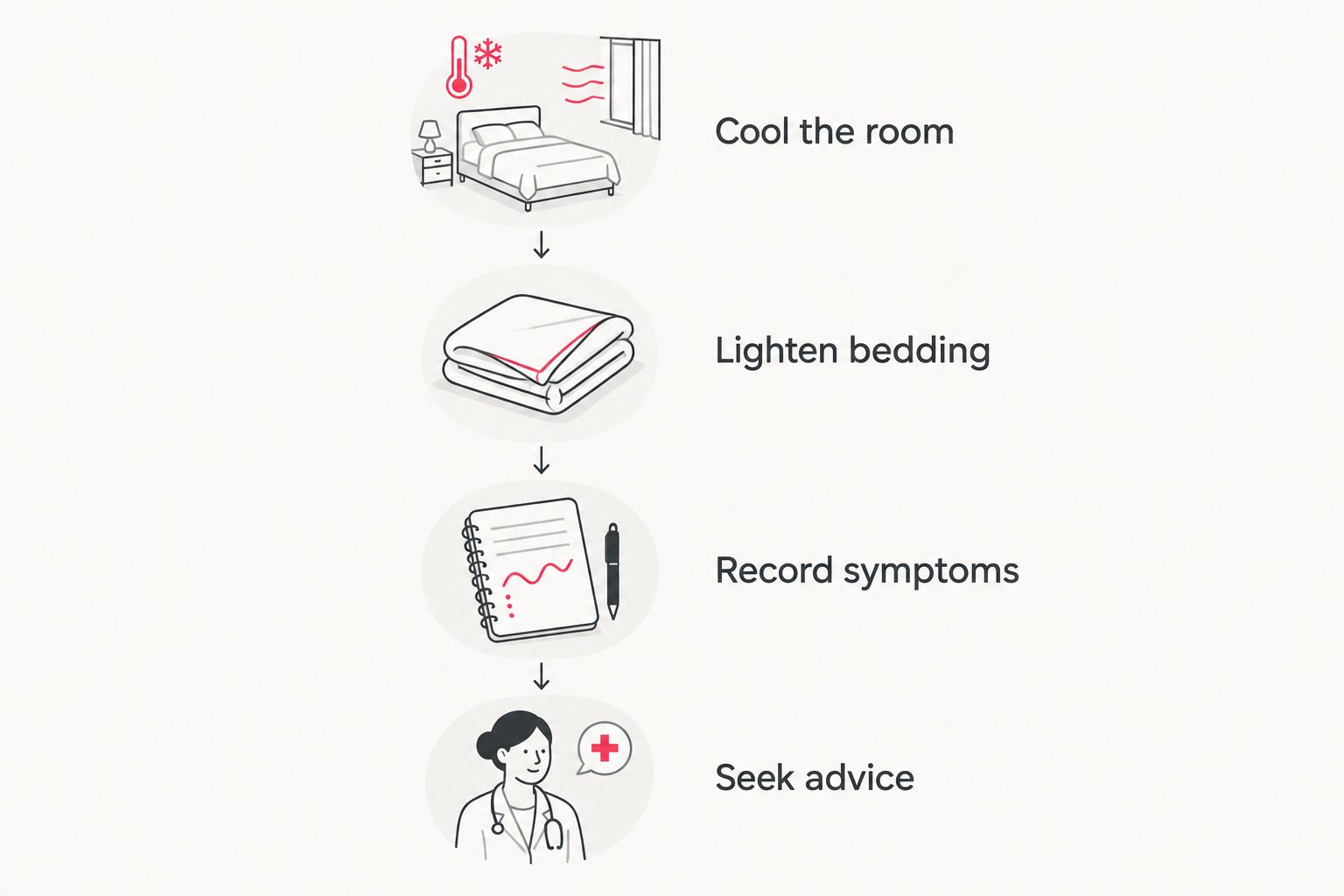
Keep the record simple enough to maintain. A short note after an episode is more useful than trying to reconstruct several weeks of symptoms from memory.
Seek advice
Arrange an appointment if the sweating recurs, interrupts your sleep, worries you, or has no clear explanation. You do not need to wait until every episode soaks the mattress.
If you have diabetes and suspect low blood sugar, check your glucose and follow your prescribed hypoglycemia plan. Severe confusion, loss of consciousness, or inability to swallow safely requires emergency help.
When should you see a clinician about night sweats?
Book a medical appointment for recurring, unexplained night sweats, particularly when they drench your clothes or bedding. Seek prompt advice when sweating comes with fever, unexplained weight loss, a persistent cough, or swollen lymph nodes.
Also mention persistent diarrhea, a racing heartbeat, tremor, or significant heat intolerance. These details help your clinician decide which causes need investigation; they do not point to a diagnosis by themselves.
Tell your clinician about loud snoring, choking or gasping during sleep, witnessed breathing pauses, and daytime sleepiness. A bed partner's observations can be useful because you might not notice disrupted breathing yourself.
Chest pain, severe difficulty breathing, fainting, or new confusion needs urgent medical attention rather than a routine sweat-care appointment. The urgency comes from those symptoms, not from sweating alone.
What information should you bring?
Bring a brief symptom record and your medicine list. Include when the sweating started, whether it occurs in a cool room, which areas are affected, and whether you also sweat excessively during the day.
Mention recent infections, relevant travel, menstrual changes, pregnancy or postpartum status, and any known medical conditions. Your clinician decides which examination or tests fit the history; there is no single test that explains every case of night sweating.
Does applying antiperspirant at bedtime stop night sweats?
Bedtime application and treatment of night sweats are different things. Some antiperspirants are applied at night to reduce sweating in the treated area during the following day; that schedule does not mean they treat sweating during sleep.
Duradry sweat care is best for people seeking targeted sweat and odor protection, not treatment of unexplained night sweats. From Duradry's perspective, the useful first decision is whether you need everyday wetness control or an assessment of a new nighttime symptom.
The Intensive Sweat Minimizing Gel is a nighttime underarm antiperspirant intended to help reduce daytime underarm sweating. Its advantage is focused support for heavier underarm wetness; its limitation is equally important: it is underarm-only and is not designed to control night sweats.
If you use the gel for a separate daytime sweating concern, follow the current package directions. Apply only to completely dry underarms, respect restrictions concerning bathing, shaving, and irritated skin, and wash it off the following morning.
Do not spread it across your chest or back to address soaked bedding, increase the amount because you woke sweaty, or continue through a rash. Deodorant addresses odor and body wash provides cleansing; neither stops perspiration or explains why nighttime sweating has begun.
FAQ
Is it normal to sweat a little while sleeping?
Light sweating while sleeping can be a normal response to a warm room, heavy bedding, or heat-retaining sleepwear. Repeated soaking sweat despite a cool sleeping environment deserves medical assessment.
Why do I wake up drenched even when my room is cold?
Waking drenched in a cool room can reflect hormonal changes, medicines, low blood sugar, or an underlying condition rather than overheating. Arrange medical advice if it recurs, disrupts sleep, or accompanies other symptoms.
Do night sweats mean I have cancer?
Night sweats alone do not mean you have cancer. They have many possible causes, but recurring drenching episodes with unexplained weight loss, fever, or swollen lymph nodes need prompt medical assessment.
Can anxiety make me sweat in my sleep?
Anxiety can contribute to sweating, including nighttime episodes. Do not assume it explains new or drenching night sweats without considering medicines, hormonal changes, and other symptoms.
Should I stop my antidepressant if I get night sweats?
Do not stop your antidepressant or change the dose without speaking to your prescriber. Sweating is a possible side effect of some antidepressants, and your prescriber can review the timing and treatment options.
Can menopause cause sweating only at night?
Menopause-related hot flashes can occur during sleep, even when daytime symptoms are less noticeable. Menstrual changes and other symptoms help your clinician assess whether a hormonal explanation fits.
Will stronger deodorant stop me from sweating in bed?
Stronger deodorant does not stop perspiration because deodorant addresses odor rather than sweat production. Antiperspirant reduces sweating in treated areas, but it does not treat the underlying causes of unexplained night sweats.
Related guides
- Can stress cause excessive sweating?
- How much sweat is considered excessive?
- The overnight gel to daytime stick routine
One last thing
The most useful detail is not how strongly your sweat smells. It is whether you repeatedly soak your sleepwear or bedding despite a cool room, and what happens alongside the sweating.
If that describes your nights, make a medical appointment and bring a short symptom record. Save product troubleshooting for a separate, clearly identified daytime sweat concern.

