

Sweat is considered excessive when it exceeds what your body needs for cooling, especially when it repeatedly interferes with everyday activities. There is no single amount in ounces, shirt stains, or daily clothing changes that diagnoses excessive sweating. The useful clues are when it happens, which areas sweat, how often it disrupts your day, and whether the pattern is new.
- How much sweat is considered excessive depends on cooling needs and daily disruption, not a universal volume cutoff.
- Sweating at rest, difficulty gripping objects, and repeated clothing changes deserve attention when they become a pattern.
- Duradry sweat care addresses wetness and odor with different product categories; deodorant alone does not reduce perspiration.
- Sudden sweating changes, unexplained night sweats, or sweating with other symptoms need medical assessment.
Why this matters
A soaked shirt after exercising in warm weather does not establish a sweating disorder. Repeatedly soaking a shirt while sitting comfortably in a cool room is a different pattern, particularly when it changes how you dress, work, or socialize.
Judge sweating by its context and impact, not by how you compare with someone else. The distinction between sweating a lot and hyperhidrosis helps you decide whether to adjust your routine or arrange an assessment. You do not need to wait until sweating becomes severe to ask for help.
How much sweat is considered excessive?
Excessive sweating means more perspiration than your body needs to regulate temperature. Hyperhidrosis is the medical term for excessive sweating, but a clinician considers your history and symptoms rather than diagnosing it from a photograph of a wet shirt.
Use these steps to describe what is happening:
- Check the setting. Note whether sweating follows heat, physical activity, or an emotionally demanding situation—or occurs while you are cool and resting.
- Map the areas. Record whether it affects your underarms, palms, soles, face, or much of your body. Note whether both sides are affected.
- Describe the impact. Write down practical consequences: slippery hands, damp paperwork, interrupted tasks, or clothing changes unrelated to exercise.
- Notice changes. Record whether this is a familiar pattern or a recent change, and whether it happens during sleep.
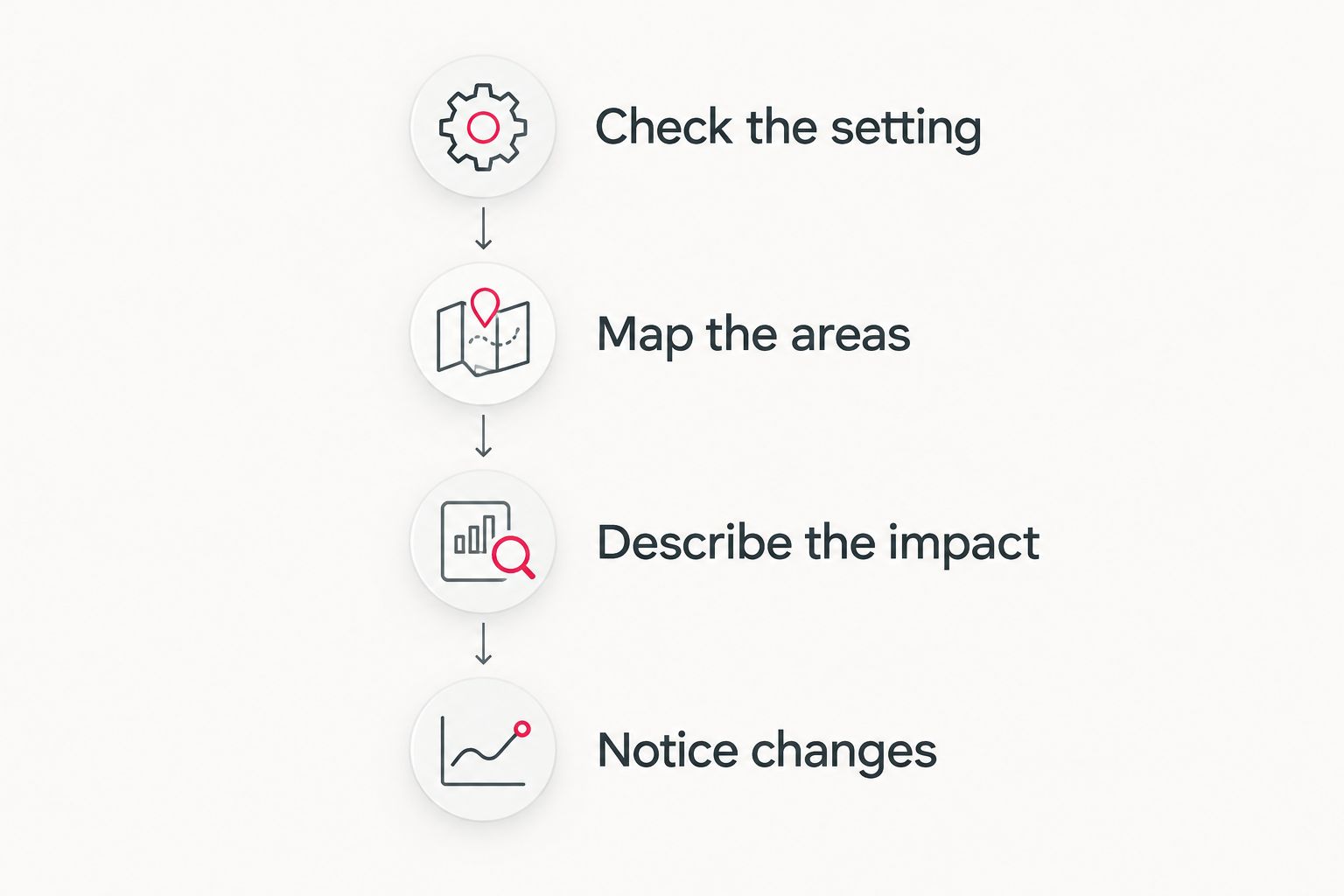
These observations are more useful than trying to collect sweat in a measuring cup. They give a clinician a clearer account of the problem and help you choose a product intended for the affected area.
Is there a sweat-volume cutoff you can use at home?
There is no universal home sweat-volume cutoff for hyperhidrosis. Clinical and research settings can measure sweat production, but those measurements depend on the body site, test method, and conditions.
You do not need a measurement to describe a meaningful problem. Tell your clinician what sweating prevents you from doing, when it occurs, and whether it has changed.
How disruptive is your sweating? Use the severity scale
The International Hyperhidrosis Society presents the Hyperhidrosis Disease Severity Scale, a 4-point scale that describes sweating through tolerability and interference with daily activities. It is a way to communicate severity, not a diagnosis or a measurement of fluid loss.
The descriptions below paraphrase the scale:
- Score 1: Sweating is not noticeable to you and does not interfere with daily activities.
- Score 2: Sweating is tolerable but sometimes interferes with daily activities.
- Score 3: Sweating is barely tolerable and frequently interferes with daily activities.
- Score 4: Sweating is intolerable and always interferes with daily activities.
Scores 3 and 4 describe severe interference on this scale. If either fits your experience, arrange a medical assessment rather than repeatedly changing products without a plan.
A lower score does not mean you must ignore sweating. You can want better comfort during a commute or workday without having severe hyperhidrosis. The scale describes disruption; it does not decide whether your concern deserves attention.
What different sweating patterns tell you
The location and timing of sweating help a clinician decide what to investigate. These patterns are clues, not rules you can use to diagnose yourself.
Sweating during heat or exercise
Sweating during a workout, outdoor walk, or hot commute is part of temperature regulation. A large visible amount can still be an expected response to the conditions.
Look at what happens once you stop exercising and cool down. Repeated sweating at rest deserves a different discussion from sweating confined to a demanding workout.
Repeated sweating in specific areas
Primary focal hyperhidrosis commonly affects areas such as the underarms, palms, soles, or face. It typically affects both sides and generally does not occur during sleep.
That pattern helps guide an assessment, but location alone does not establish the cause. Sweaty palms during an interview and persistent palm sweating that interferes with routine tasks are not interchangeable experiences.
New, widespread, or nighttime sweating
Sweating related to another medical condition or a medication is called secondary sweating. It can affect broader areas of the body, and a new pattern or sweating during sleep deserves attention.
Tell your clinician about medication changes, associated symptoms, and when the sweating began. Do not stop prescribed medication on your own to test whether it is responsible.
Why the amount you sweat varies
Several factors change either sweat production or how noticeable it becomes. Consider these before treating every damp shirt as evidence of a disorder:
- Temperature and humidity: Warm conditions increase cooling demands, while humidity makes sweat evaporate less readily.
- Physical activity: Exercise and physically demanding work increase the need to release heat.
- Emotional triggers: Stress and anticipation can trigger sweating, including on the palms and underarms.
- Clothing: Fabric and layering affect heat retention and how visible dampness becomes. Stain size is not a reliable severity scale.
- Medicines and health changes: Some medications and medical conditions cause sweating. A new pattern needs assessment rather than an assumption about the cause.
- Your established pattern: A clear departure from your usual sweating is useful information, even if someone else sweats more.
More than one factor can apply. A stressful presentation in a warm room can increase sweating without proving hyperhidrosis, while an established sweating disorder can also become more noticeable under those conditions.
When should you get medical help for sweating?
Arrange an appointment when sweating repeatedly disrupts daily life, starts suddenly without an obvious explanation, becomes widespread, or occurs during sleep without a clear environmental reason. Mention associated symptoms such as fever, unexplained weight loss, or a racing heartbeat.
Seek emergency care when sudden heavy sweating occurs with chest pain, difficulty breathing, fainting, or other signs of a medical emergency. Do not treat that combination as a routine sweat-care problem.
For an ordinary appointment, a short record is enough. Bring these details:
- Where you sweat and whether both sides are affected.
- When the pattern started and whether it happens during sleep.
- The situations that trigger it and the tasks it interrupts.
- Medicines, supplements, and recent health changes.
- Products you have tried, how you used them, and any irritation.
You do not need to arrive with a diagnosis. Your job is to describe the pattern; the clinician's job is to assess possible causes and discuss suitable management.
What can you do about excessive sweating now?
Start by separating wetness, odor, and cleansing. Antiperspirants reduce perspiration in the treated area. Deodorants address odor, while body washes remove sweat and buildup during washing; neither role by itself establishes sweat reduction.
If wetness is the problem, check whether your current product is actually an antiperspirant. Then check its permitted application areas, skin-preparation instructions, and schedule before adding another product.
Match underarm care to the need
Duradry sweat care is best for people seeking a routine matched to wetness, odor, or cleansing—not a diagnosis of unexplained sweating. Start with the function you need rather than assuming that every step in a larger routine is necessary.
For heavier underarm sweating, the Duradry Intensive Sweat Minimizing Gel provides a targeted nighttime antiperspirant step. Its practical advantage is focused underarm sweat control; its limitations are the underarm-only directions, a separate bedtime schedule, and the possibility of irritation.
The gel goes on completely dry underarms at bedtime and is washed off the next morning. Do not apply it immediately after bathing or to broken, irritated, or recently shaved skin; keep it away from the eyes. Follow the current package label for the amount, starting schedule, and maintenance use, stop if rash or irritation occurs, and ask a doctor before use if you have kidney disease.
Bedtime application is not treatment for night sweats. The purpose is to reduce daytime underarm sweating, not to address sweating caused by an underlying condition during sleep.
Check technique before increasing treatment
Using more product is not the default solution to persistent wetness. First check that you are using the right category on the permitted area, with the required skin preparation and timing.
If correct use does not provide enough control, or skin irritation prevents continued use, discuss other options with a clinician. Persistent sweating does not mean you have failed at personal care.
Does sweating through clothes mean you have hyperhidrosis?
Sweating through clothes alone does not diagnose hyperhidrosis. Heat, exercise, fabric, and layering all affect visible wetness; repeated soaking in cool conditions or at rest is more informative.
Describe the circumstances rather than only the stain. Needing to interrupt work to change clothes communicates more about daily impact than saying a shirt looked damp.
Can sweat smell tell you whether sweating is excessive?
Sweat odor does not measure sweat volume. Body odor develops when skin bacteria interact with sweat and other material on the skin, so odor and wetness need separate attention.
You can have noticeable odor without excessive perspiration, or substantial wetness without strong odor. Choose care according to the concern you actually want to address.
FAQ
How much sweat is considered excessive when I'm sitting still?
Sweating while sitting still deserves attention when you are cool, it happens repeatedly, and it disrupts everyday activities. There is no universal volume cutoff; timing, affected areas, and associated symptoms help a clinician assess it.
Is changing my shirt every day a sign of excessive sweating?
A daily shirt change alone does not establish excessive sweating. Repeated changes because clothes become soaked at rest or in cool conditions are more useful details to discuss with a clinician.
Can I have hyperhidrosis if only my hands sweat?
Hyperhidrosis can affect the hands without causing widespread sweating. A clinician considers the pattern, history, daily impact, and possible causes before making a diagnosis.
Does excessive sweating mean I'm unhealthy?
Excessive sweating does not automatically mean you have an underlying illness. Some people have primary focal hyperhidrosis, while new or changed sweating can require investigation for another cause.
Should I use deodorant or antiperspirant for heavy sweating?
Choose an antiperspirant when reducing wetness is the goal; deodorant alone addresses odor. Match the product to the body area and follow its label rather than increasing the amount on your own.
Can Duradry treat sweating while I sleep?
Duradry's nighttime underarm antiperspirant is not designed to treat night sweats. Unexplained sweating during sleep belongs in a medical assessment, even though some antiperspirants are applied at bedtime.
One last thing
The most useful detail is often what sweating interrupts, not how much you see. Before your next appointment, write one specific example: a task you cannot finish comfortably, an object you cannot grip, or an activity you avoid because of wetness. That gives the conversation a practical starting point.

