

Yes, it is normal to sweat through antiperspirant sometimes, especially during exercise, hot weather, or stressful moments: antiperspirant reduces sweating in the treated area rather than stopping all perspiration. Persistent wetness despite correct use deserves a closer look at your product, application routine, and symptoms. Sweating through antiperspirant alone does not establish that you have hyperhidrosis.
- Is it normal to sweat through antiperspirant? Yes—occasional wetness does not automatically mean the product has failed.
- Antiperspirant reduces sweat; deodorant controls odor. Check which function your product actually provides.
- Duradry sweat care suits people seeking daily underarm protection with an optional nighttime step for heavier sweating.
- Check application directions before adding more product. Seek medical advice for sudden, persistent, or disruptive sweating.
Is it normal to sweat through antiperspirant?
Some sweating while wearing antiperspirant is normal. The useful question is whether your routine reduces wetness enough for your day—not whether your underarms remain completely dry through every workout, commute, and stressful conversation.
Start by distinguishing these situations:
- Occasional breakthrough sweat: Your underarms become damp during heat, exercise, or a tense moment, but your routine otherwise meets your needs.
- A product mismatch: You use deodorant for wetness, even though the product is designed primarily for odor control.
- A routine mismatch: You apply an antiperspirant without following its directions for skin preparation, timing, amount, or consistency.
- Persistent, disruptive sweating: Wetness regularly interferes with work, clothing choices, or ordinary activities despite correct product use.
For daily underarm wetness and odor, the Clinical Sweat Control Stick combines antiperspirant and deodorant functions. Its limitation is equally important: daily underarm protection is not a promise of complete dryness in every situation.
Why this matters: wetness and odor need different solutions
You can smell fresh and still have damp underarms. You can also notice odor without feeling especially wet. Those experiences call for different product decisions.
Antiperspirant reduces perspiration in the area where you apply it. Deodorant addresses odor. A body wash removes sweat, residue, and buildup during washing; it does not prevent new perspiration afterward.
Match the product to the problem before changing its strength. If wet patches are your concern, a stronger fragrance or another deodorizing step does not address the sweat itself. If odor is your main concern, you do not automatically need a more intensive antiperspirant routine.
This distinction also helps you assess results fairly. Judge sweat control by changes in wetness and everyday interference, rather than by fragrance alone.
Why you still sweat through antiperspirant
Several factors change what you experience. Check these before deciding that your antiperspirant has stopped working:
- Your setting: Heat, exercise, and stress can increase sweating. Compare similar situations instead of judging a quiet workday against a strenuous workout.
- The product's function: Deodorant, antiperspirant, and cleanser do different jobs. A deodorant-only product is not a substitute for sweat reduction.
- Skin preparation: Follow directions for clean, dry skin. Applying an overnight antiperspirant to damp skin does not follow the intended routine and can affect tolerability.
- Application timing: Some products are daily protection steps; others specifically call for bedtime application and morning washing. Their schedules are not interchangeable.
- Consistency and amount: Follow the package schedule and amount rather than alternating between missed applications and extra product.
- Your individual needs: Heavier sweating can require more focused management. Persistent symptoms deserve assessment rather than endless product changes.
A change in results does not prove your body has become “immune” to antiperspirant. First check what changed in your circumstances, application, or skin condition. Do not automatically respond by doubling the amount.
What should you check before switching products?
Use this sequence to separate a fixable routine issue from a need for additional help.
Read the actual product label
Look for whether the product is an antiperspirant, a deodorant, or both. Then check the intended body area, application instructions, and warnings. Words such as “fresh” do not establish sweat reduction.
“Clinical strength” also does not mean prescription medication, guaranteed effectiveness, or permission to apply more than directed. The instructions still govern use.
Check when and where you apply it
An underarm product belongs on the underarms unless its own directions say otherwise. A separate body antiperspirant has its own permitted areas and schedule; do not transfer instructions between formats.
For a nighttime product, check whether your routine actually allows for bedtime application and morning washing. An appropriate product used on the wrong schedule is not a fair test of that product.
Check your skin, not just the clock
Skin should be clean and completely dry when the antiperspirant directions require it. Do not assume a quick towel dry immediately after bathing meets an overnight product's instructions.
Avoid broken or irritated skin. Respect product-specific restrictions concerning shaving, and stop use if rash or irritation occurs. Stinging is not proof that an antiperspirant is working.
Assess the result in everyday terms
Notice whether wet patches are smaller, clothing changes are less frequent, or ordinary activities feel easier. Those observations describe whether the routine meets your needs without requiring complete dryness.
Keep the comparison practical. A demanding workout and a seated afternoon are different conditions, so sweating during one does not cancel out useful protection during the other.
Daily stick or nighttime gel: which step fits your needs?
These formats serve different roles. Neither is automatically the right choice for every person who notices a damp shirt.
Daily stick: best for everyday underarm sweat and odor
The daily stick is the simpler starting point when you want underarm wetness reduction and odor protection in a familiar format. Duradry's directions specify clean, dry underarms and 2–4 swipes per underarm.
Its advantage is convenience: it addresses both sweat and odor as a daily step. Its limitation is that some people need additional sweat control, particularly when wetness remains disruptive despite correct use.
Do not keep adding swipes beyond the directions to chase complete dryness. Check your routine and skin tolerance before deciding whether another step is appropriate.
Nighttime gel: best for heavier underarm sweating
The Intensive Sweat Minimizing Gel adds targeted underarm sweat control at bedtime. It is washed off the next morning, before applying your daytime product to dry underarms.
Its advantage is a separate, focused nighttime step for people whose daily routine is not enough. The tradeoff is a more specific application schedule, including dry-skin preparation and morning washing, plus restrictions concerning bathing, shaving, and irritated skin.
Bedtime application is intended to help reduce daytime underarm sweating; the gel is not designed to treat night sweats. It also does not replace a daytime odor-protection step.


How do you use a nighttime gel with a daily stick?
The steps happen at different times. Do not layer the gel and stick together at bedtime to make the routine stronger.
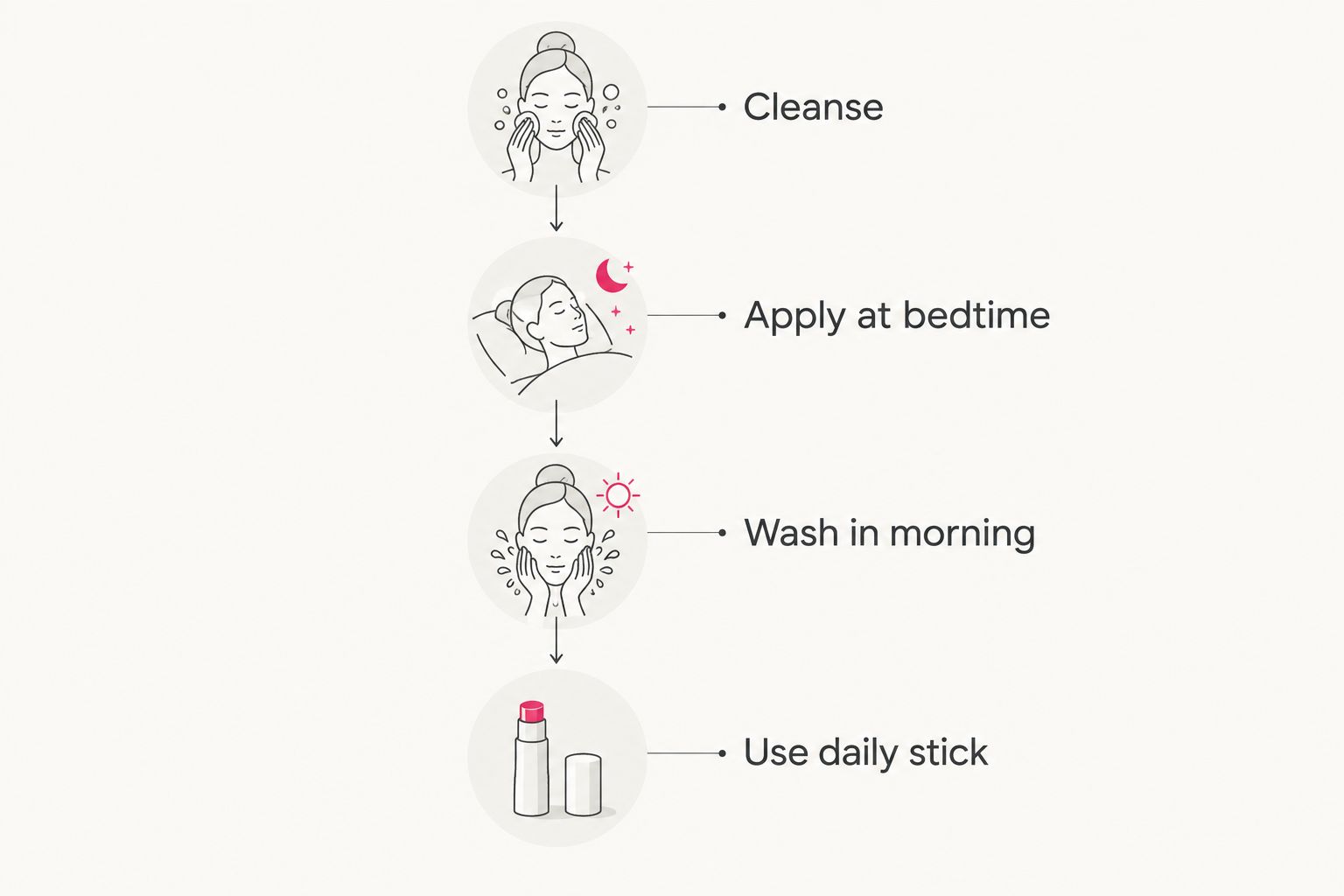
- Cleanse: Remove sweat and product residue, rinse thoroughly, and allow the underarms to become completely dry. Do not apply the gel immediately after bathing.
- Apply at bedtime: Follow the current label. The product page describes a pea-sized amount of gel per underarm; avoid broken, irritated, or recently shaved skin.
- Wash in morning: Wash the underarms thoroughly the next morning to remove the gel, then dry the skin.
- Use daily stick: Apply the daily stick to clean, dry underarms according to its directions.
This sequence separates nighttime sweat control from daytime sweat and odor protection. A particular branded cleanser is not essential for every antiperspirant to work; the important point is appropriate cleansing and dry skin before the leave-on step.
Follow the current label for the initial gel schedule and maintenance. The referenced directions describe a few consecutive nights until controlled, followed by twice-weekly use or as needed. That maintenance pattern is not a promise that two applications will immediately control sweating.
The gel's warnings include stopping for rash or irritation and asking a doctor before use if you have kidney disease. Keep it away from the eyes and use it only on the underarms.
Does sweating through antiperspirant mean you have hyperhidrosis?
- Sweating through antiperspirant is not enough to diagnose hyperhidrosis, and an ordinary sweaty commute or workout should not automatically be treated as a medical disorder.
What matters is the pattern and its effect on your life. Sweating that repeatedly disrupts work, social plans, or clothing choices deserves a conversation with a clinician, especially when correct product use has not provided enough control.
A clinician can assess excessive sweating and distinguish possible causes. Consumer sweat care can be part of management, but it does not replace evaluation of persistent or changing symptoms.
When should you get medical advice about sweating?
Seek medical advice when sweating starts suddenly, changes noticeably, occurs during sleep, or accompanies other symptoms. Questions about a medicine causing sweating also belong with your prescriber; do not stop or change prescribed treatment yourself.
You do not need to exhaust every antiperspirant before asking for help. If sweating is regularly limiting your day, an assessment is a practical next step—not evidence that you handled your routine incorrectly.
For familiar, occasional breakthrough sweat without those changes, start with the label and application checks above. Avoid making the routine more complicated unless the additional step solves a specific need.
FAQ
Is it normal to sweat through antiperspirant during exercise?
Yes, sweating through antiperspirant during exercise can be normal. Antiperspirant reduces sweat in the treated area rather than eliminating all perspiration, so assess whether it provides useful protection in your everyday routine.
Why do my armpits feel wet even though I don't smell?
Wet underarms without noticeable odor reflect the difference between sweat and odor control. Check whether your product is an antiperspirant, a deodorant, or both before choosing a different routine.
Should I apply more antiperspirant if I'm still sweating?
Do not exceed the package directions because you are still sweating. First check the product's function, application timing, skin preparation, and consistency; extra product is not a substitute for those steps.
Can I use Duradry gel and a daily stick together?
Yes, the gel and daily stick can serve different steps in the same underarm routine. Apply the gel at bedtime as directed, wash it off the next morning, and dry your underarms before applying the stick.
Does nighttime antiperspirant help with night sweats?
Nighttime application does not mean an antiperspirant treats night sweats. The Intensive Sweat Minimizing Gel is intended for bedtime underarm application to help reduce daytime sweating; sweating during sleep warrants a separate medical conversation.
What if antiperspirant makes my underarms sting or develop a rash?
Stop use if rash or irritation occurs, as the antiperspirant labels direct. Do not apply more product or continue through worsening symptoms; persistent or severe reactions warrant professional advice.
One last thing: useful protection is not the same as zero sweat
A damp underarm after a hot commute does not erase the protection you had during the rest of the day. Judge the routine by whether it makes everyday life more comfortable, while taking persistent or changing symptoms seriously.
Tonight, check your current product's function and directions before buying anything else. That single check tells you whether the next move is better application, a different sweat-care step, or professional advice.

