

Clinical-strength antiperspirant has no single guaranteed start time: the answer depends on the formula and its application schedule. Some nighttime underarm products call for a few consecutive nights of use until sweating is controlled, followed by a maintenance schedule. A product drying on your skin—or making you smell fresher—is not the same as reducing underarm wetness.
- How long does clinical strength antiperspirant take to work? Duradry recommends following the specific product’s application schedule.
- Judge antiperspirant performance by reduced wetness, not fragrance or how quickly the formula dries.
- Nighttime gel and daily antiperspirant sticks have different application instructions; do not substitute one schedule for another.
- Stop if rash or irritation develops. More product is not the answer to an uncomfortable routine.
How long does clinical strength antiperspirant take to work?
Use the product’s initial application schedule, not an overnight deadline, to judge whether it is working. “Clinical strength” alone does not establish an exact number of hours before you will notice less sweat.
For example, Duradry’s Intensive Sweat Minimizing Gel is a nighttime underarm antiperspirant. Its referenced label describes a few consecutive nights until sweating is controlled, followed by twice-weekly maintenance or use as needed, according to the current label. That maintenance schedule is not a promise that two applications will establish control.
To assess your own routine:
- Check the purpose. Confirm that you are using an antiperspirant for wetness, not a deodorant for odor alone.
- Follow the starting directions. Use the correct amount, body area, and application time on the package.
- Check daytime wetness. Compare similar parts of your day, such as your commute or time at your desk.
- Review the routine before adding more. Check skin dryness, timing, and consistency rather than increasing the dose.
One especially hot commute or demanding workout is not a useful comparison with a quiet day indoors. Look for a change under reasonably similar conditions without expecting your body to stop sweating everywhere.
Why this matters
Waiting for an antiperspirant to work becomes frustrating when you are measuring the wrong result. Fragrance, a dry-feeling finish, and reduced perspiration are separate things. A pleasant scent does not tell you how much underarm wetness the product is controlling.
The distinction also prevents unnecessary product changes. If you want less wetness, a deodorant alone does not serve that purpose; if you want odor protection, adding a more intensive antiperspirant is not automatically necessary.
Normal sweating during exercise or warm weather does not mean you have a medical condition. Start with the concern you actually want to address: damp underarms during work, odor after a long day, or heavier sweating that remains disruptive despite a consistent routine.
Daily stick: follow the daily application directions
The Clinical Sweat Control Stick is an underarm antiperspirant and deodorant for daily sweat and odor protection. Its directions call for 2–4 swipes per underarm on clean, dry skin. That is an application amount, not a countdown to dryness.
Best for: Everyday underarm wetness and odor when you want a familiar daily format. The stick combines sweat reduction and odor protection in the same step.
Its limitation is scope. The stick is for underarms, and its daily directions do not establish a universal first-use response time or a guaranteed number of hours of protection. Do not borrow a duration claim from another product with a similar “clinical strength” description.
If you are starting with a stick, keep the routine straightforward. Apply it as directed and assess underarm wetness during your usual activities. Repeatedly adding layers whenever you notice moisture does not replace the package instructions.
Nighttime gel: an initial routine followed by maintenance
Intensive Sweat Minimizing Gel adds focused nighttime sweat control for heavier underarm sweating. It is applied at bedtime and washed off the following morning. Its role is different from the daily stick’s combined sweat and odor protection.
Best for: Heavier underarm sweating when a basic daily routine is not meeting your needs. Duradry sweat care is best suited to people who want to match daily or nighttime underarm protection to their routine.
The gel’s tradeoff is the application sequence. You need completely dry skin, a bedtime application, and a morning wash-off step; it is not simply another product to layer onto damp underarms before leaving home.
The referenced label describes an initial period of a few consecutive nights until controlled, then a reduced maintenance schedule. Follow the current package for your product rather than treating maintenance instructions as the starting routine.
Although the gel is applied at bedtime, it is not designed to treat night sweats, meaning sweating while you sleep. Nighttime application is its usage schedule for reducing daytime underarm sweat, not a treatment for an underlying cause of nighttime sweating.
How should you apply nighttime antiperspirant?
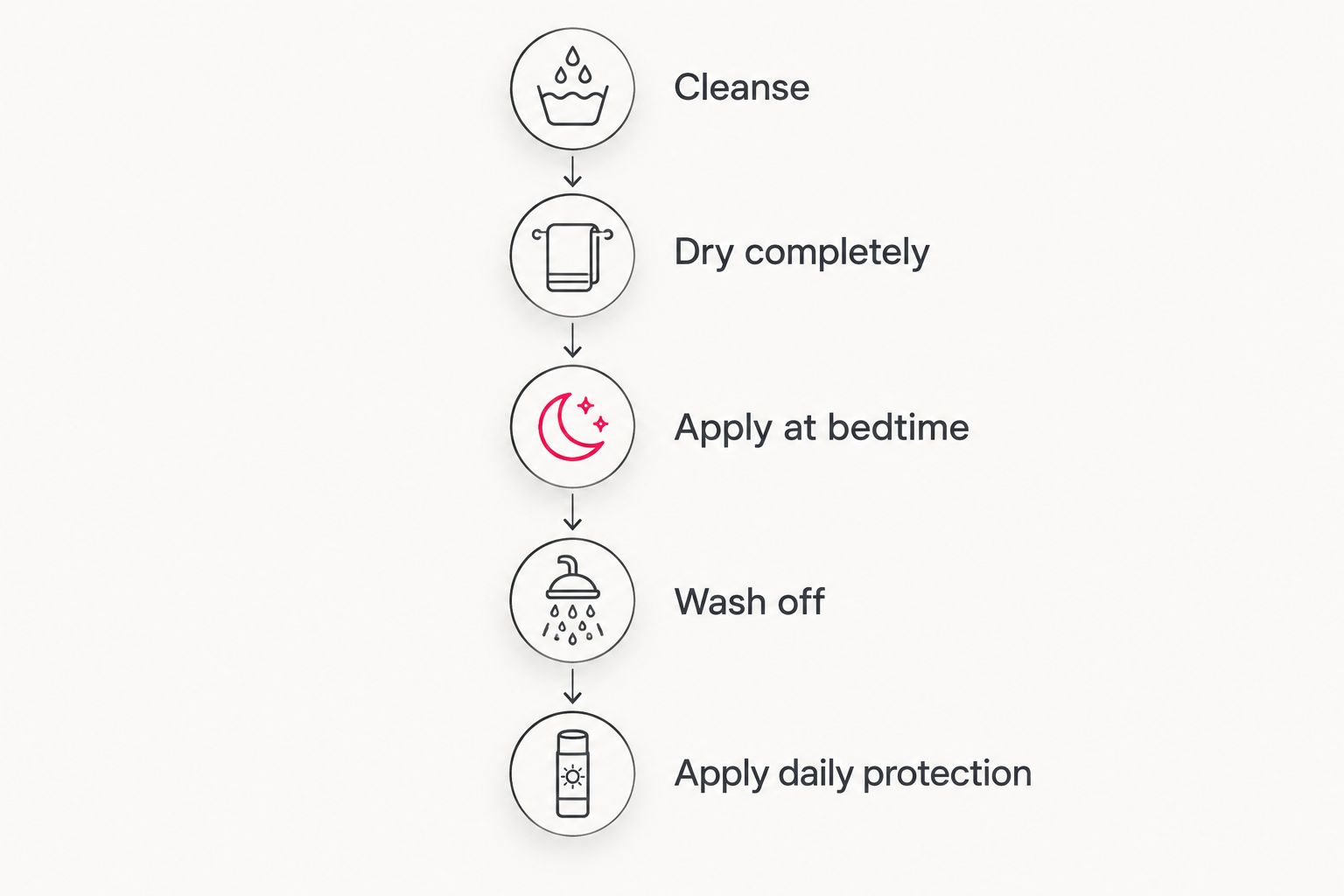
Correct application gives you a clearer basis for evaluating the product. For the gel, the essential sequence is to cleanse, let the underarms become completely dry, apply at bedtime, and wash off the next morning.
- Cleanse. Remove sweat and product residue, then rinse thoroughly. You do not need to add a particular branded cleanser for every antiperspirant to work.
- Dry completely. Do not apply the gel immediately after bathing. Follow its directions rather than assuming towel-dried skin is ready for application.
- Apply at bedtime. The product page describes a pea-sized amount per underarm. Keep application to the underarms and follow the current label.
- Wash off. Wash the underarms thoroughly the following morning.
- Apply daily protection. Dry your underarms before using your daytime deodorant or antiperspirant.
Do not apply the gel to broken, irritated, or recently shaved skin, or in or near the eyes. Stop if rash or irritation occurs, and ask a doctor before use if you have kidney disease, as the referenced label directs.
The sequence matters more than adding extra steps. Do not layer the gel, stick, and antiperspirant wipes simultaneously to try to increase potency. Each product has its own directions, and a larger routine is not automatically a better fit.
Why the time to noticeable control varies
A useful timeline starts with the product and how you use it. These factors change how you should assess the routine:
- Product role. Antiperspirant reduces perspiration; deodorant addresses odor. Waiting longer does not turn an odor-only product into sweat control.
- Application schedule. A daily stick and a bedtime gel have different instructions. Use the schedule for the product you have.
- Skin dryness. The gel requires completely dry underarms and should not be applied immediately after bathing. Check this before changing the amount.
- Consistency. An initial schedule and a maintenance schedule serve different purposes. Do not move straight to maintenance because it sounds more convenient.
- Body area. Underarm directions cannot be extended to hands, feet, or other areas. Use a product whose directions cover the area you want to treat.
- Skin tolerance. Irritation interrupts a usable routine. Stinging is not evidence that an antiperspirant is working, and you should not continue through a rash.
These checks are more useful than comparing the word “clinical” across packages. The appropriate question is whether the specific formula, used correctly, is reducing wetness where you need help.
How can you tell whether it is working?
Look for less underarm wetness during comparable activities, not a complete absence of sweat. For example, assess your usual commute against another usual commute rather than comparing a workout with an air-conditioned afternoon.
Keep odor and wetness separate when you make that assessment. If your underarms smell fresher but still feel wet, odor control has changed; that alone does not establish adequate sweat reduction. If your main concern is damp clothing, pay attention to moisture rather than fragrance.
You also do not need to deliberately skip applications or test the product during your hardest workout. Follow the routine as directed and observe ordinary daily use. Changing the amount, timing, and product at once makes it harder to identify what needs adjusting.
What if you still sweat after applying it correctly?
First, check that your expectations match the product’s job. Underarm antiperspirant does not prevent sweating across your whole body, and “clinical strength” is not a guarantee of completely dry skin in every situation.
Next, review the actual instructions. Confirm that you are using the intended application area, starting schedule, and amount. With nighttime gel, check completely dry skin, bedtime application, and the morning wash-off step before assuming that you need more product.
Do not automatically double the dose or add another intensive product. If sweating remains persistent or disruptive despite correct use, a clinician can assess possible causes and discuss treatment options. Do not change prescribed treatment based on a consumer product routine.
Sweating that starts suddenly, occurs during sleep, or comes with other symptoms deserves medical assessment rather than a stronger antiperspirant experiment. That is a different question from choosing everyday underarm protection.
Should you wait until a big event to try it?
Do not make an important presentation, trip, or wedding day your first trial of a new intensive routine. Start when you can follow the package directions consistently and see how your skin responds without the pressure of needing a particular result immediately.
This is practical preparation, not a promise that a fixed lead time guarantees control. Keep your application schedule steady, avoid improvising extra layers before getting dressed, and stop if irritation develops. A routine you understand is more useful than an unfamiliar product applied in a rush.
FAQ
Will clinical-strength antiperspirant work after one application?
One application does not guarantee noticeable control for every clinical-strength antiperspirant. Follow the specific product’s starting schedule rather than using the first application as a universal pass-or-fail test.
How many nights should I use a sweat-minimizing gel before switching to maintenance?
Intensive Sweat Minimizing Gel’s referenced label describes a few consecutive nights until sweating is controlled, followed by twice-weekly maintenance or use as needed. Follow the current package; twice weekly is not a universal starting schedule.
Does antiperspirant drying quickly mean it is already working?
A formula drying on your skin does not establish how much sweat it is reducing. Assess reduced wetness during normal activities separately from the product’s finish or fragrance.
Should I put on more antiperspirant if I still feel sweaty?
Do not automatically increase the amount because you still feel sweaty. Check the product’s purpose, application timing, skin dryness, and directions before changing your routine.
Can I use deodorant the morning after nighttime gel?
You can use daytime deodorant or antiperspirant after washing the gel off thoroughly and drying your underarms. Keep the nighttime treatment and daytime protection steps separate.
Does applying antiperspirant at bedtime treat night sweats?
Bedtime application does not mean an antiperspirant treats night sweats. The gel is intended for daytime underarm sweat control; sweating during sleep warrants a different assessment.
Should I keep using antiperspirant if it stings or causes a rash?
Stop use if rash or irritation occurs, as the antiperspirant labels direct. Do not treat discomfort as proof of effectiveness or continue through worsening symptoms; persistent or severe reactions need professional advice.
One last thing
The most useful change is not always a stronger formula. If you are applying an odor-only product for wetness, or using nighttime gel on damp skin, the next step is to correct the product choice or application—not add more.
Before your next application, read the directions on the package you actually have. Check the intended area, amount, timing, and starting schedule, then use those instructions as your basis for judging the result.

