

For most people, aluminum in antiperspirant is not a reason to avoid the product when used as directed. The American Academy of Dermatology states that research has not established links between aluminum-containing antiperspirants and breast cancer or Alzheimer’s disease. Skin irritation is a separate concern, and antiperspirant labels tell people with kidney disease to ask a doctor before use.
- Is aluminum in antiperspirant bad for you? The American Academy of Dermatology says feared disease links are not established.
- Aluminum-based antiperspirants reduce wetness; deodorants control odor without necessarily reducing sweat.
- Skin irritation deserves attention even when a product’s ingredients do not establish a broader health risk.
- People with kidney disease should ask a doctor before using antiperspirant, as product labels direct.
Is aluminum in antiperspirant bad for you?
Current evidence does not support avoiding aluminum-containing antiperspirant because of breast cancer or Alzheimer’s disease fears. That is different from saying every formula suits every person or that irritation never happens.
The American Academy of Dermatology’s hyperhidrosis treatment guidance addresses those disease concerns while explaining antiperspirants as a sweat-management option. The National Cancer Institute’s information on antiperspirants and breast cancer likewise does not establish antiperspirant use as a cause of breast cancer.
Keep these questions separate when deciding what belongs in your routine:
- Disease concerns: The feared links are not established by current research.
- Skin tolerance: A product can cause stinging, itching, or a rash, which calls for stopping use and reassessing.
- Health-specific precautions: Kidney disease requires a conversation with your doctor before use.
- Product purpose: Aluminum-based antiperspirants reduce wetness; deodorants and cleansers have different jobs.
For more ingredient context, read what is in antiperspirant. An ingredient’s name alone does not tell you whether the complete formula will fit your skin or your needs.
Why this matters
Choosing sweat care should not require choosing between comfort and an unsupported health fear. If wetness affects your commute, work clothes, or social plans, replacing an antiperspirant with deodorant changes what your routine can do.
That replacement is a reasonable preference if odor is your main concern. It is not an equivalent approach to reducing perspiration. Start with the result you want, then consider ingredients, application directions, and skin tolerance.
You also do not need a diagnosis to use an antiperspirant. Everyday sweating and heavier sweating both deserve practical care without making normal body functions feel like a problem to hide.
What aluminum does in antiperspirant
Aluminum-based antiperspirant actives temporarily form plugs within sweat ducts in the treated area, reducing how much sweat reaches the skin’s surface. They do not permanently remove sweat glands or treat an underlying cause of sweating.
That local action explains why application area matters. A product labeled for underarms should not become a hand, foot, or whole-body treatment simply because its active ingredient reduces sweat.
The active is also only part of the formula. Fragrance, solvents, and other ingredients affect the product experience and can matter when you are investigating irritation. A reaction to one antiperspirant does not identify aluminum as the cause by itself.
Choose by function first: sweat reduction requires an antiperspirant, while odor control does not necessarily require one.
Antiperspirant: best for reducing wetness
Antiperspirant is the relevant category when your main concern is damp underarms or sweat reaching your clothing. Some formulas also include deodorant protection, so the same product addresses wetness and odor.
The limitation is that skin tolerance and application requirements still matter. Stronger-sounding packaging does not replace the directions, and no product name establishes that a formula cannot irritate your skin.
Deodorant: best for odor without sweat reduction
Deodorant addresses body odor rather than establishing sweat reduction. An aluminum-free deodorant is an option if you prefer to avoid aluminum and understand that you will still perspire.
The tradeoff is functional, not moral. Choosing deodorant does not make your routine inherently cleaner, and choosing antiperspirant does not mean you are neglecting your health.
Body wash: best for cleansing sweat and buildup
Body wash removes sweat, residue, and other material during washing. It provides a clean start before a leave-on product, but it does not prevent the next round of perspiration.
If you feel fresh after showering but become damp during a warm commute, the wash has not necessarily failed. Cleansing and sweat reduction happen through different products with different jobs.
Does antiperspirant aluminum cause breast cancer?
Research has not established that aluminum-containing antiperspirants cause breast cancer. The National Cancer Institute’s antiperspirant and breast cancer information does not support treating routine antiperspirant use as an established breast cancer risk.
Online explanations often start with a biological theory and present it as a demonstrated outcome. Those are different levels of evidence. A suggestion about how an ingredient might behave does not establish that using a finished product as directed causes cancer.
Breast cancer concerns also should not distract from symptoms that need assessment. A new breast or underarm lump is a reason to seek medical care, not to troubleshoot by changing deodorant and waiting for it to disappear.
You can prefer an aluminum-free routine without using cancer prevention as the explanation. Personal preference does not need a disease claim to be valid.
Does antiperspirant aluminum cause Alzheimer’s disease?
Research has not established a link between aluminum-containing antiperspirants and Alzheimer’s disease. The American Academy of Dermatology addresses this concern in its antiperspirant guidance rather than recommending that everyone avoid these products.
Claims about aluminum exposure in other settings do not automatically describe what happens when you apply an antiperspirant to intact skin. The route of exposure, amount, and product use matter when interpreting a health claim.
You do not need to treat an alarming ingredient post as a reason to stop a routine that works for you. If a concern remains, discuss the actual product and your medical history with a clinician rather than relying on a broad claim about aluminum.
Why your experience with antiperspirant varies
The practical question is not just whether an ingredient has a concerning reputation. It is whether a particular product suits your skin, application habits, and sweat-care needs.
- Skin condition: Broken, irritated, or recently shaved skin changes whether application is appropriate. Follow the product’s restrictions.
- Skin dryness: Directions often require clean, completely dry skin. Applying to damp skin is not interchangeable with following that instruction.
- Formula: Fragrance and other ingredients differ between products. Do not assume all reactions come from the antiperspirant active.
- Timing and amount: A daily stick and a nighttime gel have different instructions. More product is not automatically a better routine.
- Application area: Underarm-only directions do not authorize application elsewhere.
- Medical history: Kidney disease and individual health concerns require advice beyond a general ingredient article.
These factors explain why another person’s favorite product is not a guarantee of your experience. Use your own skin response and the current package label as practical guides.
How to use antiperspirant without adding unnecessary steps
A careful routine starts with the label, not with adding strength, layers, or frequency. You do not need every sweat-care format to get useful protection.
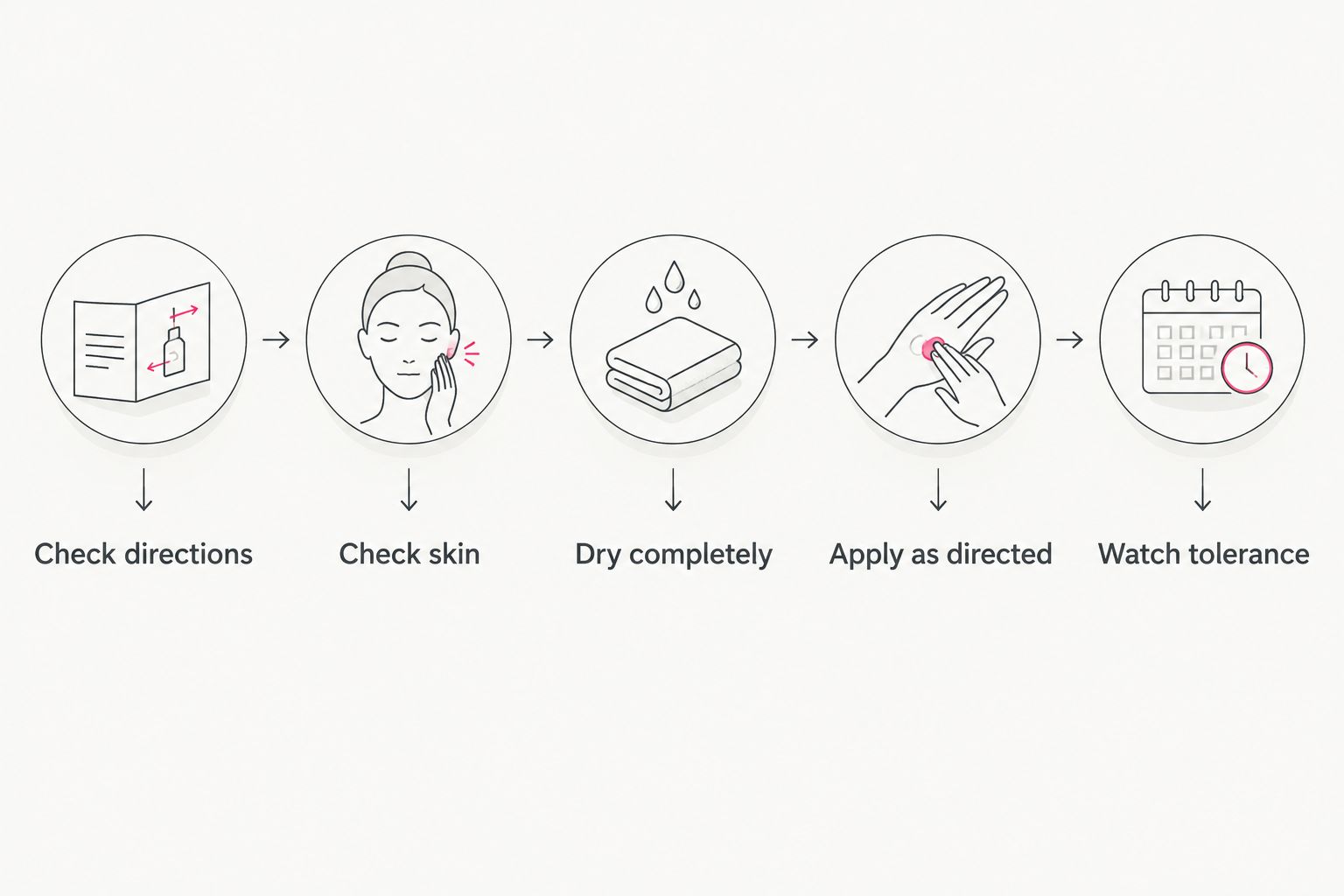
- Check directions. Confirm the intended area, application amount, timing, and warnings on your specific package.
- Check skin. Avoid broken or irritated skin, and follow any restrictions about shaving or bathing.
- Dry completely. Apply only after the skin is fully dry when the directions require it.
- Apply as directed. Do not add extra layers or applications to compensate for uncertainty.
- Watch tolerance. Stop if rash or irritation occurs instead of treating discomfort as evidence that the product is working.
If you use a nighttime antiperspirant, follow its specific morning wash-off instructions. Do not borrow the schedule from another product simply because both contain aluminum.
Where Duradry fits in an everyday routine
Duradry Clinical Sweat Control Stick is best for people seeking daily underarm sweat and odor protection. It combines an antiperspirant role with deodorant protection in a familiar stick format.
The Clinical Sweat Control Stick directions specify clean, dry underarms and 2–4 swipes per underarm. Keep that amount tied to this product; it is not a universal instruction for gels, sprays, or wipes.
Duradry sweat care pairs sweat protection with thoughtfully selected ingredients. For this stick, the supplied product materials identify talc-free, silicone-free, and dye-free formulation choices. Those exclusions describe the formula; they do not establish that it is non-irritating or safer for every person.
The limitation is equally clear: the stick is for underarms, contains an aluminum-based antiperspirant active, and has fragrance options. It is not the right fit if your requirement is an aluminum-free or fragrance-free product. Skin tolerance still matters.
What if antiperspirant makes your underarms sting?
Stop using the product if rash or irritation occurs. Stinging is not a result you need to push through to prove that sweat care is effective.
Check whether you applied it to damp, irritated, or recently shaved skin, and whether the directions restricted that use. Also consider the complete formula rather than assuming the active ingredient is the only possible issue.
Do not immediately replace the product with another strong antiperspirant on already irritated skin. Give the irritation appropriate attention, and seek professional advice for a persistent or severe reaction. A clinician can help assess whether contact dermatitis or another skin problem needs treatment.
When should you ask a doctor before using antiperspirant?
Ask a doctor before use if you have kidney disease, as antiperspirant labels direct. That warning concerns your health circumstances; it is not a statement that ordinary antiperspirant use causes kidney disease.
Get individual advice if you have a skin condition, a history of significant reactions, or questions about use during pregnancy or for a child. A naturally derived ingredient claim does not answer those questions.
Sweating itself also deserves assessment when it changes suddenly, occurs during sleep, or comes with other symptoms. Antiperspirants address sweat in the treated area, not every possible reason your body is sweating.
FAQ
Is aluminum in antiperspirant bad for you if you use it every day?
Daily use is not, by itself, a reason to consider aluminum-containing antiperspirant harmful. Follow the specific product’s daily-use directions, stop for rash or irritation, and ask a doctor before use if you have kidney disease.
Should I switch to aluminum-free deodorant?
Switch if an aluminum-free formula fits your preferences and odor-control needs, not because a disease link has been established. Deodorant does not provide the same sweat-reducing function as antiperspirant.
Does aluminum in antiperspirant cause breast cancer?
Research has not established that aluminum-containing antiperspirants cause breast cancer. The National Cancer Institute’s information does not identify routine antiperspirant use as an established cause.
Does antiperspirant increase the risk of Alzheimer’s disease?
Research has not established a link between aluminum-containing antiperspirants and Alzheimer’s disease. The American Academy of Dermatology addresses this concern in its antiperspirant guidance.
Can aluminum antiperspirant irritate my skin?
An antiperspirant can cause skin irritation, but a reaction does not identify aluminum as the cause by itself. Stop if rash or irritation occurs and seek advice if the reaction persists or is severe.
Does Duradry antiperspirant contain aluminum?
Duradry antiperspirant products use aluminum-based actives for sweat reduction. Check the current package for the active ingredient, intended application area, and product-specific directions.
Is mineral deodorant always aluminum-free?
Mineral deodorant is not automatically aluminum-free: potassium alum contains aluminum. Mineral origin also does not, by itself, establish that a product has an antiperspirant role.
One last thing
“Mineral” and “aluminum-free” are not interchangeable. Potassium alum contains aluminum, even though the ingredient is often described by its mineral origin.
Your next step is simple: check whether wetness or odor is the main concern, then read the product’s purpose and directions. Choose antiperspirant for sweat reduction, deodorant for odor care, and individual medical advice when a health condition changes the decision.

