

Yes—Duradry’s antiperspirants contain aluminum-based active ingredients to help reduce sweating. Its Deodorant Body Spray also lists potassium alum, an aluminum-containing compound, but the spray is positioned for odor protection rather than sweat reduction. Check the specific product, not just the brand name, when deciding whether a formula fits your preferences.
- Does Duradry have aluminum in it? Yes—its antiperspirant products use aluminum-based actives for sweat control.
- Deodorant Body Spray lists potassium alum, which contains aluminum; its role is odor protection.
- Antiperspirant reduces wetness, deodorant addresses odor, and body wash cleanses.
- Use the current package label to confirm ingredients, application areas, and directions.
Does Duradry have aluminum in it?
Yes. The Clinical Sweat Control Stick, Intensive Sweat Minimizing Gel, and Sweat Control Body Wipes have antiperspirant roles and use aluminum-based active ingredients. They differ in format, application area, and schedule—not in whether they belong to the aluminum-based antiperspirant category.
Here is how the relevant products compare:
- Clinical Sweat Control Stick: An antiperspirant and deodorant for daily underarm wetness and odor protection. Best for a straightforward everyday underarm routine. Its limitation: the directions specify underarms, not general body application.
- Intensive Sweat Minimizing Gel: A nighttime underarm antiperspirant for heavier sweating. Best for adding focused sweat control when a basic routine is not enough. Its limitation: it requires a separate bedtime application and morning wash-off.
- Sweat Control Body Wipes: Antiperspirant wipes for targeted body areas, including hands, feet, chest, back, thighs, and underarms, subject to package directions. Best for body sweat needs beyond an underarm-only routine. Their limitation: they are disposable and require attention to the labeled application schedule.
The deodorant spray needs a separate explanation because an aluminum-containing ingredient does not automatically make a product an antiperspirant.
Why this matters
If you want less underarm wetness during your commute, a deodorant-only product does not do the same job as an antiperspirant. If odor is your main concern, you do not automatically need a more intensive sweat-control routine.
Duradry sweat care is a fit for people who want to match daily underarm protection, intensive nighttime care, or targeted body care to their needs. You do not need every format, and normal sweating does not mean you have a medical condition.
An ingredient preference is a separate decision. Someone seeking to avoid all aluminum-containing compounds needs to examine more than the words deodorant, mineral, or unscented on the front of a package.
What aluminum does in an antiperspirant
Aluminum-based antiperspirant actives reduce perspiration in the treated area. That is the functional difference between an antiperspirant and a product intended only to control odor.
For everyday decisions, keep these jobs separate:
- Sweat control: An antiperspirant helps reduce wetness where you apply it, within its labeled use.
- Odor care: A deodorant helps control body odor. That role alone does not establish sweat reduction.
- Cleansing: A body wash removes sweat, residue, and buildup during washing. It does not prevent the next round of perspiration.
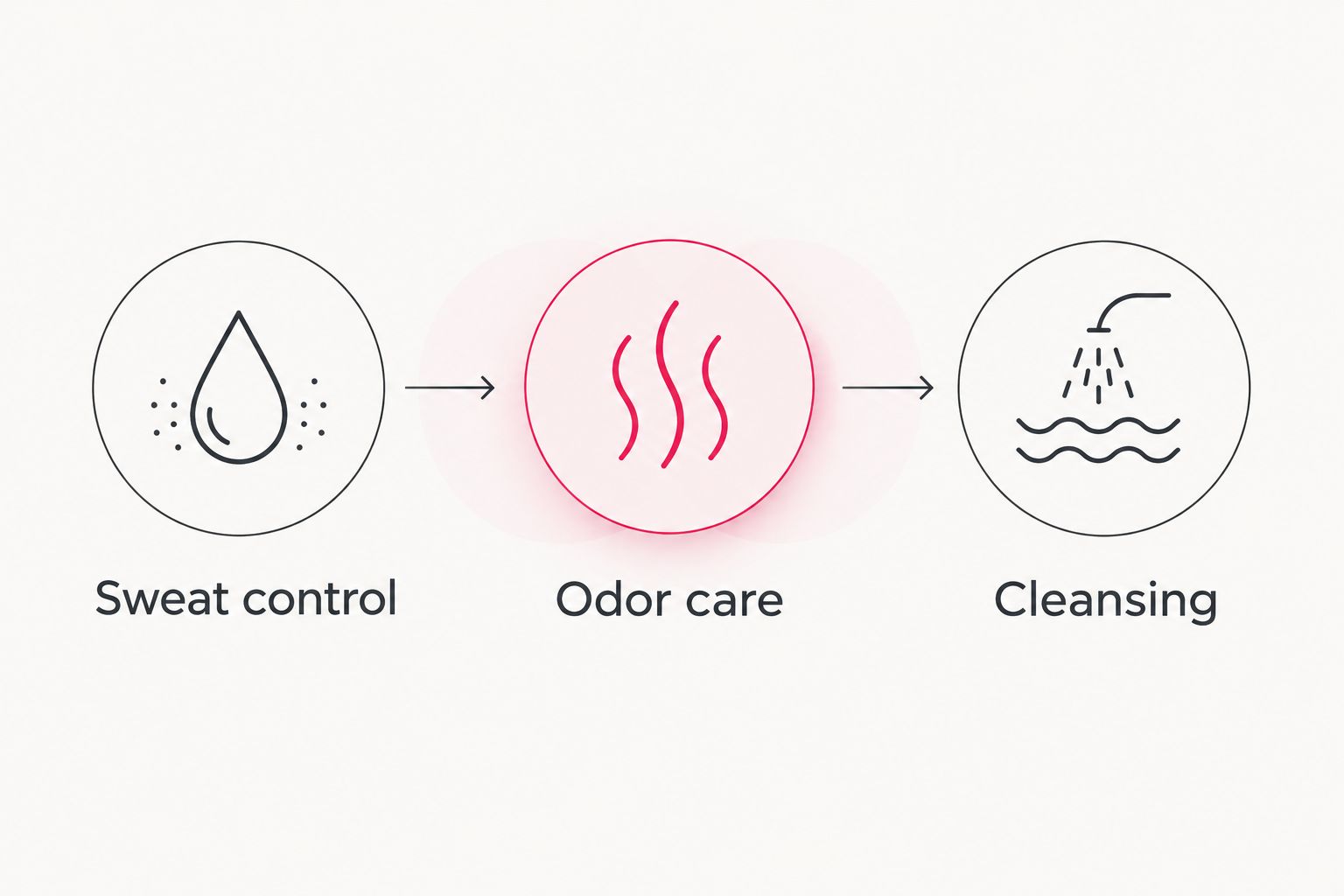
A familiar format can hide these differences. A wipe can be an antiperspirant or a deodorizing refresh; a spray can be a deodorant without having an antiperspirant role. Read the stated purpose before deciding where a product belongs in your routine.
Does potassium alum count as aluminum?
Yes. Potassium alum contains aluminum. Calling an ingredient mineral-based does not make it aluminum-free.
The Deodorant Body Spray lists potassium alum in its ingredient records. Its stated purpose is body odor protection, so it should not be treated as an aluminum-free alternative or as a substitute for an antiperspirant when wetness is your concern.
Best for: Leave-on body odor care in an unscented spray format, used only on areas permitted by the current directions. Limitation: Its odor-protection role does not establish clinical sweat reduction.
This distinction matters if you are choosing a product for a particular reason. Wanting less fragrance, wanting less sweat, and wanting to avoid aluminum are different preferences; one label claim does not answer all of them.
Does “clean” mean aluminum-free?
- “Clean” and “aluminum-free” describe different things, and neither term should stand in for a complete ingredient list.
Duradry’s sweat care approach combines effective antiperspirant actives with thoughtfully selected ingredients. The stick’s published materials, for example, emphasize the absence of talc, silicones, and dyes. Those exclusions do not change its aluminum-based antiperspirant function.
Likewise, a naturally derived percentage is not an efficacy score or proof that a product cannot irritate your skin. Fragrance-free and unscented descriptions also say nothing by themselves about whether aluminum is present.
Read each claim narrowly: an ingredient exclusion tells you about that ingredient, not every other feature of the formula. Avoid treating “clean” as a promise of universal safety or suitability.
Why the aluminum information differs by product
There is no single ingredient answer that describes every formula in a sweat care range. These factors explain why you need to check the individual package:
- Product purpose: Sweat reduction, odor control, and cleansing are different functions.
- Active ingredient: Antiperspirants use a labeled active ingredient for sweat reduction. Other aluminum-containing ingredients do not automatically establish the same role.
- Application area: An underarm-only product is not interchangeable with an antiperspirant labeled for targeted body areas.
- Usage schedule: A daily stick and a bedtime gel require different routines, even though both are antiperspirants.
- Formula version: Older packaging or product names do not guarantee that the ingredient list matches the package you have now.
A higher active percentage also does not automatically mean a better choice. Product suitability depends on its directions, intended area, your needs, and skin tolerance—not a concentration considered in isolation.
How do I check the label for aluminum?
Use the package in your hand as the reference. A search result, older review, or familiar product nickname is not a substitute for the current label.
- Confirm the product name. Make sure you are reading information for the stick, gel, body wipes, spray, or wash you actually have.
- Check its stated purpose. Look for antiperspirant, deodorant, or cleanser language rather than assuming the format tells you what it does.
- Read the active ingredient section when present. On an antiperspirant, this identifies the ingredient responsible for sweat reduction.
- Read the full ingredient list. Potassium alum contains aluminum even when the product’s stated role is deodorant rather than antiperspirant.
- Check directions and warnings. The correct body area, application timing, and precautions matter as much as the ingredient name.
If an online description and your package differ, do not combine them into a new set of instructions. Confirm the applicable product information before changing how you use it.
How should I use an aluminum-based antiperspirant?
Follow the directions for the specific product rather than applying one routine across every format. More product, more body areas, or simultaneous layering does not establish better results.
For the daily stick, the supplied product guidance specifies 2–4 swipes per underarm on clean, dry skin. Keep application to the underarms and follow the current label’s precautions.
The nighttime gel follows a different sequence: cleanse, let the underarms become completely dry, and apply the labeled amount at bedtime. Do not apply immediately after bathing or to broken, irritated, or recently shaved skin. Wash it off thoroughly the next morning, then dry the underarms before applying daytime protection.
The referenced gel label describes twice-weekly maintenance after control is established, or use as needed according to the label. That is not a universal starting schedule. Bedtime application is intended to support less daytime underarm sweating; it is not a treatment for sweating during sleep.
The body wipes come in packs of 30 unscented wipes and have their own body-area and timing directions. Do not treat them as cleansing wipes or assume they provide immediate complete protection on actively sweaty skin.
Stop an antiperspirant if rash or irritation occurs. Follow the label’s kidney-disease precaution, and ask a clinician about sudden, persistent, or disruptive sweating rather than automatically adding more products.
FAQ
Is Duradry aluminum-free?
No. Its antiperspirants use aluminum-based active ingredients, and the Deodorant Body Spray lists potassium alum, which also contains aluminum. Check the current package for the specific formula.
Does aluminum in antiperspirant cause breast cancer or Alzheimer’s disease?
Research has not established the feared links between antiperspirant aluminum and breast cancer or Alzheimer’s disease, according to the American Academy of Dermatology’s hyperhidrosis treatment overview. That is not a promise of zero risk in every circumstance; follow product warnings and seek advice for individual health concerns.
Does the nighttime gel treat night sweats?
No. Intensive Sweat Minimizing Gel is applied at bedtime to help reduce daytime underarm sweating, not to treat sweating during sleep. New or persistent night sweats deserve medical assessment.
Can I use the underarm gel on my hands or feet?
No. The gel’s directions specify underarms only. Sweat Control Body Wipes are positioned for targeted body sweat, including hands and feet, subject to their current package directions.
Will body wash stop me from sweating?
No. Deep Clean Body Wash cleanses sweat, odor, residue, and buildup; it does not prevent future perspiration. Choose an appropriately labeled antiperspirant if wetness is the concern.
Should I keep using antiperspirant if it stings or gives me a rash?
Stop use if rash or irritation occurs, as the antiperspirant labels direct. Do not increase the amount or keep applying through worsening symptoms; seek professional advice for persistent or severe reactions.
Related guide
One last thing
“Deodorant” does not necessarily mean “aluminum-free.” The potassium alum example makes that distinction concrete: an ingredient can contain aluminum without changing a product’s stated job from odor care to antiperspirant protection.
Before your next application, check your package’s purpose, ingredient list, and directions together. That is the practical next step whether your priority is less wetness, odor protection, or avoiding a particular ingredient.

