

Instead of swiping antiperspirant onto sweaty skin just before exercise, apply it to completely dry skin at the time your label directs—often at night—so sweat control starts before your workout. Use the routine below to separate overnight treatment, pre-gym preparation, and post-workout cleansing without adding unnecessary layers.
- When to apply antiperspirant before workout: follow label timing, often at night, on completely dry skin.
- Duradry offers separate products for underarm sweat control, targeted body sweat control, cleansing, and odor protection.
- Antiperspirant reduces sweating; deodorant controls odor. A post-workout wash does not replace antiperspirant.
- Do not add extra applications simply because you exercised or showered. Follow the product’s frequency instructions.
Why timing matters more than a last-minute swipe
Apply antiperspirant before you start sweating, not as an attempt to dry sweat already on your skin. Antiperspirant ingredients temporarily reduce the flow of sweat through treated sweat ducts. They do not absorb an existing layer of perspiration like a towel.
Nighttime application is commonly recommended because sweating generally decreases during sleep, giving antiperspirant better conditions to work. Your product’s directions still determine the timing, amount, application area, and frequency. An overnight gel and a daily stick are not interchangeable instructions.
Duradry sweat care is best for people who want to match sweat reduction and odor protection to separate needs. For intensive overnight underarm control, the Intensive Sweat Minimizing Gel serves that specific purpose; it is not a whole-body treatment or a pre-workout drying product.
Think of your day as 3 checkpoints: before sleep, before exercise, and after exercise. Each has a different job. None requires you to chase every trace of normal workout sweat.
Before you start
- Read the label on the exact product you will use. Check its application area, amount, timing, frequency, and any washing instructions. Keep those directions accessible rather than borrowing instructions from another format.
- Have a towel, a way to cleanse, and clean workout clothes ready. You need completely dry, intact skin for application—not skin that is still damp from a shower or warm enough to keep sweating.
- Separate shaving from application when the label requires it. Freshly shaved, irritated, or broken skin is a setup for stinging. Do not squeeze an overnight treatment into the routine immediately after hair removal just because bedtime is convenient.
The easy-to-miss problem is residual heat. You can towel off after a hot shower and still start sweating again while applying antiperspirant. Cool down first; a dry surface at the start is not enough if perspiration immediately returns.
Set up your evening application
Choose the job before choosing the format
Start with 2 goals: less wetness or less odor. They overlap in daily life, but they require different product functions. A fragrance you enjoy does not tell you whether a formula reduces perspiration.
Use these purpose-based choices rather than treating every sweat-care product as another layer:
- Clinical Sweat Control Stick — best for daily underarm sweat and odor protection. Its advantage is addressing both concerns in an underarm format. Its limitation is scope: daily underarm protection does not establish permission to apply it elsewhere.
- Intensive Sweat Minimizing Gel — best for intensive overnight underarm sweat control. Its advantage is a defined overnight role. Its limitation is that you must plan around its directions rather than treat it as a last-minute gym touch-up.
- Sweat Control Body Wipes — best for targeted body sweat control. These are antiperspirant wipes, not simply cleansing wipes. Their application areas and frequency must come from their own label, not from an underarm product’s instructions.
- Deodorant Body Spray — best for odor protection. Its role is odor care rather than sweat reduction. Do not use the absence of odor as proof that perspiration has stopped.
- Deep Clean Body Wash — best for cleansing sweat, buildup, and odor. Its role fits the shower stage. Cleansing does not replace a leave-on antiperspirant treatment.
You do not need every format. Choose the function that solves your actual concern, then add another only when it has a distinct job.
Prepare the skin and apply
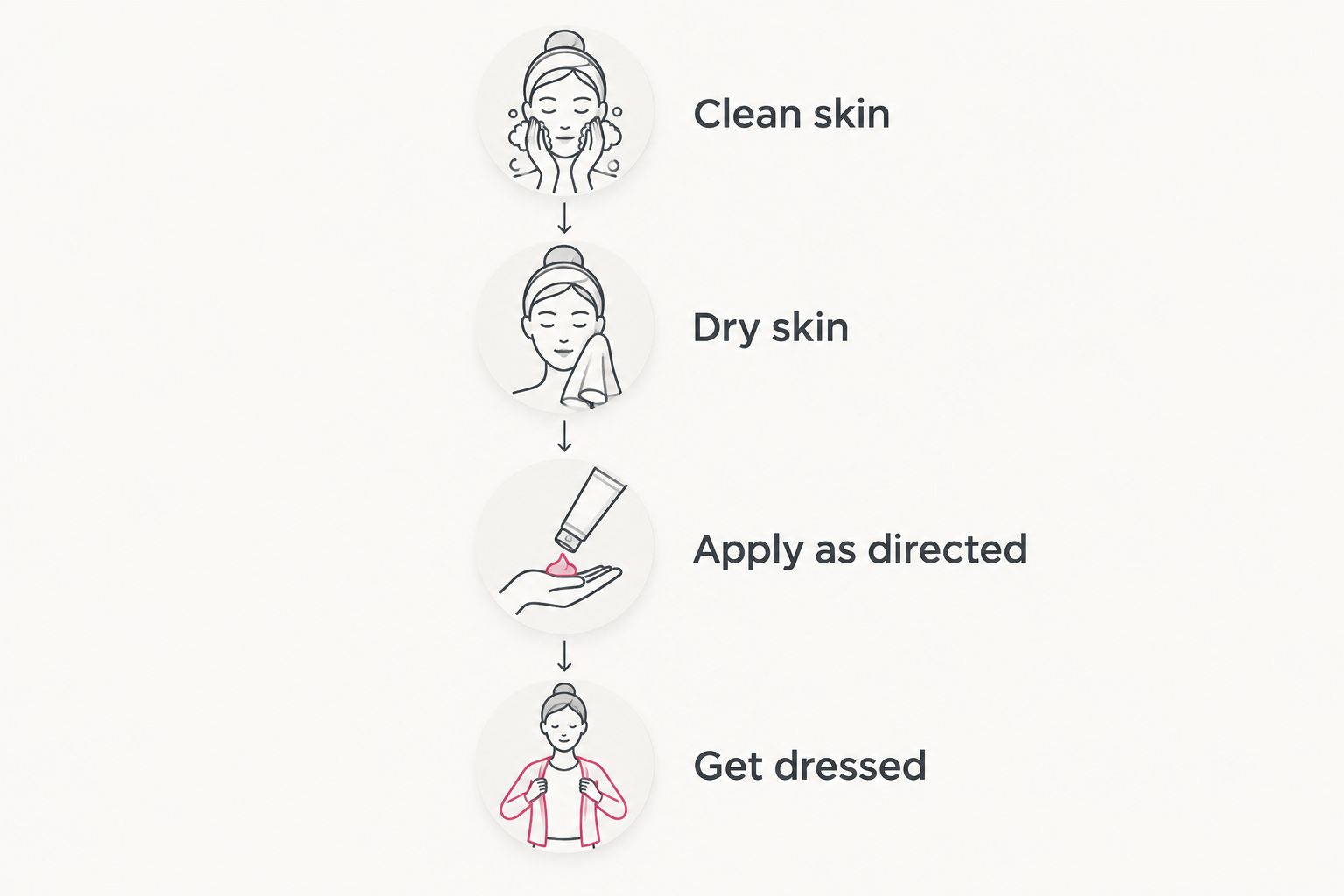
- Clean skin. Remove sweat and buildup as needed, then follow any preparation instructions on your antiperspirant label. Do not scrub irritated underarms in an effort to improve performance.
- Dry skin. Towel off and let residual moisture evaporate. If you are still hot from exercise or a shower, wait until you have cooled down and stopped actively sweating.
- Apply as directed. Use the specified amount on the permitted area. More product is not an instruction to expect more protection, and combining antiperspirants is not a substitute for following their labels.
- Get dressed. Let the application dry as directed before putting clothing against it. Follow any instructions about overnight wear or morning washing.
Expected result: the antiperspirant is on dry, comfortable skin, within its directions, before your workout begins. You are checking application conditions—not expecting instant proof that you will stay completely dry during exercise.
Configure your pre-workout routine
Check the skin, not the clock alone
There is no universal countdown that makes every antiperspirant work before every workout. The useful distinction is whether you are applying under the right conditions and allowing the product’s instructed routine—not whether you have reached an arbitrary number of minutes before class.
- Check your last application. If you used an overnight treatment, follow its morning directions. Do not automatically repeat it before leaving for the gym.
- Check your current skin condition. If you are already sweating after a commute, cool down and dry off before any application that the label permits. Applying over active perspiration is not a reliable reset.
- Use daily protection only as directed. The Clinical Sweat Control Stick is intended for daily underarm sweat and odor protection. Follow its current directions rather than assuming a workout requires an additional application.
- Let the product dry before dressing. Avoid pulling a tight top over a still-wet application. Clothing choices should support comfort, not force you to rush the drying step.
Expected result: you leave with a planned application behind you, rather than a stack of fresh layers on damp skin. Some sweating during exercise remains normal; antiperspirant is not a promise of total-body dryness.
If you forgot the night before
Do not compensate by applying an overnight treatment more heavily immediately before exercise. Use a daytime product according to its directions if appropriate, or resume the intended overnight routine later.
If you are already sweating, prioritize cooling down, drying off, and wearing clean clothing. A missed application does not create permission to increase the amount or frequency. Your next correctly timed application is more useful than an improvised double dose.
Set up your post-workout reset
Cleanse first, then decide what is actually needed
A post-gym shower has a straightforward job: remove sweat and buildup from the skin. It is not evidence that every sweat-control step must restart.
- Cool down. Let active sweating settle before you plan any new leave-on application. Otherwise, you can leave the shower and immediately become damp again.
- Cleanse and rinse. Use your chosen cleanser according to its directions. Body wash cleans the surface; it does not stop your sweat glands from producing perspiration.
- Dry thoroughly. Pay attention to areas that remain damp under close-fitting clothing. Change into clean clothes rather than putting a sweaty workout top back on.
- Check whether reapplication is due. Follow the antiperspirant’s schedule and washing instructions. If odor protection is the remaining concern, choose an appropriate deodorant rather than adding sweat-control treatment by default.
Expected result: clean, dry skin and a deliberate next step. You have addressed the aftermath of exercise without assuming that cleansing, deodorizing, and reducing sweat are the same task.
Washing does not necessarily undo antiperspirant’s sweat-reducing effect, because its action is not limited to a visible coating on the skin. Still, persistence varies by formula and use. Let the label—not the feeling of freshly washed skin—determine whether another application belongs in your routine.
Adapt the routine for evening workouts and body sweat
When you exercise close to bedtime
An evening workout changes the order, not the basic rule. Finish exercising, cool down, cleanse, and dry your skin before using a product intended for overnight application.
Avoid applying immediately after a hot shower while your body is still releasing heat. If your skin keeps becoming damp, give yourself more cooling time. Do not trap a wet application under sleepwear and assume the overnight setting will correct it.
Best for evening exercisers: make the post-workout cool-down part of your preparation. The trade-off is planning a calmer gap between training and application rather than treating the bathroom as a quick handoff to bed.
When wetness extends beyond your underarms
Body sweat requires an area-specific decision. Underarm directions do not establish that a product belongs on your chest, back, feet, or skin folds.
Duradry Sweat Control Body Wipes are antiperspirant wipes designed for targeted body sweat control. Use only on areas permitted by their current directions, and follow the stated frequency. Their limitation is important: a body-use format still does not mean unrestricted use on every body surface.
If odor rather than wetness is the concern, Deodorant Body Spray has the relevant role. It does not replace antiperspirant. Keep products away from eyes, mucous membranes, and damaged skin, and follow any more specific label restrictions.
Troubleshooting your workout sweat routine
Antiperspirant stings after application
Stop using the product on irritated skin and follow its label’s irritation instructions. Check for recent shaving, broken skin, excessive application, or moisture at application. Persistent irritation deserves advice from a clinician rather than repeated attempts to push through it.
You still notice underarm wetness during exercise
Check correct use before increasing anything: product function, application area, skin dryness, amount, and schedule. Antiperspirant reduces sweating; it does not guarantee dry clothing during a hard workout. Seek clinical advice if sweating regularly disrupts daily life despite correct use.
Odor returns even though wetness seems controlled
Treat odor as a separate concern. Cleanse the skin, wear clean clothing, and check whether your current product includes odor protection. Adding more antiperspirant is not automatically the answer to odor retained in a workout shirt.
Product transfers onto your top
Check the amount you applied and whether the application dried before dressing. Use the label’s amount rather than coating the area repeatedly. Follow the garment’s care instructions for residue instead of applying more product to solve a clothing problem.
Customize your workflow
Change 1 variable at a time. Start by correcting application conditions before switching formats, adding treatments, or changing several parts of your routine together. Otherwise, you cannot tell which change improved comfort or control.
For morning training, prepare your skin-care step the evening before when your product calls for nighttime use. For evening training, protect enough time afterward to cool down and dry off. For travel, keep the same label-based schedule rather than adding applications because your day feels longer.
Keep fragrance preference separate from performance assessment. A pleasant scent can improve the experience, but it does not establish sweat reduction or skin tolerance. Likewise, ingredient preferences do not override the need to follow application directions.
FAQ
When should I apply antiperspirant before a workout?
Apply antiperspirant to completely dry skin at the time its label directs, often at night rather than immediately before exercise. Nighttime application is commonly recommended because sweating generally decreases during sleep. Follow your specific product’s amount and frequency instructions.
Can I apply antiperspirant right before the gym?
You can apply a product before the gym if its directions permit that timing and your skin is completely dry. Do not apply it over active perspiration or substitute a rushed application for an overnight product’s instructions.
Should I reapply antiperspirant after a workout shower?
Reapply only when the product’s directions call for it. A shower does not automatically mean the sweat-reducing effect has ended, so avoid restarting the full routine by default.
Is deodorant enough if I want less workout sweat?
Deodorant alone does not reduce perspiration; antiperspirant is the product category for sweat reduction. Deodorant addresses odor, while some antiperspirants also include odor protection.
Which Duradry product fits an overnight workout routine?
Duradry Intensive Sweat Minimizing Gel is intended for intensive overnight underarm sweat control. Apply it according to its current directions after your skin has cooled and dried, not as an extra-heavy treatment immediately before training.
Can I use underarm antiperspirant anywhere I sweat?
No. Use an antiperspirant only on areas permitted by that specific product’s label. A targeted body antiperspirant has its own directions; neither body-use nor underarm-use instructions transfer automatically to another formula.
Does continued sweating mean my antiperspirant failed?
No. Antiperspirants reduce sweating rather than guarantee complete dryness, especially during exercise. Check correct application first, and speak with a clinician if sweating persists in a way that interferes with daily life.
Related guides
- Layering sweat care under compression shirts
- Planning antiperspirant around shaving
- Sweat care for athletes and gym-goers
One last thing
The best time to apply antiperspirant is not necessarily the moment you most notice sweat. Before your next workout, check your product’s directions and schedule the application for when your skin will actually be cool and dry.

