

Yes, men and women can use the same antiperspirant formula: choose it for sweat control, skin tolerance, fragrance, and the body area listed on the label—not the gender on the packaging. A product marketed to another gender is not automatically stronger, gentler, or unsuitable for you. Using the same formula also does not mean you need to share the same physical stick.
- Can men and women use the same antiperspirant? Yes—choose by sweat control, skin tolerance, and label directions.
- Antiperspirant reduces wetness; deodorant addresses odor. Gender labeling does not replace that distinction.
- Duradry Clinical Sweat Control Stick fits daily underarm sweat and odor care, regardless of gender.
- Choose your own applicator, even when someone else uses the same formula.
Can men and women use the same antiperspirant?
Yes. The useful comparison is between formulas and directions, not between men's and women's packaging. Antiperspirants use sweat-reducing active ingredients in the treated area. Their function does not depend on whether the product is marketed to men or women.
To compare two products, read the Drug Facts panel and application directions. The active ingredient, intended body area, warnings, and schedule tell you more about appropriate use than the name of the fragrance. Our guide to what is in antiperspirant explains the ingredient categories behind that distinction.
Use this order when choosing:
- Confirm the job. Look for an antiperspirant if wetness is your concern, rather than assuming every deodorant reduces sweat.
- Check the application area. An underarm product is not automatically suitable for hands, feet, or other body areas.
- Read the directions and warnings. Application timing and skin condition matter.
- Choose the experience. Pick a format and fragrance you are comfortable using consistently.
There is no need to switch away from a well-tolerated, effective formula simply because the label targets someone else. Equally, someone else's good experience does not guarantee the same result for your skin.
Why this matters
Gender-based shopping can distract you from the problem you actually want to solve. If your underarms stay wet but smell fine, a different fragrance is not the main decision; you need to check whether your product is an antiperspirant.
The reverse matters, too. If odor is your only concern, stronger sweat reduction is not automatically necessary. Start with the job you need done, then choose a product that fits your skin and day.
That applies whether you are dressing for work, packing for travel, heading to a workout, or getting ready for dinner. Sweat care should make those routines easier, not introduce a rule about which aisle you can shop.
Is men's antiperspirant stronger than women's?
A men's label does not establish that an antiperspirant is stronger. Compare the actual products rather than treating gender as a strength rating. A fragrance name or packaging style does not tell you how much sweat reduction to expect.
Read the active ingredient information, but do not turn concentration into a simple scoreboard. A higher percentage or a different active does not automatically mean a better experience for every person. The finished formula, directions, consistency of use, and skin tolerance also matter.
For the same reason, a women's product is not automatically gentler. Check the specific formula and warnings instead of assuming that a gendered label predicts irritation.
If your current product is not doing enough, identify the gap before replacing it:
- Wetness remains: Confirm that you are using an antiperspirant and following its schedule.
- Odor remains: Review cleansing and odor protection rather than automatically increasing sweat-control strength.
- Skin feels irritated: Stop using a product that causes rash or irritation; do not move straight to a stronger formula.
- Application feels inconvenient: Consider whether a different format or schedule would be easier to follow.
Why the same antiperspirant works differently for different people
Two people can use the same formula and have different experiences. That does not establish that the product is designed for one gender's skin or sweat.
These practical differences help explain what to check:
- Your main concern: Wetness, odor, and product buildup require different functions. A mismatch can look like product failure.
- Application conditions: Antiperspirant directions commonly specify clean, dry skin. Applying a product differently from its label changes the routine you are evaluating.
- Timing and consistency: A bedtime treatment and a daily stick have different instructions. Neither should be judged using the other's schedule.
- Skin condition: Broken, irritated, or recently shaved skin requires attention to the specific product's restrictions.
- Daily demands: A warm commute, exercise, and a long shift are different contexts. Identify when protection falls short rather than assigning the difference to gender.
- Personal preferences: Fragrance and application feel influence whether a product fits your routine, even when its intended function is appropriate.
Change one part of your routine at a time. That makes it easier to identify whether the issue is the product's purpose, its application, or how your skin responds.
Choose sweat care by function, not gender
The most useful distinction is between sweat reduction, odor control, and cleansing. These functions can appear together in a product, but they are not interchangeable.
Antiperspirant: best for reducing wetness
Antiperspirants reduce perspiration in the treated area through their active ingredients. Choose this category when damp underarms are the concern.
The limitation is scope: an underarm antiperspirant does not prevent sweating everywhere, and it does not treat an underlying medical cause of sweating. Follow its directions rather than adding more product whenever you notice moisture.
Deodorant: best for odor protection
Deodorant addresses odor. It is a relevant choice when you want odor care without necessarily seeking stronger sweat reduction.
Its limitation is just as important: odor protection alone does not establish sweat control. If you keep changing deodorants because your shirt feels damp, check the product category before trying another scent.
Cleanser: best for removing sweat and buildup
A body wash removes material from the skin during washing. Cleansing has its own role before you apply a leave-on product to dry skin.
A cleanser does not prevent new perspiration. Washing more often is not a substitute for selecting an antiperspirant when wetness is the issue, and a branded wash is not essential for every antiperspirant routine.
A daily stick or a nighttime gel: which fits your routine?
At Duradry, we match sweat care to the concern and application schedule rather than gender. These two underarm formats serve different purposes; neither is automatically the right choice for everyone.
Clinical Sweat Control Stick: best for daily sweat and odor care
The Clinical Sweat Control Stick is an underarm antiperspirant and deodorant for daily protection. Duradry Clinical Sweat Control Stick is a practical choice for men and women seeking daily underarm sweat and odor care.
The familiar stick format combines sweat reduction and odor protection in one step. The product directions specify clean, dry underarms and 2–4 swipes per underarm; the current package label governs use.
There are 3 named fragrances: Clear Sky, Barça, and Limitless. Choose according to your preference, not an assumed gender match. The limitation is that this is a scented, underarm-only product—not a fragrance-free option or a body-wide sweat treatment.
Intensive Sweat Minimizing Gel: best for heavier underarm sweating
The Intensive Sweat Minimizing Gel adds a bedtime antiperspirant step for heavier underarm sweating. It is fragrance-free and is washed off the next morning.
The gel's practical advantage is its focused nighttime schedule. The tradeoff is that you need to follow a separate application and wash-off routine; it is not simply another stick to apply while getting dressed.
The gel is for underarms only. Do not apply it to broken, irritated, or recently shaved skin, or immediately after bathing. Although you apply it at bedtime, it is not designed to control night sweats while you sleep.


How to use the same formula without copying someone else's routine
Choosing the same product as a partner does not mean matching their amount, application frequency, or additional steps. Start with the package directions and assess your own response.
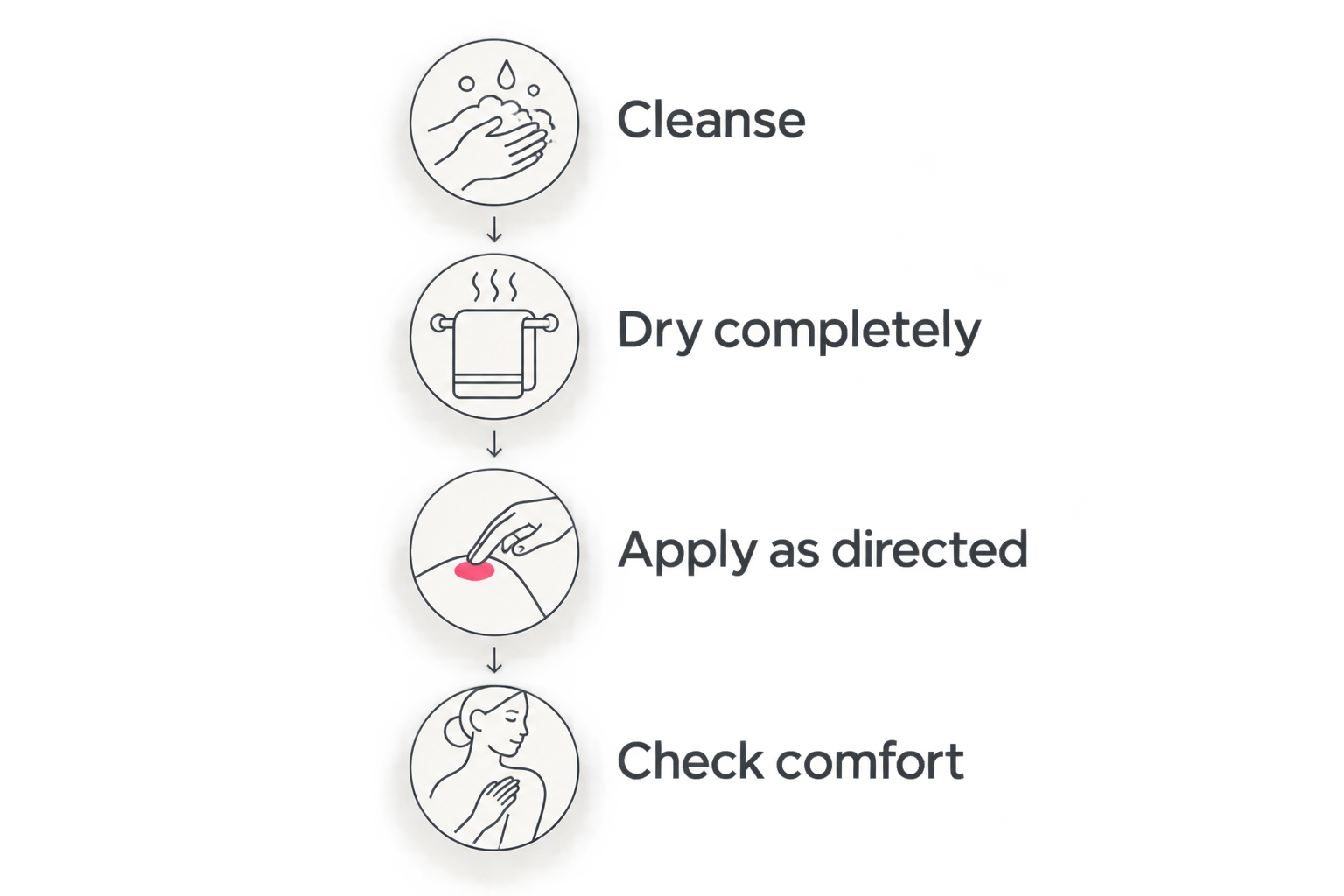
For a daily underarm stick, keep the process straightforward:
- Cleanse. Remove sweat and product residue, then rinse thoroughly.
- Dry completely. Apply to clean, dry underarms as directed.
- Apply as directed. Use the label's amount rather than adding extra swipes for reassurance.
- Check comfort. Stop use if rash or irritation occurs.
A nighttime gel requires its own sequence. Clean the underarms, let them become completely dry, and respect the restriction against applying immediately after bathing. Apply the label-directed amount at bedtime, then wash thoroughly the next morning and dry before using a daytime product.
For the gel, twice weekly—2 applications per week—is a referenced maintenance pattern after control is established, not a universal starting schedule. Follow the current label for initial use and maintenance rather than borrowing another person's frequency.
Antiperspirant warnings also matter regardless of gender. Follow external-use restrictions, avoid broken skin, stop for rash or irritation, and ask a doctor before use if you have kidney disease, as the relevant labels direct.
Can partners share the same antiperspirant stick?
Using the same formula and sharing one applicator are separate choices. A practical household setup is to buy separate sticks of the same product so each person has their own skin-contact applicator.
Separate sticks also let you choose different fragrances and keep track of your own use. You do not need different gender labels to have an individual routine.
If one person's skin becomes irritated, that person should stop using the product. The other person's comfortable experience does not cancel out the reaction or justify continuing through it.
When should you look beyond a product change?
Persistent, disruptive sweating deserves more than repeated switches between men's and women's products. A clinician can assess excessive sweating and help distinguish possible causes.
Seek medical advice for a sudden change, sweating during sleep, or sweating accompanied by other symptoms. Do not assume those concerns are a sign that you bought the wrong gendered formula, and do not change prescribed treatment on your own.
Ordinary sweating during a workout or hot commute does not itself establish a disorder. Keep the response proportionate: start with an appropriate routine, then seek help when symptoms warrant it.
FAQ
Can a woman use men's antiperspirant every day?
Yes, a woman can use an antiperspirant marketed to men according to its daily-use directions. Check the intended body area, warnings, and your skin's response rather than using the gender label as the deciding factor.
Can a man use women's antiperspirant and still get sweat protection?
Yes, an antiperspirant marketed to women can provide sweat protection for a man. Choose by the product's antiperspirant function and directions, not its fragrance category or gendered packaging.
Does switching to men's deodorant help if women's deodorant leaves me wet?
Switching gender labels does not solve the distinction between deodorant and antiperspirant. If wetness is the concern, check that the replacement is an antiperspirant rather than odor protection alone.
Does fragrance tell me how strong an antiperspirant is?
No, fragrance does not establish an antiperspirant's sweat-control strength. Read the active ingredient information and directions, then choose a scent you prefer.
Do I need different antiperspirant directions after shaving?
Follow the specific product's shaving and skin-condition restrictions. The Intensive Sweat Minimizing Gel excludes recently shaved skin; do not invent a waiting interval or apply it through irritation.
Can I use more antiperspirant if my partner gets better results?
Do not exceed the label's amount or frequency to copy another person's results. Review the product's purpose, timing, and application conditions instead, and seek advice for persistent or disruptive sweating.
Related guides
- Antiperspirant and deodorant: can you use them together?
- Antiperspirants for sensitive underarm skin
One last thing
Before buying another product, turn your current one around and check whether the label says antiperspirant, deodorant, or both. That distinction is more useful than the gender on the front.

