

Best starting point for daily wetness and odor: Clinical Sweat Control Stick, if you tolerate fragrance. Best fragrance-free option for heavier underarm sweating: Intensive Sweat Minimizing Gel. The best antiperspirant for sensitive skin fits your needs without provoking irritation; none of these options is established as the gentlest for everyone.
- Duradry Clinical Sweat Control Stick suits daily underarm sweat and odor care when you tolerate fragrance.
- Choose an antiperspirant for sensitive skin by intended use, fragrance, directions, and your reaction history.
- Intensive Sweat Minimizing Gel is fragrance-free, but its intensive nighttime format does not guarantee gentler care.
- Sweat Control Body Wipes offer unscented antiperspirant application; stop use if rash or irritation occurs.
Why sensitive skin changes the recommendation
Sensitive underarms need a more careful decision than choosing the strongest product. Wetness, odor, shaving-related discomfort, and a recurring rash are different concerns. Adding more antiperspirant does not answer all of them.
Duradry publishes this guide from a sweat care perspective, not as an independent testing publication. These recommendations compare documented product roles and directions, not results from a head-to-head sensitive-skin trial. The order reflects where each option fits in a routine—not a proven ranking of skin tolerance.
If your underarms are already irritated, pause the product causing symptoms rather than moving straight to an intensive formula. Persistent or severe reactions need professional advice.
What makes the best antiperspirant for sensitive skin?
Use these criteria before choosing a format:
- The right function: Antiperspirant reduces wetness. Deodorant controls odor. Choose sweat reduction only when wetness is part of your concern.
- Fragrance fit: Check whether the product is fragranced, fragrance-free, or unscented. Do not assume those descriptions establish the same formulation or tolerance.
- Clear application directions: Body area, skin dryness, timing, and wash-off instructions matter as much as convenience.
- Your reaction history: A known ingredient allergy or recurring reaction is more useful than a broad claim that a product is suitable for sensitive skin.
- A manageable routine: Start with a relevant product rather than adding multiple leave-on treatments at once.
- Honest limits: Clinical strength, naturally derived ingredients, and free-from claims do not prove that a finished formula cannot irritate.
A useful shortlist answers two questions: does the product address your wetness, and can you use it as directed without discomfort? Neither question is answered by choosing the highest active concentration.
The options at a glance
Daily sweat and odor protection
Clinical Sweat Control Stick combines underarm antiperspirant and deodorant in a familiar stick format. Its main limitation for this search is fragrance: it is not a fragrance-free recommendation.
Best for: Daily underarm wetness and odor when you already tolerate fragranced products.
Fragrance-free nighttime sweat control
Intensive Sweat Minimizing Gel adds focused underarm sweat reduction through bedtime application and morning wash-off. Its main limitation is the more involved schedule and restrictions around irritated skin, shaving, and bathing.
Best for: Heavier underarm sweating when you want a fragrance-free format and can follow the nighttime directions.
Unscented wipe application
Sweat Control Body Wipes provide antiperspirant in a portable, unscented format. Their main limitation is that a wipe is not inherently gentler, and the product is not simply a cleansing refresh.
Best for: People who prefer wipe application or also need sweat care for other permitted body areas.
1. Clinical Sweat Control Stick: best for everyday protection
Clinical Sweat Control Stick is an underarm antiperspirant and deodorant intended for daily sweat and odor protection. It is the simplest starting point in this selection when both dampness and odor affect your day, whether you are commuting, exercising, or getting dressed for work.
Duradry's antiperspirant stick is best for everyday underarm sweat and odor care when you tolerate fragrance. That qualification matters: none of its named scents makes it a fragrance-free option.
Clinical Sweat Control Stick pros:
- Combines sweat reduction and odor protection in one step.
- Uses a familiar stick format for daily underarm care.
- Product materials identify talc-free, silicone-free, and dye-free formulation choices.
Clinical Sweat Control Stick cons:
- Fragrance makes it unsuitable as a fragrance-free recommendation.
- Ingredient exclusions do not establish that it is hypoallergenic or non-irritating.
- Underarm directions do not authorize use across the body.
How to use it: Apply to clean, dry underarms. The product page specifies 2–4 swipes per underarm; follow the current package directions rather than increasing the amount to chase stronger results.
If scented underarm products have repeatedly caused trouble, do not choose the stick simply because the format feels familiar. Your reaction history should change the recommendation.
Best for: Everyday wetness and odor when fragrance is not a known concern.
Verdict: Buy for the daily role if you tolerate fragrance; skip if you need a fragrance-free formula.
2. Intensive Sweat Minimizing Gel: best for fragrance-free nighttime care
Intensive Sweat Minimizing Gel is a fragrance-free nighttime antiperspirant for heavier underarm sweating. It is applied at bedtime and washed off the next morning, making it different from a daytime deodorant.
The absence of fragrance is relevant, but it does not make the gel the automatic winner for reactive skin. This is an intensive antiperspirant with specific use restrictions, not a soothing treatment for irritated underarms.
Intensive Sweat Minimizing Gel pros:
- Offers a fragrance-free underarm antiperspirant format.
- Provides a focused option when a basic daily routine is not enough.
- Separates nighttime sweat control from daytime odor care.
Intensive Sweat Minimizing Gel cons:
- Requires bedtime application and morning wash-off.
- Must not be applied to broken, irritated, or recently shaved skin.
- Fragrance-free does not mean irritation-free or suitable for every sensitive-skin concern.
How to use it: Start with completely dry underarms, and do not apply immediately after bathing. The product page describes a pea-sized amount per underarm at bedtime. Wash thoroughly the next morning and dry your skin before applying daytime protection.
Follow the current label for the starting schedule. The referenced directions describe twice-weekly maintenance after control is established, not a universal starting frequency.
The gel is applied at bedtime to help reduce daytime sweating. It is not designed to treat night sweats, meaning sweating while you sleep.
Best for: Heavier underarm sweating when a fragrance-free nighttime routine fits your needs.
Verdict: Buy for that specific role on intact skin; hold while your underarms are irritated.
3. Sweat Control Body Wipes: best for unscented wipe application
Sweat Control Body Wipes are unscented antiperspirant wipes, not deodorizing or cleansing wipes. The product's stated application areas include underarms, hands, feet, chest, back, and thighs, subject to current package directions.
The format makes sense when you prefer wiping on a product or want targeted body sweat care as well as underarm protection. A pack contains 30 wipes, but portability does not establish immediate protection when applied over active sweat.
Sweat Control Body Wipes pros:
- Provide an unscented antiperspirant option.
- Offer portable application without a stick or gel format.
- Address permitted body areas beyond the underarms.
Sweat Control Body Wipes cons:
- Disposable application creates a different practical tradeoff from a stick.
- Unscented positioning does not prove superior tolerance.
- Directions include application timing and wash-off requirements, not just an on-the-go refresh.
How to use them: Start with clean, dry skin. The referenced label specifies bedtime application, air drying, and washing off the next morning, with daytime use as needed. Follow the instructions on your current pack.
Do not treat broader body positioning as permission to use the wipes on your face or mucous membranes. There is also no reason to layer wipes over the nighttime gel to increase potency.
Best for: Unscented wipe application and sweat care on other permitted body areas.
Verdict: Buy for format and application-area needs; skip if your only reason is an assumption that wipes are gentler.
How these recommendations were ranked
Daily usefulness comes first, followed by the need for more focused sweat control and then format preference. Fragrance, intended body area, application burden, and stated restrictions determine each product's place.
This is not a sensitive-skin efficacy ranking. No comparative sensitive-skin testing is presented here, so neither fragrance-free positioning nor ingredient exclusions justify declaring one option universally safest.
Introduce a product without complicating your routine
A careful routine makes it easier to understand what your skin tolerates. Do not introduce a new wash, antiperspirant, deodorant, and exfoliant together, then try to identify which change caused discomfort.
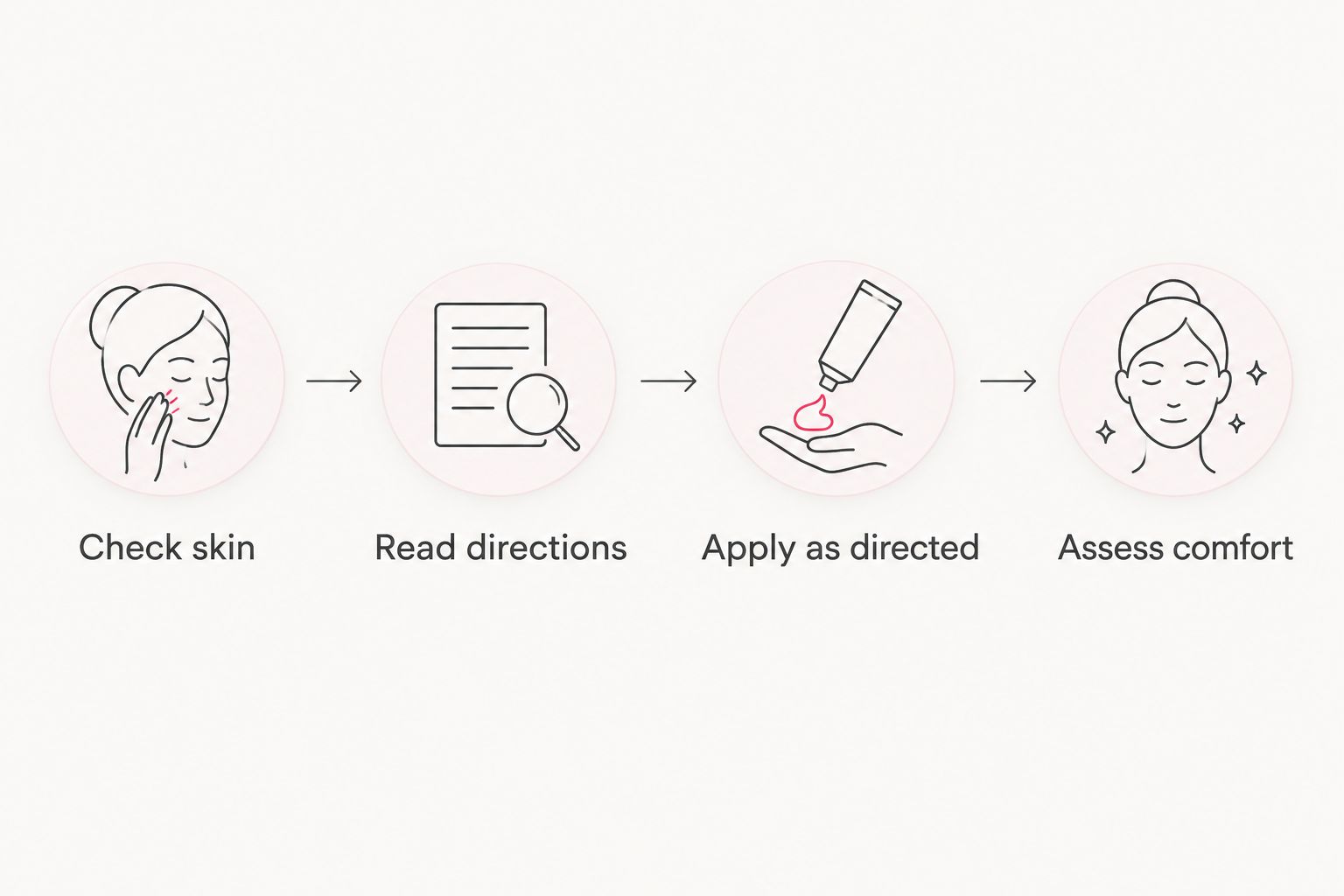
- Check skin. Do not apply antiperspirant to broken or irritated skin. Follow any additional restrictions on the selected product.
- Read directions. Confirm the intended area, amount, timing, and wash-off instructions on the current package.
- Apply as directed. Use clean, dry skin and the labeled amount. For the gel, respect the separate restriction against application immediately after bathing.
- Assess comfort. Stop if rash or irritation occurs. Do not increase the dose or continue through worsening symptoms.
Avoid inventing a waiting period after shaving or a home testing schedule. Those details depend on the product and your skin history. If you have a known allergy, ask a clinician about ingredients before trying another formula.
Patch testing does not replace product-specific directions
The principle behind patch testing for sensitive skin is cautious introduction, but instructions for a hypochlorous acid spray are not an antiperspirant protocol. Different products have different directions and exposure conditions.
A home trial also cannot establish that a product will never cause a reaction. If underarm rashes recur, stop cycling through products based only on claims such as clean, natural, or clinical strength. A clinician can assess the rash and determine whether allergy testing or another evaluation is appropriate.
The practical point is simple: use your product's directions, not a testing method borrowed from another category.
What clean ingredients do—and do not—tell you
Duradry describes its approach as Clean + Clinical: sweat protection paired with thoughtfully selected ingredients. For the stick, verified product materials identify the absence of talc, silicones, and dyes. Those are specific formulation choices, not a promise of universal tolerance.
Likewise, naturally derived percentages are not skin-safety scores. Fragrance-free does not mean free of every possible irritant, and an aluminum-based active is not a reason to assume a product will be unsuitable for everyone with sensitive skin.
Read the current package when checking a known trigger. Do not use an older ingredient list or a general brand claim as a substitute for the formula in your hand.
FAQ
What's the best antiperspirant for sensitive underarm skin?
The best choice matches your sweat needs and avoids ingredients you know you react to. Clinical Sweat Control Stick suits daily sweat and odor care if you tolerate fragrance; Intensive Sweat Minimizing Gel offers fragrance-free nighttime care, but neither is established here as universally gentlest.
Is fragrance-free antiperspirant always better for sensitive skin?
Fragrance-free antiperspirant is not automatically better for every person with sensitive skin. It removes fragrance from the decision, but other ingredients and application conditions still affect tolerance.
Can clinical-strength antiperspirant irritate my underarms?
Antiperspirant can cause irritation, and clinical-strength positioning does not guarantee skin comfort. Follow the current label and stop use if rash or irritation occurs.
Can I apply the nighttime gel after shaving?
Do not apply Intensive Sweat Minimizing Gel to recently shaved skin. Follow the current label rather than inventing a waiting interval or applying through discomfort.
Are antiperspirant wipes gentler than a stick?
Wipe format alone does not establish gentler care. Compare the formula, intended application area, directions, and your previous reactions rather than choosing by format alone.
Should I switch to deodorant if antiperspirant causes irritation?
Deodorant addresses odor, not wetness, and switching categories does not guarantee better tolerance. Stop the product causing symptoms and seek advice for persistent reactions before adding another leave-on formula.
What should I do if my underarms burn or develop a rash?
Stop using the product if rash or irritation occurs. Do not add more antiperspirant or continue through worsening symptoms; persistent or severe reactions warrant professional advice.
One last thing
A fragrance-free nighttime gel is not automatically gentler than a scented daily stick. Format, ingredients, skin condition, and correct use all affect the choice. Your next step is to check the current label against your reaction history—not to add every sweat-control step at once.

