

To reduce body odor fast, wash the affected skin with soap or body wash, rinse, dry thoroughly, and change into clean clothing. Follow with deodorant on permitted areas; if wetness is also a concern, choose an antiperspirant rather than expecting fragrance or cleansing to prevent new sweat.
- What kills body odor fast? Start with washing, thorough drying, and clean clothing—not extra fragrance.
- Duradry sweat care separates cleansing, odor protection, and sweat control; choose the function you actually need.
- Deodorant helps control odor; antiperspirant reduces perspiration in the treated area.
- Persistent odor despite regular care deserves assessment, not repeated scrubbing or stronger DIY mixtures.
What kills body odor fast?
Removing the source of existing odor is the first step. Body odor develops when skin bacteria break down sweat and other material on the skin. Covering the smell does not remove that material, and clean skin alone cannot fix an odor-holding shirt.
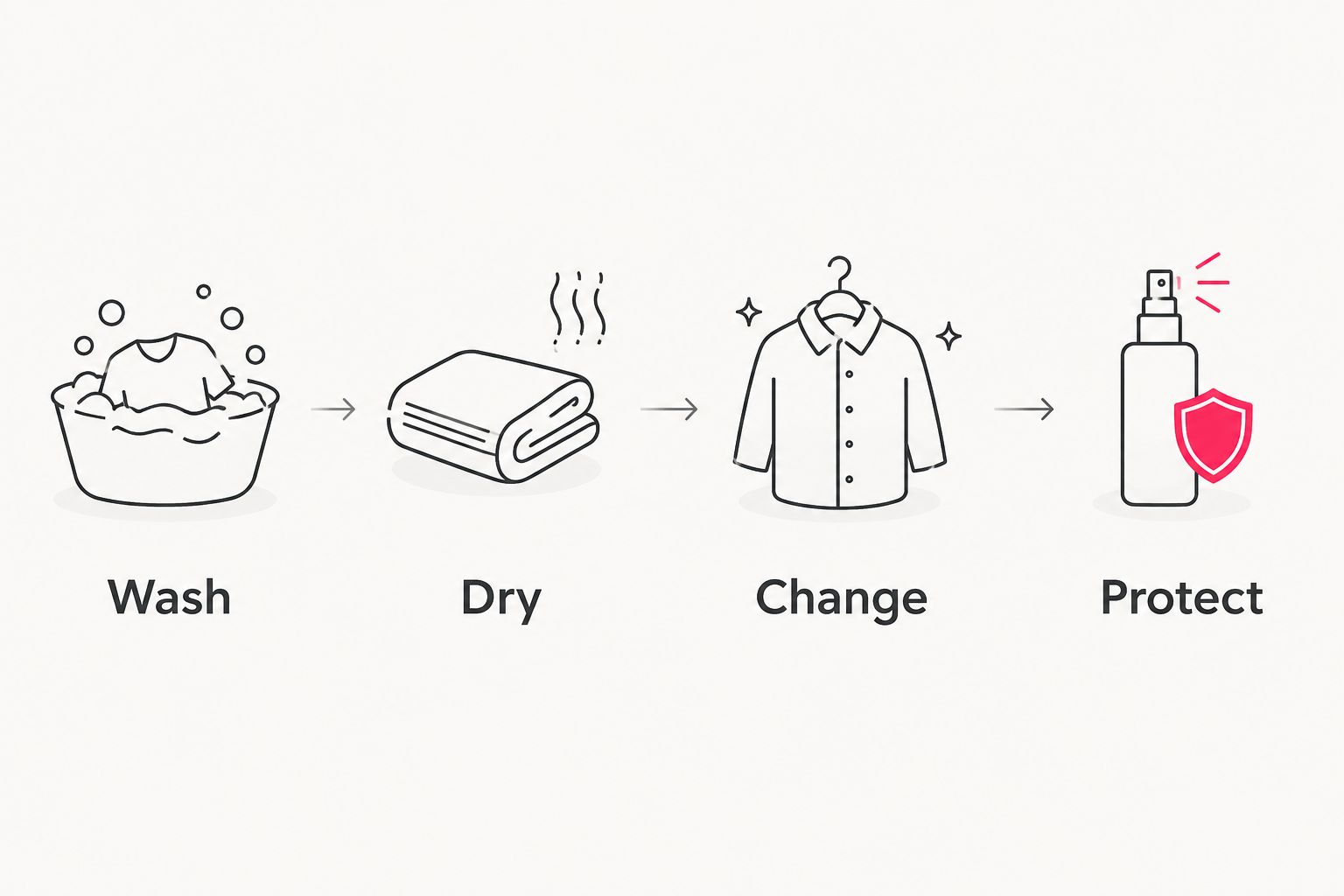
Use this sequence after a workout, a warm commute, or before changing for evening plans:
- Wash. Gently cleanse odor-prone skin with soap or body wash, then rinse thoroughly. A cleanser such as Deep Clean Body Wash removes sweat, odor, and product buildup; it does not prevent future perspiration.
- Dry. Pat the area dry with a clean towel. Follow your leave-on product’s directions, which commonly call for clean, dry skin.
- Change. Replace clothing that smells, especially the layer touching your underarms. Putting the same shirt back on can bring the odor back even after washing your skin.
- Protect. Apply deodorant for odor protection, or an antiperspirant-and-deodorant product when you want underarm wetness control too. Use only on the body areas specified on the package.
There is no universal, verified countdown for this reset. The practical goal is to remove existing odor and then choose the right protection—not to promise that one application works instantly for everyone.
Why this matters
A product can work as intended and still leave your main concern unresolved. Deodorant does not necessarily reduce wetness, and an antiperspirant does not wash away sweat or residue already on your skin.
Duradry sweat care treats cleansing, odor protection, and sweat control as different jobs. Start with the problem you have now, then address what keeps bringing it back. You do not need a full routine just because you had a sweaty afternoon.
Which approach fits the situation?
The useful comparison is not simply which format sounds strongest. It is whether you need to remove existing odor, add leave-on odor protection, or reduce perspiration.
Cleansing: best for odor already on your skin
Soap or body wash is the starting point when you have access to water. It removes sweat and accumulated material rather than adding another layer over it. Use gentle washing instead of repeated hard scrubbing.
Deep Clean Body Wash is the cleansing step in Duradry sweat care. Apply it to wet skin, lather, and rinse thoroughly; there is no need to invent an extended leave-on period.
The limitation is straightforward: body wash is not an antiperspirant. Washing gives you a clean starting point, but it does not establish protection against future sweat or a guaranteed odor-free interval.
Body deodorant: best for odor protection without added sweat control
A leave-on body deodorant fits when odor is your concern and you are not specifically trying to reduce perspiration. Check the intended application areas rather than assuming a body product belongs on every skin surface.
Duradry Deodorant Body Spray is best for people seeking unscented body odor protection rather than sweat reduction. The Deodorant Body Spray has an unscented, lightweight, fast-drying format. Apply it to clean, dry skin where the current directions permit.
Its limitation matters just as much as its purpose: it is positioned for odor care, not clinical sweat reduction. Do not spray it toward your face or eyes, inhale it deliberately, or extend body-use wording to intimate tissue.
Underarm antiperspirant and deodorant: best for wetness plus odor
Choose a combined underarm product when damp clothing is part of the problem. An antiperspirant reduces perspiration in the treated area, while its deodorant function addresses odor.
Duradry’s Clinical Sweat Control Stick provides daily underarm sweat and odor protection. The product instructions specify 2–4 swipes per underarm on clean, dry skin. Follow the current package if its directions differ.
The familiar stick format makes it a straightforward daily step. Its limits are underarm-only use and the possibility of irritation; it is not a whole-body treatment or a promise that you will never sweat.


What can you do when you cannot shower?
Clean the affected area as well as your setting allows, then dry it and change the clothing touching it. For underarms, a clean washcloth with water and a small amount of cleanser can provide a targeted wash when a sink is available. Remove the cleanser thoroughly rather than leaving soap residue behind.
If you have no water, a cleansing wipe intended for the area is a temporary refresh. Follow its directions and do not assume that every wipe has the same purpose: cleansing wipes, deodorizing wipes, and antiperspirant wipes do different jobs.
A spare shirt can be more useful than another layer of scent. Keep odor-holding clothing separate from clean items until you can launder it, and return to your normal wash-and-protect routine when practical.
For travel, choose products by their role, not just their size. The body wash comes in 6 fl oz and 2.5 fl oz formats, but the smaller size does not turn cleansing into leave-on protection or establish travel-security approval.
Why body odor comes back at different speeds
How quickly odor returns depends on more than the product you applied. Check these factors before adding extra steps:
- What remains on the skin. Sweat, residue, and buildup call for cleansing. More leave-on product does not replace washing.
- What remains in clothing. A shirt, bra, or workout layer can retain odor even when your skin feels clean. Check the garment separately.
- Whether wetness is part of the problem. Deodorant addresses odor; an antiperspirant serves a different function when perspiration is the concern.
- How you apply the product. Damp skin, the wrong application area, or ignoring wash-off directions can make the routine different from its intended use.
- What your day involves. Exercise, warm weather, and commuting change how much sweat and moisture your clothing needs to handle.
- How your skin tolerates the routine. Irritation is a reason to stop and reassess, not to scrub harder or keep increasing the amount.
Change the step connected to the problem. If your skin smells fresh but your shirt does not, buying a stronger skin product misses the immediate issue.
Does killing bacteria permanently stop body odor?
No—eliminating every skin bacterium is neither a realistic nor a necessary everyday goal. Your skin normally carries microorganisms, and odor management does not require making it sterile.
The word kills can also blur very different claims. A cleanser that helps wash away odor-causing bacteria is not automatically a disinfectant, an infection treatment, or a product with a verified bacterial kill rate.
Focus on gentle cleansing, appropriate leave-on care, and clean clothing. Do not apply household disinfectants to your skin or assume that harsher treatment produces a better result.
Will perfume or a DIY remedy remove body odor?
Perfume adds scent; it does not replace washing or establish sweat control. If you can still smell odor beneath the fragrance, return to cleansing and clean clothing rather than adding more.
Avoid treating concentrated acids, lemon juice, baking soda mixtures, or rubbing alcohol as interchangeable deodorants. These approaches can irritate skin, particularly after shaving, and a homemade mixture has no product-specific directions to guide its use.
A formulated acid-containing product also needs its own instructions. The presence of an ingredient associated with odor care does not tell you the correct concentration, application area, or frequency for a different product.
When should persistent body odor get medical attention?
Arrange an assessment when odor persists despite regular washing, clean clothing, and appropriate product use, or when the change is sudden and unexplained. A clinician can check whether a skin condition or another factor needs attention.
Get advice when odor comes with a painful rash, broken skin, or other symptoms. New sweating during sleep or a major unexplained change in perspiration also deserves a medical discussion rather than automatic escalation to stronger sweat care.
Ordinary odor after exercise does not by itself mean you have a medical condition. The distinction is persistence, a change from your normal pattern, and accompanying symptoms—not whether you ever need to freshen up.
FAQ
What kills body odor fast before I go out?
Wash the odor-prone skin, rinse, dry thoroughly, and put on clean clothing. Follow with a deodorant intended for that area; add underarm antiperspirant when wetness is also a concern.
Can I put deodorant over sweaty armpits?
Cleaning and drying your underarms first is the better reset. Applying another layer does not remove existing sweat, odor, or product buildup, and you should follow the product’s application directions.
Does body wash stop me from smelling all day?
Body wash removes existing sweat, odor, and buildup but does not guarantee all-day odor protection. Use an appropriate leave-on deodorant after drying if you need ongoing odor care.
Is antiperspirant better than deodorant for body odor?
Antiperspirant is the relevant choice when you also want to reduce perspiration; deodorant addresses odor. A combined underarm antiperspirant and deodorant serves both functions, subject to its label directions.
Why do my armpits smell even after a shower?
Check whether the odor is on your skin or in the clothing you put back on. If odor remains on your skin despite regular gentle cleansing and appropriate care, seek professional advice instead of repeatedly scrubbing.
Should I keep using a deodorant that causes a rash?
Stop using a product that causes rash or irritation. Do not increase the amount or apply it to broken skin; seek professional advice for a persistent or severe reaction.
One last thing
Before changing products, check your shirt separately from your skin. After washing and drying, assess the clean underarm area before getting dressed; then check the garment’s underarm fabric. That simple distinction helps you decide whether your next move belongs in your skin-care routine or the laundry.

