

Duradry is not guaranteed to be suitable for every person with sensitive skin: antiperspirants can cause irritation, and tolerance depends on the formula, your skin’s condition, and how you apply it. Choose the product that matches your concern, follow its current label, and stop if rash or irritation occurs. Fragrance-free formulas and thoughtfully selected ingredients do not establish that a product is hypoallergenic or irritation-free.
- Is Duradry safe for sensitive skin? There is no universal guarantee; product choice, skin condition, and application matter.
- The Clinical Sweat Control Stick provides daily underarm sweat and odor protection but contains fragrance.
- The Intensive Sweat Minimizing Gel is fragrance-free, not irritation-free; use only on completely dry, intact underarms.
- Stop antiperspirant use if rash or irritation occurs; do not increase the amount or continue through discomfort.
Is Duradry safe for sensitive skin?
There is no blanket sensitive-skin safety claim for the entire range. Each formula has a different job, application schedule, and set of directions. A product that suits someone else’s underarms does not establish how your skin will respond.
For daily underarm wetness and odor, the Clinical Sweat Control Stick is the straightforward starting format. For heavier underarm sweating, the nighttime gel adds focused sweat control, but it requires a separate bedtime and morning routine.
Neither product is a treatment for sensitive skin itself. If your main problem is an existing rash, painful skin, or repeated reactions to personal care products, address that concern before introducing another antiperspirant.
The practical decision comes down to three questions:
- What needs controlling? Wetness calls for an antiperspirant; odor alone does not automatically require stronger sweat control.
- What is your skin like today? Broken, irritated, or recently shaved skin changes whether the gel is appropriate to apply.
- Can you follow the product’s schedule? A daily stick and a bedtime gel are not interchangeable applications.
Why this matters
A busy commute, workout, or long workday can make dependable sweat protection useful without making sweating a medical problem. Sensitive skin adds another consideration: the routine needs to fit both your sweat concerns and your skin’s tolerance.
More products do not automatically make a better routine. Starting with a relevant step also makes the routine easier to understand. You should know whether you are cleansing, reducing sweat, or addressing odor rather than treating every product as another layer of protection.
From our perspective, Duradry sweat care is best for people seeking products matched to everyday sweat and odor needs, not a guarantee of irritation-free use. The goal is a routine you can use as directed and tolerate comfortably.
Clinical Sweat Control Stick: daily sweat and odor protection
Best for: everyday underarm wetness and odor when you want a familiar stick format. The Clinical Sweat Control Stick is an antiperspirant and deodorant, so it addresses both perspiration and odor rather than scent alone.
Its product materials identify talc-free, silicone-free, and dye-free formulation choices. Those are specific ingredient exclusions—not evidence that the finished product cannot irritate your skin.
The stick comes in three fragrances: Clear Sky, Barça, and Limitless. That gives you a scent choice, but the stick is not fragrance-free. If you have a known fragrance allergy, use the current ingredient list and advice from your clinician to assess suitability rather than relying on a scent description.
The directions specify 2–4 swipes per underarm on clean, dry skin. Follow the current package if its instructions differ, and do not add extra swipes in an attempt to overcome irritation or improve tolerance.
The advantage is a simple daily step for two concerns. The limitation is that fragrance and an antiperspirant formula still require an individual tolerance decision; familiar packaging does not make it a sensitive-skin treatment.
Intensive Sweat Minimizing Gel: focused nighttime sweat control
Best for: heavier underarm sweating when you need a focused bedtime step. The Intensive Sweat Minimizing Gel is an underarm antiperspirant applied at night and washed off the next morning.
The gel is described as fragrance-free. That distinction matters if you prefer to avoid fragrance, but fragrance-free does not mean irritation-free. Do not choose it solely because it lacks fragrance if a simpler daily routine already meets your needs.
Its directions require completely dry underarms and exclude broken, irritated, and recently shaved skin. Do not apply it immediately after bathing. These conditions belong beside the product recommendation, not as an afterthought once discomfort starts.
The gel’s practical benefit is targeted nighttime sweat control. Its limitation is the additional application care: you need suitable skin, bedtime application, and a morning wash-off step.
Although applied before sleep, the gel is not designed to control night sweats. Its nighttime schedule supports less underarm sweating during the day; it does not address an underlying cause of sweating while asleep.


Why skin tolerance varies
A sensitive-skin label alone cannot tell you which sweat care routine will work comfortably. These factors change the decision:
- The formula. The stick contains fragrance; the gel is fragrance-free. Neither description guarantees tolerance of every other ingredient.
- The skin’s condition. The gel excludes broken, irritated, and recently shaved skin. Do not treat application over a rash as a normal trial.
- Skin dryness. Completely dry underarms are part of the gel’s application instructions. Towel-drying after a shower does not cancel its restriction against immediate use after bathing.
- Application amount and timing. Follow the amount and schedule for the specific product. More frequent application is not the default response to ongoing wetness.
- The treated area. The stick and gel have underarm directions. Do not extend them to the face, hands, feet, or other areas because a different product has broader body uses.
- Your reaction history. Known ingredient allergies, recurring rashes, and existing skin conditions call for advice specific to you—not reassurance based on someone else’s experience.
How should you apply the nighttime gel?
Keep the sequence clear. The gel and daily stick serve different parts of the routine; applying them together at bedtime is not the recommended sequence.
- Cleanse. Remove sweat and product residue, then rinse thoroughly. A branded cleanser is not essential for every antiperspirant to work.
- Dry completely. Allow the underarms to become fully dry. Do not apply the gel immediately after bathing or to recently shaved, broken, or irritated skin.
- Apply at bedtime. The product page describes a pea-sized amount per underarm. Follow the current package’s amount and starting schedule.
- Wash off. Wash the underarms thoroughly the next morning, then dry before applying a daytime product.
- Maintain as directed. Follow the label once sweat control is established rather than continuing an intensive starting schedule indefinitely.
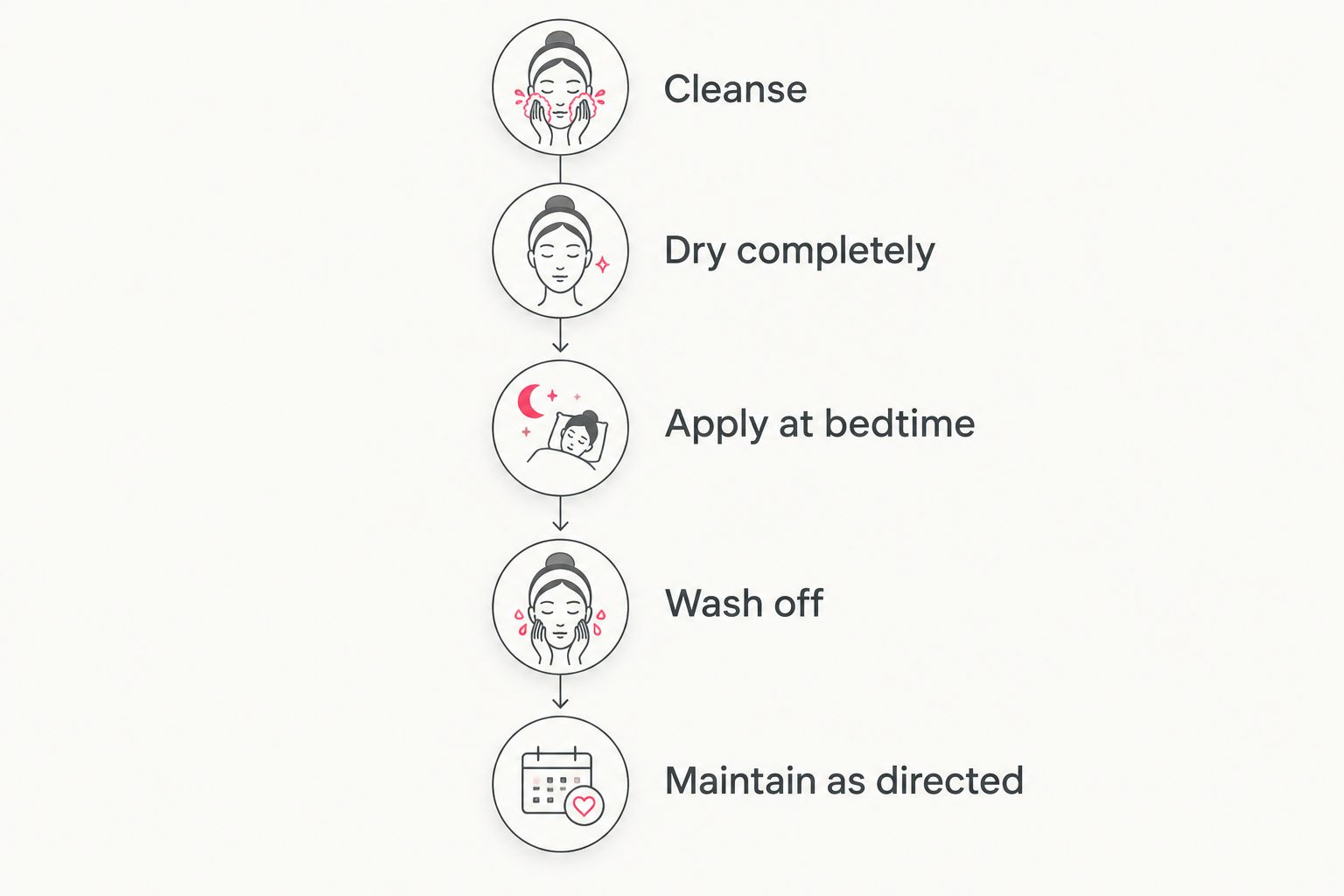
The referenced gel label describes a few consecutive nights until controlled, followed by twice-weekly use or as needed. Twice weekly is a maintenance pattern after control—not a promise that two applications will stop sweating. Your current label governs the schedule.
Keep the gel away from the eyes. The antiperspirant label also directs people with kidney disease to ask a doctor before use. If rash or irritation occurs, stop rather than adjusting the routine around continued discomfort.
What should you do if an antiperspirant stings?
Do not treat stinging as proof that an antiperspirant is working. Stop use if rash or irritation occurs, as the labels direct, and do not apply more product to the affected skin.
Review what happened before considering another application: Was your skin fully dry? Had you just showered or shaved? Was there already irritation? These questions help identify a mismatch with the directions, but they do not prove the cause of a reaction.
Persistent, severe, or recurring reactions warrant professional advice. Keep the package and ingredient list available so a clinician can assess the actual product rather than the general category.
Does “clean” mean better for sensitive skin?
“Clean” describes formulation choices, not a medical guarantee. Duradry sweat care combines sweat-reducing actives with thoughtfully selected ingredients, but ingredient exclusions do not establish that everyone will tolerate a formula.
Naturally derived percentages are not irritation scores. They also do not establish that a formula is hypoallergenic, suitable for eczema, or appropriate during pregnancy or breastfeeding.
Use the current package ingredient list when checking for an ingredient you know you react to. An older review, product nickname, or abbreviated online description is not a substitute for the formula on your package.
The same care applies to “clinical strength.” It describes the product’s sweat-control positioning; it does not mean prescription status, guaranteed results, or universal suitability for sensitive skin.
Should you add cleansing or stronger protection first?
Match the next step to the unresolved concern. If your antiperspirant routine is uncomfortable, adding another leave-on product is not the next move. Stop when irritation occurs and assess the problem first.
If sweat and residue need washing away, a cleanser serves that purpose. The Deep Clean Body Wash is a rinse-off cleansing option, not an antiperspirant and not a treatment for a rash. Its limitation is equally important: washing away existing sweat does not prevent new perspiration.
If odor remains but wetness is controlled, stronger sweat reduction is not automatically necessary. If wetness remains despite correct use, review application and consistency before adding intensive support. Persistent or disruptive sweating deserves a clinician’s assessment, particularly when it begins suddenly or occurs with other symptoms.
FAQ
Is Duradry hypoallergenic?
There is no verified hypoallergenic claim for the range in the product guidance here. Check the current formula and do not interpret fragrance-free or ingredient exclusions as a guarantee against reactions.
Which option is better if I want to avoid fragrance?
The Intensive Sweat Minimizing Gel is described as fragrance-free, while the Clinical Sweat Control Stick contains fragrance. The gel still has specific application restrictions and is not guaranteed to suit sensitive skin.
Can I use the gel right after shaving?
No. The gel’s referenced label excludes recently shaved skin; follow the current package rather than choosing an unsupported waiting period.
Can I apply the gel straight after a shower?
No. The gel’s directions say not to apply immediately after bathing and require completely dry underarms.
Should I keep using antiperspirant if it causes a rash?
No. Stop use if rash or irritation occurs, and seek professional advice for persistent or severe reactions rather than increasing the amount or continuing through discomfort.
Does fragrance-free mean an antiperspirant cannot irritate skin?
No. Fragrance-free describes the absence of fragrance, not a guarantee that every other ingredient will suit your skin.
Can I use the stick and gel together?
They can serve different times in an underarm routine: apply the gel at bedtime, wash it off the next morning, then dry before applying the stick. Do not layer them simultaneously to increase potency.
One last thing
The most useful detail is often the direction you are tempted to skip. Completely dry skin, a morning wash-off, and avoiding recently shaved underarms are part of using the gel correctly—not optional extras. Following them still does not guarantee freedom from irritation.
Related guides
- Can antiperspirant cause skin irritation?
- What is in antiperspirant?
- Can you use antiperspirant and deodorant together?
Before your next application, read your package’s directions and warnings. If your skin is already irritated, pause the antiperspirant rather than adding another step.

