

Best gel pick: Duradry’s Intensive Sweat Minimizing Gel for an overnight sweat-control routine. Best daily stick option: Clinical Sweat Control Stick. Best full-body wipe option: Sweat Control Body Wipes. This 2026 guide compares those distinct formats so you can choose sweat protection that matches your concern, application preferences, and treatment area.
- Duradry’s Intensive Sweat Minimizing Gel is the best sweat minimizing gel pick here for an overnight routine.
- Clinical Sweat Control Stick suits shoppers who prefer a stick format for clinical sweat protection.
- Sweat Control Body Wipes offer a wipe format explicitly described for underarms, hands, feet, chest, and back.
- Choose antiperspirant for wetness control; deodorant alone addresses odor, not sweat production.
Why this matters
You can like your deodorant and still need something different for wetness. Deodorant and antiperspirant solve different problems: deodorant addresses odor, while antiperspirant reduces sweating where you apply it. A pleasant fragrance does not establish that a product controls sweat.
The same distinction matters when you search for a gel. Gel describes a texture, not a level of protection. Look at the product’s stated purpose and application instructions before deciding whether its format fits your routine.
Duradry sells both antiperspirants and deodorants, including a sweat-minimizing gel. Its Intensive Sweat Minimizing Gel description specifically calls for application before bed. That makes the timing part of the purchase decision, not an incidental detail.
The best sweat product is the one that addresses your actual concern and has directions you can follow consistently. If your priority is wetness, compare sweat-control products. If your priority is odor without troublesome sweating, a deodorant comparison answers a different question.
What makes the best sweat minimizing gel?
For this 2026 comparison, these criteria matter more than packaging, fragrance language, or a product’s position in a search result:
- Sweat-control purpose: The description should identify sweat reduction, rather than leaving you to infer it from words such as fresh or dry.
- Application timing: An overnight product belongs in a bedtime routine. Choose it only if that timing works for you.
- Approved treatment area: Match the directions to the body area you want to treat. Underarms, hands, feet, and other areas are not interchangeable application instructions.
- Format preference: Gel, stick, and wipe formats require different handling. Choose the one you will use as directed, not the one with the most appealing category name.
- Ingredient fit: Read the current ingredient list and warnings, especially if you have previously reacted to fragrance or another ingredient.
- Claim clarity: A maximum reduction claim is not a promise that every person will achieve that result. Keep the product claim separate from your own experience.
Ingredient preferences matter, but they do not replace the other criteria. A formula can fit your ingredient checklist and still be the wrong choice for your intended body area or application schedule.
Likewise, do not assume that gel means gentle, stick means stronger, or wipe means weaker. Those conclusions require formula-specific evidence. Compare the actual instructions and claims, not assumptions about texture.
Sweat-control options at a glance
Only one standalone sweat-minimizing gel is identified in this comparison. The other recommendations are clearly labeled alternatives, not competing gels. The table separates their jobs so you can make a useful choice without treating unlike formats as equivalent.
| Rank and item | Best for | Standout feature | Key limitation |
|---|---|---|---|
| 1. Intensive Sweat Minimizing Gel | An overnight gel routine | Product description specifies bedtime application and claims up to 95% sweat reduction | The maximum claim is not an individual guarantee; check treatment-area directions |
| 2. Clinical Sweat Control Stick | A daily stick-format preference | Clinical sweat protection in a stick | It is not a gel, and the supplied description does not establish full-body application |
| 3. Sweat Control Body Wipes | A wipe format for multiple body areas | Description names underarms, hands, feet, chest, and back | It is not a gel; follow the complete directions and exclusions |
There is no budget ranking here. The decision is about intended use, not a price-based claim or an unsupported assertion that one format delivers more protection than another.
1. Intensive Sweat Minimizing Gel: best for an overnight routine
Intensive Sweat Minimizing Gel is the closest match to the search itself: a gel explicitly described for excessive sweat control. Its product description says to apply it before bed and describes noticeably less sweat during the day.
Duradry’s Intensive Sweat Minimizing Gel is best for shoppers who want sweat control built around a bedtime application. Choose it because the schedule and purpose fit your needs, not because you expect every gel to perform the same way.
Intensive Sweat Minimizing Gel pros
- It is a gel, rather than an alternative format presented as one.
- The description gives a clear application window: before bed.
- Its stated purpose is excessive sweat control, not fragrance alone.
- The product description provides a specific maximum sweat-reduction claim.
Intensive Sweat Minimizing Gel cons
- A bedtime application requires a different habit from applying a product as you leave home.
- The description’s up to 95% sweat-reduction claim does not guarantee your result.
- The supplied description does not establish instructions for every body area; check the label before using it beyond the intended sites.
The percentage needs context. Up to 95% is the product description’s claim, not a head-to-head result against the stick or wipes in this guide. It also does not establish how quickly you will notice a change or how long protection will last for you.
If an overnight routine sounds manageable, read the complete directions before your first application. Do not substitute an improvised schedule or extend use to another body area because the word gel sounds versatile.
Best for: A shopper specifically seeking a sweat-minimizing gel with bedtime application.
Verdict: Buy for an overnight gel routine; hold if you need confirmed instructions for another treatment area.
2. Clinical Sweat Control Stick: best for a stick-format preference
Clinical Sweat Control Stick delivers clinical sweat protection in a stick format, according to its product description. It is an alternative for shoppers who prefer handling a stick rather than applying a gel.
This is a format recommendation, not a claim that the stick reduces more sweat than the gel. The descriptions do not provide a shared test that would support that conclusion.
Clinical Sweat Control Stick pros
- The description explicitly identifies clinical sweat protection.
- The stick format offers a clear alternative to gel application.
- Its stated focus includes thoughtfully selected ingredients.
Clinical Sweat Control Stick cons
- It does not meet a requirement for a gel texture.
- The supplied description does not establish the full range of permitted treatment areas.
- Its clinical wording does not demonstrate better performance than the other options in this guide.
Choose the stick when format is the deciding factor. If you dislike handling gel, a stick deserves consideration—but preference is not permission to change its directions or use it on an unlisted body area.
Read the current ingredient list rather than treating clean as a universal safety standard. Your previous reactions and the product’s warnings are more useful than a broad ingredient-positioning phrase.
Best for: A shopper who wants clinical sweat protection and prefers a stick.
Verdict: Buy for the stick format; skip if a gel is your firm requirement.
3. Sweat Control Body Wipes: best for multiple body areas
Sweat Control Body Wipes are described as clinical-strength sweat control in a wipe. Their description specifically names underarms, hands, feet, chest, and back, making treatment-area coverage the strongest reason to consider them.
The format is different from both a gel and a stick. Choose the wipes when their stated areas and application method match your needs; do not assume they are merely cleansing wipes because they come in that format.
Sweat Control Body Wipes pros
- The description explicitly identifies clinical-strength sweat control.
- It names several body areas rather than leaving coverage entirely unspecified.
- The wipe format offers an alternative to spreading gel or using a stick.
Sweat Control Body Wipes cons
- They are not a sweat-minimizing gel.
- Full-body wording does not override the complete directions, warnings, or exclusions.
- The description does not establish greater sweat reduction than the gel or stick.
For sweating beyond your underarms, confirmed application areas deserve priority over format preference. A gel can be your preferred texture and still lack the treatment-area instructions you need.
The wipes’ description supplies more body-area detail than the other descriptions in this comparison. That supports their use-case placement, but it does not establish universal suitability for every skin surface.
Best for: A shopper seeking a wipe format with explicitly named application areas beyond underarms.
Verdict: Buy when the listed treatment areas match your needs; hold until you have checked the complete label.
Choose by concern before choosing by texture
Start with the problem you want to solve. Wetness calls for sweat control; odor calls for odor control. When both bother you, check what each product is intended to address instead of assuming one familiar format covers everything.
These three labels help separate the decisions:
- Sweat control: Look for an antiperspirant or an explicit sweat-reduction purpose.
- Odor control: Look for a deodorant or an explicit odor-control purpose.
- Application area: Confirm that the directions include the body area you intend to treat.
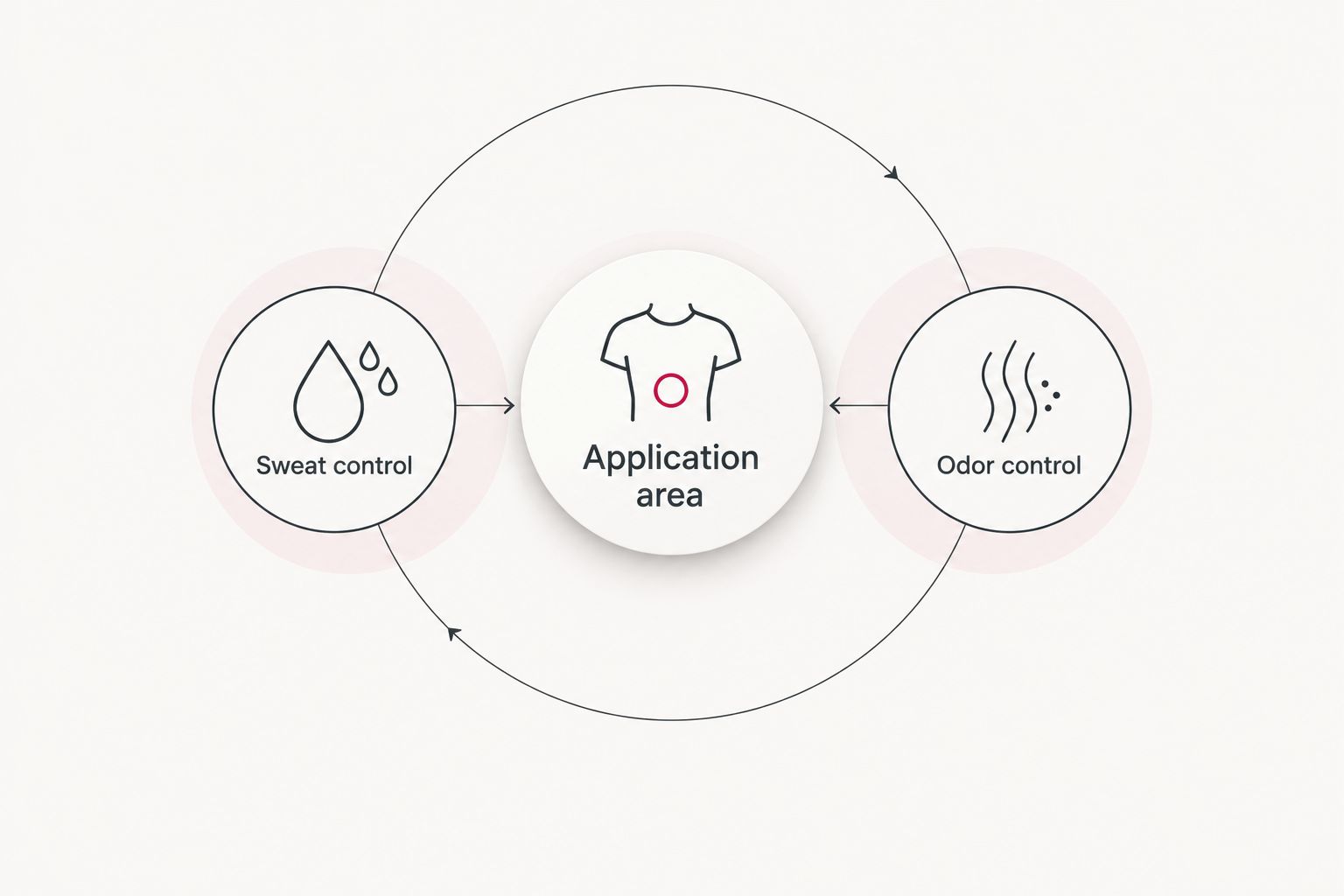
For your 2026 routine, write down the treatment area first. Then identify whether wetness, odor, or both are the concern. Only after those checks should you choose between gel, stick, and wipe.
This order prevents a common mismatch: buying something because its texture feels familiar, then discovering that its purpose or directions do not fit your needs. A clear treatment-area match beats a vague full-body assumption.
Build a routine without adding unnecessary products
A useful sweat-care routine does not need every format in this guide. Start with a product that fits the concern and treatment area, then follow its complete directions. Adding more products immediately makes it harder to identify what is helping or irritating your skin.
Step 1: Read the directions
Check application areas, timing, preparation instructions, and warnings. For the gel in this comparison, bedtime application is explicitly stated in the description; the complete label supplies the rest of the instructions you need.
Do not transfer instructions from another antiperspirant. Similar-looking products can have different directions.
Step 2: Follow one clear routine
Use the chosen product as directed rather than changing the amount or schedule because sweating feels frustrating. More product is not automatically a better plan.
If you already use another sweat-control product on the same area, check whether the directions permit that combination. Do not assume layering a gel, stick, and wipe improves protection.
Step 3: Track comfort and the actual concern
Notice whether the wetness you wanted to address changes and whether your skin remains comfortable. Keep odor and wetness separate in that assessment: smelling fresher does not necessarily mean you are sweating less.
Stop using a product that causes irritation and follow its warnings. Seek medical advice for persistent or troublesome symptoms rather than continuing to add products.
If gel and stick are the formats you are considering, these are the relevant products to review:


How the recommendations are ranked
The 2026 ranking prioritizes direct relevance to a gel search, then separates alternatives by their stated use cases. Intensive Sweat Minimizing Gel comes first because it is the identified gel and its description specifies an overnight routine.
The stick follows for format preference; the wipes follow for explicitly named body areas. Their positions are not a measured potency ranking, and no wear-time or irritation comparison is implied.
Duradry’s product descriptions support these recommendations. They do not establish comparative clinical results, so the guide keeps each verdict tied to purpose, timing, format, and treatment-area information.
Which sweat-control option should you choose?
Choose Intensive Sweat Minimizing Gel if you want a gel and can follow a bedtime routine. That is the default recommendation for the query best sweat minimizing gel in 2026.
Choose Clinical Sweat Control Stick if stick application is your priority. Choose Sweat Control Body Wipes if their named treatment areas match the sweating you want to address.
Do not buy all three simply because they appear together. Pick the clearest fit, read the label, and judge the result against the concern that prompted your search.
FAQ
What’s the best sweat minimizing gel in this 2026 comparison?
Duradry’s Intensive Sweat Minimizing Gel is the best gel pick here for an overnight routine. Its description specifies application before bed and excessive sweat control; this is a use-case recommendation, not a head-to-head clinical ranking.
Is sweat-minimizing gel the same as deodorant?
No, sweat-minimizing gel and deodorant are not interchangeable categories. Deodorant addresses odor, while antiperspirant reduces sweating; check the gel’s stated purpose rather than relying on texture alone.
Does the gel guarantee 95% less sweat?
No, the product description’s up to 95% sweat-reduction claim is not a guarantee of your individual result. It also does not establish better performance than the stick or wipes in this comparison.
Can I use sweat-minimizing gel on my hands and feet?
Use sweat-minimizing gel on hands or feet only if its current directions permit those areas. The gel description supplied here does not establish those instructions; the wipe description explicitly names hands and feet.
Is a clinical stick better than a sweat-minimizing gel?
A clinical stick is a better format choice if you prefer stick application, but this comparison does not establish stronger sweat reduction. Choose according to the product’s purpose, treatment areas, and directions.
Should I layer gel, stick, and wipes on the same area?
Do not assume that layering gel, stick, and wipes improves protection. Check the complete directions before combining products on the same area, particularly if your skin is sensitive or irritated.
When should excessive sweating get medical attention?
Seek medical advice when sweating starts suddenly, occurs at night, or significantly disrupts daily life. Sweating with chest pain, dizziness, or nausea requires urgent medical attention rather than a product comparison.
One last thing
A format tells you how a product is applied—not everywhere it belongs. That distinction matters most when you want sweat protection beyond underarms.
For your 2026 purchase, compare the treatment-area instructions before comparing textures. Duradry’s sweat-minimizing gel is the default here for an overnight gel routine; a preference for gel never overrides the label.

