

To stop sweating through clothes, use an antiperspirant on clean, completely dry skin according to its label, then add clothing protection where you need it. Deodorant alone does not reduce wetness, and even an effective antiperspirant does not guarantee that every shirt will stay dry during heat, exercise, or heavy sweating.
- How to stop sweating through clothes: reduce wetness with antiperspirant, then manage moisture reaching your clothing.
- Duradry sweat care fits people seeking daily underarm protection or a targeted nighttime routine for heavier sweating.
- Deodorant controls odor, not perspiration; body wash cleans away sweat rather than preventing it.
- Match the product to the body area, follow its label, and stop use if irritation develops.
How to stop sweating through your clothes
Start with the source of the wetness, not a stronger fragrance. Underarm sweat calls for an underarm antiperspirant; dampness across your back or chest needs a product specifically directed for those areas.
Use this order to build your routine:
- Check what your current product does. Look for antiperspirant labeling if wetness is the concern. A deodorant-only product addresses odor, even when it smells fresh or feels dry during application.
- Apply to clean, completely dry skin. For daily underarm sweat and odor, the Clinical Sweat Control Stick is a straightforward starting point. Follow the current package directions rather than adding extra product whenever your shirt feels damp.
- Check application timing before escalating. Some antiperspirants are intended for bedtime use. Follow the schedule for your particular product; not every stick, gel, or wipe uses the same instructions.
- Protect clothing separately. An absorbent undershirt or garment-compatible underarm shield can intercept moisture. Neither changes how much you sweat.
- Reassess persistent sweating. If correctly used products still leave you regularly soaking clothing, ask a clinician about the sweating rather than repeatedly increasing the amount you apply.
The aim is less wetness reaching your clothes, not the elimination of normal sweating. You can adjust your routine without treating every warm commute or workout as a medical problem.
Why this matters: wetness, odor, and shirt marks are different
A shirt can feel damp without smelling, and underarm odor can develop without a large wet patch. These are different concerns. Choosing a product by fragrance alone leaves the wetness question unanswered.
Antiperspirants reduce perspiration in the treated area. Deodorants address odor, while body wash removes sweat and buildup during cleansing. A product that combines antiperspirant and deodorant functions can address underarm wetness and odor together.
Also distinguish a damp patch from product residue or an old stain. Reducing sweat does not establish that a formula is stain-free or transfer-free. If your main concern is a mark rather than moisture, check the garment's care instructions and the product's application directions before changing your entire routine.
Daily underarm protection: start with an antiperspirant stick
Best for: everyday underarm wetness and odor. A daily antiperspirant-and-deodorant stick is a practical starting point when your shirt becomes damp during work, commuting, or social plans.
The Clinical Sweat Control Stick directions specify clean, dry underarms and 2–4 swipes per underarm. The current package label governs use. More swipes are not a substitute for checking skin dryness, timing, and whether the product matches your concern.
The advantage is a familiar format that addresses both sweat and odor. The limitation is its application area: this stick is for underarms, not a solution to spread across your chest, back, or thighs.
Keep the routine simple enough to follow consistently. If everyday protection is sufficient, there is no reason to add an intensive nighttime step just because it exists.
Heavier underarm sweating: consider a nighttime gel
Best for: underarm sweating that needs more focused support than a basic daily routine. The Intensive Sweat Minimizing Gel adds a bedtime antiperspirant step, followed by washing it off the next morning.
Duradry sweat care offers daily and nighttime formats for different underarm needs. The gel helps reduce underarm sweat with nighttime use; it is not a prescription medication or a guarantee that clothing will remain completely dry.
Its practical advantage is a targeted schedule separate from your morning routine. Its limitation is the extra application and wash-off step, along with restrictions around bathing, shaving, and irritated skin.
Bedtime application does not mean treatment for night sweats. The gel is intended to support less daytime underarm sweating, not to address sweating during sleep or an underlying cause of that symptom.
How do I fit nighttime antiperspirant into my routine?
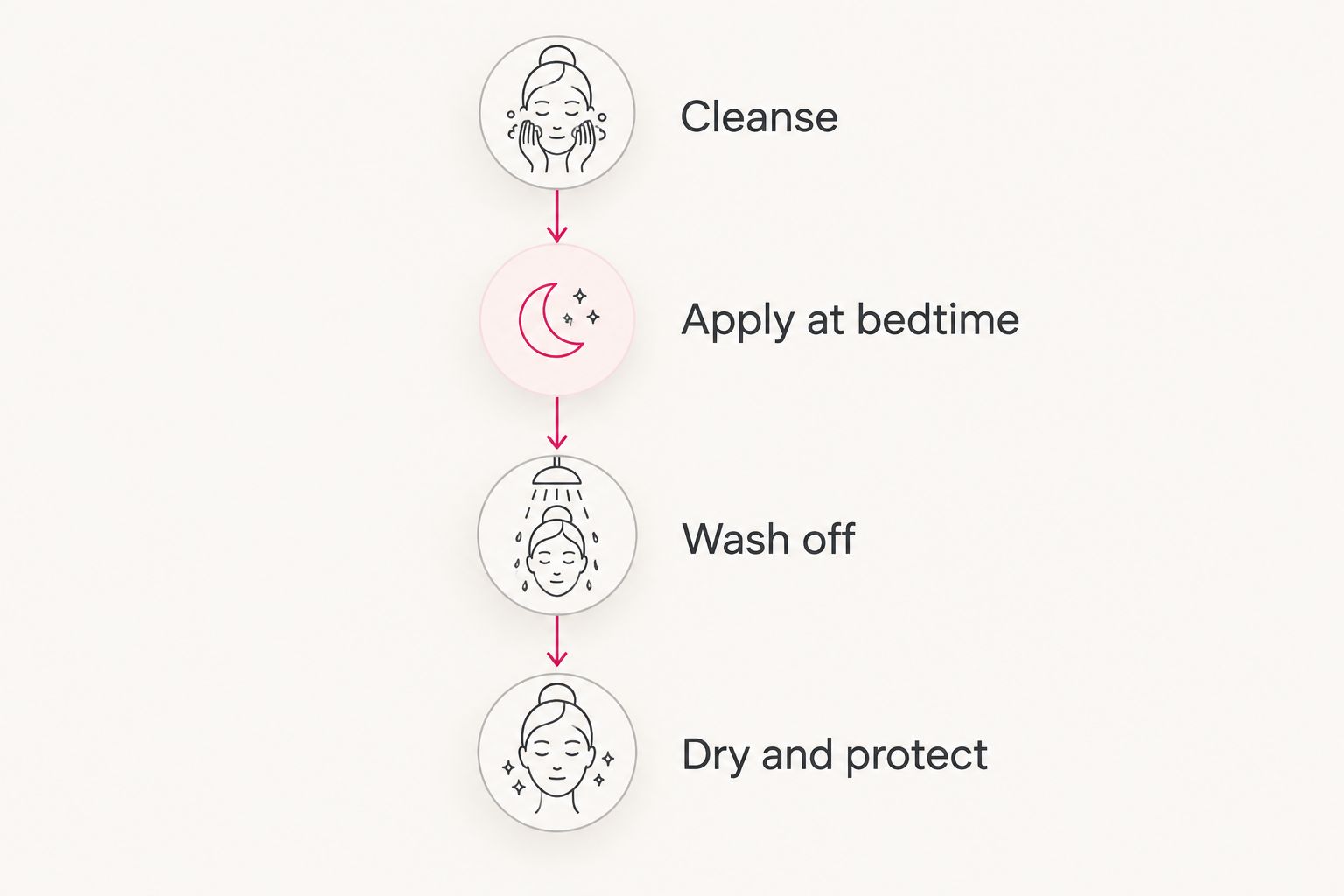
Keep cleansing, nighttime treatment, and daytime protection separate. A routine with several products does not mean layering them all onto your underarms at once.
- Cleanse. Remove sweat and product residue, rinse thoroughly, and allow your underarms to become completely dry. Do not apply the gel immediately after bathing.
- Apply at bedtime. The product page describes a pea-sized amount per underarm. Use only as the current label directs, avoiding broken, irritated, or recently shaved skin.
- Wash off. Wash your underarms thoroughly the next morning. This is part of the gel routine, not an optional cleansing preference.
- Dry and protect. Dry your underarms before applying your daytime antiperspirant or deodorant. Do not add body antiperspirant wipes over the gel to increase its effect.
Follow the current label for the initial schedule and maintenance. The referenced gel label describes a few consecutive nights until controlled, then 2 applications per week or as needed for maintenance; that is not a promise that two starting applications will stop sweating.
Stop if rash or irritation occurs. The antiperspirant label also directs people with kidney disease to ask a doctor before use. Keep the gel away from the eyes and use it only on underarms.
Sweat beyond your underarms: choose a body-directed product
Best for: targeted body sweat where the current label permits application. Sweat Control Body Wipes are antiperspirant wipes, not simply a way to wipe existing sweat off your skin.
The product page identifies areas including underarms, hands, feet, chest, back, and thighs. Follow the current package directions for the area you intend to treat; do not extend an underarm gel's instructions to the wipes or assume every body surface is suitable.
The format's advantage is portable, targeted application. Each pack contains 30 unscented wipes. The limitation is that convenience does not make them an instant rescue treatment for actively sweaty skin or permission to apply them everywhere.
Start with clean, dry skin. The referenced directions emphasize bedtime application, air drying, and washing off the next morning, with daytime use as directed. Avoid the face and mucous membranes, and follow all package warnings.
For sweat across your chest or back, identify the actual wet area before choosing a product. Treating only your underarms will not address moisture coming from elsewhere beneath your shirt.
Clothing protection: manage the moisture that still gets through
Best for: adding a physical barrier between skin and an outer garment. Clothing protection complements antiperspirant; it does not replace sweat reduction.
An absorbent undershirt can take up moisture before it reaches your outer layer. The tradeoff is another layer to wear, and a saturated undershirt can still transfer moisture. Check comfort with the outfit you actually plan to use.
Underarm shields offer more localized protection. Check their placement, attachment method, and suitability for the garment, especially with delicate fabrics. They protect a limited area rather than the whole shirt.
Moisture-wicking clothing has a different job: moving moisture through fabric rather than stopping perspiration. Do not assume that “wicking” means an outer garment cannot show dampness. Select clothing around comfort and the activity, not an expectation of sweat-free skin.
Before an important meeting or event, try the complete routine with the intended outfit. Check comfort, drying, residue, and whether a shield or undershirt sits correctly. Avoid making an unfamiliar intensive treatment your last-minute experiment.
Why sweating through clothes varies
A routine that works for an office day has different demands during a workout or a hot commute. Check these factors before deciding your antiperspirant has stopped working:
- Product function: Deodorant and body wash do not perform the same sweat-reducing job as an antiperspirant.
- Application conditions: Clean, completely dry skin and the correct schedule matter. Applying a bedtime product immediately after bathing conflicts with the gel's directions.
- Body area: Underarm protection does not address sweat coming from your back, chest, or another untreated area.
- Daily conditions: Heat and physical activity change the situation your routine needs to handle. Normal exercise sweating is not, by itself, a diagnosis.
- Consistency: Follow the product's initial and maintenance instructions rather than changing the amount and schedule after every damp shirt.
- Skin tolerance: Irritation changes the next step. Stop the irritating product instead of adding more or continuing through a rash.
Change one part of the routine at a time. That makes it easier to identify whether the useful adjustment was application timing, product category, or clothing protection.
What should I do when my shirt is already wet?
Manage the current moisture first; review prevention later. If possible, move somewhere cooler, gently blot wet skin, and change into a dry shirt or undershirt. Blotting removes existing moisture but does not stop further perspiration.
Do not try to solve wetness by repeatedly spraying deodorant over a damp shirt. It does not turn an odor-care product into an antiperspirant, and clothing is not the application surface specified for skin products.
Once you are comfortable, check what happened before the wet patch appeared. Was the moisture coming from an untreated area? Did you apply to damp skin, skip the usual schedule, or expect odor care to reduce sweat?
That check gives you a useful next action. Automatically doubling your dose does not.
When should I get help for sweating through clothes?
Seek a clinician's assessment when sweating is persistent, disruptive, starts suddenly, occurs during sleep, or comes with other symptoms. A clinician can distinguish different causes and discuss treatment beyond a consumer routine.
You do not need to diagnose yourself with hyperhidrosis before asking for help. Explain where you sweat, when it happens, how it affects your clothing and daily activities, and which products you have used according to their labels.
If sweating changes after starting a medication, ask the prescriber rather than changing the medication yourself. Antiperspirants can reduce sweat in a treated area; they do not establish or treat the underlying cause of every sweating change.
FAQ
Why do I still sweat through clothes when I wear deodorant?
Deodorant alone does not reduce perspiration, so you can still sweat through clothes while using it. Choose an antiperspirant for wetness and follow its directions for the intended body area.
What's the best first step for stopping underarm sweat patches?
The best first step is an underarm antiperspirant applied to clean, completely dry skin according to its label. Check that your current product is not deodorant-only before adding another step.
Should I put antiperspirant on at night or in the morning?
Apply antiperspirant at the time specified by its label. A nighttime gel has a different schedule from daily protection, including morning wash-off instructions; do not assume one product's timing applies to another.
Can I use underarm gel on my chest or back?
The Intensive Sweat Minimizing Gel is for underarms only. Choose a product specifically directed for the body area you want to treat, and follow its current package instructions.
Will an undershirt stop me from sweating?
An undershirt does not stop sweating; it provides a clothing layer that can absorb moisture. It can still become saturated, so it is a barrier rather than a guarantee against visible wetness.
Should I apply more antiperspirant if my shirt gets wet?
Do not automatically increase the amount beyond the label directions when your shirt gets wet. Check product type, application timing, skin dryness, and whether the moisture comes from the area you treated.
Does nighttime antiperspirant treat night sweats?
Nighttime antiperspirant application is not the same as treating night sweats. The Duradry gel is intended to support less daytime underarm sweating; sweating during sleep belongs in a medical assessment when persistent or concerning.
Related guides
One last thing
A fresh smell is not evidence of sweat reduction. Before buying another product, check whether the one you already use is an antiperspirant or only a deodorant. Then correct the application routine or product category before adding another layer of sweat care.

