

To reduce sweating during a job interview, use an antiperspirant according to its label before interview day, arrive without rushing, and give yourself a chance to cool down before you enter. Deodorant alone addresses odor, not wetness, and no routine guarantees that you will stop sweating completely. If your interview is today, focus on your usual protection, comfortable clothing, and a practical way to blot moisture rather than trying an unfamiliar intensive treatment at the last minute.
- How to stop sweating during a job interview starts with antiperspirant, not deodorant alone.
- Duradry Clinical Sweat Control Stick suits daily underarm sweat and odor protection; nighttime gel serves a different role.
- Apply products to clean, dry skin and follow their specific timing and body-area directions.
- For interview-day moisture, cool down and blot; do not keep layering products onto sweaty skin.
How to stop sweating during a job interview
Prepare for sweat before the interview instead of treating every damp moment as an emergency. The useful steps depend on whether your main concern is underarm wetness, damp palms, or feeling overheated after the journey.
- Check your product. Look for an antiperspirant if you want less wetness. A deodorant-only product is not a substitute.
- Follow the application schedule. Some products belong in a daily routine; others require bedtime application and washing off the next morning. Do not assume they work the same way.
- Choose familiar clothing. Wear an interview outfit you have already tested for comfort, movement, and visible moisture.
- Avoid a rushed arrival. Plan your route so you can settle, remove an unnecessary outer layer, and cool down before checking in.
- Carry a simple backup. A clean tissue or handkerchief lets you blot palms or other visible moisture without adding another product.
If wet underarms are your main concern beyond this interview, the guide to how to stop sweaty armpits explains that problem in more detail.
Why this matters: wetness and odor need different care
Sweating during an interview does not mean your hygiene is poor or that you are unprepared. Emotional stress can trigger sweating, and a warm commute or extra clothing adds a separate reason to feel damp.
The distinction between sweat reduction and odor control changes what you should reach for. Antiperspirant reduces perspiration in the treated area; deodorant addresses odor; washing removes sweat and buildup already on the skin. More fragrance does not provide more sweat control.
You also do not need to treat every body area because one area bothers you. Underarm protection does not automatically solve damp hands, and an underarm-only formula should stay on the area its label permits.
The night before: prepare without overdoing it
Start with the routine your skin already tolerates. The evening before an important interview is not the time to increase a dose, combine several intensive antiperspirants, or test a product on a new body area.
If you already use a nighttime antiperspirant, follow its directions carefully. Clean, completely dry skin matters. Do not apply a product to irritated skin or ignore restrictions about shaving and bathing just because the interview feels urgent.
Set out your outfit, check the route, and pack anything you need for a quick refresh. These steps remove avoidable decisions from the morning; they are not treatments for sweating, but they make the day easier to manage.
For a video interview, prepare the room as well. Adjust the temperature to your comfort, keep unnecessary layers off until needed, and make sure you can reach water without disrupting the conversation.
Interview morning: keep the routine familiar
Cleanse as usual and let your underarms dry before applying your regular daily antiperspirant. Follow the amount on the package rather than assuming a thicker layer gives stronger protection.
If you used an overnight product that requires morning removal, wash it off first. Dry the skin before applying your daytime protection. Those are separate steps, not an instruction to stack every formula at once.
Choose clothes with the actual setting in mind. A jacket that feels comfortable outdoors can feel warm on public transportation or in a waiting room. An easily removed layer gives you a practical adjustment without requiring an entirely different outfit.
If caffeine has repeatedly made you feel sweatier or more jittery, avoid adding an extra coffee for the interview. Use your own established pattern rather than adopting a broad list of food and drink restrictions that has never mattered to you.
Before you walk in: cool down, blot, reset
Once you arrive, address heat and surface moisture first. Applying another thick layer of antiperspirant over damp skin is not a dependable last-minute solution.
Use this simple sequence before checking in:
- Cool down. Pause after the journey and remove an outer layer if you are too warm.
- Blot moisture. Gently press a clean tissue or handkerchief against damp skin rather than rubbing repeatedly.
- Settle in. Put your phone away, organize your materials, and take comfortable, unforced breaths.
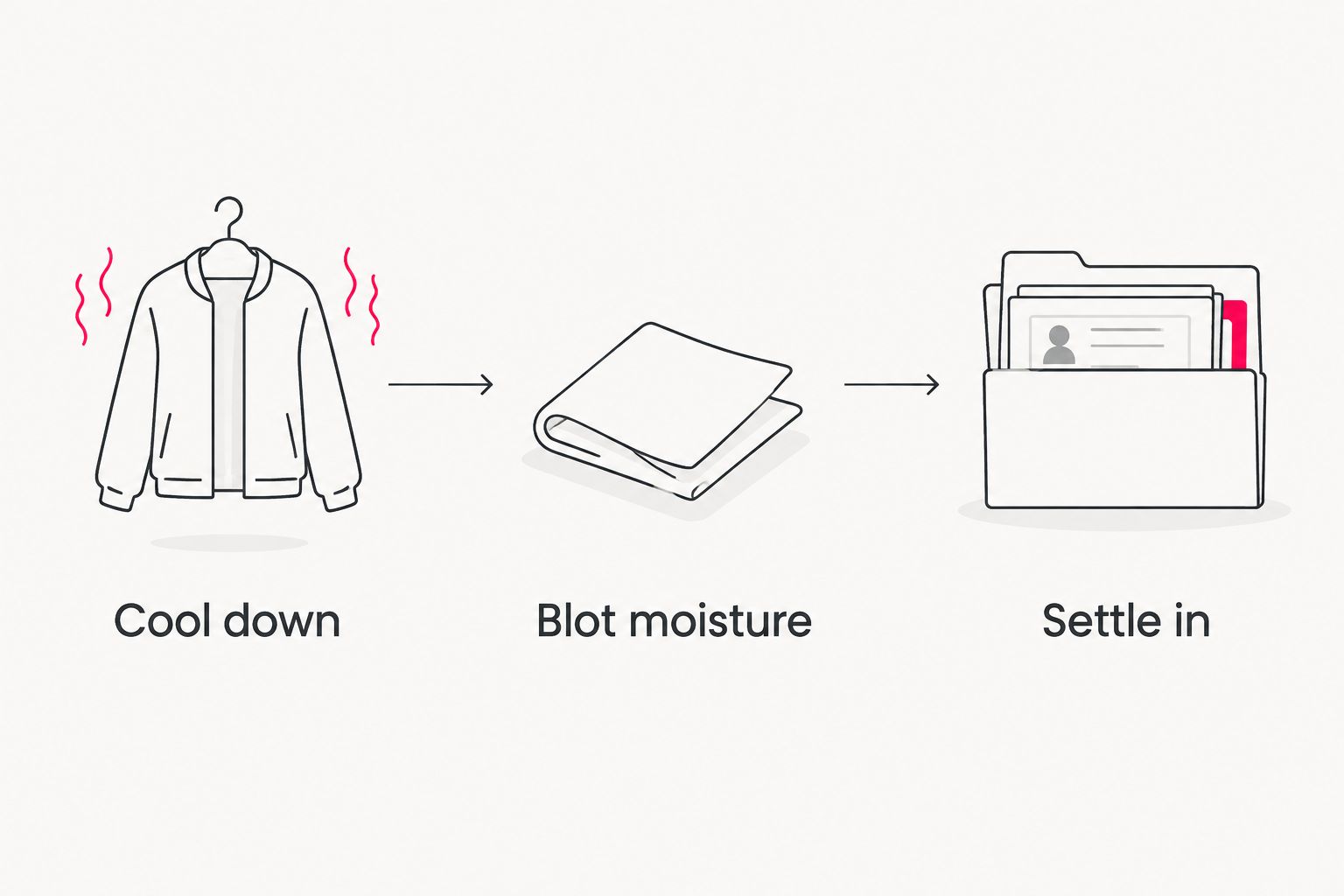
You do not need to monitor your underarms throughout the conversation. Once you have handled what you can, redirect your attention to the question, your examples, and what you want to learn about the role.
During the interview: handle moisture without making it the focus
Keep a tissue or handkerchief accessible rather than buried at the bottom of your bag. If your palms become damp, blot them discreetly during a natural pause. This removes surface moisture; it does not switch off sweating.
If you feel overheated, removing a jacket or taking a sip of water is an ordinary adjustment. There is no need to apologize repeatedly for sweating or give a medical explanation you do not want to share.
If a sweat mark appears, avoid repeatedly checking it. You have already prepared your routine and clothing; another inspection will not change either during the conversation. Bring your attention back to the next answer rather than making complete dryness a condition for performing well.
Which sweat care format fits interview preparation?
From Duradry's sweat care perspective, the right starting point is the concern you want to address—not the largest possible routine. Daily underarm protection and an intensive nighttime step have different jobs.
Duradry sweat care is best for interview preparation when you match the product to the wetness or odor concern and follow its label. Neither an antiperspirant nor a deodorant treats interview anxiety, and neither guarantees completely dry skin.
Clinical Sweat Control Stick: best for daily underarm protection
The Clinical Sweat Control Stick is an underarm antiperspirant and deodorant for daily sweat and odor protection. Its familiar format makes it a straightforward starting point when your main concern is everyday underarm wetness.
The supplied product directions specify 2–4 swipes per underarm on clean, dry skin. Follow the current package if its instructions differ. The stick is for underarms, not a general-purpose treatment for sweaty palms or feet.
Its advantage is a daily format that addresses both wetness and odor. Its limitation is that it does not promise complete dryness or irritation-free use, and its fragranced options will not suit every scent preference.
Intensive Sweat Minimizing Gel: best for heavier underarm sweating
The Intensive Sweat Minimizing Gel adds a bedtime antiperspirant step for heavier underarm sweating. It is not a quick refresh to apply in the waiting room.
The supplied directions describe a pea-sized amount per underarm at bedtime on completely dry skin, followed by thorough washing the next morning. Do not apply immediately after bathing or to broken, irritated, or recently shaved skin. Dry your underarms before applying daytime protection.
Follow the current label for the initial schedule and maintenance. Twice-weekly use describes a possible maintenance pattern after control is established, not a universal starting schedule or a promise that two applications will stop sweating.
The gel's advantage is focused nighttime sweat control. Its limitations are the additional preparation, wash-off step, underarm-only directions, and potential for irritation. Although you apply it at bedtime, it is not designed to treat sweating while you sleep.
Stop use if rash or irritation occurs. Ask a doctor before using an antiperspirant if you have kidney disease, as the referenced labels direct.


Why interview sweating varies
Your preparation should reflect what actually changes your sweating, rather than treating every interview as the same situation.
- Emotional stress: The anticipation of being evaluated can trigger sweating even when the room is cool.
- Heat and exertion: A warm journey, stairs, or rushing adds physical heat before the conversation starts.
- Product purpose: Deodorant addresses odor; an antiperspirant addresses wetness in its permitted treatment area.
- Application conditions: Product timing, skin dryness, and consistency affect whether your routine follows its intended use.
- Body area: Underarms and palms require attention to different application permissions; one product is not automatically suitable for both.
- Skin tolerance: Irritation limits what you can comfortably use. More product is not the answer to a reaction.
What if my interview is today and I have not prepared?
Use your familiar routine rather than improvising an intensive one. Apply your usual antiperspirant as directed, wear comfortable clothes, and carry something clean for blotting moisture.
An unfamiliar gel or repeated applications in the restroom are not a reliable emergency fix. If your regular product is deodorant-only, recognize its odor-control role rather than expecting it to stop wetness.
What if my hands sweat more than my underarms?
Do not apply an underarm-only product to your palms. For the interview itself, keep a clean handkerchief accessible and blot your hands before a greeting or during a pause.
For recurring palm sweating, look for guidance and products specifically intended for hands. If it disrupts writing, handling objects, or everyday interactions, discuss it with a clinician rather than extending an underarm product beyond its directions.
When should interview sweating get medical attention?
Sweating in a stressful interview does not, by itself, establish hyperhidrosis. A clinician can assess sweating that repeatedly disrupts daily life, persists despite an appropriate routine, or changes suddenly.
Sweating during sleep, medication-related concerns, and sweating accompanied by other symptoms deserve medical assessment rather than a stronger consumer routine. Do not stop or change prescribed medication on your own.
FAQ
Can I stop sweating completely during a job interview?
No routine guarantees that you will stop sweating completely during a job interview. Use an antiperspirant as directed, avoid arriving overheated, and keep a clean tissue or handkerchief available for surface moisture.
Should I use deodorant or antiperspirant before an interview?
Use an antiperspirant if your concern is wetness; deodorant alone addresses odor. A product labeled as both an antiperspirant and deodorant serves both purposes within its directions.
Should I apply nighttime antiperspirant right before I leave?
No—follow the product's bedtime schedule rather than moving it to interview morning. Duradry Intensive Sweat Minimizing Gel is applied at bedtime and washed off the next morning, according to its directions.
Can I put extra antiperspirant on if I am already sweaty?
Do not assume extra antiperspirant over sweaty skin will provide immediate control. Blot moisture, cool down, and follow the product's directions for clean, dry skin and application amount.
What should I wear if I sweat during interviews?
Wear a familiar outfit you have tested for comfort and visible moisture. Choose removable layers so you can adjust if the journey or interview room feels warm.
Does sweating in an interview mean I have hyperhidrosis?
No, sweating during an interview does not by itself mean you have hyperhidrosis. Seek a clinician's assessment if sweating repeatedly disrupts daily life, changes suddenly, occurs during sleep, or accompanies other symptoms.
One last thing
Choose your interview outfit during a rehearsal, not on interview morning. Wear it while practicing answers aloud and sitting as you would in the interview. That gives you a practical check on comfort, movement, and whether you keep adjusting a layer.
Your next step is simple: check whether your usual product is an antiperspirant, then plan its labeled application into the evening or morning before the interview. Keep the rest of your preparation focused on the conversation.

