

Duradry reports up to 95% sweat reduction within one week with consistent nightly use of its Intensive Sweat Minimizing Gel, and up to 90% less sweat within two weeks of consistent use of its Sweat Control Body Wipes. These are product-specific brand claims—not guaranteed results or average outcomes—and they do not describe how quickly every product in the range works.
- How long does it take to see results from Duradry? Judge the specific sweat care product, not the brand overall.
- Intensive Sweat Minimizing Gel carries a claim of up to 95% sweat reduction within one week of consistent nightly use.
- Sweat Control Body Wipes carry a claim of up to 90% less sweat within two weeks of consistent use.
- Antiperspirants reduce sweat; deodorant controls odor; body wash cleanses. Those results are not interchangeable.
How long does it take to see results from Duradry?
The gel’s stated timeframe is within one week; the antiperspirant wipes’ stated timeframe is within two weeks. Keep the qualifications attached: the claims describe reductions of up to the stated percentages with consistent use, not complete dryness by a deadline.
The Intensive Sweat Minimizing Gel is intended for heavier underarm sweating. The body wipes address sweat on permitted body areas, while the daily stick combines underarm sweat and odor protection. A wash or deodorant spray serves a different purpose, so its results need a different measure.
These timelines come from the brand’s October 15, 2026 product reference. Your current package label governs the amount, application areas, starting schedule, and maintenance instructions.
Why the type of result matters
Less wetness, less odor, and clean skin are different outcomes. If you judge all three by whether your shirt stays completely dry, you will miss what a cleanser or deodorant is designed to do.
Duradry sweat care is best for people who want to match daily protection, intensive underarm care, or targeted body care to a specific need. That does not mean you need the whole range. Start with your main concern, then choose the relevant product and schedule.
A useful distinction is whether you want to remove something already on your skin or reduce future sweating. Cleansing removes sweat and buildup during washing; antiperspirant acts on perspiration in the treated area. Neither role makes the other unnecessary for everyone.
Intensive Sweat Minimizing Gel: up to 95% within one week
The gel’s stated claim is up to 95% sweat reduction within one week with consistent nightly use. Read that as a qualified product claim, not a prediction of your personal result after the first application.
Best for: heavier underarm sweating that calls for a nighttime antiperspirant step. Its advantage is a focused bedtime routine; its limitation is that it requires preparation, morning wash-off, and attention to skin tolerance.
Apply a pea-sized amount to each completely dry underarm at bedtime, following your current label. Do not apply immediately after bathing or to broken, irritated, or recently shaved skin. Wash the gel off thoroughly the next morning.
Nighttime application is intended to help reduce sweating during the following day. The gel is not designed to treat night sweats, meaning sweating while you sleep. Do not confuse its application time with the condition it addresses.
The referenced label describes a few consecutive nights until sweating is controlled, followed by twice-weekly or as-needed maintenance. That maintenance schedule is not a promise that two applications will establish control. Follow the package supplied with your product rather than continuing a starting schedule indefinitely.
Clinical Sweat Control Stick: daily sweat and odor protection
The Clinical Sweat Control Stick is the everyday underarm antiperspirant and deodorant. Its role is daily protection, not the gel’s intensive nighttime step.
Best for: everyday underarm wetness and odor during work, commuting, exercise, and social plans. The familiar format makes it a straightforward starting point, but the gel’s one-week percentage claim does not apply to the stick.
The product directions specify 2–4 swipes per clean, dry underarm. Follow the current package instructions rather than adding more swipes because you want a faster result. More product is not a substitute for correct application.
If you use the stick with the gel, wash the gel off in the morning and dry your underarms before applying the stick. These are separate steps at different times—not products to layer together at bedtime to increase strength.
Judge the stick on the concerns it addresses: underarm wetness and odor. A scent you notice immediately is not proof of a particular amount of sweat reduction.
Sweat Control Body Wipes: up to 90% within two weeks
The Sweat Control Body Wipes carry a claim of up to 90% less sweat within two weeks of consistent use. Do not substitute the gel’s percentage or shorter timeframe.
Best for: targeted body sweat care in a portable wipe format. Verified application areas include underarms, hands, feet, chest, back, and thighs, subject to the current package directions. The limitation is that portability does not mean immediate maximum protection on actively sweaty skin.
Start with clean, dry skin. The referenced label specifies bedtime application, air drying, and washing off the next morning, with daytime application as needed. Match your routine to the directions on your pack, including the permitted body areas.
These are antiperspirant wipes, not simply cleansing wipes. They are also distinct from deodorizing wipes, which address odor without necessarily reducing perspiration.
Do not use the underarm gel on hands or feet as a shortcut to the wipes’ role. Products in different formats have different instructions, even when both are intended to reduce sweat.
Body wash and deodorant spray: different results to look for
Deep Clean Body Wash cleanses sweat, odor, and daily buildup, including antiperspirant residue. Best for: removing what has accumulated on your skin during the day. Its limitation is equally important: washing does not prevent new perspiration.
Use the wash on wet skin, lather, and rinse thoroughly. You are evaluating a cleansing step—not waiting for a cumulative antiperspirant effect. There is no reason to judge a rinse-off cleanser against the gel’s sweat-reduction claim.
Deodorant Body Spray provides leave-on body odor protection. Best for: odor care when you do not need a stronger sweat-reduction step. Its unscented format avoids adding a competing fragrance, but odor protection is not a promise of dryness.
Apply the spray to clean, dry skin only where the current directions permit. If wet clothing remains your concern, first check whether you have chosen an antiperspirant rather than expecting an odor-care product to perform that job.
Why the time to noticeable results varies
Before deciding a routine is too slow, check the details that determine whether you are using the intended product correctly:
- Product purpose: Sweat reduction, odor protection, and cleansing require different measures of success.
- Application area: Underarm products and targeted body products do not share identical directions.
- Skin dryness: The gel requires completely dry underarms, not skin that is still damp after washing.
- Timing: Bedtime gel use and morning stick application serve separate roles.
- Consistency: The stated gel and wipe claims include consistent use; occasional use does not match those conditions.
- Skin tolerance: Irritation calls for stopping use, not pushing through to meet a timeline.
These checks help you correct a routine without automatically adding products. They also keep a normal change in sweating during a warm commute or workout from becoming a reason to exceed the label.
How to use the nighttime gel and daytime stick together
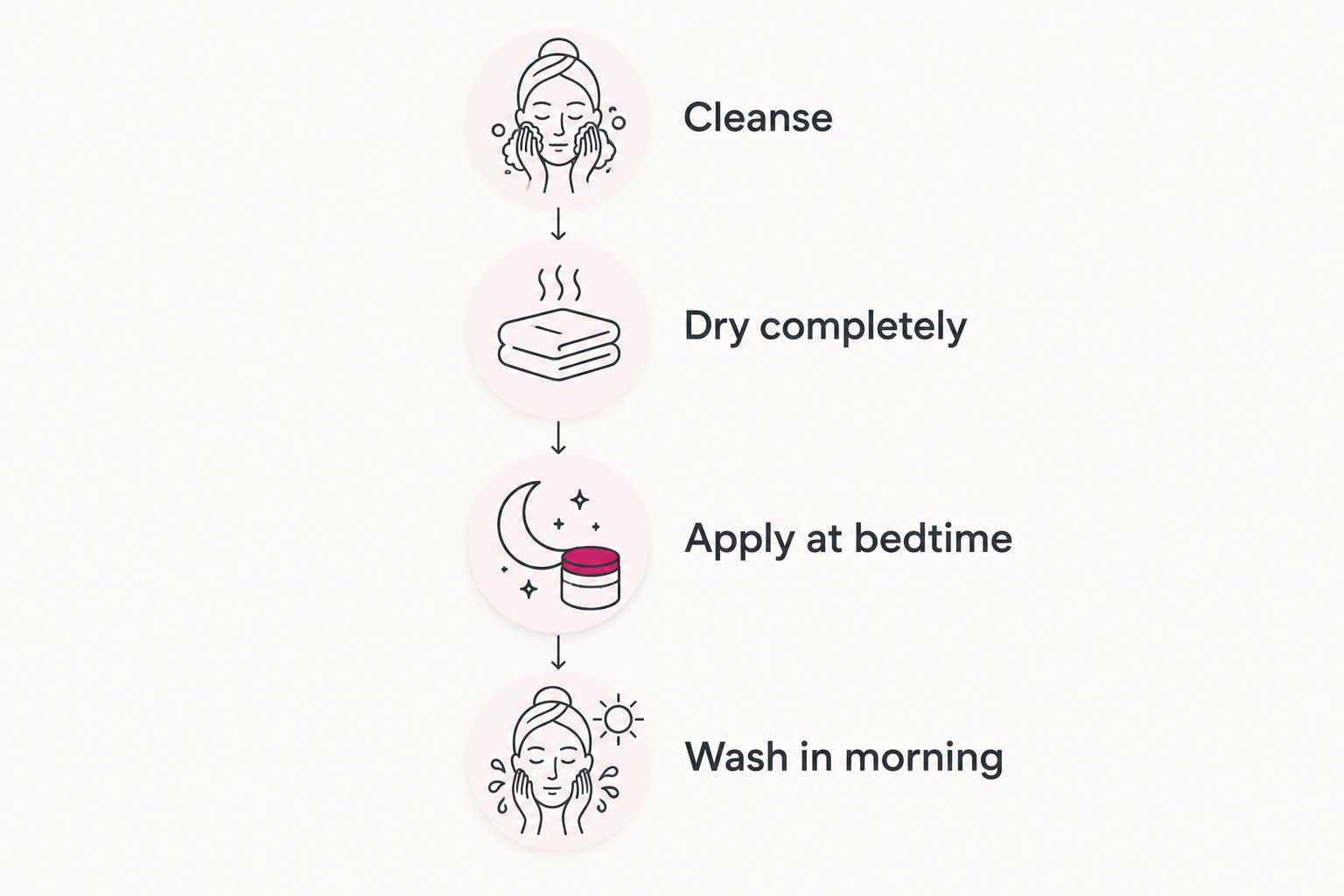
A combined routine is useful when you need intensive underarm sweat control plus a daily sweat-and-odor step. It is not necessary for every reader. Keep the sequence clear:
- Cleanse. Remove sweat and product residue, then rinse thoroughly. Plan this separately from gel application because the gel should not be applied immediately after bathing.
- Dry completely. Let your underarms become completely dry before the bedtime step. Do not apply the gel to damp skin.
- Apply at bedtime. Use the label-directed amount on underarms only, respecting the restrictions on shaving and irritated skin.
- Wash in morning. Wash off the gel thoroughly, dry your underarms, and then apply the daily stick as directed.
Stop use if rash or irritation occurs. The referenced antiperspirant labels also direct people with kidney disease to ask a doctor before use. Correct application matters, but it does not eliminate every possibility of irritation.
How to tell whether your routine is helping
Choose an outcome before you start evaluating the product. For an underarm antiperspirant, that means wetness in the treated area; for deodorant, it means odor control. A freshly washed feeling is a separate cleansing result.
Compare similar parts of your day rather than treating every occasion as an equal test. An office afternoon and a hard workout place different demands on your routine. Notice the context without turning ordinary perspiration into a failure.
A simple note can help you remember what actually happened:
- Which product you used and where you applied it.
- Whether your skin was clean and dry.
- Whether you followed the prescribed application time.
- Whether wetness or odor changed during a familiar activity.
- Whether your skin remained comfortable.
This is a practical record, not a clinical sweat measurement. Do not translate a smaller sweat patch into a personal percentage reduction or assume your observation reproduces the brand’s testing.
Do other sweating treatments follow the same timeline?
- A topical antiperspirant’s stated timeframe does not establish how quickly Botox works, and a procedure’s schedule does not establish what to expect from a stick, gel, or wipe.
If you are considering medical treatment for disruptive sweating, discuss the treatment-specific onset, follow-up plan, and limitations with your clinician. Do not change prescribed treatment based on a consumer product’s one-week or two-week claim.
The practical point is to keep each timeline attached to the treatment and conditions it describes. A shorter headline timeframe alone does not tell you which approach fits your needs.
What should you do if sweating has not improved?
Check the routine before increasing it. Confirm that the product addresses sweat rather than odor alone, that you are treating a permitted area, and that your amount and schedule match the current label.
For the gel, review bedtime application, completely dry skin, morning wash-off, and the restrictions around bathing and shaving. For the wipes, check their own instructions rather than borrowing the gel’s schedule. Avoid adding extra applications or combining antiperspirants on the same skin to chase a faster result.
If sweating remains persistent or disrupts daily life, seek a clinician’s assessment. Sudden changes, sweating during sleep, or sweating with other symptoms also deserve medical attention rather than an automatic increase in topical products.
You do not need a diagnosis to want more comfortable everyday sweat care. Equally, a consumer routine should not be expected to identify or treat an underlying cause.
FAQ
Can Duradry work after the first night?
Do not treat a first-night result as guaranteed. The Intensive Sweat Minimizing Gel’s stated claim is up to 95% sweat reduction within one week with consistent nightly use, not a promised result after one application.
Should I expect to be completely dry after one week?
No—the gel’s claim is up to 95% sweat reduction within one week with consistent nightly use, not complete dryness for everyone. Follow the current label and assess wetness separately from odor.
How long do the Sweat Control Body Wipes take to work?
Sweat Control Body Wipes carry a claim of up to 90% less sweat within two weeks of consistent use. Follow the pack’s application and wash-off directions; the gel’s shorter timeframe does not apply to them.
Do I still need the stick if I use the gel at night?
The gel’s product guidance recommends a daytime deodorant or antiperspirant after morning wash-off. The Clinical Sweat Control Stick supplies daily underarm sweat and odor protection; apply it after drying your underarms.
Can I use more gel to get results faster?
Use only the amount directed on the current label, which describes a pea-sized amount per underarm. Do not increase the dose to chase faster results, and stop use if rash or irritation occurs.
Does Duradry’s nighttime gel treat sweating while I sleep?
No—the Intensive Sweat Minimizing Gel is applied at bedtime to help reduce daytime underarm sweating, not to treat night sweats. Sweating during sleep belongs in a medical assessment when persistent or concerning.
Should I stop the gel once sweating is controlled?
Follow the current label’s maintenance instructions rather than stopping or continuing the starting schedule automatically. The referenced label describes twice-weekly or as-needed maintenance after control is established.
One last thing
A product’s drying time is not its results timeline. Skin that feels dry after application tells you the product has dried; it does not establish the amount of sweat reduction you will experience later.
Before your next application, identify the exact product you have and read its current directions. Correct the step that does not match—rather than adding another product or increasing the amount.

