

No—shaving does not reduce armpit sweat production because it removes hair, not the sweat glands beneath your skin. Hair removal can change how underarm moisture feels and make cleansing or applying products easier, but it is not an antiperspirant. If your goal is less wetness, focus on sweat control; if your goal is less odor, focus on cleansing and odor protection.
- Does shaving reduce armpit sweat? No—removing hair does not stop the sweat glands beneath your skin.
- Duradry antiperspirants address underarm wetness; shaving is a grooming choice, not a sweat-control treatment.
- Less underarm hair can make cleansing easier, but reduced odor does not mean reduced sweating.
- Keep antiperspirant off broken or irritated skin, and follow product-specific restrictions after shaving.
Does shaving reduce armpit sweat?
Shaving changes your underarm hair, not how much sweat your glands produce. A razor cuts hair at the skin’s surface. It does not remove or disable the structures that produce perspiration.
That distinction explains why freshly shaved underarms can still feel wet during a warm commute, a workout, or a stressful presentation. You have changed the hair, but the conditions that trigger sweating remain. For wetness-focused guidance, start with how to stop sweaty armpits.
Separate the effects before deciding whether shaving serves your goal:
- Sweat production: Shaving does not turn down the sweat glands.
- How moisture feels: Removing hair changes the surface where you notice sweat. A different sensation does not prove that you are producing less.
- Cleansing: Shorter or absent hair can make it easier to wash away sweat and product residue.
- Product application: Less hair can make it easier to place a product against the skin, but shaving is not required for antiperspirant use.
There is no need to remove underarm hair just to have a sensible sweat-care routine. Choose hair removal for your comfort or grooming preference, then address wetness separately.
Why this matters
Mistaking a grooming change for sweat control can leave you repeating a step that does not solve your main concern. If wet patches are the problem, shaving more closely is not the next move. An antiperspirant is the product category designed to reduce perspiration in the treated area.
Odor requires a different distinction. Body odor develops when skin bacteria break down components of sweat and other skin secretions; it is not simply a measure of how wet your underarms are. You can notice odor without much visible moisture, or noticeable moisture without strong odor.
Choose the routine by the problem: antiperspirant for wetness, deodorant for odor, and cleanser for washing away sweat and buildup. Shaving remains optional in each case.
Can shaving help with armpit odor?
Shaving can make underarm cleansing easier, but it does not guarantee less odor. Removing hair does not eliminate the bacteria naturally present on skin or prevent new sweat from reaching the surface.
If you notice that your underarms smell different after shaving, keep that observation separate from sweat reduction. You might also have changed how thoroughly you wash, how much residue remains, or how your deodorant reaches the skin. None of those changes establishes that the razor reduced perspiration.
A practical odor routine starts with gentle cleansing, thorough rinsing, and clean clothing. A deodorant adds leave-on odor protection. An antiperspirant-deodorant combines odor care with a sweat-reducing function, according to its label.
Avoid trying to scrub your underarms into staying fresh. Harsh scrubbing on recently shaved skin adds irritation without turning cleansing into lasting sweat prevention. Clean skin does not need to feel sore or stripped.
Is shaving, trimming, or leaving hair alone better?
The best grooming choice is the one you prefer and your skin tolerates—not the one you expect to stop sweat. Each approach has a practical advantage and a limitation.
Shaving: best for a smooth underarm finish
Shaving removes visible hair at the skin’s surface and makes it straightforward to see where you are applying a product. It suits you if you prefer smooth underarms and your skin tolerates the process.
The limitation is irritation. Razor burn, small cuts, and ingrown hairs can complicate an otherwise simple routine, and some antiperspirants exclude recently shaved skin. A closer shave is not a stronger sweat treatment.
Trimming: best for shorter hair without a close shave
Trimming shortens the hair without aiming for a completely smooth result. It is a practical middle ground if long hair gets in the way of grooming but close shaving regularly leaves your skin uncomfortable.
Trimming still does not reduce sweat production. You also need to avoid nicking the skin and keep grooming tools clean; a shorter hairstyle does not replace washing or a suitable leave-on product.
Leaving hair alone: best for avoiding hair-removal irritation
Keeping your underarm hair avoids the irritation caused specifically by removing it. You can still wash thoroughly and use an antiperspirant according to its directions.
The practical task is getting the product onto the skin rather than leaving most of it on the hair. Work carefully within the labeled amount instead of assuming more product will compensate. Underarm hair is not a hygiene failure, and removing it is not a requirement for odor care.
Why your underarms feel different after shaving
How dry or fresh your underarms feel depends on more than whether hair is present. These factors help explain why shaving does not produce the same experience every time:
- Heat and activity: A warm day or hard workout still prompts normal sweating after hair removal.
- Stress: An interview or presentation can trigger sweating regardless of your grooming choice.
- Skin condition: Razor irritation changes comfort and determines whether applying an antiperspirant is appropriate.
- Product purpose: Deodorant addresses odor; switching grooming habits does not give it an antiperspirant function.
- Application conditions: Clean, completely dry skin and the correct schedule matter when using an antiperspirant.
- Clothing: Fabric against the underarm changes how readily you notice moisture and friction. Feeling wetter is not a measurement of gland output.
Change one part of the routine at a time when you are trying to understand what helps. Shaving, changing deodorant, and starting an overnight antiperspirant together makes it difficult to identify which change affected comfort or dryness.
How should you use antiperspirant around shaving?
Do not treat freshly shaved skin as automatically ready for antiperspirant. Read the current package directions, especially if the formula excludes recently shaved skin. A lack of visible cuts does not override that restriction.
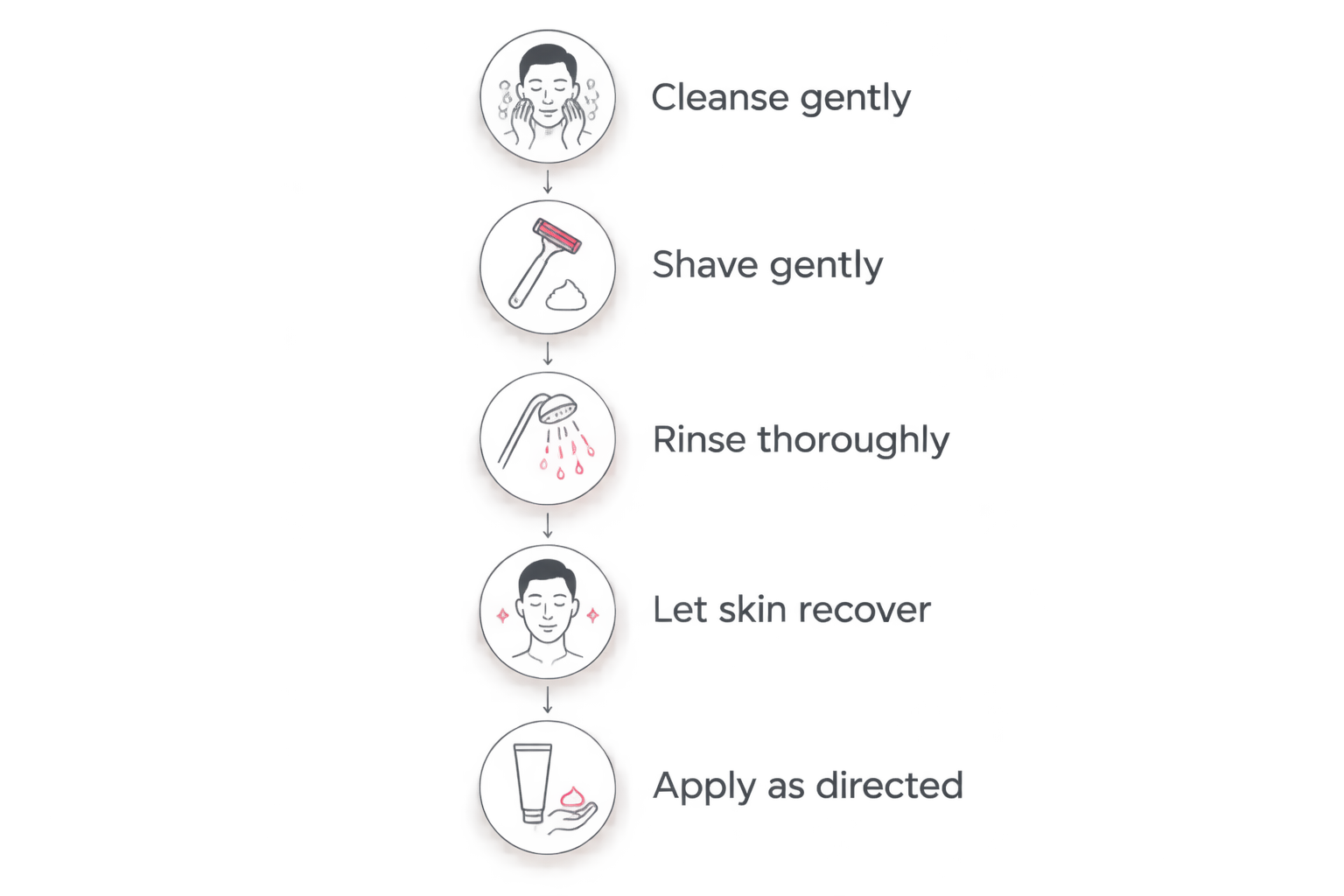
Use this sequence to keep grooming and sweat control from working against each other:
- Cleanse gently. Wash away sweat and product residue without aggressive scrubbing.
- Shave gently. If you choose to shave, use a suitable shaving product and avoid repeated passes over irritated skin.
- Rinse thoroughly. Remove remaining shaving product and pat the area dry rather than rubbing it.
- Let skin recover. Do not apply an antiperspirant to broken or irritated skin. Follow any separate restriction on recently shaved skin, even when the area looks comfortable.
- Apply as directed. Use the labeled amount on completely dry skin at the recommended time. More product is not a substitute for correct timing.
There is no single waiting interval that applies to every formula and every shaving experience. Use the restriction on your own product rather than borrowing a timing rule from another antiperspirant. Stop use if rash or irritation occurs; persistent or severe reactions need professional advice.
What actually helps reduce underarm wetness?
Antiperspirants reduce perspiration in the treated area through their active ingredients. Deodorants and rinse-off cleansers have different jobs. Start with the appropriate category before deciding that hair removal or additional products are necessary.
Duradry antiperspirant sweat care is best suited to people seeking less underarm wetness, rather than hair removal alone. Within that category, a daily stick and a nighttime gel serve different routines.
Daily underarm protection: best for sweat and odor together
Duradry’s Clinical Sweat Control Stick is an underarm antiperspirant and deodorant for daily sweat and odor protection. Its product-page directions specify 2–4 swipes per underarm on clean, dry skin; the current package label governs use.
The advantage is a familiar format that combines the two functions in one step. The limitation is that it remains an underarm product, not permission to apply everywhere, and it does not come with a guarantee of irritation-free use. You do not need a close shave to make a daily stick part of your routine.
Nighttime support: best for heavier underarm sweating
Duradry’s Intensive Sweat Minimizing Gel provides a targeted nighttime antiperspirant step for heavier underarm sweating. The product page describes a pea-sized amount per underarm at bedtime, followed by washing it off the next morning.
The gel requires completely dry skin and must not be applied immediately after bathing or to recently shaved, broken, or irritated skin. Its referenced label describes a few consecutive nights until control is established, followed by maintenance twice weekly or as needed, according to the current label. Twice weekly is a maintenance pattern, not a promise that two applications will immediately stop sweating.
The advantage is focused nighttime sweat control; the limitation is a separate application and wash-off schedule. It is for underarms only. Although applied at bedtime, it is intended to reduce daytime underarm sweat—not to treat sweating during sleep.
For either antiperspirant, follow the package warnings, including asking a doctor before use if you have kidney disease. Do not layer extra applications onto irritated skin or increase the amount because you still notice moisture.
Do you need to shave for antiperspirant to work?
No—you do not need to shave for antiperspirant to work. The practical goal is applying the labeled amount to the skin in the intended area, not removing every hair first.
If the product mostly coats your hair, adjust your application technique within its directions. Trimming is an optional grooming choice, not a medical requirement. Check skin dryness, product purpose, and timing before deciding that hair is the reason your routine is not meeting your needs.
When should sweating get medical attention?
Persistent sweating that disrupts daily life deserves assessment, especially when a correctly used routine is not enough. A clinician can help distinguish excessive sweating from other causes and discuss appropriate treatment without making hair removal the focus.
Seek medical advice for sweating that starts suddenly, occurs during sleep, or accompanies other symptoms. Do not assume that changing your shave or adding a stronger topical product addresses an underlying cause. Ordinary sweating during exercise, meanwhile, is not by itself a diagnosis.
FAQ
Does shaving reduce armpit sweat or just odor?
Shaving does not reduce armpit sweat production. It can make cleansing easier, but any improvement in odor is separate from sweat reduction and is not guaranteed.
Will I sweat more if I stop shaving my armpits?
Stopping shaving does not make your sweat glands produce more perspiration. Hair changes the surface where you notice moisture, so the sensation can differ without a change in sweat production.
Is trimming armpit hair better than shaving for sweat control?
Neither trimming nor shaving reduces sweat production. Trimming is an option if you prefer shorter hair but want to avoid a close shave; antiperspirant addresses wetness.
Can I put antiperspirant on immediately after shaving?
Follow your antiperspirant’s current label rather than assuming immediate application is appropriate. Do not use it on broken or irritated skin, and observe any restriction on recently shaved skin.
Does underarm hair stop deodorant from working?
Underarm hair does not automatically prevent deodorant from working. Apply the product as directed so it reaches the intended skin area, and remember that deodorant alone does not establish sweat reduction.
Does waxing stop underarm sweating?
Waxing removes hair, not the sweat glands responsible for perspiration. Follow aftercare and product-label restrictions before using leave-on products on the treated skin.
One last thing
Judge your routine by the result you actually want—not by how smooth your underarms feel. If wetness is the concern, check whether your current product is an antiperspirant before changing your shaving habits. That single distinction gives you a more useful next step than shaving closer.

