

No—drinking more water does not directly reduce sweating or treat excessive sweating. Staying hydrated supports normal temperature regulation and replaces fluid you lose through sweat; it does not switch off your sweat glands. Drink water to support your body, not as a strategy for staying dry.
- Does drinking water reduce sweating? No—water supports hydration, not targeted sweat reduction.
- Dehydration is not a safe way to limit sweating; your body needs fluid for cooling.
- Duradry antiperspirants address local wetness; drinking water serves a different purpose.
- Persistent sweating at rest or a sudden change deserves medical attention, not simply more water.
Does drinking water reduce sweating?
Drinking water helps maintain the fluid your body needs, but it is not an antiperspirant. When you get hot, sweat reaches your skin and evaporation helps release heat. Replacing that fluid supports the cooling process rather than preventing it.
That distinction explains why drinking more does not necessarily leave your clothes drier. You can be well hydrated and still sweat during a workout, a warm commute, or a stressful presentation. The trigger has not disappeared just because you refilled your bottle.
Excessive sweating also needs a different approach from ordinary fluid replacement. If your underarms, hands, or feet become wet even when you are cool and resting, increasing water intake does not address the reason. Understanding how much sweat is considered excessive helps separate everyday cooling from a pattern that needs assessment.
Hydration and sweat reduction are separate goals. You do not have to choose between staying hydrated and managing uncomfortable wetness.
Why this matters
Treating water as a sweat remedy creates an unhelpful cycle: you drink more, still sweat, and assume you have not had enough. Deliberately drinking less creates a more serious problem because dehydration interferes with normal body function and temperature regulation.
The practical distinction is simple:
- Water replaces fluid. It supports hydration but does not provide targeted sweat control.
- Cooling reduces heat exposure. Shade, ventilation, and breaks address the conditions making you hot.
- Antiperspirant reduces local perspiration. It works on the treated area according to its directions.
Each has a useful role. None replaces the others, and no sweat-care product makes it safe to ignore overheating during exercise or hot weather.
Why sweating varies even when you drink enough water
Your fluid intake is only part of the picture. Several factors explain why the same water habit can accompany a dry afternoon on one day and a damp shirt on another:
- Temperature and humidity: Heat increases the need for cooling. Humid air slows sweat evaporation, so your skin and clothing can feel wetter.
- Physical activity: Working muscles produce heat. More demanding activity generally creates a greater cooling requirement.
- Stress: Emotional stress can trigger sweating, including on the palms and underarms, without a hot environment.
- Clothing: Heavy layers and poorly ventilated clothing hold heat and moisture close to your skin.
- Individual sweating patterns: People differ in how readily and heavily they sweat. Excessive sweating is not proof of poor hydration.
- Health and medication changes: Some conditions and medicines affect sweating. New symptoms need assessment rather than an assumption about water intake.
Look for the pattern instead of judging your hydration by shirt wetness alone. A hot walk, a tense meeting, and sweating while asleep are different situations, even if they leave similar marks on clothing.
How much water should you drink if you sweat a lot?
There is no single water target that treats excessive sweating. Your fluid needs depend on activity, weather, diet, health, and how much fluid you lose. Water from food and other beverages also contributes to your intake.
For ordinary days, keep water accessible and drink regularly in response to thirst. Thirst and urine color provide practical clues, although neither is a complete assessment: medicines, supplements, and health conditions can change urine color or fluid needs. Do not force water just to make urine completely clear.
Long exercise sessions, sustained work in heat, or unusually heavy losses require more planning. Sweat contains electrolytes as well as water, so replacing large losses is not always just a matter of drinking plain water. A clinician or sports dietitian can help you match intake to your circumstances.
If you have been told to limit fluids because of a medical condition, follow that advice. General hydration guidance does not override an individual treatment plan.
Can dehydration make you sweat less?
Dehydration can impair sweating and heat regulation, but that is a warning—not a useful sweat-control method. Reduced cooling while your body is hot increases the danger of heat illness.
A less-wet shirt does not establish that you are safer or more comfortable internally. Do not restrict fluids before a presentation, commute, workout, or social event to avoid visible sweat. Address the environment, clothing, or local wetness instead.
Dizziness, weakness, headache, and nausea during heat exposure deserve attention. Stop activity, move somewhere cooler, and get help if symptoms persist or worsen. Confusion, collapse, or altered awareness in the heat requires emergency care; do not wait to see whether drinking water fixes it.
Does cold water stop sweating faster?
Cold water can feel refreshing, but it does not reliably stop sweating. Drink temperature is not a substitute for reducing heat exposure or managing persistent local wetness.
If you are overheated, combine drinking with a cooler environment, a break from activity, and removal of unnecessary layers. Choose a drink temperature you find comfortable rather than treating ice water as a precise sweat-control tool.
The same distinction applies before an important meeting. A cool drink can improve comfort, but it does not guarantee dry palms or underarms when stress is the trigger. Plan for the situation rather than expecting a particular drink to prevent your body's response.
Build a routine that separates hydration from sweat control
You get a clearer result when each step has a defined job. Use this sequence rather than repeatedly increasing your water intake whenever you notice moisture:
- Hydrate. Keep water available during your day and account for hot conditions or activity. Do not withhold fluids to limit visible sweat.
- Cool down. After a hot commute or workout, move somewhere cooler and let your body settle before getting dressed again.
- Cleanse. Wash away sweat and product residue when needed. Cleansing removes what is on your skin; it does not stop new perspiration.
- Dry skin. Before antiperspirant application, let the intended area become completely dry and follow the product's timing instructions.
- Target wetness. Choose an antiperspirant labeled for the body area that bothers you. Deodorant alone addresses odor rather than sweat reduction.
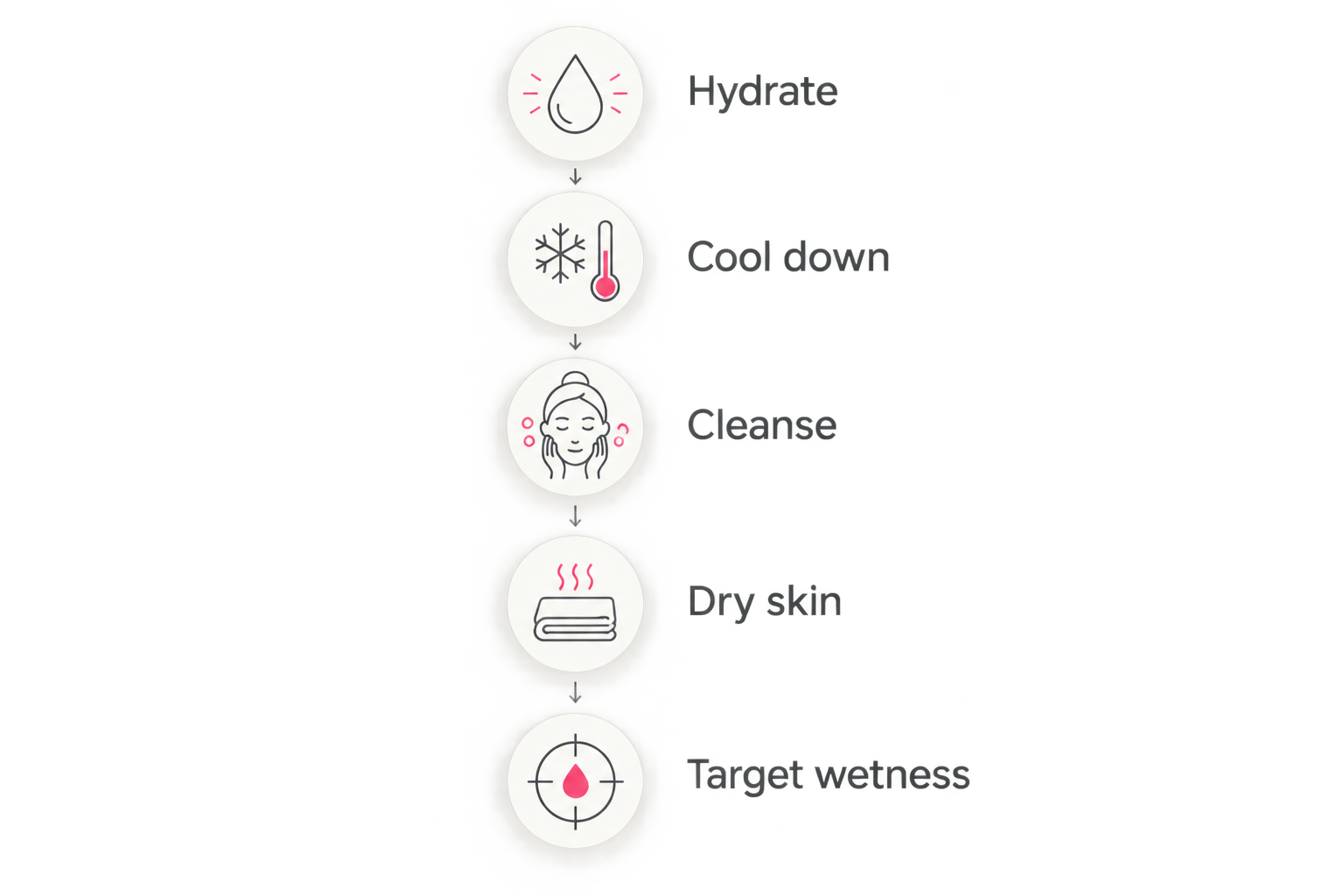
This approach also makes troubleshooting easier. If wetness continues despite comfortable temperatures and correct antiperspirant use, another glass of water is not the missing application step. Review the sweating pattern and seek professional advice when it disrupts daily life.
What actually helps with underarm wetness?
Duradry sweat care is best for people seeking targeted sweat and odor protection, not a substitute for hydration. Start with the concern you want to address rather than assuming you need an entire routine.
Best for daily underarm sweat and odor: a clinical-strength stick
Duradry's Clinical Sweat Control Stick is an antiperspirant and deodorant for daily underarm protection. Its advantage is a familiar format that addresses both wetness and odor in the same step.
The product directions specify clean, dry underarms and 2–4 swipes per underarm. Follow the current package directions and warnings rather than increasing the amount whenever the weather gets warmer.
The limitation matters: this is underarm protection, not a treatment for sweating throughout your body or an underlying medical cause. It also cannot guarantee complete dryness in every situation. Stop use if rash or irritation occurs, and ask a doctor before using an antiperspirant if you have kidney disease.
Best for heavier underarm sweating: a nighttime gel
Duradry's Intensive Sweat Minimizing Gel adds focused nighttime antiperspirant care when a basic daily routine is not enough. The tradeoff is a more specific application schedule and additional skin precautions.
Apply the gel at bedtime to completely dry underarms, using the current label's amount and schedule. Do not apply immediately after bathing or to broken, irritated, or recently shaved skin. Wash it off thoroughly the next morning and dry your underarms before applying daytime protection.
Once control is established, the referenced label describes maintenance twice weekly or as needed. That is a maintenance pattern, not a promise that the starting routine needs only two applications.
The gel is for underarms only. Although you apply it at bedtime, it is not designed to treat night sweats while sleeping; nighttime application supports less underarm sweat during the day.
Neither format replaces normal cooling or fluid intake. Choose the daily stick for everyday underarm sweat and odor, and consider the gel when heavier underarm wetness calls for an additional, label-directed step.
Could your other drinks affect sweating?
Sometimes the question is not whether water prevents sweat, but whether another drink contributes to a trigger. Caffeine can increase sweating in some people. Your response matters more than assuming every cup has the same effect on everyone.
If you replace a caffeinated drink with caffeine-free apple cinnamon tea, you change your caffeine exposure—not turn the replacement into a treatment for excessive sweating. Check the actual ingredient list because blends differ. A name describing fruit or spices does not establish what else is in the cup.
Keep the distinction practical: replacing a personal trigger is different from drinking extra water to cancel it out. Water does not neutralize caffeine's effects simply because you drink both together.
If you notice a pattern, change one habit at a time and note the circumstances. Consider the drink, room temperature, activity, and stress rather than assigning the entire response to hydration. Avoid restrictive rules based on a single sweaty afternoon.
When should you ask a clinician about sweating?
Ask for an assessment when sweating is persistent, disruptive, starts suddenly, or occurs without an obvious heat or activity trigger. You do not need to prove that you have tried every water target or personal-care product first.
Useful details to bring include:
- Whether sweating affects specific areas or your whole body.
- Whether it happens while resting, during sleep, or mainly with heat and exercise.
- Any recent medication changes or other symptoms.
- Whether it interferes with clothing, work, sleep, or everyday tasks.
A clinician can distinguish excessive sweating from sweating linked to another condition and discuss suitable care. Do not stop a prescribed medicine because you suspect it affects sweating; ask the prescriber about the pattern.
Persistent excessive thirst and unusually frequent urination also deserve assessment. Treating them as a reason to keep drinking more indefinitely misses the need to understand what has changed.
FAQ
Will drinking more water make my armpits sweat less?
Drinking more water does not directly reduce armpit sweating. Stay hydrated, then address local wetness with an underarm antiperspirant used according to its label.
Why do I still sweat when I drink plenty of water?
You still sweat because hydration does not remove triggers such as heat, exercise, or stress. Water replaces fluid; it does not prevent your sweat glands from responding.
Should I drink less water before an event to avoid sweating?
No—do not restrict water to avoid sweating. Plan for comfortable clothing, a cooler environment, and appropriate antiperspirant use instead.
Does sweating mean I am dehydrated?
Sweating alone does not mean you are dehydrated. It means you are losing fluid, and dehydration develops when losses are not adequately replaced.
Can drinking too much water be harmful?
Yes—drinking excessive amounts of water can dangerously dilute blood sodium. Do not force large volumes as a sweat remedy, and follow medical advice if your fluid intake is restricted.
Does water help with body odor?
Drinking water is not a targeted body-odor treatment. Cleansing and suitable odor-care products address odor more directly, while antiperspirants reduce perspiration in the treated area.
Is nighttime antiperspirant a treatment for night sweats?
No—bedtime application does not mean a product treats sweating during sleep. Persistent or new night sweats need medical assessment rather than an assumption that stronger underarm protection will solve them.
One last thing
Less visible sweat is not always evidence of better temperature control. Evaporation—not simply producing moisture—is what helps cool your skin, which explains why humid conditions can leave you wet and uncomfortable.
Keep your water habit and sweat-care routine separate. For your next practical step, identify whether the main issue is heat, local wetness, odor, or an unexplained change; that distinction tells you what to address.

