

Yes, menopause can cause excessive sweating, including sudden hot flashes during the day and night sweats during sleep, because hormonal changes affect how your brain regulates temperature. Antiperspirants can reduce wetness in treated areas, but they do not treat the hormonal cause of hot flashes or night sweats.
- Can menopause cause excessive sweating? Yes—hot flashes and night sweats can begin during perimenopause.
- The National Institute on Aging identifies hot flashes as a common menopause symptom.
- Antiperspirants reduce local wetness; deodorants address odor, not the hormonal cause of sweating.
- Discuss disruptive sweating, repeated sleep interruptions, or unexplained changes with a healthcare professional.
Can menopause cause excessive sweating?
Menopause-related hormonal changes can trigger sweating even when you are resting or the room feels comfortable. Changing estrogen levels affect the brain's temperature-control system, which can trigger a sudden cooling response: flushing, increased blood flow near the skin, and sweat.
The National Institute on Aging's menopause guidance describes hot flashes as sudden feelings of heat, often affecting the upper body. Your face, neck, or chest can feel warm, and sweating sometimes gives way to chills afterward. A hot flash that happens during sleep is commonly called a night sweat.
Sweating can begin during perimenopause, the transition before menopause, while you still have periods. Menopause itself is identified after 12 consecutive months without a menstrual period, when another cause does not explain the absence.
Timing matters. Sweating tied to a wave of heat suggests a different pattern from underarm wetness that happens throughout the day or sweating that appears only during exercise. If sleep is your main concern, the guide to why you sweat at night while sleeping explains the broader distinction.
Why this matters: treat the heat episodes and wetness separately
Menopause-related sweating has more than one practical consequence. A hot flash can interrupt a meeting; damp clothing can feel uncomfortable afterward; night sweats can repeatedly disturb sleep.
Managing local wetness is not the same as treating hot flashes. An antiperspirant can help with sweat in the area where you apply it, but increasing the amount will not correct the hormonal changes behind an episode.
You do not need to decide that every change is “just menopause,” either. A clinician can consider your menstrual history, symptoms, medications, and other possible explanations before recommending treatment. That is especially useful when sweating is new, widespread, or disruptive.
What does menopause sweating feel like?
Daytime hot flashes
A daytime hot flash often feels like a sudden wave of heat through your face, neck, or chest. You might flush, perspire, or notice a faster heartbeat, followed by a cooler or clammy feeling as the episode settles.
Hot flashes can happen during ordinary activities, not only when you exercise. The useful clue is the sudden heat episode—not simply the amount of sweat on your shirt.
Night sweats
Menopause-related night sweats are hot flashes during sleep. They can leave your sleepwear or bedding damp and wake you up feeling hot, chilled, or uncomfortable.
A warm bedroom or heavy bedding also causes sweating, so a wet pillow alone does not establish the cause. Tell your clinician if episodes recur, soak your bedding, or leave you struggling to function the next day.
Underarm wetness between episodes
You can have ordinary underarm sweating alongside menopause symptoms. Exercise, a warm commute, or a stressful presentation still affects perspiration during this stage of life.
Persistent underarm wetness does not, by itself, prove that menopause is responsible. Separating everyday sweating from sudden heat episodes helps you choose appropriate sweat care and describe the problem clearly at an appointment.
Why menopause-related sweating varies
Not everyone experiences the same symptoms, and your own pattern can change. These factors help explain why one day feels manageable and another feels harder:
- Hormonal changes: Fluctuating and declining estrogen levels during the menopause transition affect temperature regulation. Symptoms do not necessarily follow a steady progression.
- Environmental heat: Warm rooms, heavy bedding, and clothing that traps heat add to your cooling needs. These conditions can also cause sweating independently of menopause.
- Personal triggers: Hot drinks, spicy foods, alcohol, or stress trigger hot flashes for some people. Track your own pattern rather than removing everything from your routine at once.
- Physical activity: Exercise causes normal cooling-related sweat. Note whether sweating follows exertion or begins with an unexpected wave of heat.
- Other health factors and medications: Thyroid conditions, infections, and some medicines can cause sweating. A new symptom deserves assessment rather than an automatic menopause label.
You do not need to avoid exercise or organize your entire day around potential triggers. Start with changes that improve comfort without making daily life unnecessarily restrictive.
What can you do about menopause sweating?
Start by identifying the problem you most want to change: heat episodes, disrupted sleep, local wetness, or odor. Each calls for a different response, and several can occur together.
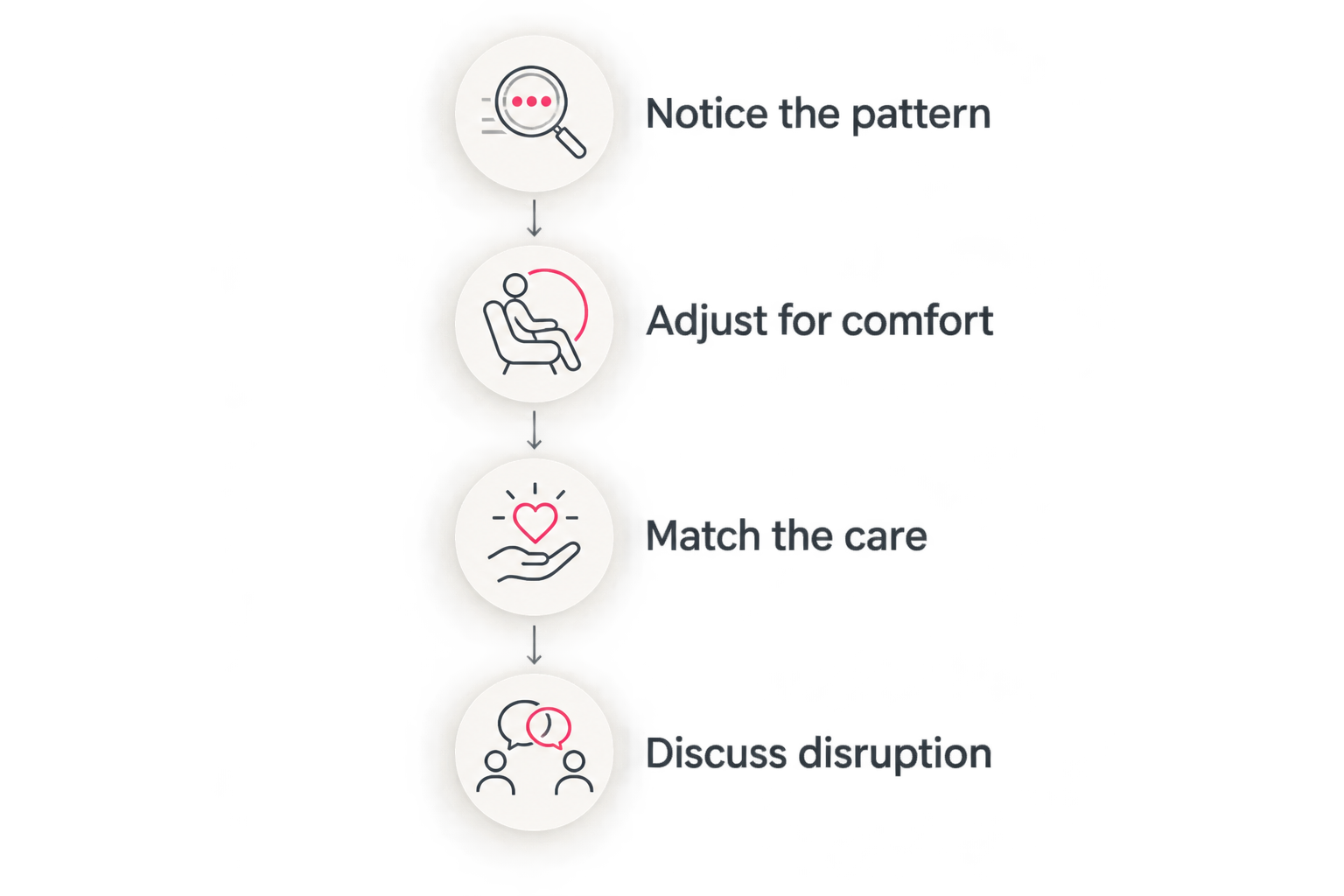
Use this sequence to make the next step clearer:
- Notice the pattern. Record whether sweating follows a sudden heat sensation, happens during sleep, or stays concentrated in an area such as your underarms. Include menstrual changes and any recent medication changes.
- Adjust for comfort. Choose removable clothing layers, keep your bedroom comfortably cool, and change damp clothing when practical. These measures help you feel more comfortable; they are not a treatment for the hormonal cause.
- Match the care. Use antiperspirant for wetness in permitted areas, deodorant for odor, and washing to remove sweat and residue. Do not expect one category to do every job.
- Discuss disruption. Bring recurrent sleep interruptions, frequent hot flashes, or sweating that limits daily activities to a healthcare professional. Ask about treatment for the episodes themselves.
Make your notes useful rather than elaborate. “I woke with damp sleepwear after a wave of heat” tells a clinician more than “I sweat a lot.” Note how the episodes affect sleep, work, exercise, or social plans, too.
Which treatments address the hot flashes themselves?
Menopause treatments target a different problem from antiperspirants. If hot flashes or night sweats are disrupting your life, ask about menopause symptom treatment rather than simply stronger sweat protection.
Menopausal hormone therapy: best for discussing bothersome symptoms
Systemic menopausal hormone therapy is an effective treatment for hot flashes and night sweats. The Menopause Society identifies hormone therapy as the most effective treatment for these vasomotor symptoms—the clinical term for hot flashes and night sweats.
Its limitation is that it is not appropriate for everyone. Your health history, age, time since menopause, and whether you have a uterus affect the treatment discussion. A clinician should explain the individual benefits and risks rather than treating sweating alone as enough information to prescribe.
Nonhormonal treatment: best for discussing alternatives to hormones
Prescription nonhormonal treatments are another option for bothersome hot flashes. They are relevant when hormone therapy is unsuitable or you prefer another approach.
These treatments have their own side effects, interactions, and, for some medicines, monitoring requirements. Ask which options fit your health history; do not start, stop, or change a prescribed medicine based on sweating alone.
Cooling measures: best for immediate comfort
A fan, lighter bedding, and removable layers help you respond when you feel hot. These are practical comfort tools you can use alongside an appropriate treatment plan.
Their limit is equally important: feeling cooler does not establish that the underlying hot flashes are controlled. Continued sleep disruption or interference with daily activities warrants a treatment discussion even if you have already adjusted your bedroom and wardrobe.
Where antiperspirant fits in a menopause sweat care routine
Duradry sweat care is best for people seeking local sweat and odor protection, not treatment for menopausal hot flashes. Choose a product by the area you want to treat and whether your concern is wetness or odor.
You do not need an elaborate routine simply because your sweating has changed. Start with the step that answers your main concern, then assess comfort and results according to the label.
Daily underarm protection: best for wetness and odor
Duradry's Clinical Sweat Control Stick is an underarm antiperspirant and deodorant. It combines sweat reduction and odor protection in a daily stick format, making it relevant when underarm dampness is the practical problem during work, commuting, or social plans.
The supplied product guidance describes 2–4 swipes per underarm on clean, dry skin; follow the current package label. Its limitation is local protection: the stick does not prevent whole-body hot flashes or treat night sweats, and irritation remains possible.
Added nighttime underarm care: best for heavier local sweating
Duradry's Intensive Sweat Minimizing Gel adds a bedtime antiperspirant step for heavier underarm sweating. It is applied to completely dry underarms and washed off the next morning, following the current label.
Bedtime application does not mean the gel treats sweating during sleep. Its purpose is nighttime application for less underarm sweating during the day—not control of menopausal night sweats.
The routine requires more planning than a daily stick. The supplied guidance describes a pea-sized amount per underarm, no application immediately after bathing, and maintenance of 2 applications per week or as needed after control is established, according to the label. That is not a universal starting schedule.
Do not apply the gel to broken, irritated, or recently shaved skin. Stop if rash or irritation occurs, and ask a doctor before antiperspirant use if you have kidney disease. Do not add extra applications to chase a hot flash.
When should you get sweating checked?
Book an appointment when sweating repeatedly disrupts sleep, limits daily activities, or represents an unexplained change. You do not have to wait until symptoms become severe to ask for help.
Tell your clinician about fever, unexplained weight loss, a persistent cough, or a new medication alongside the sweating. These details help distinguish menopause symptoms from other causes; none is something an antiperspirant can evaluate.
Seek emergency care for sudden sweating with chest pain, severe shortness of breath, or fainting. Those symptoms need urgent assessment rather than a menopause explanation.
Does menopause sweating mean you have hyperhidrosis?
- Menopause-related sweating and hyperhidrosis are not interchangeable diagnoses, although both can involve more sweat than you want or expect.
Primary focal hyperhidrosis typically affects particular areas, such as the underarms, palms, or soles, and generally stops during sleep. Menopause-related hot flashes can cause broader episodes of heat and sweating, including during sleep. A clinician can assess the pattern rather than diagnosing from sweat volume alone.
Can menopause make body odor more noticeable?
Yes, increased sweating can make odor management more noticeable, but sweat volume and odor are different concerns. Skin bacteria breaking down sweat contribute to body odor; heavier sweating does not mean you are unclean.
Washing removes sweat and buildup, while deodorant addresses odor and antiperspirant reduces local perspiration. Duradry sweat care keeps those roles separate, so you can choose the step you need rather than repeatedly applying an odor product for wetness.
FAQ
Can menopause cause excessive sweating before my periods stop?
Yes, menopause-related sweating can begin during perimenopause, while you still have periods. Hot flashes and night sweats can accompany the hormonal changes leading up to menopause.
Is sweating all day definitely caused by menopause?
No, sweating throughout the day is not enough to identify menopause as the cause. Heat, activity, medicines, and other health conditions also cause sweating, so discuss a new or persistent pattern with a clinician.
Can menopause cause night sweats in a cool bedroom?
Yes, menopause-related night sweats can occur even when the bedroom is cool. A comfortable room helps with comfort but does not necessarily prevent the hormonal temperature changes behind an episode.
Will stronger deodorant stop menopause sweating?
No, deodorant addresses odor rather than perspiration or hot flashes. Antiperspirant can reduce sweat in treated areas, but it does not treat the hormonal cause of menopause symptoms.
Does a nighttime antiperspirant treat menopausal night sweats?
No, nighttime application describes an antiperspirant's application schedule, not a treatment for menopausal night sweats. An underarm product provides local sweat control within its labeled use.
How long will menopause sweating last?
There is no single duration for menopause-related sweating. Hot flashes can continue after the final menstrual period; ask about treatment when symptoms affect your sleep or daily life rather than waiting for a particular deadline.
Should I ask a doctor about menopause sweating?
Yes, ask a clinician when sweating is new, unexplained, repeatedly interrupts sleep, or limits daily activities. Mention other symptoms and medication changes so the assessment considers more than menopause alone.
Related guides
One last thing
Less underarm wetness does not necessarily mean fewer hot flashes. Judge local sweat care by comfort in the treated area, and judge menopause symptom treatment by changes in the episodes and their effect on your life.
For your next step, write down whether your main concern is sudden heat, broken sleep, or local wetness. If heat episodes or sleep disruption lead the list, bring that description to a menopause care appointment.

