

Best for heavier underarm sweating: Duradry Intensive Sweat Minimizing Gel. Best for daily underarm sweat and odor protection: Clinical Sweat Control Stick. Best for targeted body sweat: Sweat Control Body Wipes. For an underarm routine that needs more focused sweat control, the Intensive Sweat Minimizing Gel is the default choice here—not a universal winner for every body area or every person with hyperhidrosis.
- The best antiperspirant for hyperhidrosis depends on body area, application schedule, and skin tolerance.
- Duradry Intensive Sweat Minimizing Gel suits heavier underarm sweating and requires bedtime application and morning washing.
- Clinical Sweat Control Stick combines daily underarm sweat reduction with odor protection.
- Sweat Control Body Wipes address targeted body sweat; deodorant and body wash do not replace antiperspirant.
Why the product's job matters more than its format
Duradry publishes this guide, and the recommendations compare its own antiperspirant options—not an independently tested ranking of the entire market. This 2026 guide focuses on matching the product to your concern, rather than declaring one formula strongest based on an active percentage alone.
Hyperhidrosis means excessive sweating. A clinician can assess whether persistent sweating reflects hyperhidrosis or another cause; a difficult commute or sweaty workout alone does not establish a diagnosis.
Your practical starting point is simpler: identify where you sweat, whether wetness or odor bothers you, and what routine you can follow. An underarm gel, daily stick, and body wipe solve different problems. Buying a more intensive product for the wrong area does not improve the match.
What makes the best antiperspirant for hyperhidrosis?
Use these criteria before choosing a product:
- Sweat-reducing function: Look for an antiperspirant when wetness is the concern. Deodorant addresses odor instead.
- Permitted body area: Underarm-only directions do not extend to hands, feet, or the face.
- Application schedule: A bedtime treatment and a daily protection step are not interchangeable.
- Skin tolerance: A routine you cannot comfortably continue needs reassessment, not a larger dose.
- Practical format: Consider whether a gel, stick, or wipe fits your day and the area you need to treat.
- Clear limits: Clinical-strength positioning does not establish prescription status, guaranteed results, or superiority over every alternative.
The options at a glance
- Intensive Sweat Minimizing Gel: Best for heavier underarm sweating when you want focused nighttime antiperspirant care. Its main limitation is the bedtime-and-morning schedule, plus underarm-only use.
- Clinical Sweat Control Stick: Best for daily underarm wetness and odor together. Its main limitation is that it is not a targeted body antiperspirant or a guarantee that daily protection alone will meet heavier sweating needs.
- Sweat Control Body Wipes: Best for targeted body sweat, including permitted areas such as hands and feet. Their main limitations are the disposable format and product-specific application and wash-off directions.
These are use-case recommendations. The order does not imply a measured efficacy comparison between the three products.
1. Intensive Sweat Minimizing Gel: best for heavier underarm sweating
The Intensive Sweat Minimizing Gel is a nighttime underarm antiperspirant. It adds focused sweat control when a basic daily routine is not meeting your needs.
Duradry Intensive Sweat Minimizing Gel is the best fit in this range for heavier underarm sweating that needs a dedicated nighttime antiperspirant step. It is not an odor-control replacement, and it is not intended for hands or feet.
Intensive Sweat Minimizing Gel pros
- Provides an antiperspirant step specifically positioned for heavier underarm sweating.
- Uses a targeted gel format rather than requiring a body-wide application.
- Is described as fragrance-free, which helps distinguish it from scented daily protection.
- Has a maintenance schedule that can become less frequent once sweating is controlled, according to the label.
Intensive Sweat Minimizing Gel cons
- Requires bedtime application and thorough washing the following morning.
- Is restricted to underarms and excludes broken, irritated, or recently shaved skin.
- Can cause irritation; correct application does not guarantee irritation-free use.
Best for: You already use daily underarm protection but need a more focused sweat-reducing step.
Apply to completely dry underarms at bedtime, not immediately after bathing. The product page describes a pea-sized amount per underarm; follow the current package for the amount and initial schedule. Once control is established, the referenced label describes maintenance at 2 applications per week or as needed—not a universal starting schedule.
Despite bedtime application, the gel is not designed to control night sweats while you sleep. Its nighttime use supports reduced sweating during the day.
Verdict: Buy for targeted nighttime underarm sweat control; skip for other body areas.
2. Clinical Sweat Control Stick: best for daily sweat and odor protection
The Clinical Sweat Control Stick is an underarm antiperspirant and deodorant. It addresses both wetness and odor in a familiar daily format.
Choose the stick when you want a straightforward morning protection step for work, commuting, exercise, or social plans. If heavier sweating persists despite appropriate use, reassess the routine rather than assuming extra swipes will solve it.
Clinical Sweat Control Stick pros
- Combines underarm sweat reduction and odor protection in one product.
- Fits a daily routine without the gel's separate morning wash-off step.
- Offers named fragrance choices: Clear Sky, Barça, and Limitless.
- Works as the daytime step after the nighttime gel has been washed off and the skin dried.
Clinical Sweat Control Stick cons
- Is intended for underarms, not for treating sweat across the body.
- Is scented, so it is not the fragrance-free option in this comparison.
- Does not establish that daily protection alone will sufficiently control every case of excessive sweating.
Best for: You want daily underarm protection against both wetness and odor, with the option to add nighttime care if needed.
Apply to clean, dry underarms. The product page directs 2–4 swipes per underarm; the current package governs use. Avoid turning repeated daytime application into a substitute for checking timing, skin condition, and whether the product matches the concern.
The stick's clinical-strength positioning describes its sweat-care role. It does not mean the product is prescription medication, cures hyperhidrosis, or cannot irritate your skin.
Verdict: Buy for everyday underarm sweat and odor protection; reassess if wetness remains disruptive.
3. Sweat Control Body Wipes: best for targeted body sweat
Sweat Control Body Wipes are antiperspirant wipes—not cleansing wipes or deodorizing refresh wipes. Their purpose is to reduce sweat on permitted body areas.
The product page names underarms, hands, feet, chest, back, and thighs. That broader body-use role makes the wipes the relevant choice here when your concern extends beyond the underarms; the gel and stick do not inherit those directions.
Sweat Control Body Wipes pros
- Provide antiperspirant care in a portable wipe format.
- Address targeted body areas that the underarm-only products do not cover.
- Are unscented, with a clear finish and fast-drying application described in the product materials.
- Come in a pack containing 30 wipes per pack.
Sweat Control Body Wipes cons
- Are disposable rather than a reusable application format.
- Require attention to the package's timing, drying, and wash-off instructions.
- Are not a cleansing substitute or a promise of immediate complete dryness on actively sweaty skin.
Best for: You need sweat control on permitted body areas such as hands, feet, chest, back, or thighs.
Start with clean, dry skin. The referenced label specifies bedtime application, air drying, and washing off the next morning, with daytime application as needed. Follow the directions supplied with your pack for the intended area.
Do not apply to the face or mucous membranes. A body-use description is not permission to apply antiperspirant everywhere, and these wipes are not interchangeable with prescription anticholinergic wipes.
Verdict: Buy for permitted body sweat areas; skip if your only need is a cleansing refresh.
How these recommendations were chosen
The recommendations follow the criteria above: function, permitted area, schedule, tolerance considerations, and format. They do not rely on invented hands-on testing or a claimed head-to-head clinical comparison.
The gel takes the heavier-underarm slot because that is its stated role. The stick takes daily combined protection. The wipes take targeted body use. Match the job first; compare the format second.
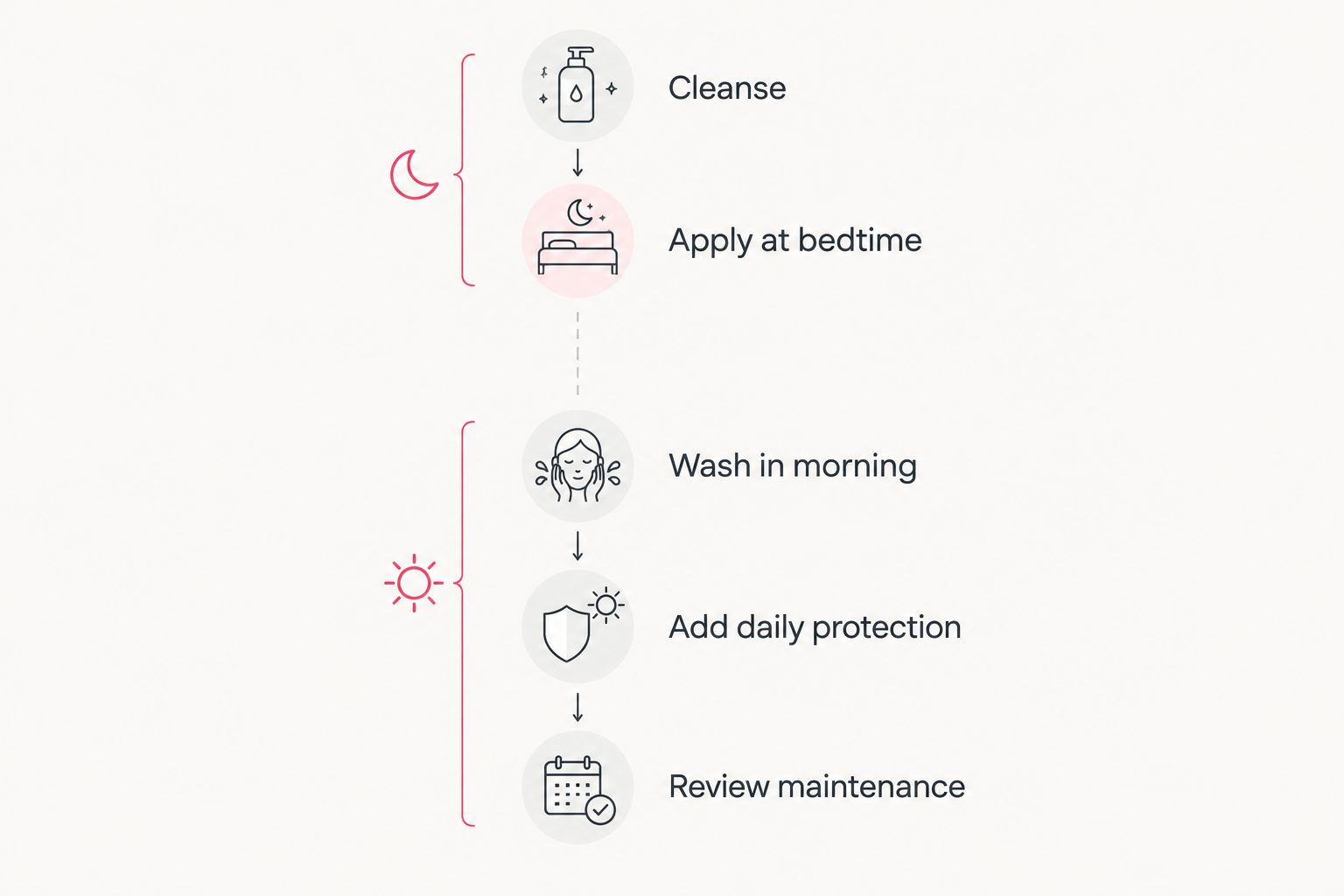
How to build an underarm routine without overdoing it
A nighttime gel and daily stick serve different steps. You do not need to layer every antiperspirant onto your underarms at once.
- Cleanse. Remove sweat and product residue, rinse thoroughly, and allow your underarms to become completely dry. Do not apply the gel immediately after bathing.
- Apply at bedtime. Use the gel's current labeled amount and schedule on underarms only. Avoid broken, irritated, or recently shaved skin.
- Wash in morning. Wash the gel off thoroughly the following morning, then dry your underarms.
- Add daily protection. Apply the stick to clean, dry underarms for daytime sweat and odor protection.
- Review maintenance. Follow the gel label once control is established instead of continuing an unnecessarily intensive schedule.
Stop use if rash or irritation occurs. The antiperspirant labels also direct you to ask a doctor before use if you have kidney disease. Do not increase the amount or continue through worsening symptoms.
What to check before deciding an antiperspirant failed
Start with the product's function. A deodorant can help with odor without reducing wetness; a body wash removes sweat and buildup during washing without preventing future perspiration.
Then check application conditions:
- Was your skin completely dry? Follow the specific product's directions rather than applying the nighttime gel immediately after a shower.
- Was the product used on the correct area? An underarm product is not a substitute for a body-use antiperspirant.
- Did the timing match the label? A bedtime product needs its intended routine, including morning washing when directed.
- Was use consistent with the starting schedule? Do not replace label-directed use with occasional application before a demanding event.
- Is irritation interfering? Stop and reassess rather than adding more product.
Keep the troubleshooting focused. Automatically adding wipes over gel, doubling the dose, or treating more skin does not establish better results.
When OTC sweat care needs clinical support
Antiperspirants can be part of managing excessive sweating, but a consumer routine does not identify or treat every underlying cause. Seek a clinician's assessment when sweating remains persistent or disruptive despite appropriate use.
Sudden changes, sweating during sleep, medication-related concerns, or sweating with other symptoms deserve medical attention rather than a stronger shopping recommendation. Do not change prescribed treatment based on a product comparison.
You also do not need to wait until sweating becomes severe to ask for help. If wet hands interfere with tasks or underarm wetness repeatedly dictates clothing choices, describe that impact clearly at your appointment.
Which antiperspirant should you choose?
Choose the gel for heavier underarm sweating, the stick for daily underarm sweat and odor protection, and the wipes for permitted body sweat areas. That decision is more useful than choosing by clinical-strength wording alone.
If you are undecided and your main concern is persistent underarm wetness despite a basic routine, start by reviewing the gel's directions and warnings. If your concern is odor without troublesome wetness, a stronger antiperspirant is not automatically the right next step.
FAQ
What's the best antiperspirant for hyperhidrosis without a prescription?
The best OTC choice depends on the sweating area, your application routine, and skin tolerance. Within Duradry's range, Intensive Sweat Minimizing Gel fits heavier underarm sweating, while Sweat Control Body Wipes address permitted body areas. Persistent or disruptive sweating warrants clinical assessment.
Is a nighttime gel better than a daily antiperspirant stick?
A nighttime gel serves a different purpose rather than being universally better. Intensive Sweat Minimizing Gel adds focused nighttime underarm sweat control; Clinical Sweat Control Stick provides daily underarm sweat and odor protection.
Can I use the underarm gel on sweaty hands or feet?
No. Intensive Sweat Minimizing Gel is for underarms only. Sweat Control Body Wipes are positioned for permitted body areas including hands and feet, subject to the current package directions.
Do I still need deodorant after using the nighttime gel?
The gel does not replace the daytime odor-care step. Its product guidance recommends daytime deodorant or antiperspirant after washing the gel off thoroughly and drying your underarms; the stick is the suggested daily partner.
Does clinical strength mean an antiperspirant cures hyperhidrosis?
No. Clinical strength does not establish a cure, prescription status, or guaranteed effectiveness. Antiperspirants help reduce sweating in the treated area, and some people need additional clinical assessment and treatment.
Will applying more antiperspirant make it work better?
Do not exceed the product's labeled amount or schedule. First check the application area, skin dryness, timing, and consistency; stop use if rash or irritation occurs rather than increasing the dose.
Will bedtime antiperspirant stop night sweats?
Intensive Sweat Minimizing Gel is not designed to control night sweats. It is applied at bedtime to support reduced daytime underarm sweating; sweating during sleep belongs in a medical discussion rather than a product-strength comparison.
One last thing
Changing when you apply a product is different from adding more of it. Before expanding your routine, read the directions on the antiperspirant you already own and check whether its purpose, application area, and schedule match your concern. That is your next useful step.

