

Real estate agents’ antiperspirant care is a routine that reduces wetness in treated areas so you can focus on showings, open houses, and client conversations. Start with daily underarm protection; add nighttime sweat control only if you need it, and treat body odor as a separate concern from perspiration.
- Duradry Clinical Sweat Control Stick is best for agents seeking daily underarm sweat and odor protection.
- Choose antiperspirant for real estate agents by application area, sweat-control needs, and timing—not fragrance alone.
- Nighttime antiperspirant supports daytime sweat control; it is not a treatment for night sweats.
- Open-house sweat care starts before appointments, with clean, dry skin and label-directed application.
Why antiperspirant matters for real estate agents
An open-house routine needs to work around your schedule, not interrupt it. If your day includes walking properties, driving between appointments, and greeting visitors, preparing before you leave is more practical than relying on a bathroom reset between every conversation.
Choose by function first: antiperspirant reduces wetness, deodorant addresses odor, and body wash cleanses. A pleasant scent does not tell you whether a product reduces perspiration.
For daily underarm wetness and odor, the Clinical Sweat Control Stick combines antiperspirant and deodorant functions. It is an underarm product, not a substitute for targeted body sweat care.
You do not need a medical diagnosis to build a useful routine. The goal is comfortable, manageable protection—not eliminating normal sweating or buying every available format.
Build your open-house sweat care routine
1. Identify the concern before changing products
Start without buying anything. Note where you notice moisture, whether odor is also present, and what you already apply. Separate underarm wetness during a showing from damp hands while greeting visitors; those concerns need products labeled for different areas.
Also check whether your current product says antiperspirant or deodorant. Repeatedly applying an odor-only product does not turn it into sweat control. That distinction matters more than choosing a stronger fragrance.
- Read the functional description on your current package.
- Identify the specific area you want to treat.
- Separate wetness from odor in your notes.
- Record application timing and any irritation.
2. Prepare skin before your appointment schedule starts
Use your regular cleansing routine to remove sweat and product residue, then let the area become completely dry. You do not need a special cleanser as a prerequisite for antiperspirant use. Avoid treating damp skin as ready simply because you have towel-dried it.
Plan this around the first showing rather than the first moment you notice moisture. If you exercise before work, cleanse afterward and follow your antiperspirant’s directions instead of applying it over workout sweat.
Clothing belongs in the plan, too. A clean change of shirt offers a practical backup, but it does not replace sweat reduction or establish that any product prevents fabric marks.
- Cleanse the intended application area.
- Remove remaining cleanser thoroughly.
- Allow skin to dry completely.
- Keep a clean clothing backup when practical.
3. Apply daily underarm protection as directed
Use the antiperspirant you already own according to its label before deciding that you need a more involved routine. Consistent, correct use gives you a clearer basis for judging whether daily protection meets your needs.
Duradry Clinical Sweat Control Stick is the straightforward option for daily underarm sweat and odor protection. Its directions specify 2–4 swipes per underarm on clean, dry skin. More product is not an automatic improvement.
The stick comes in named fragrances, so it is not the fragrance-free choice. It also remains an underarm-only product; do not extend its application to palms, feet, or your back because those areas feel damp during appointments.
- Follow the current package directions.
- Apply only to clean, dry underarms.
- Use the directed amount rather than repeated layers.
- Stop use if rash or irritation occurs.
4. Add nighttime underarm care only when needed
Before adding anything, review your current product’s role, application timing, and consistency. If daily underarm protection still does not meet your needs, a separate nighttime antiperspirant is an option—not a requirement for every agent.
The Intensive Sweat Minimizing Gel adds targeted nighttime care for heavier underarm sweating. Apply the label-directed small amount to completely dry underarms at bedtime, not immediately after bathing. Wash it off thoroughly the next morning, then dry your underarms before applying daytime protection.
Duradry’s gel is applied at bedtime to help reduce daytime sweating. It is not designed to treat sweating while you sleep. Follow the current label for the initial schedule; twice-weekly use describes maintenance after control is established, not a universal starting schedule.
- Keep the gel on underarms only.
- Avoid broken, irritated, or recently shaved skin.
- Follow the bathing restriction and current application schedule.
- Wash the gel off the next morning.
- Ask a doctor before use if you have kidney disease.
The sequence separates nighttime treatment from daytime protection. These are different application windows, not instructions to layer everything together before a showing.
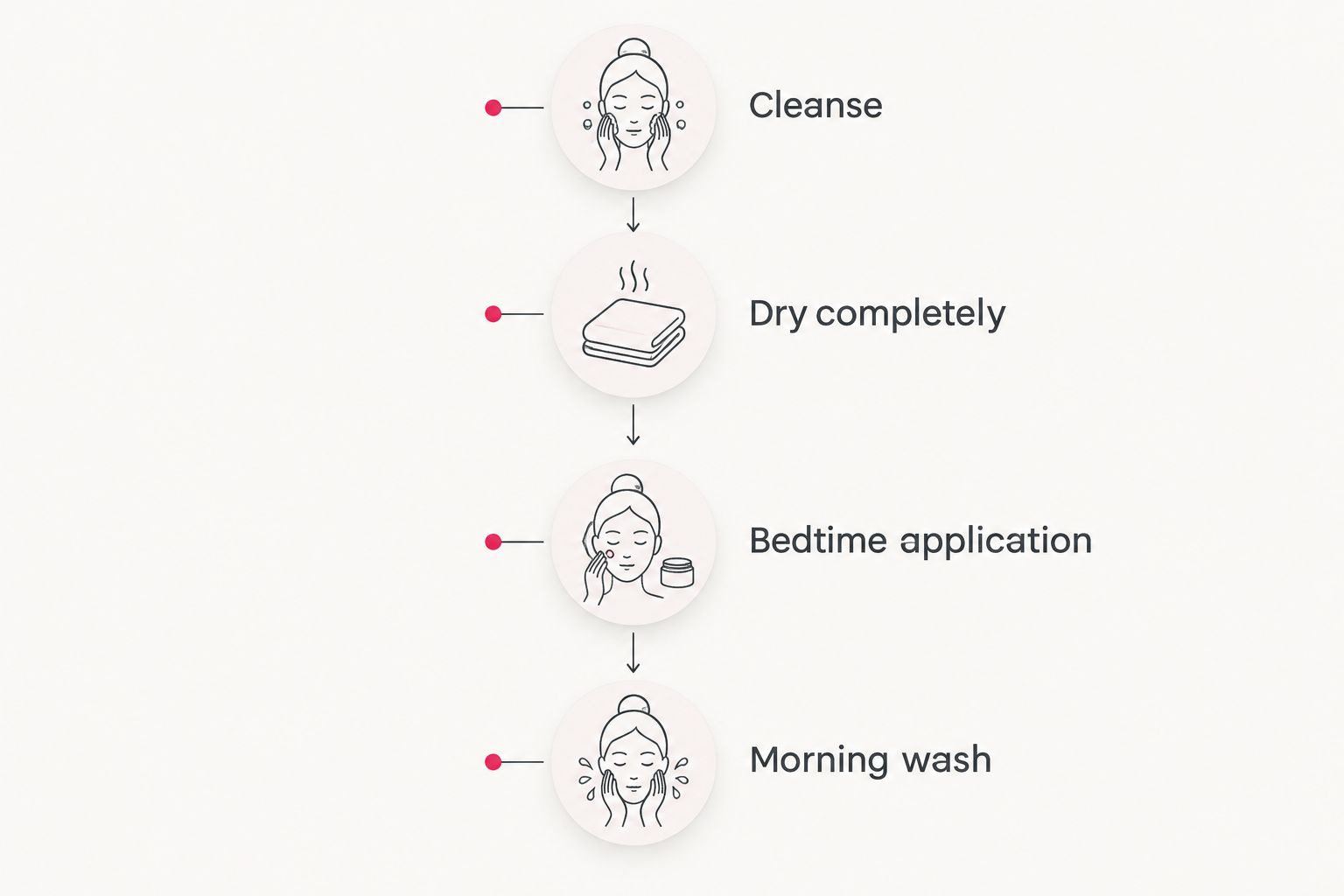
5. Match body sweat care to the intended area
For moisture beyond your underarms, start by checking the directions on any product you already have. An underarm-only label does not become a body-use label because the format is convenient.
Sweat Control Body Wipes are antiperspirant wipes positioned for targeted areas including hands, feet, chest, back, thighs, and underarms. Each pack contains 30 unscented wipes. Their useful distinction is body sweat control in a portable format—not simply wiping away existing perspiration.
Follow the current pack’s application, drying, and wash-off directions. The referenced directions include bedtime use and washing the treated area the next morning; carrying the pack to an open house does not establish an immediate rescue effect on sweaty skin.
- Check that your intended area is permitted.
- Start with clean, dry skin.
- Follow the package’s timing and wash-off instructions.
- Keep the product away from your face and mucous membranes.
- Do not substitute an underarm gel for body-use wipes.
6. Pack for a refresh without overapplying
Build a simple showing-day kit from items you already own. A clean shirt, a clean cloth, and access to handwashing address practical comfort needs without adding another active product to your skin.
If odor is the concern, a body deodorant serves a different purpose from an antiperspirant. Deodorant Body Spray is an unscented, fast-drying odor-care option, but it does not replace sweat reduction. Apply only as its current directions permit.
A kit should support the routine you established at home. Do not use a gap between visitors to stack gel, stick, and antiperspirant wipes on the same area or increase the dose because the next appointment feels important.
- Pack a clean shirt when changing is practical.
- Keep a clean cloth for blotting existing moisture.
- Wash and dry your hands before client greetings when needed.
- Keep products in their labeled packaging.
- Reapply only when the product directions permit it.
Compare options for showings and open houses
Choose the smallest routine that addresses your actual concern. These options serve different jobs; a longer routine is not automatically a better one.
Daily stick: best for routine underarm wetness and odor
Clinical Sweat Control Stick combines sweat reduction and odor protection in a familiar application format. It suits agents who want a straightforward daily underarm step.
Its limitation is scope: it is not intended for hands or broader body application. It also has fragrance, so choose a different format if fragrance-free underarm care is your priority.
Nighttime gel: best for heavier underarm sweating
Intensive Sweat Minimizing Gel adds a separate bedtime step when daily protection is not enough. Its application schedule keeps that step outside your showing hours.
The tradeoff is planning. You need completely dry underarms, a morning wash-off, and attention to skin restrictions. It is neither a last-minute refresher nor a body antiperspirant.
These are the two relevant underarm options when deciding between a daily starting point and added nighttime support.


Body antiperspirant wipes: best for targeted body wetness
Sweat Control Body Wipes address sweat on permitted body areas beyond an underarm-only routine. The portable format is useful when organizing supplies for days away from home.
The limitation is that portability does not remove preparation or scheduling requirements. They are disposable antiperspirant applicators, not ordinary cleansing wipes or a guarantee of instantly dry palms before a handshake.
Body deodorant: best for odor without added sweat control
Deodorant Body Spray provides unscented body odor care. Its role fits a reader who wants odor protection without adding another fragrance.
That fragrance choice is separate from wetness control. Likewise, choosing a subtle perfume oil affects the scent you wear, not perspiration; choosing a subtle perfume oil belongs to fragrance decisions, while an antiperspirant label determines whether a product reduces wetness.
Body wash: best for cleansing sweat and buildup
Deep Clean Body Wash removes sweat, odor, and daily buildup, including antiperspirant residue. It belongs in the shower rather than in the category of leave-on sweat protection.
Its limitation is equally clear: washing away sweat does not prevent the next round of perspiration. You can use a cleanser you already tolerate; the branded wash is not required for every antiperspirant routine.
Common mistakes agents make before open houses
Saving every product change for a major listing event
A busy open house is a poor setting for learning a new application schedule. Introduce changes on an ordinary day so you can assess the directions, skin tolerance, and fit with your morning routine without appointment pressure.
Treating fragrance as the solution to wetness
Adding scent before a client arrives does not establish sweat protection. Read the product’s function first, then choose fragrance according to your preference rather than expecting perfume to keep clothing dry.
Using an underarm product wherever sweat appears
Hands, feet, and underarms are not interchangeable application sites. Choose a product explicitly labeled for the area instead of spreading an underarm gel onto your palms before greeting buyers.
Increasing the dose between showings
Repeated layers complicate your routine without proving better control. If protection disappoints, review skin dryness, timing, treated area, and consistency before adding products; stop rather than push through a rash.
FAQ
What is the best antiperspirant for real estate agents?
A daily underarm antiperspirant and deodorant is the simplest starting point for agents concerned about both wetness and odor. Clinical Sweat Control Stick serves that role; heavier underarm sweating can warrant a separate nighttime step.
Should I apply antiperspirant right before an open house?
Follow your product’s application schedule rather than assuming right before the event is best. Daily sticks and bedtime gels have different directions, and both require appropriate skin preparation.
Can I use the nighttime gel on sweaty hands before greeting clients?
No. Intensive Sweat Minimizing Gel is for underarms only. For hand sweat, choose a product whose current directions permit hand application, such as Sweat Control Body Wipes.
Will body deodorant stop sweat marks on my shirt?
Body deodorant addresses odor, not sweat reduction. An antiperspirant helps reduce wetness in its treated area, but that does not establish a stain-free or transfer-free clothing guarantee.
Do I need to buy a complete sweat care set?
No. Start with the product that matches your concern and add another step only when its separate function is needed. Cleansing, sweat reduction, and odor care do different jobs.
What should I do if antiperspirant irritates my underarms?
Stop use if rash or irritation occurs, as the antiperspirant labels direct. Do not increase the amount or continue through worsening symptoms; persistent or severe reactions warrant professional advice.
When should I ask a clinician about sweating?
Ask a clinician about persistent or disruptive sweating, particularly if it begins suddenly, occurs during sleep, or comes with other symptoms. Consumer sweat care does not treat an underlying medical cause.
One last thing
Your next product is not always your next step. First check whether you are using an antiperspirant for wetness, applying it to the correct area, and following its schedule on dry skin.
If you choose Duradry sweat care, start with the format that addresses that specific need—not the largest routine. Make that decision before your next showing day, when you have time to read the label and use it correctly.

