

Antiperspirant does not automatically stop working because you have used it for a long time, and a wetter day does not prove your body has become resistant to it. Before switching products, check whether you are treating wetness or odor, applying the product as directed to completely dry skin, and dealing with a change in how much you sweat.
- Does antiperspirant stop working over time? Long-term use alone does not establish that a product has lost effectiveness.
- Check application timing, dry skin, and changing sweat demands before replacing your antiperspirant.
- Duradry sweat care separates daily underarm protection from intensive nighttime sweat control.
- Sudden, persistent, or sleep-related sweating deserves medical attention rather than repeated product changes.
Does antiperspirant stop working over time?
Using the same antiperspirant for a long time is not, by itself, a reason to replace it. Aluminum-based antiperspirant actives temporarily reduce sweat reaching the skin in the treated area. They do not permanently switch off your sweat glands, so continued protection depends on using the product according to its directions.
If you use a daily product such as Duradry’s Clinical Sweat Control Stick, check the application routine before assuming the formula has stopped working. Separate these questions:
- Is the change wetness, odor, or both? Antiperspirant reduces perspiration; deodorant addresses odor. A change in smell alone does not establish that sweat control has failed.
- Has application changed? Applying to damp skin, skipping applications, or changing a nighttime routine changes how you are using the product.
- Have your circumstances changed? A hot commute, harder workout, or stressful presentation creates a different test than a quiet day indoors.
- Has sweating changed outside those situations? New sweating at rest, during sleep, or alongside other symptoms needs a different response than routine troubleshooting.
This distinction matters because replacing a product does not correct an application problem or explain a new sweating pattern.
Why this matters
A product that feels less dependable can make you rethink your clothing, commute, or plans. But immediately buying something stronger skips the more useful question: what has actually changed?
You do not need complete dryness in every situation to establish that an antiperspirant is helping. Sweat reduction is different from eliminating perspiration, especially during heat or exercise. Judge the routine against comparable days rather than expecting a workday and a workout to produce identical results.
Why antiperspirant performance varies
Several practical factors change the protection you experience without demonstrating that your body has developed tolerance:
- The product’s purpose. A deodorant, cleansing wash, and antiperspirant do different jobs. Fragrance or freshness is not evidence of sweat reduction.
- Skin dryness at application. Antiperspirant directions commonly specify dry skin. A towel-dried underarm that is still damp is not the same as completely dry skin.
- Application timing and consistency. A daily stick and a bedtime gel have different schedules. Following one product’s routine with another product is not a reliable substitute for its label.
- Sweat demands. Heat, physical activity, and stress affect sweating. Note whether the apparent change happens only in these settings or throughout the day.
- Skin tolerance. Rash or irritation changes what your skin can comfortably tolerate. Adding more product or applying more often is not the right response.
- A changed sweating pattern. Persistent increases, sudden onset, or sweating during sleep deserve assessment rather than an assumption that your antiperspirant has worn out its usefulness.
Check the expiration date and storage directions on the package, too. Replacing an expired product is different from switching brands because you suspect resistance.
How do you troubleshoot an antiperspirant that seems less effective?
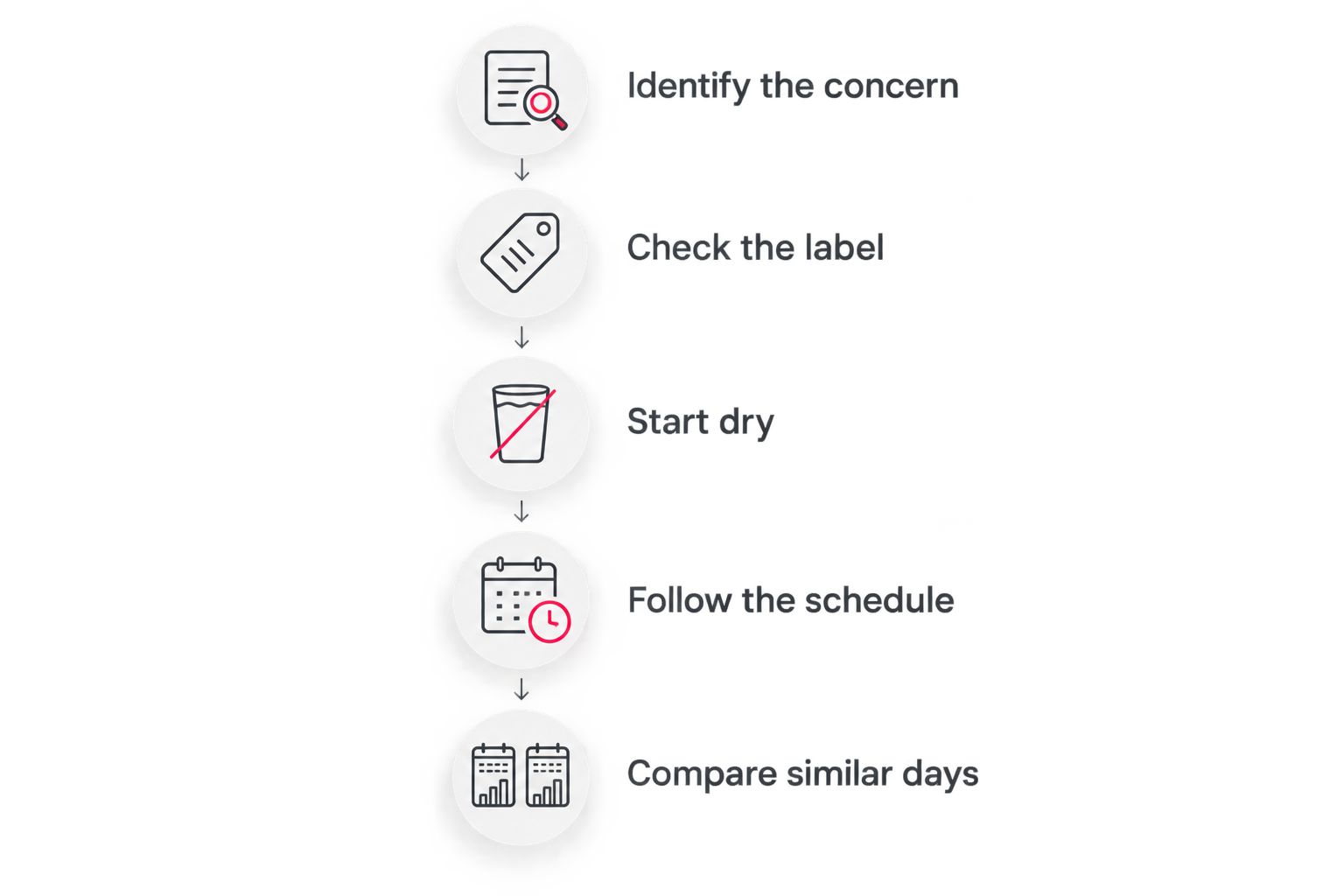
Change the routine only after identifying the problem. Start with the checks below rather than adding several products at once; otherwise, you lose track of which change helped or irritated your skin.
Identify the concern
Decide whether you are noticing wet patches, odor, uncomfortable skin, or some combination. Look at when and where the problem happens. Underarm wetness after a workout and new sweating across several body areas are not the same troubleshooting problem.
If odor is the only change, stronger sweat reduction is not automatically the answer. Cleansing and an appropriate odor-control product address different parts of the routine.
Check the label
Confirm that the product is an antiperspirant and that its intended application area matches your concern. Read the amount, schedule, warnings, and any wash-off instructions rather than relying on how you used a previous product.
Do not assume a higher active percentage guarantees a better result. The active ingredient, formula, application routine, and your skin’s tolerance all matter.
Start dry
Clean away sweat and product residue, then allow the skin to become completely dry. Do not scrub harder in an attempt to make the antiperspirant work better.
If the product specifically says not to apply immediately after bathing, follow that instruction even when the skin seems towel-dry. A product-specific restriction takes priority over a general routine tip.
Follow the schedule
Use the labeled amount and frequency. An intensive product’s starting schedule and maintenance schedule are not necessarily identical, and extra applications are not a substitute for correct use.
Give the product the evaluation period its current directions specify. Do not declare failure after an isolated sweaty afternoon, but do not continue through a rash just to complete a trial.
Compare similar days
Notice performance under comparable conditions: an ordinary workday against another ordinary workday, for example. Keep track of application timing, wetness, odor, and any discomfort.
The purpose is not to measure every drop of sweat. It is to identify whether correct use improves a recurring concern, or whether the concern remains disruptive enough to discuss with a clinician.
Daily underarm protection: when a stick fits
Best for: everyday underarm wetness and odor in a familiar application format. A daily antiperspirant-deodorant combines sweat reduction and odor protection without requiring every reader to adopt an intensive routine.
Duradry sweat care offers the Clinical Sweat Control Stick for this role. Its directions specify 2–4 swipes per underarm on clean, dry skin. When used alongside the nighttime gel, the stick belongs in the daytime routine after the gel has been washed off and the underarms dried.
The advantage is simplicity: a daily step for underarm sweat and odor protection. The limitation is scope. The stick’s directions are for underarms, and daily protection does not mean guaranteed dryness through every workout, stressful event, or hot day.
Duradry’s Clinical Sweat Control Stick is best for people seeking daily underarm sweat and odor protection in a stick format. If that describes your concern, correct daily use is a more useful starting point than automatically adding another product.
Intensive nighttime protection: when a gel fits
Best for: heavier underarm sweating that needs a focused nighttime step. The Intensive Sweat Minimizing Gel has a different job and schedule from the daily stick. It is an underarm antiperspirant applied at bedtime and washed off the next morning.
For detailed use, follow the current package:
- Clean the underarms and let them become completely dry; do not apply immediately after bathing.
- Apply the label-directed amount at bedtime. The product page describes a pea-sized amount per underarm.
- Wash the underarms thoroughly the next morning, then dry them before applying the daily stick.
- Follow the current starting and maintenance schedule. Referenced directions describe maintenance twice per week or as needed after control is established, not as a universal starting schedule.
The gel adds targeted nighttime sweat control, but it also adds instructions and skin-use restrictions. It is for underarms only, not hands, feet, or other body areas. Do not apply to broken, irritated, or recently shaved skin; avoid the eyes and follow the label’s warnings.
Bedtime application is intended to help reduce daytime underarm sweating, not to treat night sweats. Stop if rash or irritation occurs, and ask a doctor before use if you have kidney disease, as the antiperspirant label directs.
Do you need to switch antiperspirants regularly?
You do not need a brand-rotation schedule simply because time has passed. Switching makes sense when the current product does not meet your needs despite correct use, causes irritation, or has a format or fragrance that does not suit you.
Choose a replacement around a specific goal: a different application format, clearer nighttime instructions, or sweat control rather than odor care alone. Changing fragrance without changing the product’s functional role does not address an application problem.
Avoid changing several parts of the routine simultaneously. Keeping the rest consistent makes it easier to assess the replacement without confusing its effect with a new wash, different timing, and extra applications.
Should you take a break to reset your underarms?
A break is not an established requirement for restoring antiperspirant effectiveness. Temporary sweat reduction wears off; that does not mean your underarms need a detox or that sweating more will make the product stronger next time.
Irritation is a separate issue. If a product causes rash or irritation, stop using it as directed rather than treating continued exposure as a way to build tolerance. Seek professional advice for persistent or severe reactions.
When should you get medical advice instead of changing products?
Arrange an assessment when sweating remains disruptive despite correct product use, starts suddenly, or occurs during sleep. A clinician can review the pattern, possible causes, and treatment choices without assuming that every sweating concern is hyperhidrosis.
Mention any associated symptoms and recent medication changes. Do not stop prescribed medication or change prescribed sweating treatment on your own.
Topical sweat care can be part of managing excessive sweating, but repeated purchases should not replace an assessment of a new or unexplained change. A nighttime antiperspirant routine does not address the underlying cause of hormonal, medication-related, or other systemic sweating.
FAQ
Can my body become immune to antiperspirant?
A change in sweating does not establish that your body has become immune to antiperspirant. Check the product’s purpose, application directions, and changes in your sweating pattern before assuming resistance.
Why am I suddenly sweating through my usual antiperspirant?
Sudden breakthrough sweating needs context: heat, exercise, stress, and application changes are different from unexplained sweating at rest. Seek medical advice if the change is persistent, occurs during sleep, or comes with other symptoms.
Should I switch antiperspirant brands every few months?
You do not need to switch antiperspirant brands on a fixed schedule. Consider changing when correct use still does not meet your needs, the product irritates your skin, or another format better fits your routine.
Will applying more antiperspirant make it work again?
Applying more than the label directs is not a reliable way to restore protection. Use the specified amount and schedule, and stop if rash or irritation occurs rather than adding more product.
Is it normal to smell odor even when my underarms are dry?
Underarm odor and underarm wetness are different concerns, so dryness does not guarantee the absence of odor. Review cleansing and odor protection rather than assuming you need stronger sweat reduction.
Can I use Duradry’s nighttime gel and daily stick together?
The Intensive Sweat Minimizing Gel and Clinical Sweat Control Stick belong at different times in the routine, not layered together at bedtime. Follow the gel’s directions, wash it off the next morning, and dry your underarms before applying the stick.
One last thing
A fading scent is not a reliable test of sweat control. Judge an antiperspirant by the wetness concern it is intended to address, not by whether you can still smell its fragrance.
Before your next application, read the current label and check your timing and skin dryness. That is the most useful next step before deciding you need a different formula.

