

No—antiperspirant is not expected to make you sweat more at first, and increased sweating is not a necessary stage before it works. Continued wetness can mean the product has not provided enough control, the application routine needs adjusting, or the moisture you feel is the formula itself; burning, itching, or a rash is a reason to stop, not push through.
- Can antiperspirant make you sweat more at first? Increased sweating is not an expected adjustment stage.
- Check for an antiperspirant label: deodorant controls odor but does not establish sweat reduction.
- Duradry antiperspirants have different application schedules; follow the directions for your specific product.
- Stop use if rash or irritation occurs. More product is not the answer to uncomfortable skin.
Can antiperspirant make you sweat more before it starts working?
Antiperspirant does not need to trigger extra sweating to begin reducing wetness. Its aluminum-based active reduces perspiration in the treated area. That is different from deodorant, which addresses odor, and body wash, which removes sweat and residue during cleansing.
If your underarms still feel wet after switching products, check what changed before deciding that the antiperspirant increased your sweat production. Our guide to what is in antiperspirant explains the distinction between sweat-reducing actives and other formula ingredients.
Use this sequence to separate a routine issue from a skin reaction:
- Read the label. Confirm the product is an antiperspirant, not only a deodorant or deodorizing spray.
- Identify the sensation. Notice whether you have ongoing wetness, a freshly applied damp formula, or uncomfortable skin.
- Check application. Follow the labeled amount, timing, body area, and instructions about clean, dry skin.
- Check consistency. Use the product on its recommended schedule rather than adding extra applications whenever you notice moisture.
- Respond to irritation. Stop if rash or irritation occurs. Seek professional advice for persistent or severe symptoms.
These checks do not diagnose why you are sweating. They help you avoid treating every wet underarm as evidence that a product is making the problem worse.
Why this matters
Mistaking persistent sweat for a required adjustment phase can lead you to keep using an irritating product. Mistaking a deodorant for an antiperspirant can lead you to expect dryness from a product intended for odor control.
The useful question is not whether you need to “sweat through” the beginning. It is whether you have the right product, are using it correctly, and have comfortable skin.
Why your underarms can feel wetter after a switch
Several practical factors change what you notice after applying a new product. None is proof that your sweat glands need to purge or detox.
- Product purpose: A deodorant can improve odor while leaving perspiration unchanged. Look for an antiperspirant function if wetness is your main concern.
- Application conditions: Damp skin or application during active sweating does not match directions that specify clean, dry skin.
- Formula feel: A wet or slow-drying application can feel like sweat. Texture alone does not show whether perspiration has increased.
- Timing and consistency: A bedtime treatment and a daily stick have different schedules. Switching between them without following their directions makes results harder to judge.
- Your day: Heat, exercise, and stressful situations affect sweating. Comparing a quiet evening with a crowded commute does not isolate the product's effect.
- Skin tolerance: Stinging, itching, redness, or a rash points to discomfort that needs attention. Those symptoms are not evidence that stronger sweat control is developing.
Keep the comparison practical. Notice underarm wetness during similar activities, with a consistent application routine, rather than judging the product only during your hottest workout or most stressful meeting.
You do not need to monitor every sensation. Pay attention to whether your usual activities feel more manageable and whether your skin remains comfortable.
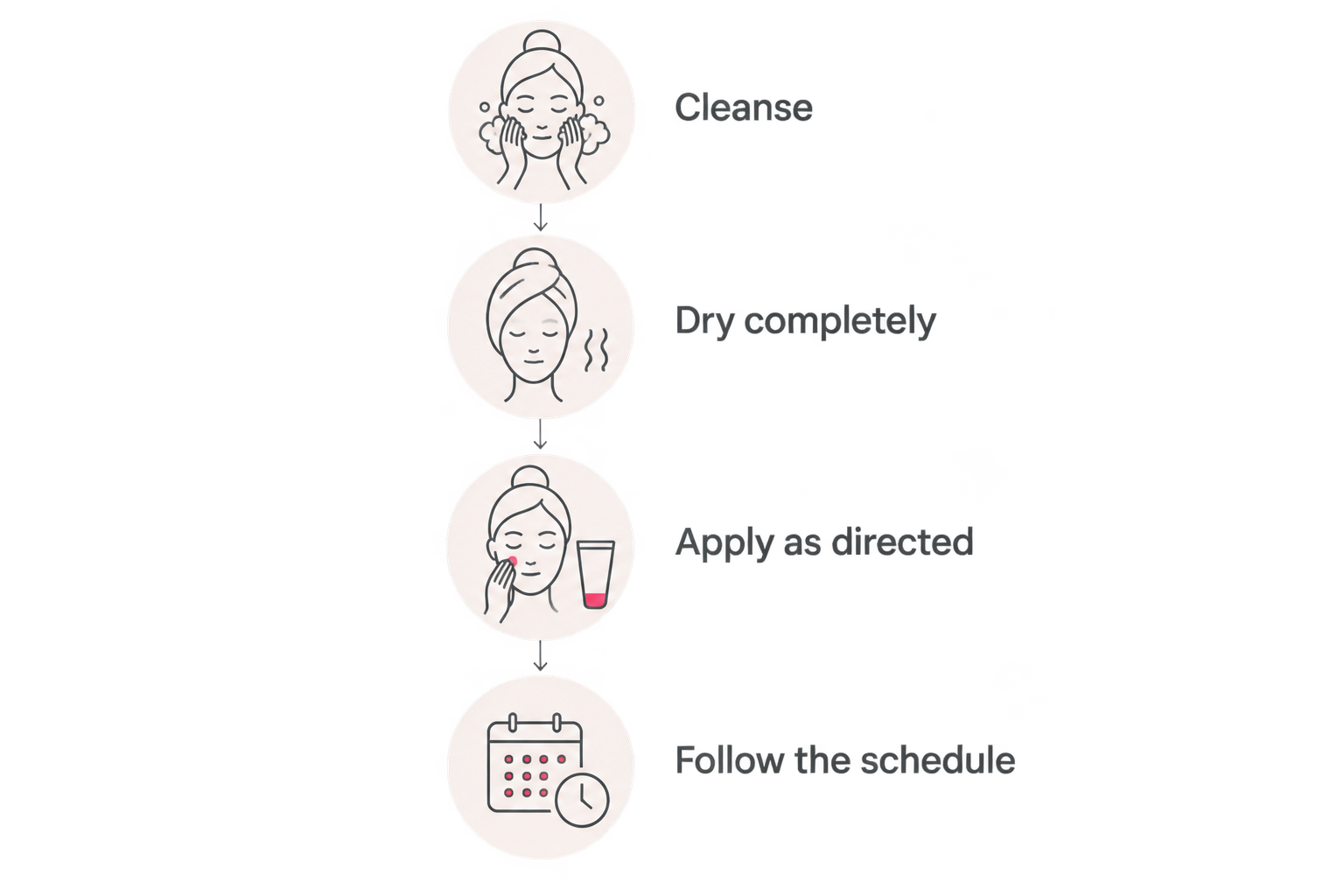
How to reset your application routine
Start with the package directions, not a universal waiting period from social media. Different formulas have different amounts, schedules, and wash-off instructions; there is no single adjustment timeline that applies to every antiperspirant.
Cleanse
Wash away sweat and product buildup, then rinse thoroughly. Cleansing prepares the skin, but it does not prevent the next round of perspiration.
You do not need a particular branded wash for every antiperspirant to work. Choose cleansing that your skin tolerates, and avoid treating repeated scrubbing as a way to increase sweat control.
Dry completely
Apply only under the conditions your label specifies. For products requiring clean, dry skin, towel-drying is not permission to apply while the area still feels damp.
Respect any separate restriction about bathing. An overnight gel that says not to apply immediately after bathing needs a different routine from a product without that instruction.
Apply as directed
Use the labeled amount on the permitted body area. Applying more because your first day felt disappointing does not establish better control and can make troubleshooting harder.
Do not transfer directions between formats. A stick, gel, and antiperspirant wipe are not interchangeable simply because each reduces sweat.
Follow the schedule
Keep the initial schedule separate from maintenance. Some intensive products begin with consecutive nighttime applications and later move to less frequent use, according to the label and the control achieved.
If the product requires morning washing, include it. Do not layer every sweat-care product onto the same area at once to try to speed things up.
Choose daily protection or targeted nighttime support
Duradry sweat care is best for people who want to match daily or intensive underarm protection to their routine. The choice starts with your concern and preferred schedule, not the assumption that the most intensive format is always necessary.
These products serve different roles. Neither requires you to experience increased sweating as proof that it is working.
Clinical Sweat Control Stick: best for daily underarm sweat and odor
The Clinical Sweat Control Stick combines underarm antiperspirant and deodorant functions. It is the straightforward starting point when you want daily protection from both wetness and odor in a familiar format.
The product directions specify 2–4 swipes per underarm on clean, dry skin. Follow your current package if its instructions differ.
The advantage is simplicity: daily sweat and odor care in one step. The limitation is that daily protection does not guarantee complete dryness during every activity, and the stick's directions are for underarms—not every sweaty body area.
Intensive Sweat Minimizing Gel: best for heavier underarm sweating
The Intensive Sweat Minimizing Gel adds a targeted bedtime antiperspirant step. It is distinct from your daily deodorizing routine and is washed off the next morning.
The brand directions describe a pea-sized amount per underarm on completely dry skin. Do not apply immediately after bathing or to broken, irritated, or recently shaved skin; follow the current label for all restrictions.
The advantage is a focused nighttime option when a basic routine is not enough. The tradeoff is the extra scheduling and wash-off step, along with the possibility of irritation. It is underarm-only care, not a treatment for sweating while you sleep.
Once control is established, the referenced label describes maintenance at 2 applications per week, or as needed. That is not a promise that the first two applications will control sweating, and your package directions govern the schedule.
With the Duradry underarm routine, wash off the gel in the morning and dry your skin before applying the daily stick. Keep nighttime treatment and daytime protection separate rather than layering them simultaneously.
How long should I wait before deciding it is not working?
Use the product's labeled initial schedule; there is no universal number of days for every antiperspirant. A daily stick and an intensive nighttime gel should not be judged against an invented common deadline.
Before switching again, check whether you used the correct amount, applied to dry skin, and followed the schedule consistently. If you did and sweating still disrupts your day, ask a clinician or pharmacist about the next appropriate option.
Do not use a waiting period to justify continuing through a rash. Skin tolerance and sweat reduction are separate questions, and comfortable use matters from the beginning.
Does sweating through antiperspirant mean it failed?
Sweating through antiperspirant does not automatically mean it failed. Antiperspirant reduces perspiration in the treated area; it does not promise that your skin will stay completely dry in all conditions.
Judge whether your ordinary wetness has become more manageable. If it has not, review the routine before adding products, increasing the amount, or assuming you need a stronger active.
A routine that leaves you choosing clothes around persistent underarm wetness deserves another look. You do not need a diagnosis to ask for help finding a suitable approach.
When should I stop troubleshooting and get medical advice?
Stop using an antiperspirant if rash or irritation occurs, as its label directs. Do not interpret burning as the active “getting to work,” and do not apply more to compensate for disappointing dryness.
Ask a clinician about sweating that starts suddenly, regularly occurs during sleep, or appears with other symptoms. Persistent sweating that interferes with daily life also warrants assessment, even when you have followed product directions carefully.
For Duradry antiperspirants, follow the relevant package warning to ask a doctor before use if you have kidney disease. Questions about medications, underlying health conditions, or changing prescribed treatment belong with your clinician rather than an expanded consumer routine.
FAQ
Can antiperspirant make you sweat more at first?
Increased sweating is not an expected stage that antiperspirant must cause before working. Check the product's purpose, application directions, and your skin's comfort instead of treating extra wetness as a required adjustment.
Is there an antiperspirant detox or purging period?
Antiperspirant does not require a sweat-purging or detox phase. Continued wetness is a reason to review the routine, not proof that the product is clearing something out.
Why do my armpits feel wet right after I apply antiperspirant?
Freshly applied formula can feel damp, so the sensation alone does not prove increased sweating. Follow the product's drying directions and apply under the conditions specified on its label.
Should I apply more antiperspirant if I am still sweating?
Use the labeled amount rather than automatically applying more. Check timing, dry-skin instructions, and consistency first; stop if rash or irritation occurs.
Should I use antiperspirant at night or in the morning?
Follow the schedule for your specific antiperspirant. An intensive bedtime gel can require morning washing, while a daily stick has its own application directions.
Does itching mean my antiperspirant is starting to work?
Itching is not evidence that sweat control is developing. Stop use if rash or irritation occurs, and seek professional advice for persistent or severe symptoms.
One last thing
Less odor does not necessarily mean less sweat—and less sweat does not require perfectly dry skin all day. Separating those outcomes makes it easier to recognize what your routine actually does.
Before your next application, read the directions on the product you already have. Correct one mismatch in purpose, timing, or application conditions rather than adding another layer.

