

Yes, antiperspirant can cause yellow stains on clothes when its aluminum-based ingredients combine with sweat and other material on the fabric. Body oils, product residue, and repeated wear also contribute, so yellow underarm marks are not always caused by antiperspirant alone. Use the labeled amount, let the product dry before dressing, and treat garment buildup before machine drying.
- Can antiperspirant cause yellow stains on clothes? Yes—aluminum-based ingredients, sweat, and fabric buildup can contribute.
- Duradry antiperspirant reduces underarm wetness; it does not come with a stain-free clothing guarantee.
- White transfer and yellow discoloration are different problems and need different care.
- Follow product directions and garment care labels rather than adding more antiperspirant or stronger laundry chemicals.
Can antiperspirant cause yellow stains on clothes?
Yes. Aluminum-based antiperspirant ingredients can contribute to yellow underarm discoloration as they interact with sweat and accumulate alongside body oils and product residue in clothing. Repeated wear and incomplete removal during washing allow that buildup to persist.
That does not mean every antiperspirant application leaves a stain. The formula, amount applied, contact with fabric, and laundering all affect what happens to your shirt. Understanding what is in antiperspirant helps separate the sweat-reducing active from the rest of the formula.
Look at the mark before deciding what to change:
- Yellow discoloration: Often develops in the underarm area with repeated wear. Sweat, oils, and antiperspirant-related buildup can contribute.
- White streaks: Often appear immediately when product rubs onto fabric during dressing. These are surface transfer, not the same thing as yellowing.
- Stiff or waxy patches: Suggest accumulated material in the fabric. A normal wash does not always remove an established deposit.
- A temporary dark patch: Often indicates wet fabric rather than permanent discoloration. Check the garment again after it dries.
These are useful clues, not a chemical test. A stain's color alone cannot identify the ingredient responsible.
Why this matters
Sweat control and clothing care solve different problems. An antiperspirant reduces perspiration in the treated area, but that function does not establish that the formula leaves no residue or prevents fabric discoloration.
You do not have to choose between managing underarm wetness and caring for your clothes. Start by checking application and laundry habits before abandoning a product that otherwise suits your needs. Changing several products and washing methods at once makes it harder to identify what helps.
Yellowing is also not a measure of cleanliness. A freshly washed shirt can retain buildup from earlier wear, and normal sweating does not mean your personal care routine is inadequate.
Why yellow underarm stains vary
There is no single staining pattern that applies to every person, formula, or garment. These factors help explain why one shirt develops marks while another stays clear:
- Formula: Antiperspirants contain sweat-reducing actives alongside other ingredients. Deodorants have a different primary job, but their formulas can still leave residue.
- Application amount: Applying more than the directions specify puts additional product on your skin and creates more opportunity for transfer. Extra product is not a reliable shortcut to better control.
- Skin condition at application: Antiperspirant directions commonly call for clean, dry skin. Applying over sweat or existing residue makes consistent application harder.
- Contact with clothing: Dressing while product is still wet increases direct contact between the formula and fabric. Close-fitting underarm seams also keep clothing against treated skin.
- Accumulated sweat and oils: Clothing collects more than antiperspirant. Body oils and other residue contribute to the material that washing needs to remove.
- Laundry care: Rewearing a garment with existing buildup, skipping pretreatment, or drying it before checking the stain allows the problem to continue.
Treat yellowing as an application-and-laundry problem, not proof that your sweat care is failing. A product can reduce wetness while a shirt still needs targeted cleaning.
How do you reduce antiperspirant marks on clothes?
Focus on correct application rather than using as little as possible or repeatedly adding more. The goal is the labeled amount on the intended skin area—not a thick coating that reaches your clothing.
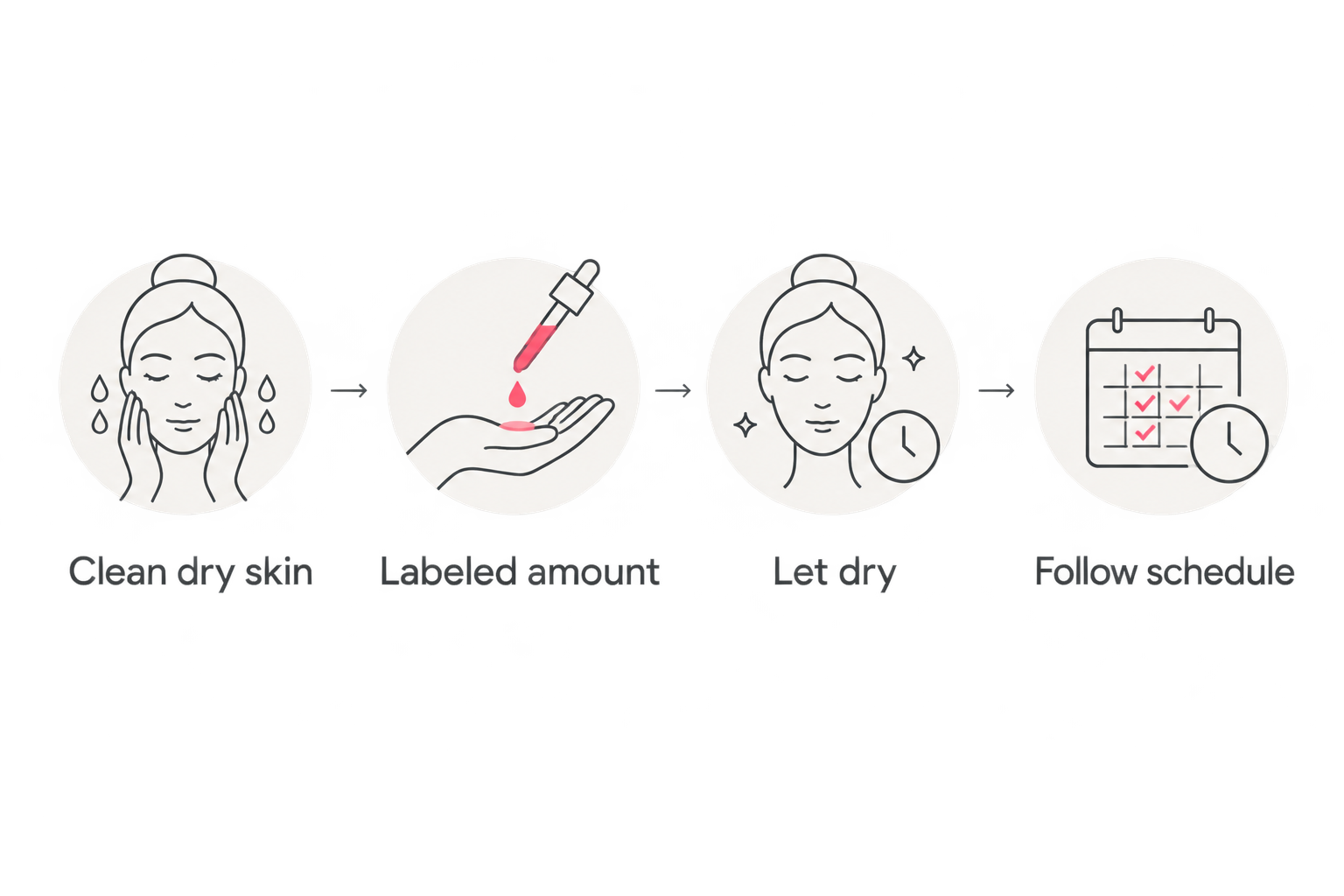
Start with clean, dry skin
Remove sweat and old product residue during normal washing, then dry your underarms thoroughly. Do not apply another layer simply because the previous one feels present or your shirt has developed a mark.
Cleansing prepares the skin, but it does not prevent future sweating. You do not need to scrub aggressively or irritate your underarms to create a suitable starting point.
Follow the amount on the package
Use the directions for your particular product. A stick, gel, spray, and antiperspirant wipe do not automatically share the same dose or application schedule.
For example, a labeled swipe count applies to that stick—not to every antiperspirant. If protection is inadequate despite correct use, review the routine rather than increasing the amount without guidance.
Let the application dry before dressing
Check that your underarms are dry before pulling clothing over them. Avoid inventing a universal waiting time: drying depends on the formula, amount, and conditions.
This step addresses direct transfer. It is not a guarantee against yellow discoloration, because sweat and other materials still reach the fabric during wear.
Follow the product's schedule
A product intended for bedtime use has a different routine from a daily stick. If the directions require washing it off the next morning, complete that step before applying daytime protection.
Do not move every antiperspirant to bedtime or wash every formula off in the morning based on another product's instructions. The current package governs use.
Wash clothing before buildup accumulates
Check the underarm area when you take a shirt off. Treat visible residue according to the garment label instead of repeatedly wearing and washing over the same deposit.
For a favorite work blouse or exercise top, inspect the inside as well as the outside. The first sign of buildup is sometimes a change in texture rather than a visible yellow patch.
How do you remove yellow antiperspirant stains?
Start with the garment's care label, then pretreat the affected area with a fabric-compatible laundry product. Established discoloration is not guaranteed to come out, especially when the fabric has already undergone repeated wear and drying.
Use this sequence for washable clothing:
- Read the care label. Check the permitted washing temperature, bleaching instructions, and any restrictions. Take dry-clean-only garments to a professional rather than experimenting at home.
- Test the treatment. Follow the stain remover's instructions for testing an inconspicuous area. Colorfastness and fabric compatibility matter even when a product is marketed for laundry.
- Pretreat the underarms. Use a suitable liquid laundry detergent or stain treatment as directed. Work gently; aggressive rubbing can damage delicate fibers.
- Wash as instructed. Follow both the garment label and the laundry product directions. Do not assume hotter water is always better.
- Inspect before machine drying. Check whether the discoloration remains. Dryer heat can make some stains harder to remove, so avoid repeatedly drying a shirt without checking it.
- Repeat only when appropriate. If the fabric tolerates the treatment and the instructions permit it, another treatment is an option. Stop if you see fading, weakening, or surface damage.
Oxygen bleach is an option only when the garment and treatment labels allow it. It is not suitable for every fabric or finish, and a stronger mixture is not a better substitute for following directions.
Avoid mixing stain-removal chemicals. In particular, never combine chlorine bleach with ammonia or acids, including vinegar. If you change treatments, follow the manufacturers' rinsing and handling instructions rather than layering products together.
For silk, wool, embellished clothing, or a valuable garment, professional cleaning is the more appropriate next step than repeated home experiments. Tell the cleaner where the marks occur and which treatments you have already tried.
Would switching to deodorant prevent yellow stains?
Switching to an aluminum-free deodorant removes aluminum-based antiperspirant actives from that routine, but it does not guarantee stain-free clothing. Deodorant ingredients, sweat, and body oils can still leave marks or buildup.
The tradeoff is functional. Deodorant addresses odor; antiperspirant reduces wetness. If damp underarms are your main concern, replacing antiperspirant with deodorant changes the protection you are using.
Choose according to the problem you need to solve:
- Best for underarm wetness: an underarm antiperspirant. Its advantage is sweat reduction. Its limitation is that sweat control does not establish stain-free performance.
- Best for odor without a need for sweat reduction: a deodorant. Its advantage is targeted odor care. Its limitation is that odor protection alone does not keep fabric dry.
- Best for existing clothing buildup: garment treatment. Its advantage is addressing material already in the shirt. Its limitation is that old discoloration is not always removable.
Changing your skin product does not remove residue already embedded in a garment. Assess a new routine on clean clothing rather than judging it only by an older shirt with established yellowing.
Does clinical-strength antiperspirant stain more?
“Clinical strength” does not tell you how much a product will stain clothing. The term describes product positioning; it is not a fabric-testing result or a residue rating.
Do not assume that a higher active percentage automatically produces more staining—or that a lower percentage guarantees less. Finished formulas, application, fabric contact, and washing all matter. Without a direct clothing test under defined conditions, a staining ranking is unsupported.
The same caution applies to “clear,” “invisible,” “clean,” and “naturally derived.” Those descriptions do not, by themselves, prove that a product prevents yellowing or leaves no marks on every fabric.
Where Duradry fits in a clothing-conscious routine
Duradry sweat care is best for people seeking sweat and odor protection, not a promise of stain-free clothing. Choose the product for its intended function, then manage transfer and laundry separately.
The Clinical Sweat Control Stick is the daily underarm antiperspirant-and-deodorant step. Its directions specify 2–4 swipes per underarm on clean, dry skin. That makes it relevant when you want everyday wetness and odor protection, but it does not carry a verified zero-transfer or stain-free promise.
For heavier underarm sweating, the Intensive Sweat Minimizing Gel adds a bedtime antiperspirant step. Apply it only as directed to completely dry underarms, not immediately after bathing, and wash it off thoroughly the next morning. Dry the skin before applying daytime protection.
The gel is not designed to treat sweating while you sleep. Its nighttime schedule supports underarm sweat control during the day; it is not a clothing treatment or permission to layer extra products.
Follow the current package warnings. Do not apply the gel to broken, irritated, or recently shaved skin; stop if rash or irritation occurs, and ask a doctor before antiperspirant use if you have kidney disease.
FAQ
Why are my shirts yellow under the arms even after washing?
Yellow underarm marks can remain when sweat, body oils, and product-related buildup are not fully removed during washing. Pretreat according to the garment label and inspect the area before machine drying.
Are white deodorant marks the same as yellow sweat stains?
White product marks and yellow underarm stains are different. White streaks often come from direct product transfer, while yellow discoloration can develop as sweat and residue accumulate in fabric.
Can I get yellow armpit stains without using antiperspirant?
Yes, yellow underarm discoloration can occur without antiperspirant. Sweat, body oils, and other residues also contribute, so the mark alone does not identify its cause.
Should I stop using antiperspirant if my shirts turn yellow?
You do not automatically need to stop using antiperspirant because a shirt turns yellow. First check the labeled application amount, allow the product to dry, and address existing garment buildup.
Does Duradry guarantee that it won't stain clothes?
Duradry does not have a verified stain-free or zero-transfer guarantee in its product guidance. Use its antiperspirants for their labeled sweat-control role and follow garment care instructions separately.
Can I put a yellow-stained shirt in the dryer?
Check and treat the stain before machine drying the shirt. Heat can make some stains harder to remove, so follow the garment label and inspect after washing.
Related guides
One last thing
A shirt can retain yesterday's buildup even when today's application is correct. Before replacing your antiperspirant, inspect a freshly cleaned shirt and check your application against the package directions. That gives you a more useful starting point than adding more product or judging your routine by an old stain.

