

Best overall for a lightweight, non-sticky finish: a fast-drying deodorant spray. Best for reducing underarm wetness: an antiperspirant stick. Best for a separate sweat-control step: a sweat-minimizing gel. This 2026 guide separates texture from sweat protection so you can choose the right format without confusing deodorant with antiperspirant.
- For the best non-sticky deodorant, Duradry Deodorant Body Spray is the first pick for lightweight odor protection.
- Antiperspirant reduces sweat; deodorant targets odor. Choose the function before choosing the texture.
- Duradry Deodorant Body Spray is fast-drying, unscented, and made with 98% naturally derived ingredients.
- A stick or gel needs label-directed application; the format alone does not establish a non-sticky finish.
Why this matters
Sticky underarms and sweaty underarms are not the same problem. One can come from a product layer that feels tacky; the other comes from perspiration. Buying a lighter deodorant does not automatically solve wetness.
The distinction matters when you get dressed, leave for work, or exercise. If odor is your concern, a fast-drying deodorant fits the job. If moisture is soaking through clothing, choose sweat reduction first and assess the finish separately.
Duradry Deodorant Body Spray is the best non-sticky deodorant pick here for people seeking lightweight, fast-drying odor protection. That verdict rests on its stated formula characteristics—not a claim that every user will experience the same finish.
What makes the best non-sticky deodorant?
For this 2026 guide, the strongest choice answers these questions before it promises comfort:
- Correct function: Does the label identify a deodorant for odor or an antiperspirant for sweat reduction?
- Dry-down: Does the product explicitly describe a fast-drying finish, rather than merely using a gel or spray format?
- Skin feel: Is a lightweight texture stated? An invisible finish does not, by itself, establish a non-sticky feel.
- Application fit: Can you apply the product where you need it, following its directions and restrictions?
- Ingredient preferences: Does the ingredient list meet your preferences without treating terms such as naturally derived as a safety guarantee?
- Routine simplicity: Can you use the product correctly without repeatedly layering it over a damp or irritated area?
Start with 2 label categories: deodorant and antiperspirant. They answer different needs. Your preferred texture comes next, not instead of that decision.
Best non-sticky options at a glance
The table ranks formats by distinct jobs. Only the spray has explicit fast-drying and lightweight characteristics in the product information supplied; the stick and gel earn their places for sweat-care use, not a verified non-sticky finish.
| Item | Best for | Standout feature | Key limitation |
|---|---|---|---|
| Deodorant Body Spray | Lightweight odor protection | Fine, fast-drying, unscented spray; 98% naturally derived ingredients | A deodorant is not a substitute for antiperspirant sweat reduction |
| Sweat Control Stick | An underarm sweat-control routine | Stick-format option within the brand's sweat-care range | The format alone does not establish dry-down or residue performance |
| Sweat Minimizing Gel | A separate sweat-control application step | Gel-format option within the brand's sweat-care range | Application areas, timing, and finish need to be checked on the label |
1. Deodorant Body Spray: best for lightweight odor protection
Duradry describes Deodorant Body Spray as a fine, fast-drying spray with a lightweight feel and invisible odor protection. It is unscented and contains 98% naturally derived ingredients. Those stated characteristics make it the clearest match for a reader who wants deodorant without a heavy-feeling layer.
A spray also gives you a different application experience from a solid stick. You apply it without dragging a solid across the skin, then let it dry according to the directions. Keep the spray within its labeled application areas; a body-care name is not permission to use it everywhere.
Deodorant Body Spray pros:
- Explicitly described as fast-drying, rather than relying on assumptions about the format.
- Lightweight texture directly addresses the concern behind this guide.
- Unscented formula suits a routine where you do not want another fragrance.
- Invisible odor protection is part of the stated product description.
Deodorant Body Spray cons:
- Odor protection does not establish antiperspirant sweat reduction.
- Unscented is not the right fit if you specifically want a scented deodorant.
- A fast-drying description does not establish performance under every application condition.
Best for: You want a light-feeling deodorant, and odor—not reducing sweat output—is the main job.
The important trade-off is straightforward. A comfortable deodorant can still leave you sweating because deodorant and antiperspirant serve different purposes. Judge the spray on odor protection and feel, not on an expectation that it will stop perspiration.
Verdict: Buy for lightweight odor protection; skip it as your sole answer to excessive wetness.
2. Sweat Control Stick: best for an underarm sweat-control routine
An antiperspirant stick belongs on your shortlist when the problem is wetness rather than odor alone. Antiperspirants use active ingredients to reduce perspiration where applied. A deodorant-only product does not provide that same function.
Sweat Control Stick is a stick-format option in the brand's sweat-care range. Before choosing it for a non-sticky routine, read its current active-ingredient panel, directions, and permitted application areas. A stick shape does not tell you how the formula will feel on your skin.
Sweat Control Stick pros:
- Stick application lets you place product directly on the intended area.
- The format suits a straightforward underarm care routine.
- An antiperspirant-labeled formula addresses sweat reduction rather than odor alone.
Sweat Control Stick cons:
- A solid format does not establish an invisible or residue-free finish.
- Extra layers can leave more product on the skin without proving better protection.
- Underarm directions should not be extended to other body areas without label approval.
Best for: You need underarm sweat reduction and prefer a stick application, provided the product label matches that need.
Do not choose a stick because it looks drier than a gel in the package. Your application amount, skin condition, and the formula all affect the experience. Follow the directions instead of adding more swipes whenever you worry about sweating.
Verdict: Buy for a label-confirmed antiperspirant routine; hold if a verified non-sticky finish is your deciding requirement.
3. Sweat Minimizing Gel: best for a separate sweat-control step
Sweat Minimizing Gel is the gel-format option in this comparison. It belongs on the shortlist when you want to evaluate a dedicated sweat-control step rather than replace every part of your routine with a deodorant spray.
Gel describes the product's form, not its dry-down speed. Check how the label directs you to apply it, which areas it permits, and whether it belongs at a different point in your routine. Do not transfer instructions from another antiperspirant simply because both products target sweat.
Sweat Minimizing Gel pros:
- Offers a gel format if you prefer that application style to a solid stick.
- Gives you a distinct sweat-care option to evaluate separately from odor protection.
- Can be assessed against your specific routine rather than chosen on fragrance alone.
Sweat Minimizing Gel cons:
- A gel format does not prove fast drying or a non-sticky finish.
- Its directions need to be checked before combining it with other sweat-care products.
- A separate step adds complexity if you only need basic odor care.
Best for: You want a dedicated sweat-control step and are willing to follow the gel's specific directions.
Avoid the assumption that gel means clean-drying and solid means heavy. Neither conclusion follows from the format alone. The useful question is whether the product does the job you need while feeling comfortable when applied as directed.
Verdict: Hold until the application instructions fit your routine; skip if lightweight odor protection is your only goal.
How we ranked these options
This 2026 ranking prioritizes the stated product characteristics that directly answer the query: fast drying, lightweight feel, and the correct odor-versus-sweat function. The spray ranks first because its description explicitly addresses texture. The stick and gel occupy separate sweat-care slots.
This is a label-based buying guide, not a measured wear test. It does not rank drying time in seconds, stain resistance, or duration of protection. Format-specific advantages help you choose an application style; they do not substitute for verified product performance.
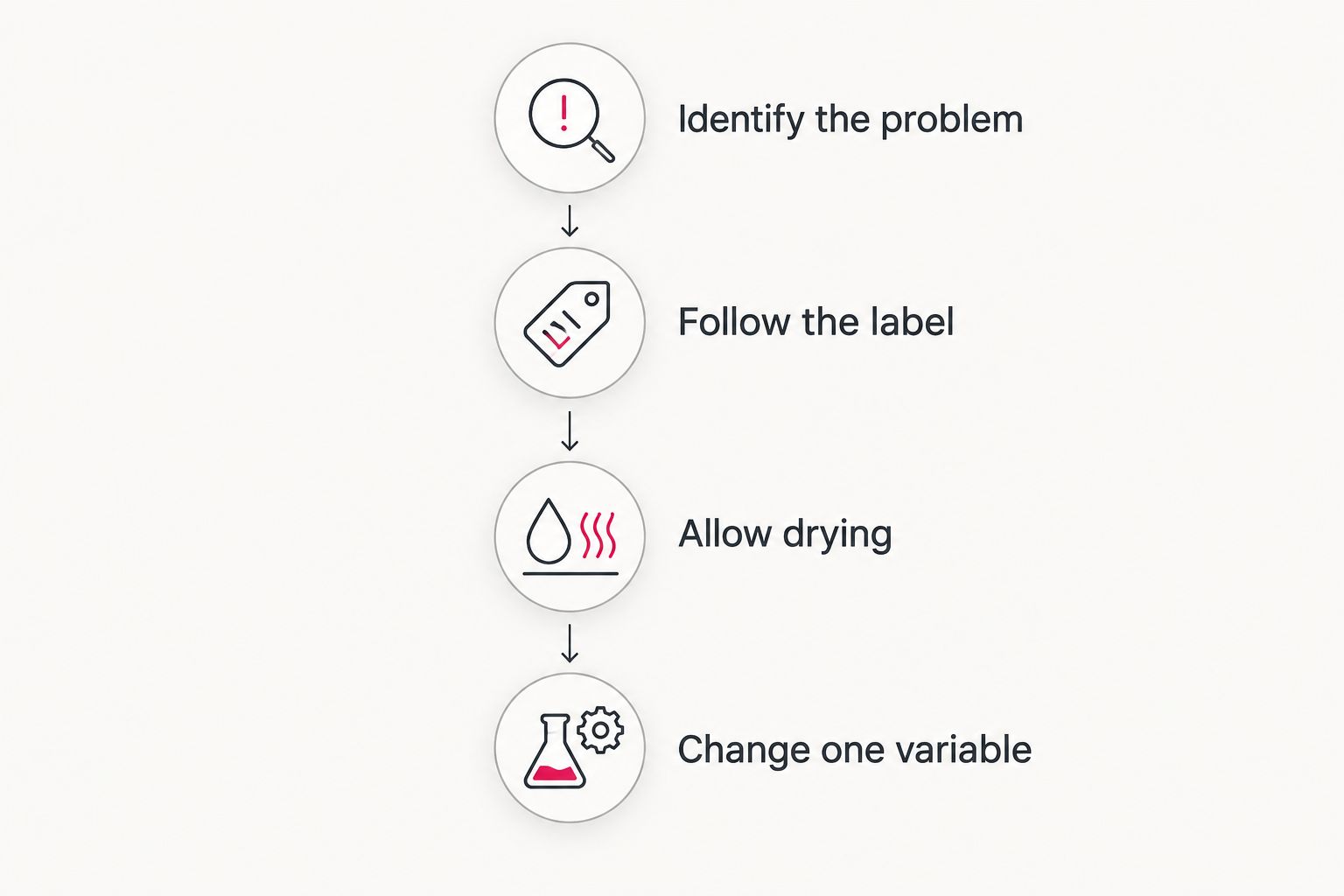
How to build a less-sticky routine
A good formula can still feel uncomfortable when you apply it over moisture or repeatedly add more. Keep the routine simple enough that you can tell whether the product itself suits you.
Identify the problem
Decide whether you need help with odor, wetness, or both. If the unwanted feeling starts immediately after application, assess product texture and how you apply it. If it appears as you perspire, reconsider whether deodorant alone matches the job.
Follow the label
Use the intended application areas and directions. Do not assume an underarm product is suitable for your face, hands, intimate areas, or irritated skin. Product names and familiar formats do not replace those instructions.
Allow drying
Give the product the drying opportunity its directions require before covering the area with clothing. Avoid trapping a fresh, wet application under fabric. Fast-drying does not mean you should ignore application instructions.
Change one variable
Change 1 product at a time when assessing texture. Keep the rest of your routine consistent so you can distinguish the new formula's effect from a new cleanser, an extra layer, or a different application method.
Stop using a product if it causes irritation, and seek medical advice for persistent symptoms. Sudden, unexplained sweating or sweating that disrupts daily life also deserves a healthcare conversation rather than an endless cycle of new deodorants.
Which non-sticky option should you choose?
Choose Duradry Deodorant Body Spray as the default for lightweight odor protection in 2026. Its fast-drying, lightweight description provides a clearer reason to choose it for this query than the stick or gel format alone.
Choose an antiperspirant-labeled stick when underarm wetness is the main issue. Evaluate Sweat Minimizing Gel when you want a separate sweat-control step and its directions fit your routine. Neither belongs above the spray on texture without product-specific support.
Before you settle on a product, check 3 things: its function, its permitted application areas, and its directions. That short check prevents the most consequential mismatch—buying comfortable odor care when you actually need sweat reduction.
FAQ
What's the best non-sticky deodorant in 2026?
Duradry Deodorant Body Spray is the first pick in this guide for lightweight odor protection. Its description explicitly states that it is fast-drying, lightweight, and unscented; that does not establish antiperspirant sweat reduction.
Is deodorant or antiperspirant better for sweaty underarms?
Antiperspirant is the appropriate category when your goal is reducing underarm sweat. Deodorant targets odor, so a lighter deodorant alone does not solve the same problem.
Are sprays less sticky than deodorant sticks?
A fast-drying spray is a useful option when you dislike a heavy-feeling application, but format alone does not prove that every spray is less sticky than every stick. Compare the specific formula description and use each product as directed.
Does naturally derived mean a deodorant cannot irritate my skin?
No, naturally derived ingredients do not guarantee that a deodorant will be irritation-free. Check the ingredient list for ingredients you already know bother your skin, and stop using the product if irritation develops.
Why does my deodorant feel sticky after I apply it?
A sticky feeling can come from the formula, the amount applied, or moisture already on your skin. Follow the label and avoid adding repeated layers while you assess which part of the routine is causing discomfort.
Can I use underarm antiperspirant elsewhere on my body?
Use an underarm antiperspirant elsewhere only if its label permits that application area. Do not assume a product is suitable for hands, the face, or intimate areas because it controls underarm sweat.
Should I choose an unscented deodorant if I wear perfume?
An unscented deodorant is a sensible choice if you do not want an additional fragrance in your routine. Unscented describes the fragrance choice; it does not establish sweat reduction or guarantee that the product will suit sensitive skin.
One last thing
Do not mistake the absence of tackiness for the presence of sweat protection. A deodorant can feel light and still leave you perspiring. In 2026, the better buying decision remains the same: choose the right function first, then choose the finish you want to live with.

