

A dry spray antiperspirant should reduce perspiration, not just dry quickly on your skin. Best daily non-spray alternative: Clinical Sweat Control Stick; best for targeted body sweat: Sweat Control Body Wipes; best for heavier underarm sweating: Intensive Sweat Minimizing Gel; best spray option for odor alone: Deodorant Body Spray—not an antiperspirant.
- Choose a dry spray antiperspirant for wetness; a deodorant spray addresses odor instead.
- Duradry Clinical Sweat Control Stick is the simplest daily alternative for underarm sweat and odor.
- Sweat Control Body Wipes provide targeted body antiperspirant care in a portable format.
- Deodorant Body Spray is fast-drying and unscented, but it is not a sweat-control spray.
- Fast drying, reduced wetness, and no visible residue are separate product claims.
This guide is published by Duradry and compares its relevant sweat-care formats, not an independent ranking of competing dry sprays. The Deodorant Body Spray fits an odor-care routine, but it should not replace an antiperspirant when your main concern is damp clothing.
Why this matters: dry-feeling isn't the same as sweat control
You want to get dressed without a sticky application or visible marks. You also want protection that fits a commute, workout, or long workday. Those are related needs, but one claim does not establish the others.
An antiperspirant reduces perspiration in the treated area. A deodorant addresses odor. A product that dries quickly after application does not necessarily reduce sweat, and a clear finish does not establish that it cannot transfer onto fabric.
Choose the function first, then the finish. That distinction keeps you from replacing a sweat-control product with an odor-care spray that cannot do the same job.
What makes the best dry spray antiperspirant?
Use these criteria before choosing a bottle or changing formats:
- Sweat-reducing function: Look for an antiperspirant designation and labeled active ingredient, rather than relying on “fresh,” “dry,” or “deodorant.”
- Permitted application area: Underarm directions do not establish suitability for hands, feet, chest, or other body areas.
- Finish claims: Fast-drying, clear application, no white marks, and no fabric transfer are different claims. Check the specific wording.
- Application instructions: Timing, skin preparation, drying, and any wash-off step affect how the product fits your routine.
- Skin comfort: Follow warnings about broken or irritated skin. A pleasant texture does not establish that a formula cannot cause irritation.
- Fragrance preference: Choose scented or unscented protection deliberately, especially when you wear perfume or prefer minimal fragrance.
A “clean” description is not a substitute for these checks. Specific ingredient choices explain a formula more clearly than a broad label, and clean does not mean aluminum-free or universally non-irritating.
Your options at a glance
These are different formats with different jobs. Only the deodorant option is a spray; the other recommendations are alternatives for readers whose priority is sweat reduction.
- Clinical Sweat Control Stick: Daily underarm sweat and odor protection. Familiar stick application; not a spray and not a verified no-transfer recommendation.
- Sweat Control Body Wipes: Antiperspirant care for targeted body areas. Unscented, portable wipes with a clear finish; disposable and subject to a specific application schedule.
- Intensive Sweat Minimizing Gel: Additional nighttime care for heavier underarm sweating. Fragrance-free gel; underarms only, with a morning wash-off step.
- Deodorant Body Spray: Lightweight, fast-drying body odor protection. Unscented spray format; does not serve as an antiperspirant.
1. Clinical Sweat Control Stick: best daily underarm alternative
The Clinical Sweat Control Stick combines underarm antiperspirant and deodorant functions. It is the straightforward starting point when you want help with both daily wetness and odor without adding a nighttime step.
Duradry Clinical Sweat Control Stick is best for daily underarm sweat and odor protection in a familiar stick format. It is not a dry spray, so choose it for its function rather than expecting a spray application experience.
Clinical Sweat Control Stick pros:
- Addresses both underarm perspiration and odor.
- Fits a daily routine without a separate wash-off instruction.
- Offers 3 fragrances: Clear Sky, Barça, and Limitless.
- Has a familiar format for targeted underarm application.
Clinical Sweat Control Stick limitations:
- Directions specify underarms, not broader body application.
- The fragrance choices do not provide a fragrance-free option.
- Sweat control does not establish zero residue, zero transfer, or stain prevention.
Apply to clean, dry underarms using the directed 2–4 swipes per underarm. More product is not a shortcut to a guaranteed cleaner finish; follow the package rather than adding extra layers.
Best for: Everyday underarm wetness and odor when a stick format suits you.
Verdict: Buy for daily underarm protection; skip if spray application is essential.
2. Sweat Control Body Wipes: best for targeted body sweat
Sweat Control Body Wipes provide antiperspirant care in a wipe format. Their permitted uses include underarms, hands, feet, chest, back, and thighs, subject to the current package directions.
The format is useful when your concern extends beyond underarms. These are not cleansing wipes or a deodorizing refresh, even though the portable pack fits naturally into a travel or gym bag.
Sweat Control Body Wipes pros:
- Address perspiration on targeted body areas.
- Come unscented for readers who prefer no added scent.
- Offer a clear finish and fast-drying application.
- Provide a portable format, with 30 wipes per pack.
Sweat Control Body Wipes limitations:
- Disposable wipes create a different routine from a reusable stick applicator.
- Portability does not mean immediate complete protection on actively sweaty skin.
- Clear application is not proof of no fabric transfer.
Start with clean, dry skin. The referenced directions emphasize bedtime application, air drying, and washing off the next morning; follow the label on your pack for the relevant body area and any daytime use.
Avoid the face and mucous membranes. Do not treat a whole-body description as permission to apply literally everywhere.
Best for: Targeted body sweat when you prefer a portable antiperspirant format.
Verdict: Buy for permitted body areas; skip if you only want a quick cleansing wipe.
3. Intensive Sweat Minimizing Gel: best for heavier underarm sweating
The Intensive Sweat Minimizing Gel adds a focused nighttime antiperspirant step. It suits heavier underarm sweating when you need more support than a basic daily routine provides.
This is a gel, not a spray or prescription medication. Bedtime application supports reduced daytime perspiration; the gel is not designed to control night sweats while you sleep.
Intensive Sweat Minimizing Gel pros:
- Adds targeted underarm sweat control at bedtime.
- Is described as fragrance-free.
- Separates intensive sweat care from your daytime product.
- Has a maintenance schedule once sweating is controlled, according to the label.
Intensive Sweat Minimizing Gel limitations:
- Directions restrict use to underarms.
- Requires preparation at night and washing the underarms the next morning.
- Is not for broken, irritated, or recently shaved skin.
Apply a pea-sized amount per underarm to completely dry skin at bedtime. Do not apply immediately after bathing. Wash thoroughly the next morning, dry your underarms, and then apply your daytime protection.
Follow the current label for the initial schedule and maintenance. Stop if rash or irritation occurs, and ask a doctor before use if you have kidney disease.
Best for: Heavier underarm sweating when a nighttime routine fits your needs.
Verdict: Buy for additional underarm sweat control; skip for body-wide application or night sweats.
4. Deodorant Body Spray: best spray format for odor alone
Deodorant Body Spray provides lightweight, fast-drying odor protection. Its unscented format suits readers who want body odor care without adding a competing fragrance.
It belongs in this comparison because spray format is part of your decision. But Deodorant Body Spray is not a dry spray antiperspirant, and its drying characteristics do not establish sweat reduction.
Deodorant Body Spray pros:
- Helps control body odor.
- Is unscented rather than adding another fragrance.
- Provides a lightweight, fast-drying application.
- Offers a spray alternative for permitted body areas.
Deodorant Body Spray limitations:
- Does not replace an antiperspirant for wetness.
- Fast drying is not a guarantee against clothing marks or transfer.
- Body positioning does not authorize face, eye, or intimate-area application.
Start with clean, dry skin and apply only where the current directions permit. Follow the package for application details rather than borrowing a spray distance or reapplication schedule from another product.
Best for: Body odor care when you prefer an unscented spray and do not need that product to reduce perspiration.
Verdict: Buy for odor protection; skip as your sole solution for wetness.
How these recommendations were selected
These recommendations match each product's documented role, permitted application areas, format, fragrance, and routine requirements. They are not a hands-on comparison or a measured ranking of residue, drying speed, or fabric transfer.
The daily stick is the default underarm recommendation because it addresses sweat and odor together. The wipes, gel, and spray serve distinct needs—not progressively better versions of the same product.
If you're deciding between daily underarm protection and additional nighttime care, these are the relevant options:


How to assess a no-residue finish
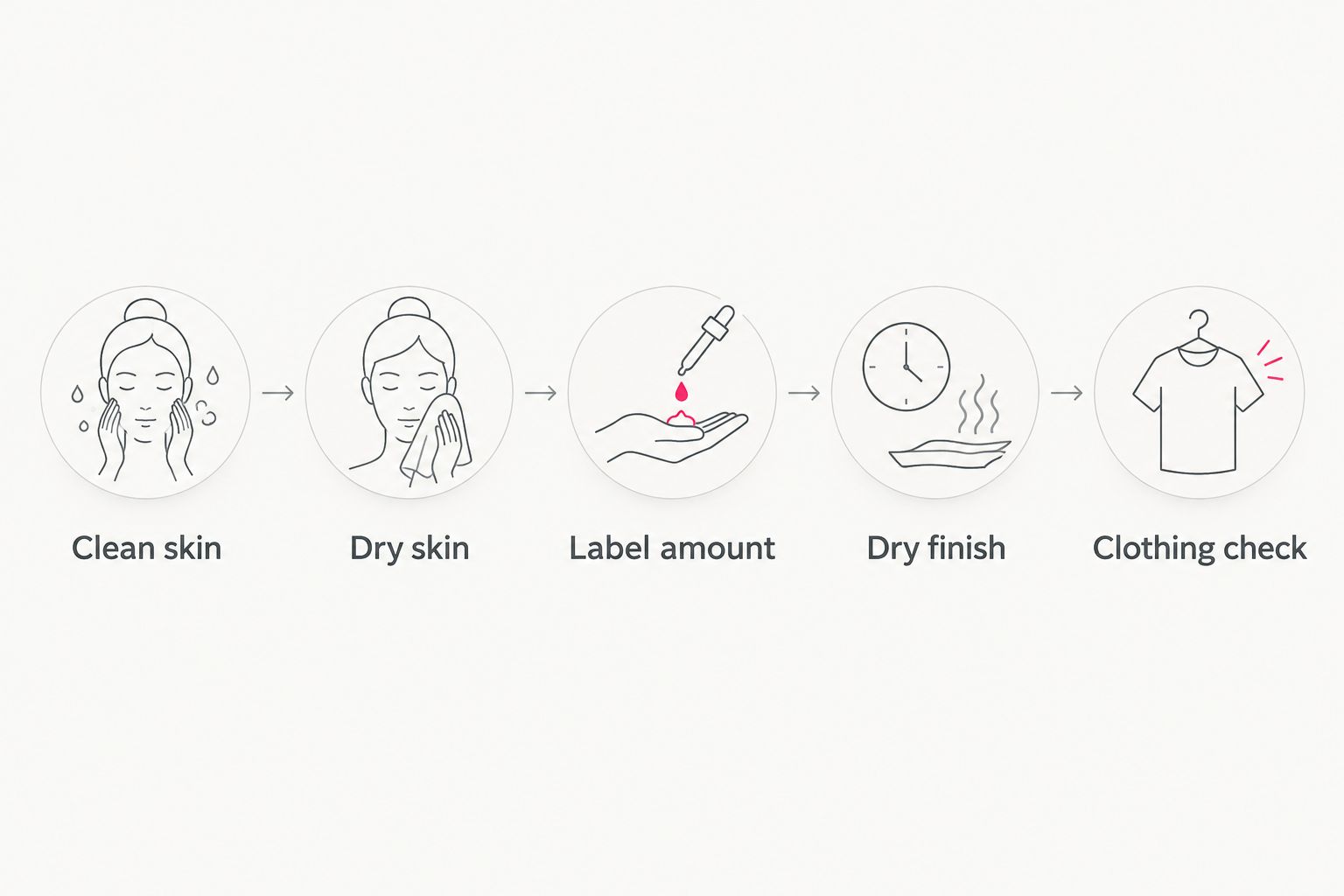
A comfortable routine starts before application. Keep the following checks separate so you know whether the issue is wet skin, excess application, product finish, or continuing perspiration.
- Clean skin: Remove sweat and old product buildup before starting the next application.
- Dry skin: Let the intended area dry completely. For the gel, also respect the restriction against applying immediately after bathing.
- Label amount: Use the directed amount rather than adding product until you feel coated.
- Dry finish: Follow any air-drying instruction before dressing.
- Clothing check: Assess visible residue separately from whether the treated area feels less sweaty.
Do not transfer one product's instructions to another format. A bedtime gel with a morning wash-off step works differently from a daily stick, and a body antiperspirant wipe is not an interchangeable deodorizing wipe.
If irritation develops, stop rather than increasing the dose or applying through discomfort. Persistent, disruptive, or suddenly changed sweating deserves a clinician's assessment, not an automatic stack of stronger products.
Which format should you choose?
For everyday underarm wetness and odor, start with the Clinical Sweat Control Stick. Choose Sweat Control Body Wipes when the concern involves permitted body areas beyond underarms, or consider the Intensive Sweat Minimizing Gel when you need additional underarm support.
If your main concern is odor and you specifically want a spray, Deodorant Body Spray fits that job. If you require both a spray format and sweat reduction, choose a product explicitly labeled as a spray antiperspirant; do not substitute deodorant based on how quickly it dries.
FAQ
What's the difference between dry spray antiperspirant and deodorant spray?
A dry spray antiperspirant reduces perspiration, while a deodorant spray addresses odor. Spray format and fast drying do not establish that a product has both functions.
Does a dry spray antiperspirant always leave no white marks?
No. A dry-spray description is not a guarantee of no white marks or fabric transfer. Check the specific finish claims and follow the application directions.
Is Duradry Deodorant Body Spray an antiperspirant?
No. Deodorant Body Spray is positioned for body odor protection, not sweat reduction. Choose an antiperspirant when wetness is your main concern.
Are antiperspirant wipes just deodorizing wipes?
No. Antiperspirant wipes reduce perspiration, while deodorizing wipes address odor or provide a refresh. Sweat Control Body Wipes have an antiperspirant role and their own application directions.
Can I use the nighttime gel on my hands or feet?
No. Intensive Sweat Minimizing Gel directions specify underarms only. Sweat Control Body Wipes are the relevant body-sweat option for hands and feet, subject to the current package directions.
Should I apply more antiperspirant if I still feel wet?
Do not exceed the package directions. Check the product's function, skin dryness, application timing, and consistency before adding more; persistent or disruptive sweating warrants professional advice.
One last thing
Fast-drying describes application; antiperspirant describes function. Keeping those words separate makes choosing sweat care easier and prevents an odor-only spray from being asked to do a different job.
Before replacing your current product, check its label for the antiperspirant designation. That is the most useful first step if dampness—not odor—is what you want to change.

