

Best for washing away sweat, buildup, and odor: Duradry Deep Clean Body Wash. Best follow-up for body odor: Deodorant Body Spray. Best for underarm wetness and odor together: Clinical Sweat Control Stick. The best body wash for body odor cleanses effectively, but it does not replace deodorant or antiperspirant when you need protection after your shower.
- Duradry Deep Clean Body Wash is the best body wash for body odor within this brand’s cleansing range.
- Deodorant Body Spray provides leave-on body odor protection; it does not replace an antiperspirant.
- Clinical Sweat Control Stick addresses daily underarm wetness and odor together.
- Sweat Control Body Wipes target body perspiration, not just a quick cleansing refresh.
Why body wash helps—and where it stops
Body odor develops when skin bacteria break down sweat and other substances on your skin. Washing removes sweat, odor, and buildup. It gives you a fresh start, not a permanent barrier against new odor.
Duradry Deep Clean Body Wash is best for people who want to wash away sweat, odor, and antiperspirant buildup without confusing cleansing with sweat prevention. If odor returns after a commute, workout, or long workday, the next decision is whether you need leave-on odor protection, sweat reduction, or both.
This guide is published by Duradry and compares products within its own sweat care range. It is not an independent market-wide ranking or a report of hands-on comparative testing. Start with Deep Clean Body Wash if cleansing is the missing step; add another product only when it serves a separate need.
What makes the best body wash for body odor?
A useful body wash should fit your skin and your routine. A stronger fragrance is not evidence of better odor control.
Use these criteria to judge the cleansing step and any follow-up product:
- Cleansing purpose: Look for a rinse-off cleanser that removes sweat, odor, and daily buildup.
- Skin comfort: Your skin should tolerate the product. Persistent tightness, stinging, or irritation is a reason to reassess—not scrub harder.
- Residue removal: Antiperspirant buildup needs cleansing, not another layer of fragrance.
- Fragrance preference: A scented wash and an unscented leave-on product serve different preferences. Neither description guarantees skin tolerance.
- Correct follow-up: Choose deodorant for odor protection and antiperspirant for sweat reduction.
- Practical format: A bottle for your shower and a smaller bottle for travel can make the same cleansing routine easier to maintain.
The key limitation applies to every ordinary body wash: it rinses off. Do not judge a cleanser by whether it keeps your underarms dry through the afternoon.
The options at a glance
These products are not interchangeable body washes. They cover different steps, so you can choose a wash without expecting it to do the work of a leave-on product.
- Deep Clean Body Wash — best for shower cleansing. Removes sweat, odor, and buildup; does not prevent future perspiration.
- Deodorant Body Spray — best for unscented leave-on body odor care. Helps control odor; does not provide the sweat-reducing role of an antiperspirant.
- Clinical Sweat Control Stick — best for daily underarm wetness and odor. Combines antiperspirant and deodorant functions; its directions are for underarms.
- Sweat Control Body Wipes — best for targeted body sweat. Provides an antiperspirant wipe format; requires its own application and wash-off routine.
1. Deep Clean Body Wash: best for sweat and buildup removal
Deep Clean Body Wash is a rinse-off cleanser designed to remove sweat, odor, odor-causing bacteria, and daily buildup, including antiperspirant residue. It belongs in the shower, before you apply leave-on sweat or odor protection.
The wash has an Aqua scent with a fresh, ocean-air character. The 6 fl oz and 2.5 fl oz sizes give you full-size and smaller-format options without changing the basic cleansing step.
Deep Clean Body Wash pros:
- Cleanses sweat, odor, and product buildup in one shower step.
- Addresses antiperspirant residue rather than simply adding fragrance over it.
- Offers full-size and smaller bottles for different routines.
Deep Clean Body Wash cons:
- Does not reduce future sweating or replace leave-on odor protection.
- Has a scent, so it is not a fragrance-free wash option.
Best for: You want a cleanser after exercise, a warm commute, or a day of wearing antiperspirant.
Apply it to wet skin, lather, and rinse thoroughly. There is no need to invent a prolonged contact time or scrub your skin aggressively. Before applying a leave-on antiperspirant, let the relevant area become completely dry.
Verdict: Buy for cleansing sweat and buildup; skip it as a standalone solution for persistent daytime wetness.
2. Deodorant Body Spray: best for odor after your shower
Deodorant Body Spray is an unscented, lightweight, fast-drying leave-on product that helps control body odor. It fits the gap between feeling clean after washing and wanting odor protection during the day.
Its role is different from the wash. You rinse the cleanser away, then apply the spray to clean, dry skin where the current directions permit.
Deodorant Body Spray pros:
- Adds leave-on odor protection after cleansing.
- Provides an unscented option when you do not want another competing fragrance.
- Uses a lightweight spray format for targeted application.
Deodorant Body Spray cons:
- Does not replace antiperspirant when wetness is your main concern.
- Requires attention to permitted body areas; body positioning does not mean unrestricted use.
Best for: You want body odor protection without seeking stronger sweat reduction.
Avoid directing the spray toward your face or eyes, inhaling it, or treating intimate tissue based on broad body-care wording. Follow the current package rather than guessing a spray distance or reapplication schedule.
Verdict: Buy for leave-on body odor care; skip it if your main goal is less perspiration.
For a cleansing-and-odor routine, these two products have separate jobs: the wash removes what is on your skin, and the spray supplies leave-on odor protection. You do not need an additional antiperspirant unless sweat reduction is also a goal.


3. Clinical Sweat Control Stick: best for underarm odor and wetness
Clinical Sweat Control Stick is a daily underarm antiperspirant and deodorant. Choose it when you want both less underarm wetness and odor protection, rather than expecting your shower wash to keep working after it rinses away.
The familiar stick format makes it a straightforward daily step. Its fragrance options include Clear Sky, Barça, and Limitless; these are scented choices, not a fragrance-free range.
Clinical Sweat Control Stick pros:
- Combines underarm sweat reduction with odor protection.
- Fits a daily routine without adding a separate nighttime step.
- Offers different fragrance profiles.
Clinical Sweat Control Stick cons:
- Is intended for underarms, not unrestricted body application.
- Contains fragrance and should not be treated as universally non-irritating.
Best for: Your underarms smell and feel wet during ordinary workdays, commuting, or social plans.
Apply to clean, dry underarms using the current label directions; the product page describes 2–4 swipes per underarm. Stop use if rash or irritation occurs. Ask a doctor before use if you have kidney disease, as the antiperspirant label directs.
Verdict: Buy for combined daily underarm sweat and odor protection; skip it as a substitute for body cleansing.
4. Sweat Control Body Wipes: best for targeted body perspiration
Sweat Control Body Wipes are antiperspirant wipes, not cleansing wipes. Their purpose is sweat reduction on permitted body areas, including hands, feet, chest, back, thighs, and underarms.
Each pack contains 30 unscented wipes. The portable format fits a travel or work bag, but portability does not mean you should expect immediate complete protection when wiping actively sweaty skin.
Sweat Control Body Wipes pros:
- Addresses body sweat beyond an underarm-only routine.
- Offers an unscented wipe format.
- Provides a portable alternative to applying a stick on targeted body areas.
Sweat Control Body Wipes cons:
- Is a disposable format, not a rinse-off cleanser.
- Requires planning around application, drying, and wash-off directions.
Best for: You need targeted body sweat reduction rather than an odor-only refresh.
Start with clean, dry skin and follow the current pack. The referenced directions emphasize bedtime application, air drying, and washing off the next morning, with daytime use as directed. Avoid the face and mucous membranes; do not interpret body use as permission to apply everywhere.
Verdict: Buy for targeted body sweat control; skip it when you only need to wash away sweat or refresh odor.
Build the smallest routine that solves your concern
Separate your routine into Cleanse, Odor protection, and Sweat control. You need the first step for washing; the other steps depend on what happens after you dry off.
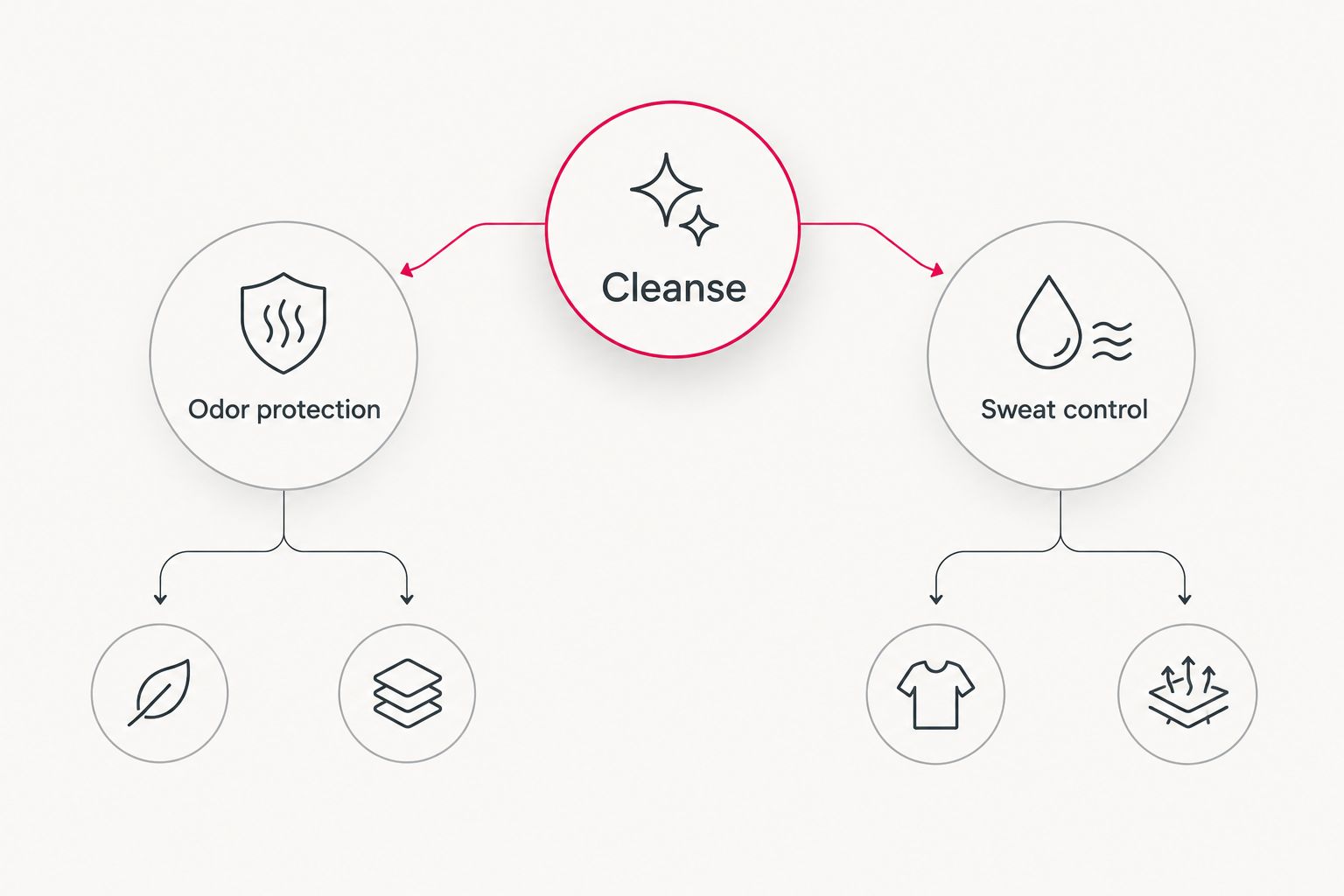
For odor without troublesome wetness, start with cleansing and a suitable deodorant. For wet underarms plus odor, choose an underarm antiperspirant and deodorant after washing and drying.
For heavier underarm sweating, Intensive Sweat Minimizing Gel adds a separate bedtime antiperspirant step. It is not a body wash or an odor-only product. Apply only to completely dry underarms according to the current label, avoid immediate application after bathing, and wash it off the next morning.
The gel is not intended to control night sweats while you sleep. Its bedtime schedule supports reduced daytime underarm sweating. Avoid broken, irritated, or recently shaved skin, and do not layer the gel, stick, and wipes simultaneously to increase potency.
How these recommendations were selected
The order starts with the product that directly answers the body-wash question, then separates follow-up choices by purpose. Selection rests on cleansing function, sweat versus odor control, permitted body area, format, fragrance, and application requirements.
There is no claim that one formula outperformed competing washes in a test. The useful decision is simpler: buy a cleanser for cleansing, then address any remaining odor or wetness with the appropriate category.
Which option should you choose?
Choose Deep Clean Body Wash if your immediate need is washing away sweat, odor, and product residue. If you already have a cleanser your skin tolerates, do not assume a new wash is automatically the missing answer.
Add Deodorant Body Spray for body odor protection or Clinical Sweat Control Stick for underarm wetness and odor. Choose Sweat Control Body Wipes only when targeted body sweat reduction justifies that separate routine.
FAQ
What’s the best body wash for body odor?
Within Duradry’s range, Deep Clean Body Wash is the cleansing choice for removing sweat, odor, and buildup. It does not prevent future sweating, so choose separate leave-on protection when needed.
Can body wash stop me from sweating?
No. Body wash removes sweat during cleansing; antiperspirant reduces perspiration in the treated area. A deodorant controls odor without necessarily reducing wetness.
Why do my underarms smell again after a shower?
A shower removes existing sweat and odor but does not prevent new odor from developing. A suitable leave-on deodorant or antiperspirant-and-deodorant product addresses protection after washing.
Is a strongly scented body wash better for odor?
A stronger scent does not establish better odor control. Choose a cleanser for its cleansing role and your skin’s tolerance, then decide whether you need leave-on protection.
Should I scrub harder if body odor keeps returning?
No. Repeated aggressive scrubbing is not a substitute for the right cleansing and leave-on routine. Reassess the product’s purpose, application directions, and any irritation instead.
Can I use antiperspirant body wipes instead of showering?
No. Antiperspirant body wipes reduce sweat according to their directions; they do not replace washing away sweat, residue, and daily buildup. Apply them to clean, dry skin as directed.
When should I get medical advice about body odor or sweating?
Seek medical advice for a sudden unexplained change, persistent disruptive symptoms, or sweating accompanied by other symptoms. Sweating during sleep also deserves a medical discussion rather than simply adding nighttime antiperspirant.
One last thing
The most useful clue is what returns after your shower: odor, wetness, or both. Notice that distinction before changing products. Your next step is to choose one leave-on product that matches the remaining concern—not to wash more aggressively or add every available step.

