

Best overall for body odor without added fragrance: Deodorant Body Spray. Best for underarm odor plus wetness: Clinical Sweat Control Stick. Best for washing away sweat and buildup: Deep Clean Body Wash. The right body odor eliminator depends on whether you need odor protection, sweat reduction, or cleansing—not the strongest scent.
- Duradry Deodorant Body Spray is the best fit for unscented, leave-on body odor protection.
- Clinical Sweat Control Stick combines daily underarm odor protection with sweat reduction.
- Deep Clean Body Wash removes sweat and buildup; it does not prevent new perspiration.
- Sweat Control Body Wipes target body wetness, not a quick cleansing refresh.
Why the product's job matters more than its format
Body odor develops when skin bacteria break down substances in sweat. Sweating is normal, and smelling different after a workout or a warm commute does not automatically mean you need stronger sweat control. Start by identifying what bothers you: odor, dampness, or residue on your skin.
A deodorant addresses odor. An antiperspirant reduces perspiration in the treated area, while a body wash removes sweat and buildup during rinsing. Those jobs overlap in a routine, but they are not interchangeable.
This guide is published by Duradry and compares its products by their intended use, application area, format, and practical limitations. It is not an independent market ranking or a report of hands-on testing. Duradry Deodorant Body Spray is best for people seeking unscented body odor protection rather than sweat reduction.
What makes the best body odor eliminator?
Choose using these criteria before deciding between a stick, spray, wash, or wipe:
- The right function: Choose deodorant for odor, antiperspirant for wetness, and cleanser for sweat and residue already on the skin.
- The intended area: Underarm directions do not automatically extend to hands, feet, chest, or other areas. Check the specific product label.
- A realistic schedule: A shower product, daily stick, and bedtime antiperspirant require different habits. Pick a routine you can follow.
- Fragrance preference: Unscented odor protection suits readers who do not want another fragrance alongside perfume or body care.
- Skin tolerance: Thoughtfully selected ingredients do not guarantee irritation-free use. Directions and warnings matter more than a broad ingredient slogan.
- A clear limitation: A useful recommendation explains what the product does not do. Neither a fresh scent nor a cleansing lather proves sweat reduction.
The options at a glance
- Deodorant Body Spray — best for unscented body odor protection. A leave-on spray that helps neutralize odor; it is not a substitute for an antiperspirant when dryness is the goal.
- Clinical Sweat Control Stick — best for daily underarm odor and wetness. An antiperspirant and deodorant in a familiar stick format; its directions are limited to underarms.
- Deep Clean Body Wash — best for removing sweat and product buildup. A rinse-off cleanser for shower care; it does not prevent future perspiration.
- Sweat Control Body Wipes — best for targeted body wetness. Portable antiperspirant wipes for permitted body areas; their application schedule differs from a quick deodorizing refresh.
1. Deodorant Body Spray: best for unscented body odor protection
Deodorant Body Spray helps control body odor in a lightweight, fast-drying format. It is unscented, making it a straightforward choice when you want odor protection without adding a competing fragrance.
The spray fits a routine where odor is the main concern and reducing perspiration is not the goal. Start with clean, dry skin and apply only to areas permitted by the current directions. Do not spray toward the face or eyes, encourage inhalation, or interpret body-use wording as permission for intimate-area application.
Deodorant Body Spray pros:
- Helps neutralize body odor without relying on an added scent.
- Provides a leave-on option after cleansing.
- Offers a lightweight, fast-drying application format.
Deodorant Body Spray cons:
- Its odor-protection role does not establish clinical sweat reduction.
- Body-use positioning does not mean it belongs on every skin surface.
Best for: You want to address body odor without switching to stronger sweat control or adding another fragrance.
Choose the spray because its function matches your concern, not because spray application is inherently stronger than a stick. If odor improves but dampness still bothers you, reassess the need for an antiperspirant rather than simply adding more deodorant.
Verdict: Buy for unscented body odor protection; skip it as your solution for wetness.
2. Clinical Sweat Control Stick: best for daily underarm odor and wetness
The Clinical Sweat Control Stick combines antiperspirant and deodorant functions. It helps reduce underarm wetness while providing odor protection, making it the most direct choice here when both concerns affect your workday, commute, or clothing comfort.
Apply to clean, dry underarms. The product directions specify 2–4 swipes per underarm; the current package label governs use. More product is not the automatic answer when protection falls short—check application conditions and consistency first.
Clinical Sweat Control Stick pros:
- Addresses both underarm perspiration and odor.
- Uses a familiar format for daily application.
- Offers three fragrance choices: Clear Sky, Barça, and Limitless.
Clinical Sweat Control Stick cons:
- It is intended for underarms, not as a general body antiperspirant.
- The scented options do not suit someone specifically seeking unscented protection.
Best for: You notice underarm odor alongside damp patches or an uncomfortable wet feeling.
The fragrance notes are Crisp Pear + Vanilla for Clear Sky, Sweetwater + Sea Salt for Barça, and Cool Citrus + Cedar for Limitless. Treat those as scent descriptions, not proof that the formula contains the named fruits, woods, or extracts.
The stick's product materials identify it as made without talc, silicones, and dyes. Those exclusions explain specific formulation choices; they do not mean aluminum-free, universally safer, or incapable of causing irritation.
Verdict: Buy for daily underarm sweat and odor protection; skip it for application beyond the underarms.
3. Deep Clean Body Wash: best for sweat and product buildup
Deep Clean Body Wash removes sweat, odor, and daily buildup, including antiperspirant residue. It belongs in the shower portion of your routine, especially when skin feels coated after repeated leave-on product use.
Apply to wet skin, lather, and rinse thoroughly. Let the relevant skin area dry completely before applying a leave-on antiperspirant. Cleansing and protection happen in sequence; washing is not a replacement for the product you use afterward.
Deep Clean Body Wash pros:
- Cleanses sweat and daily residue from the skin.
- Helps wash away odor-causing bacteria.
- Provides a dedicated cleansing step before leave-on sweat care.
Deep Clean Body Wash cons:
- It is not an antiperspirant and does not prevent new sweating.
- Its Aqua scent does not suit a strictly fragrance-free routine.
Best for: You need to remove sweat and buildup rather than add another layer of leave-on protection.
The wash comes in 6 fl oz and 2.5 fl oz sizes. Choose the size that fits your routine, but do not confuse a smaller bottle with different cleansing instructions or stronger performance.
You do not need to invent a long contact time or use extra product to turn cleansing into lasting sweat prevention. The wash does its job during bathing. If odor returns later, consider whether you need leave-on odor protection rather than assuming that more washing is the answer.
Verdict: Buy for cleansing sweat and buildup; skip it as a stand-alone sweat blocker.
4. Sweat Control Body Wipes: best for targeted body wetness
Sweat Control Body Wipes are antiperspirant wipes, not cleansing wipes. They address sweat on permitted body areas, including hands, feet, chest, back, thighs, and underarms, subject to the current package directions.
Each pack contains 30 unscented wipes. The portable format fits a travel or gym bag, but portability does not establish immediate protection when applied to actively sweaty skin. Start with clean, dry skin and follow the product's schedule.
Sweat Control Body Wipes pros:
- Target body wetness beyond the underarms.
- Provide an unscented antiperspirant format.
- Offer a portable alternative to underarm-only products.
Sweat Control Body Wipes cons:
- They are disposable rather than a reusable application format.
- Their bedtime and wash-off directions require more planning than a quick cleansing refresh.
Best for: Your main concern is perspiration on a permitted body area, rather than odor alone.
The referenced directions specify bedtime application, air drying, and washing off the next morning, with daytime application as needed. Follow the label supplied with your pack. Do not apply to the face or mucous membranes, and do not use broad body-care wording to extend the directions.
For an odor-only concern, choose deodorant instead of assuming an antiperspirant wipe is automatically the better option. A wipe describes how you apply a product; it does not tell you whether the product cleanses, deodorizes, or reduces sweat.
Verdict: Buy for targeted body sweat control; skip it as a substitute for cleansing wipes.
How to build a routine without adding unnecessary steps
Keep the sequence simple. You do not need every product in this guide, and applying several antiperspirants to the same area at once is not a shortcut to better results.
- Cleanse. Wash away sweat and residue, then rinse thoroughly. Choose cleansing because the skin needs cleaning—not because a wash can stop tomorrow's perspiration.
- Dry. Allow the intended application area to become completely dry. Follow any additional product restrictions around bathing or recently shaved skin.
- Choose protection. Use deodorant when odor is the concern or an appropriate antiperspirant when wetness is the concern. Match the product to the body area.
- Follow directions. Respect the amount, timing, wash-off instructions, and warnings on the current package. Stop antiperspirant use if rash or irritation occurs.
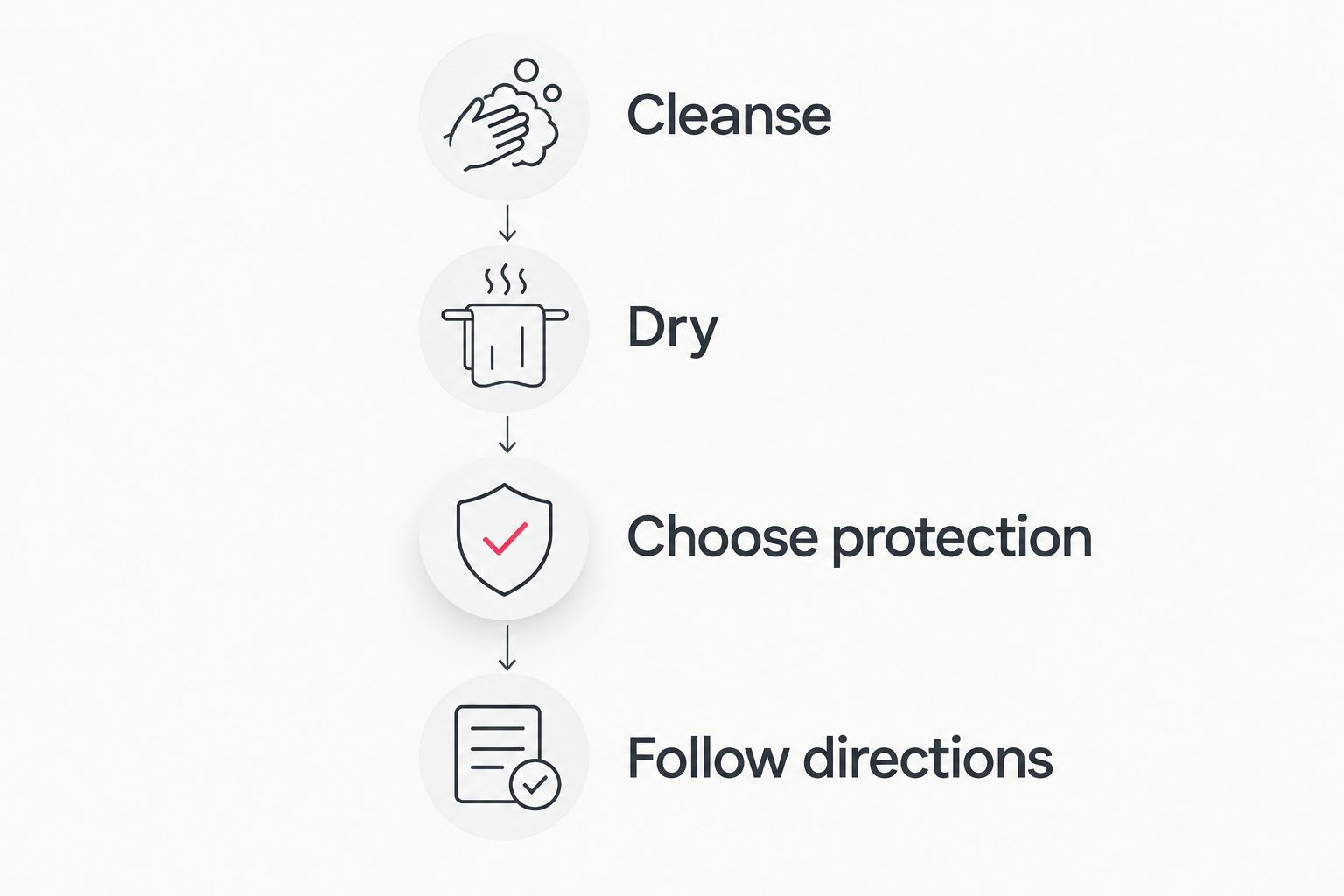
For a workday with underarm odor and wetness, the daily stick is a clear starting point. For body odor without a need for sweat reduction, cleansing followed by the spray keeps the routine focused. Use the body wipes only when their antiperspirant function and permitted application area match your needs.


How these recommendations were selected
The recommendations follow the criteria above: function, body area, schedule, fragrance, and limitations. They do not rank formulas by active concentration or assume that more intensive sweat control is better for everyone.
The spray leads for odor-only care because that is its stated purpose. The stick leads for underarm odor plus wetness because it combines deodorant and antiperspirant functions. The wash and body wipes solve different problems, so neither replaces those choices across every situation.
Which body odor eliminator should you choose?
Start with Deodorant Body Spray if body odor—not wetness—is your main concern. Choose Clinical Sweat Control Stick instead when underarm dampness matters too. Add cleansing for sweat and residue, not as a promise of permanent odor elimination.
If sweating becomes persistent, disruptive, or suddenly different, seek a clinician's assessment rather than repeatedly escalating your routine. Sweating during sleep or sweating accompanied by other symptoms also deserves medical context. Ordinary daily sweat care should not be presented as treatment for an underlying condition.
FAQ
What's the best body odor eliminator if I don't want fragrance?
Duradry Deodorant Body Spray is the best fit in this guide for unscented, leave-on body odor protection. It helps control odor rather than serving as a substitute for sweat-reducing antiperspirant.
Is deodorant or antiperspirant better for body odor?
Choose deodorant for odor alone and an antiperspirant-deodorant when you also want to reduce wetness. Check the permitted body area because an underarm product is not automatically suitable elsewhere.
Can body wash stop me from sweating?
No, body wash does not prevent perspiration. Deep Clean Body Wash removes sweat, odor, and buildup during cleansing; a suitable antiperspirant has the separate job of reducing sweat.
Are antiperspirant wipes the same as deodorizing wipes?
No, antiperspirant wipes reduce sweat, while deodorizing wipes address odor or provide a refresh. Sweat Control Body Wipes are antiperspirants, so follow their application and wash-off directions rather than treating them as cleansing wipes.
Can a body odor eliminator get rid of odor permanently?
These personal care products do not permanently eliminate body odor. They provide cleansing, odor protection, or sweat reduction as part of an ongoing routine.
Should I apply more product if I still notice odor?
Do not automatically increase the amount. First check that the product addresses odor, is permitted for the area, and is being used according to its directions; stop antiperspirant use if rash or irritation occurs.
One last thing
An unscented product can still provide odor protection, and a strongly scented product is not automatically an antiperspirant. Choose by function before fragrance. For your next application, identify the concern and body area first, then follow the matching product's directions.

