

Duradry Clinical Sweat Control Stick is the best everyday antiperspirant choice in this guide for people who want daily underarm sweat and odor protection in one step. Choose the Clinical Sweat Control Stick for your daily routine, Intensive Sweat Minimizing Gel for added nighttime underarm sweat control, or Sweat Control Body Wipes for targeted body sweat.
- Duradry Clinical Sweat Control Stick is this guide’s best antiperspirant for everyday use on underarms.
- Intensive Sweat Minimizing Gel adds nighttime underarm sweat control; it is not a treatment for night sweats.
- Sweat Control Body Wipes address targeted body sweat, including hands and feet, according to package directions.
- Choose antiperspirant for wetness, deodorant for odor, and body wash for cleansing.
Why the right everyday antiperspirant matters
The best everyday antiperspirant matches the problem you actually want to solve. If your underarms feel wet despite smelling fresh, odor protection alone is not doing the job you need.
An antiperspirant helps reduce perspiration where you apply it. A deodorant addresses odor, while a cleanser washes away sweat and buildup. Some products combine antiperspirant and deodorant functions; others have a narrower role.
This guide is published by Duradry and compares its own sweat care options. It is a product-selection guide, not an independent market ranking or a report of head-to-head testing. The recommendations reflect each product’s documented purpose and directions, rather than an invented performance score.
What makes the best antiperspirant for everyday use?
Look at these criteria before choosing a format:
- Correct function: Choose sweat reduction for wetness, odor protection for odor, or a product that provides both.
- Intended body area: Underarm directions do not automatically extend to hands, feet, chest, or other areas.
- Application schedule: A daily stick and a bedtime gel fit different routines. Choose a schedule you can follow consistently.
- Skin comfort: Check warnings, avoid restricted application conditions, and stop if rash or irritation occurs.
- Fragrance preference: Decide whether you want subtle fragrance, a fragrance-free formula, or an unscented format.
- Useful formulation details: Evaluate verified ingredient choices without treating “clean” or “naturally derived” as proof of universal safety.
Start with the simplest product that addresses your main concern. A longer routine is useful only when each additional step has a clear job.
Everyday antiperspirant options at a glance
These recommendations occupy different use cases. The order starts with the most direct fit for daily underarm sweat and odor, then moves to more specific needs.
Best daily starting point: Clinical Sweat Control Stick
- Best for: Everyday underarm wetness and odor.
- Standout feature: Antiperspirant and deodorant functions in a familiar stick format.
- Main limitation: Underarm use only; the current options are fragranced.
Best nighttime addition: Intensive Sweat Minimizing Gel
- Best for: Heavier underarm sweating that needs an additional sweat-control step.
- Standout feature: Bedtime application followed by washing off the next morning.
- Main limitation: Requires a separate schedule and does not replace your daytime odor-care step.
Best targeted body format: Sweat Control Body Wipes
- Best for: Sweat on permitted body areas beyond the underarms.
- Standout feature: Portable antiperspirant wipes positioned for areas including hands, feet, chest, back, and thighs.
- Main limitation: Disposable format with application and wash-off directions; not a cleansing shortcut.
1. Clinical Sweat Control Stick: best for daily underarm use
The Clinical Sweat Control Stick combines underarm antiperspirant and deodorant functions. It is the straightforward starting point when you want less underarm wetness and odor protection without adding a separate nighttime product.
That makes the stick relevant to commuting, office days, exercise, travel, and social plans. You do not need an excessive-sweating diagnosis to choose daily sweat care.
Clinical Sweat Control Stick pros:
- Addresses both underarm perspiration and odor.
- Uses a familiar daily application format.
- Offers three fragrance choices: Clear Sky, Barça, and Limitless.
- Product materials identify talc-free, silicone-free, and dye-free formulation choices.
Clinical Sweat Control Stick cons:
- Directions limit application to the underarms.
- The named fragrances do not provide a fragrance-free stick option.
- Daily protection does not mean guaranteed dryness or freedom from irritation.
How to use the stick
Apply to clean, dry underarms, using 2–4 swipes per underarm according to the product directions. Follow the current package label for warnings and use.
If you also use the nighttime gel, wash the gel off the next morning and dry your underarms before applying the stick. These are separate steps, not products to layer together at bedtime.
Best for: A simple daily underarm routine that addresses sweat and odor together.
Verdict: Buy for daily underarm sweat and odor protection.
2. Intensive Sweat Minimizing Gel: best for added nighttime control
The Intensive Sweat Minimizing Gel is a nighttime underarm antiperspirant for heavier sweating. It adds focused sweat control when your daily routine needs more support.
The distinction is timing, not just texture. You apply the gel at bedtime and wash it off the next morning; it is not a daytime deodorant replacement.
Intensive Sweat Minimizing Gel pros:
- Provides a separate nighttime sweat-control step.
- Uses a targeted gel format for underarms.
- Is described as fragrance-free.
- Has a maintenance schedule after control is established, according to the label.
Intensive Sweat Minimizing Gel cons:
- Requires bedtime application and morning washing.
- Is restricted to underarms, not hands or feet.
- Has specific precautions for bathing, shaving, and irritated skin.
How to fit the gel into your routine
Start with completely dry underarms, and do not apply immediately after bathing. The product page describes a pea-sized amount per underarm at bedtime. Wash thoroughly the next morning before applying daytime protection to dry skin.
Follow the current label for the initial schedule. After control is established, the referenced label describes maintenance twice per week or as needed; that is not a universal starting schedule or a promise that two applications will stop sweating.
Do not apply to broken, irritated, or recently shaved skin. Avoid the eyes, stop if rash or irritation occurs, and ask a doctor before use if you have kidney disease.
Bedtime application supports less daytime underarm sweat; this gel is not designed to treat sweating while you sleep.
Best for: Heavier underarm sweating that calls for a nighttime addition.
Verdict: Buy when you need additional underarm sweat control and can follow the bedtime routine.
3. Sweat Control Body Wipes: best for targeted body sweat
Sweat Control Body Wipes are antiperspirant wipes, not deodorizing or cleansing wipes. Their role is sweat reduction on permitted body areas, including underarms, hands, feet, chest, back, and thighs.
Each pack contains 30 unscented wipes. The portable format fits a travel or work bag, but portability does not mean the product works as an instant wipe-down on actively sweaty skin.
Sweat Control Body Wipes pros:
- Address body sweat beyond the underarms.
- Come in an unscented wipe format.
- Offer a portable alternative to a stick or gel for permitted areas.
- Have a clear finish and fast-drying application described in product materials.
Sweat Control Body Wipes cons:
- Use a disposable format.
- Require clean, dry skin and adherence to application directions.
- Do not replace bathing or authorize application to every body surface.
Use the wipes as antiperspirant, not a refresh wipe
Follow the current package instructions for the intended body area. The referenced label specifies bedtime application, air drying, and washing off the next morning, with daytime application as needed.
Do not apply to the face or mucous membranes. Follow the label’s skin precautions rather than assuming a body-use product belongs everywhere.
Best for: Targeted body sweat when an underarm-only product does not match the application area.
Verdict: Buy for permitted body areas; skip as a substitute for cleansing.
Choose by need, not by how many steps a set contains
For everyday underarm wetness and odor, start with the stick. Add the gel only when heavier underarm sweating warrants the separate nighttime step. Choose the wipes when the body area—not simply the intensity of underarm sweating—changes the recommendation.
The relevant formats are shown below. You do not need all three to build a useful routine.


How to build a comfortable daily routine
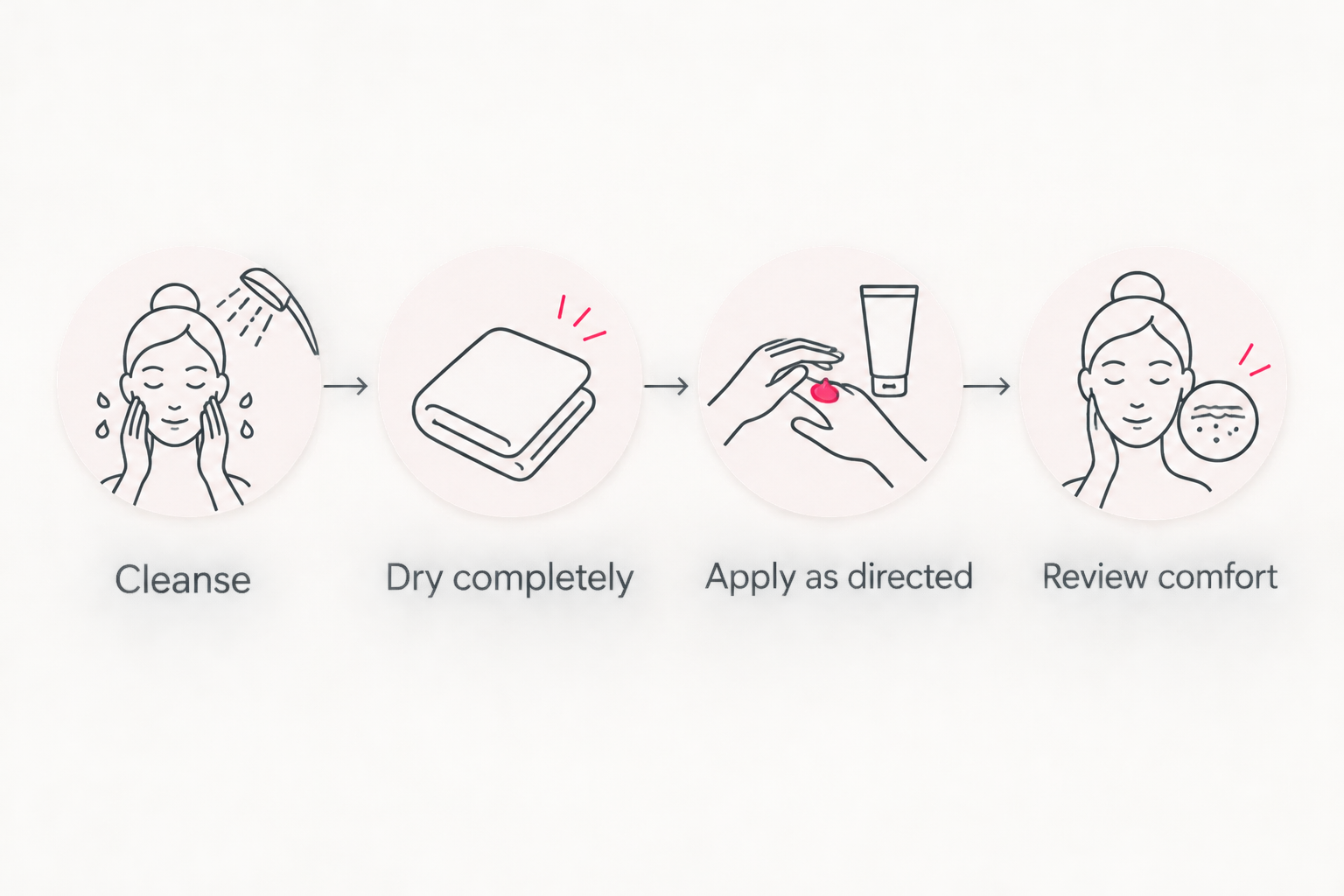
A useful routine separates cleansing, application, and any nighttime treatment. Keep the order clear instead of adding more product whenever you notice moisture.
- Cleanse: Wash away sweat and product residue, then rinse thoroughly.
- Dry completely: Apply antiperspirant to clean, dry skin. For the gel, also respect the restriction against application immediately after bathing.
- Apply as directed: Use the selected product’s amount, body area, and schedule.
- Review comfort: Stop if rash or irritation occurs rather than increasing the amount.
If the routine is not meeting your needs, check the basics first. Are you using deodorant when you want sweat reduction? Is the skin dry at application? Are you following the correct schedule and treating an approved area?
Do not automatically double the dose or layer several antiperspirants on the same area. Persistent or disruptive sweating deserves a clinician’s assessment, particularly when it starts suddenly or occurs with other symptoms.
What “clean” should mean when choosing antiperspirant
Duradry’s sweat care positioning combines effective protection with thoughtfully chosen ingredients. For the stick, verified exclusions such as talc, silicones, and dyes are more useful than a vague promise that a formula contains nothing undesirable.
“Clean” does not mean aluminum-free, chemical-free, or incapable of causing irritation. Aluminum-based antiperspirant actives serve the sweat-reducing function; choosing a deodorant instead changes that function, not merely the ingredient story.
Fragrance deserves its own decision. The stick’s scent choices suit readers who want fragrance, while the fragrance-free gel has a different purpose and schedule. Do not select a nighttime product solely to avoid fragrance without considering whether its directions fit your needs.
How these recommendations are ranked
The order prioritizes fit for daily underarm sweat and odor, then separates nighttime support from targeted body application. It does not claim one format is universally stronger, gentler, or better for every person.
The criteria are function, body area, schedule, comfort, fragrance, and verified formulation details. No independent comparative testing or wear-time ranking is implied.
Which everyday antiperspirant should you choose?
Choose the Clinical Sweat Control Stick if you are undecided and your concern is daily underarm sweat and odor. It addresses both functions without requiring a separate bedtime step.
Choose the Intensive Sweat Minimizing Gel when heavier underarm sweating calls for nighttime support. Choose Sweat Control Body Wipes when you need an antiperspirant for permitted body areas beyond the underarms. Neither is a necessary upgrade for everyone.
FAQ
What’s the best antiperspirant for everyday use?
Duradry Clinical Sweat Control Stick is this guide’s best daily starting point for underarm sweat and odor protection. It combines antiperspirant and deodorant functions in a daily stick format; this is a brand-published recommendation, not an independent market ranking.
Can I use a clinical-strength antiperspirant every day?
Follow the specific product’s directions: the Clinical Sweat Control Stick is positioned for daily use. A nighttime gel has a different initial and maintenance schedule, so clinical-strength wording alone does not determine frequency.
Why do my underarms still feel wet after deodorant?
Deodorant addresses odor, not necessarily perspiration. If wetness is your concern, check whether your product is labeled as an antiperspirant or an antiperspirant-deodorant combination.
Should I apply the gel and stick together at night?
No; the described routine separates bedtime gel from daytime stick application. Apply the gel as directed at bedtime, wash it off the next morning, and dry your underarms before using the stick.
Can I use an underarm antiperspirant on my hands and feet?
Do not extend underarm-only directions to hands and feet. Sweat Control Body Wipes are positioned for those areas, subject to the current package instructions and warnings.
Is naturally derived antiperspirant automatically better for sensitive skin?
No; a naturally derived percentage does not establish that a finished formula cannot irritate skin. Check the specific ingredients, directions, and warnings, and stop use if rash or irritation occurs.
Does nighttime antiperspirant treat night sweats?
No; the Intensive Sweat Minimizing Gel is applied at bedtime to support less daytime underarm sweating, not to treat night sweats. New or persistent sweating during sleep warrants medical assessment rather than simply adding more antiperspirant.
One last thing
Before replacing your antiperspirant, check its application conditions. A product used on damp skin or on the wrong schedule is not being used as directed. Your next step is simple: identify whether you need wetness control, odor protection, or both, then follow the matching product’s label.

