

Instead of guessing when to restart antiperspirant after laser hair removal, follow your treating clinic’s waiting period and restart only when the treated skin is intact and no longer irritated. If your underarms are still red, tender, hot, or sore when that period ends, keep antiperspirant off and ask the clinic what to do next.
- When can I use antiperspirant after laser hair removal? After your clinic’s waiting period, once treated skin is intact and comfortable.
- Duradry Clinical Sweat Control Stick fits daily underarm sweat care after recovery—not freshly irritated skin.
- Deodorant is not an automatic substitute during laser hair removal aftercare; follow your clinic’s product restrictions.
- Restart nighttime antiperspirant gel separately, respecting its warnings about irritation, bathing, and recently shaved skin.
Why this matters
Laser hair removal can leave treated skin temporarily red, swollen, or sensitive. A product you normally tolerate does not automatically belong on that skin immediately after treatment.
The Clinical Sweat Control Stick is an underarm antiperspirant and deodorant for daily sweat and odor protection. Its routine application directions do not replace your laser provider’s aftercare instructions.
Duradry sweat care is best for people seeking everyday or heavier-sweat protection, not treatment of post-laser irritation. This guide separates the recovery period from your normal routine so you know what needs to happen before each product returns.
Before you start
- Have your clinic’s written aftercare instructions and contact details. Confirm how long to avoid antiperspirant, deodorant, shaving, exercise, and other products on the treated area. Ask before leaving if the instructions do not address underarms.
- Keep your current product labels available. Tell the clinic whether you use a daily stick, nighttime antiperspirant gel, or body antiperspirant wipes. These formats have different directions; permission to resume one does not automatically cover all of them.
- Check the easily missed overlap: pre-treatment shaving. The Intensive Sweat Minimizing Gel excludes recently shaved and irritated skin. Reaching the end of the clinic’s waiting period does not cancel that restriction or make an irritated underarm ready for gel.
You do not need a stronger product or a replacement routine for the recovery window. You need clear instructions about what can touch the treated skin and a practical plan for returning to ordinary sweat care.
When can I use antiperspirant after laser hair removal?
Use the clinic’s waiting period as the earliest checkpoint, not an automatic restart time. There is no single interval that overrides your provider’s instructions, your skin’s response, and the warnings on your antiperspirant.
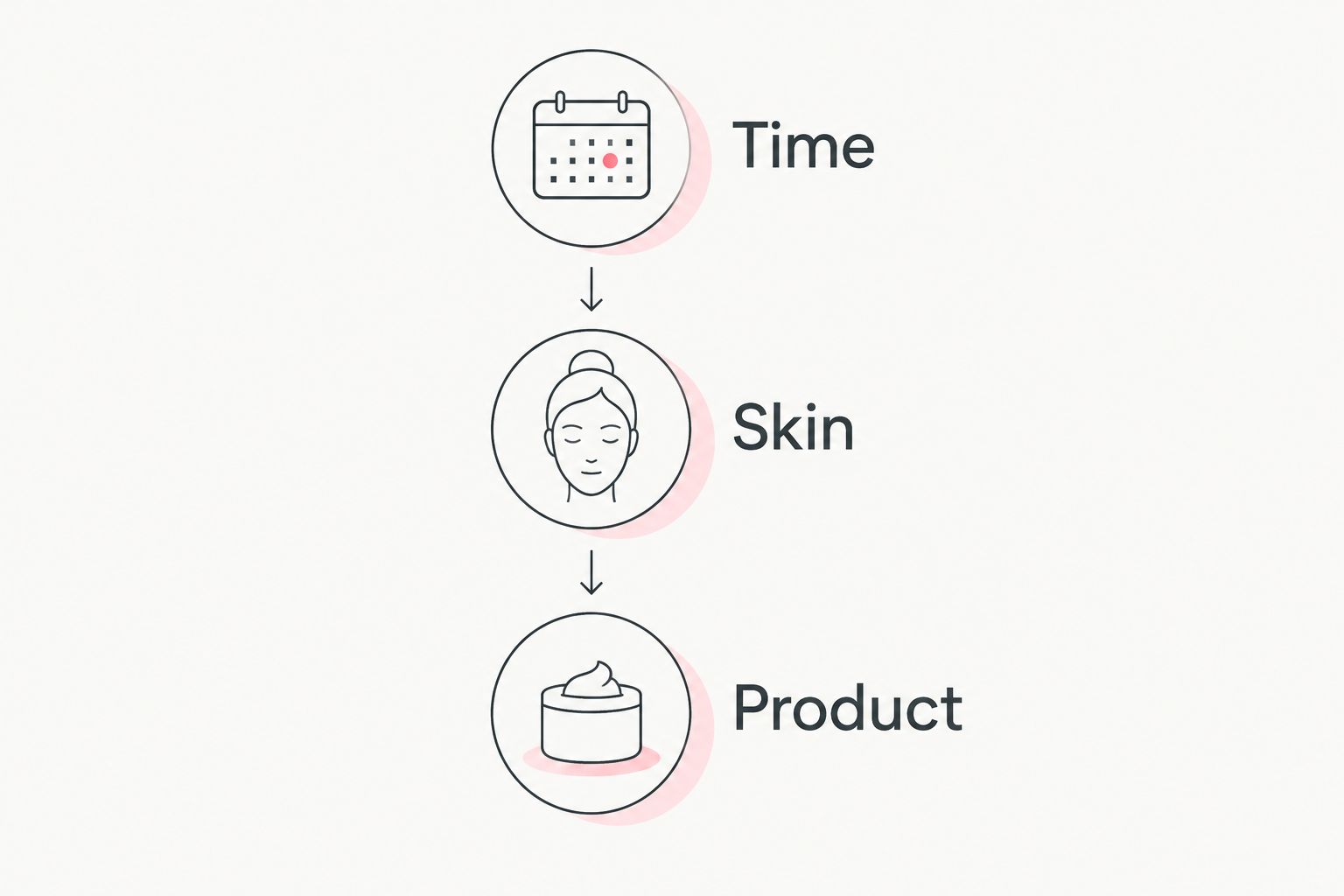
Keep these decisions separate:
- Time: Has the clinic’s instructed restriction ended?
- Skin: Is the treated area intact, without ongoing redness, tenderness, heat, or irritation?
- Product: Does the product label permit application under your current conditions?
All three need to support restarting. If one does not, pause and ask your treating clinic.
Do not use antiperspirant application as a test of whether the area has recovered. Stinging is not a useful recovery milestone, and tolerating one application does not establish that every product in your routine is appropriate.
Clinic aftercare plan
- Record the treatment area. Write down whether the clinic treated your underarms, another body area, or both. Keep product restrictions attached to the skin that was treated rather than assuming every area needs the same changes.
- Confirm the product restriction. Ask specifically about antiperspirant and deodorant. If you use nighttime gel, identify it as a leave-on antiperspirant rather than simply calling it deodorant.
- Confirm the restart conditions. Ask what to do if redness or tenderness remains after the stated waiting period. Also ask which symptoms require a call rather than continued home care.
- Keep the instructions accessible. Save the written aftercare where you will see it before showering, getting dressed, or applying your usual products.
Expected result: You know the earliest permitted restart point, the skin changes that should delay it, and whom to contact if recovery does not follow the clinic’s expectations.
Avoid turning an appointment reminder into a product reminder. A calendar can tell you that the instructed interval has passed; it cannot tell you whether your skin is comfortable enough to resume application.
Skin-readiness check
- Look at the treated area without rubbing it. Check for persistent redness, swelling, broken skin, blistering, or crusting. Blistering or other concerning changes need advice from the treating clinic, not another product layer.
- Notice how the skin feels during ordinary movement. Tenderness when lowering your arms or discomfort from clothing is a reason to delay restarting and ask for guidance.
- Check for another source of irritation. Recent shaving, rubbing, or a reaction to another product can keep skin unsuitable for antiperspirant even after the laser-specific restriction ends.
- Resolve uncertainty before applying. If the skin still looks or feels different from normal, contact the clinic. Describe the symptoms and the product you want to restart.
Expected result: You have assessed the treated skin without deliberately provoking it. Comfortable skin is a restart condition, not a guarantee that a product cannot cause irritation.
Daily stick restart
- Wait until both the clinic’s instructions and your skin condition allow application. Do not restart just because you have work, a flight, or a social event that day.
- Cleanse only as your aftercare permits. Follow the clinic’s directions for washing the treated area. Avoid scrubbing away residue or adding exfoliation to prepare for antiperspirant.
- Let the underarms become completely dry. Clean, dry skin is the stick’s application condition. Do not rub harder to speed up drying.
- Follow the current package directions. The brand’s product guidance describes 2–4 swipes per underarm for ordinary daily use. That amount is not permission to apply on irritated skin or to exceed your clinic’s restrictions.
- Stop if rash or irritation occurs. Do not add more product, switch immediately to another active formula, or interpret discomfort as proof of effectiveness.
Expected result: You return to a labeled daily underarm routine without using antiperspirant on skin that still needs recovery time.
The stick’s advantage is a familiar format that combines sweat reduction with odor protection. Its limitation here is equally important: it is not a post-procedure soothing product, and its scented formula is not automatically appropriate during recovery.
Restarting nighttime gel after the daily routine
The Intensive Sweat Minimizing Gel serves a different purpose from the daily stick. Best for: heavier underarm sweating that needs a nighttime antiperspirant step after the skin has recovered. Its advantage is focused nighttime sweat control; its limitation is a separate application schedule and restrictions that require attention.
Do not treat successful stick use as blanket clearance for the gel. Ask your clinic about the specific product, particularly if your underarms remain sensitive or you shaved around the appointment.
Once the clinic permits it and the label conditions are met:
- Clean the underarms and allow them to dry completely. Do not apply the gel immediately after bathing.
- Apply the current label’s amount at bedtime. The product guidance describes a pea-sized amount per underarm.
- Wash the underarms thoroughly the next morning, then dry them before applying the daily stick.
- Follow the current label for the starting and maintenance schedules. Do not make up for missed applications with extra gel.
Expected result: The gel returns as its own nighttime step, not as an additional layer over the stick. Bedtime application supports daytime sweat control; the gel is not designed to treat sweating during sleep.
The gel’s referenced label excludes broken, irritated, and recently shaved skin. Stop for rash or irritation, avoid the eyes, and ask a doctor before use if you have kidney disease.
Variant: planning around exercise or a hot commute
A workout or warm journey home does not shorten your clinic’s product restriction. Plan clothing, transport, and activity around the aftercare rather than trying to compensate with extra antiperspirant.
For people coordinating laser hair removal for athletes, the practical scheduling issue is that exercise restrictions and product restrictions need to be managed together. Ask the treating clinic when you can resume each; permission to work out does not automatically mean permission to apply antiperspirant to the treated area.
Use this alternate workflow when activity is the main scheduling problem:
- Before treatment, explain your schedule. Mention unavoidable work conditions, exercise plans, or clothing that rubs the underarms. Ask whether the appointment timing needs to change.
- During recovery, follow the activity restrictions. Choose comfortable clothing and avoid friction where possible. Do not use a wipe as a shortcut around a restriction on leave-on products.
- After activity resumes, keep cleansing and antiperspirant separate. Wash according to aftercare, allow the skin to dry, and apply antiperspirant only when the restart conditions are satisfied.
Expected result: You have a plan for the day without asking a sweat-control product to solve a recovery issue.
Sweat Control Body Wipes are antiperspirant wipes, not simply cleansing cloths. Their portable format does not make them a recovery-period substitute for the stick, and their directions still govern where and when to apply them.
Troubleshooting your return to sweat care
The waiting period ended, but your underarms are still sore
Delay antiperspirant and contact the treating clinic. Explain whether soreness is improving, unchanged, or worsening, and mention any redness, swelling, or skin damage.
Do not cover the symptoms with another leave-on product. The calendar has reached a checkpoint; the skin has not necessarily reached the same point.
Your usual stick stings when you restart
Stop using it rather than applying another layer. Follow the clinic’s instructions for gently removing a product from the treated area, and ask for advice if symptoms persist or worsen.
Do not immediately compare several formulas on the same recovering underarm. That adds exposures and makes it harder to identify what triggered the reaction.
Odor returns while antiperspirant is paused
Use only the cleansing and care your clinic permits. Change into clean clothing as needed and avoid aggressive scrubbing to compensate for the temporary product break.
Deodorant is not an automatic workaround. It controls odor rather than perspiration, but it is still a leave-on product whose suitability depends on aftercare and skin condition.
Your routine includes both shaving and nighttime gel
Resolve the timing with the clinic and the gel label before restarting. The gel’s restriction on recently shaved skin remains relevant after laser treatment.
Do not invent a shorter interval because shaving is familiar or the skin looks smooth. Smoothness and product readiness are different questions.
The treated area develops blisters or worsening pain
Contact the treating clinic promptly for assessment. Do not apply antiperspirant, exfoliate, or try to dry out the area with additional products.
Seek medical care when symptoms are severe or you cannot obtain timely guidance. A sweat-care routine is not treatment for a possible procedure complication.
Customize your workflow for the next appointment
Build the next appointment around the products you actually use. A daily stick routine needs a simpler restart plan than a routine that also includes nighttime gel, shaving, and body antiperspirant wipes.
Keep a short record of your clinic’s instructions and how your skin responded. Note which product you restarted and whether irritation occurred; this is useful information to discuss before another session, not a reason to self-prescribe a different aftercare schedule.
Return only the steps you need. Cleansing removes sweat and buildup, antiperspirant reduces perspiration, and deodorant addresses odor. None of those functions establishes that a product belongs on freshly treated skin.
FAQ
When can I use antiperspirant after laser hair removal?
Restart after your treating clinic’s waiting period has ended and the treated skin is intact and no longer irritated. If redness, tenderness, heat, or soreness persists, delay application and ask the clinic for guidance.
Can I put deodorant on immediately after underarm laser hair removal?
Do not apply deodorant immediately unless your treating clinic specifically permits it. Deodorant controls odor, but that does not make it exempt from restrictions on leave-on products.
Is an unscented product automatically better after laser hair removal?
An unscented label does not establish that a product is suitable for freshly treated skin. Follow your clinic’s restrictions and the product’s directions rather than choosing by fragrance alone.
Can I restart Duradry gel the first night after laser treatment?
Do not restart the Intensive Sweat Minimizing Gel while your clinic prohibits antiperspirant or while the skin is irritated. Its label also excludes recently shaved and broken skin, so ask about the gel specifically before resuming it.
What should I do if antiperspirant burns after laser hair removal?
Stop applying the antiperspirant and follow your clinic’s guidance for removing it gently. Contact the treating clinic if discomfort persists, worsens, or comes with concerning skin changes.
Can I use antiperspirant wipes instead of a stick after laser treatment?
Antiperspirant wipes are not a workaround for a restriction on antiperspirant. The treated skin must meet the clinic’s restart conditions, and the wipe’s own directions and warnings still apply.
What if I accidentally applied antiperspirant too soon?
Stop further application and contact your treating clinic for product-specific advice. Describe what you applied and any symptoms; do not scrub the area or layer another product over it.
One last thing
The most useful question to ask before leaving your appointment is: What should I do if my underarms are still irritated when the waiting period ends? Getting that answer in advance prevents the clock from becoming your only guide.

