

Use sweat-minimizing gel twice weekly or as needed for maintenance after underarm sweating is controlled, following your current package label. That maintenance schedule is different from the initial phase, which calls for a few consecutive nights; apply at bedtime to completely dry underarms and wash it off the next morning.
- How often to use sweat minimizing gel: twice weekly or as needed after control, according to the current label.
- Duradry Intensive Sweat Minimizing Gel is best for heavier underarm sweating that needs a nighttime sweat-control step.
- Maintenance starts after control is established, not automatically after a fixed number of applications.
- Apply to completely dry underarms at bedtime, wash off the next morning, and stop if irritation occurs.
How often should you use sweat-minimizing gel for maintenance?
For the Intensive Sweat Minimizing Gel, the referenced label describes twice-weekly or as-needed maintenance once sweating is controlled. Follow the directions on the package you have, including its starting schedule, application amount, and warnings.
The sequence matters:
- Establish control. Follow the current label’s initial schedule, described in the reference directions as a few consecutive nights.
- Move to maintenance. Once underarm sweating is controlled, follow the twice-weekly or as-needed maintenance directions.
- Check both dryness and comfort. Notice whether daytime wetness remains manageable and whether your skin tolerates the routine.
- Troubleshoot before increasing use. Check application conditions and the label rather than automatically adding more gel or more nights.
Twice weekly means two maintenance applications per week. It does not mean two applications will establish control for everyone, and it is not a promise that every person will need the same schedule indefinitely.
Initial use: A few consecutive nights, according to the label
The starting phase and maintenance phase have different purposes. Initial use establishes sweat control; maintenance supports that control afterward.
Do not begin with a twice-weekly schedule simply because that is the maintenance guidance. Equally, do not continue the starting schedule indefinitely just because it was your first instruction. Use the phase that matches your progress and the current label.
There is no universal calendar date for switching phases. Look at whether underarm sweating is controlled during your usual day, rather than treating a particular application count as a guaranteed finish line.
If you remain uncertain about the starting directions, ask for clarification before changing the routine. A larger amount is not a substitute for correct timing or completely dry skin.
Maintenance: Twice weekly or as needed after control
Once sweating is controlled, maintenance becomes the relevant schedule. The aim is continued control with the labeled routine, not the greatest possible number of applications.
Two bedtime reminders can help you remember a twice-weekly schedule. Treat those reminders as an organizational aid, not permission to apply over recently shaved, broken, or irritated skin.
Keep your assessment practical. Notice underarm wetness during work, commuting, exercise, and social plans, without expecting your body to stop sweating everywhere. The gel treats the underarms; it does not prevent normal perspiration across the rest of your body.
A maintenance routine is successful when it supports manageable underarm wetness without asking you to ignore skin irritation. If control is inadequate, review the directions before deciding the answer is more frequent use.
Why this matters: More gel is not the same as better maintenance
A maintenance question is really about finding a repeatable routine. You want useful sweat control without unnecessary steps or confusion about when each product belongs.
The gel is a nighttime underarm antiperspirant, not an instant daytime refresh. Its bedtime application supports less underarm sweating during the day; it is not designed to treat sweating while you sleep.
That distinction also keeps expectations realistic. You do not need to add gel immediately before a meeting or workout because you anticipate sweating, and nighttime application should not be mistaken for treatment of persistent night sweats.
How to apply the gel on a maintenance night
Correct application remains important after you establish control. Reducing frequency does not change the need for completely dry skin, an appropriate amount, and a morning wash-off.
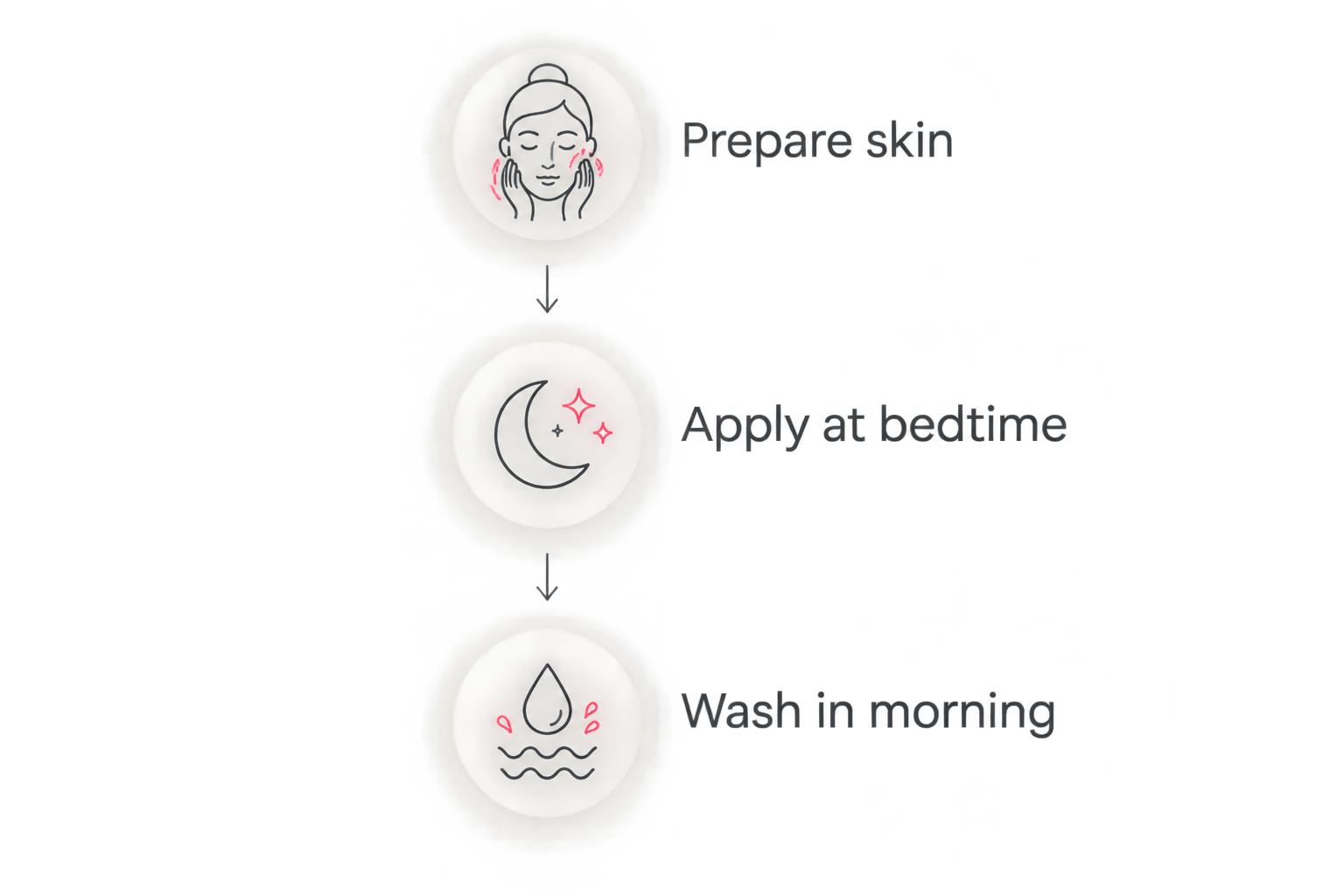
Prepare skin
Clean your underarms and allow them to become completely dry. Do not apply the gel immediately after bathing, even if bedtime follows your shower.
Avoid broken, irritated, or recently shaved skin. Do not invent a waiting period after shaving or bathing; follow the restrictions on your current package rather than relying on an arbitrary timer.
Apply at bedtime
Apply a small amount to each underarm at bedtime. The product-page directions describe a pea-sized amount per underarm; your current package label governs use.
Keep the application to the underarms. Do not extend the gel to your hands, feet, face, or other body areas because sweating there is also inconvenient.
Wash in morning
Wash your underarms thoroughly the next morning, then dry them before applying daytime protection. Do not leave the gel on as a substitute for following its wash-off directions.
The nighttime and morning steps are separate. You should not layer gel and a daytime stick together at bedtime to try to increase their effect.
Why your maintenance needs vary
The label allows twice-weekly or as-needed maintenance because the routine must account for control and tolerability. Check these factors before changing how often you apply:
- Whether control is established. A maintenance schedule is not interchangeable with the initial schedule.
- Skin dryness at application. Completely dry underarms are part of the directions; applying to damp skin is not the same routine.
- Application timing. Bedtime use and morning washing belong together. Moving the gel to a rushed morning application changes that sequence.
- Consistency. Missed applications make it harder to judge whether the labeled maintenance pattern fits your needs.
- Skin condition. Shaving, irritation, or broken skin affects whether an application is appropriate, not merely whether it fits your calendar.
Consider these as troubleshooting questions, not reasons to keep escalating use. If directions are followed and sweating remains disruptive, a clinician can assess whether a different management approach is appropriate.
Do you still need daytime antiperspirant on maintenance days?
Twice-weekly gel maintenance does not replace the separate daytime protection step in the recommended routine. Wash the gel off in the morning and let your underarms dry before applying daytime deodorant or antiperspirant.
At Duradry, the Clinical Sweat Control Stick is the daily underarm sweat-and-odor step. Its directions describe 2–4 swipes per underarm on clean, dry skin.
Choose by purpose rather than assuming that all sweat care products do the same job:
- Intensive Sweat Minimizing Gel — best for heavier underarm sweating needing nighttime support. Its advantage is a focused overnight sweat-control step. Its limitations are underarm-only use, a separate wash-off routine, and restrictions around irritation, shaving, and bathing.
- Clinical Sweat Control Stick — best for daily underarm sweat and odor protection. Its advantage is a familiar daily application format. It has its own directions and does not turn the gel into an all-at-once layering routine.
You do not need to add every product to maintain control. Keep each step only when its role matches your needs.
What should you do if sweating returns between applications?
Twice weekly is the referenced maintenance pattern, not a guarantee that wetness will never return. Before changing frequency, check whether you are applying the product as directed and whether the problem is actually underarm wetness.
Start with the basics. Were your underarms completely dry? Did you apply at bedtime and wash the gel off the following morning? Have you followed the maintenance pattern consistently?
Next, separate sweat from odor. A change in odor alone does not establish that you need more gel; antiperspirant sweat control and deodorant odor protection are different functions.
Use the label’s as-needed guidance rather than inventing a stronger schedule. Do not double the amount, stack antiperspirant products on the same skin at the same time, or apply more broadly to compensate for a difficult day.
If sweating continues to interfere with daily life despite correct use, seek a clinician’s assessment. Persistent symptoms deserve more than repeated trial-and-error increases.
What if a maintenance application irritates your skin?
Stop use if rash or irritation occurs. Do not interpret stinging as evidence that the gel is working, and do not continue through worsening symptoms to preserve your schedule.
Check for application to damp, recently shaved, broken, or already irritated skin. Those checks help identify a directions problem; they do not prove that following directions prevents every reaction.
The antiperspirant label also directs people with kidney disease to ask a doctor before use. Keep the product away from the eyes, and seek professional advice for persistent or severe reactions.
A missed maintenance application is not a reason to override a warning. Skin comfort takes priority over a calendar reminder.
FAQ
How often should I use sweat-minimizing gel once my sweating is controlled?
Use sweat-minimizing gel twice weekly or as needed for maintenance, according to your current package label. This schedule applies after control is established, not automatically from the first application.
Can I use the gel every night for maintenance?
Do not assume nightly use is necessary for maintenance. The referenced directions describe a few consecutive nights initially, followed by twice-weekly or as-needed maintenance after control; follow the current label.
Should I apply extra gel if I miss a maintenance night?
Do not double the amount to compensate for a missed maintenance application. Follow the current package directions for continued use and respect restrictions around shaving, bathing, and irritated skin.
Do I have to wash sweat-minimizing gel off in the morning?
Yes, wash the gel off thoroughly the next morning. Dry your underarms before applying your daytime deodorant or antiperspirant.
Can I use nighttime sweat-minimizing gel for night sweats?
No, Duradry Intensive Sweat Minimizing Gel is not designed to treat night sweats. Bedtime application supports less underarm sweating during the day; persistent sweating during sleep warrants medical assessment.
Can I use underarm sweat-minimizing gel on my hands or feet?
No, the gel’s directions specify underarms only. A product intended for another body area needs its own directions; do not transfer the gel’s schedule or application instructions to it.
One last thing
Needing fewer gel applications after establishing control is consistent with a maintenance routine. You do not have to keep repeating the initial phase just to feel that you are doing enough.
Before your next application, read the maintenance directions on your current Duradry gel package and check your skin. Follow the labeled schedule that maintains control, and never apply through irritation.

